Month: May 2012

  • No Stinkin’ Amps (or Amp Simulators)

    No Stinkin’ Amps (or Amp Simulators)

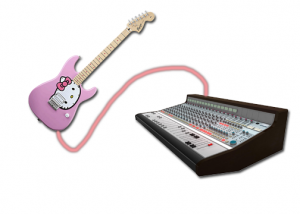
    An advanced technical diagram.

    No videos or audio examples today — I’m in the midst of “reconfiguring” my studio. (That’s the technical term for pulling stuff out of racks, tangling all your cables, making an ungodly mess, and dissolving into a puddle of bitter, frustrated tears.)

    But the good news is, I got some cool new stuff. I’m switching over a pair of large Pro Tools and Apogee systems to a minimalist Universal Audio Apollo setup, an audio interface that doubles as a plug-in host. UA makes killer plug-ins, but I’ve never owned any, since they’ve always run off of proprietary PCI cards, and the card slots in my computers have always been filled to capacity. Now that I have the UA stuff in my grubby mitts, I’m obsessing on the idea of exploring non-amped guitar tones, especially distorted ones. And I’m not talking amp simulators, but the distortion you get from overdriving a recording console’s preamps. (more…)

  • A Cool Alternative Tone Control for Bass

    A Cool Alternative Tone Control for Bass

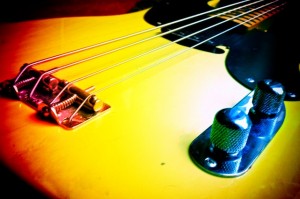
    Looks vintage, but it ain't.

    After auditioning so many different tone-control schemes over the course of the Mongrel Strat Project, I wound up with more tone circuits than I have Strats, so I figured I’d victimize a bass — specifically, a 1954 Fender P-Bass reissue with a Seymour Duncan Quarter-Pound pickup, which I’ve written about here. It’s a minimalist one-pickup model with basic volume and tone controls.

    I was eager to audition a multi-capacitor tone control like I wrote about here. (Actually, it’s literally the same tone control — the guitar where it used to reside now houses the Stellartone ToneStyler tone pot covered here.) And while I had the patient on the operating table, I figured I’d also install the Black Ice distortion cube I wrote about here. (My friends in the medical profession assure me that patients always appreciate it when surgeons indulge in improvisational operating-theater mods.)

    Demo and details after the break:

    (more…)

  • PRINT Your Own Guitar Parts?!

    PRINT Your Own Guitar Parts?!

    Yes, it's bad Photoshop. You can't REALLY print a guitar at home . . . not quite yet, anyway.

    UPDATE: Check out the comments, where reader J links to videos of a 3D-printed guitar and violin.It’s cool and INTENSE.

    Last weekend I got to enjoy one of my favorite things in the universe: the Maker Faire, held each year in San Mateo, California, outside San Francisco.

    The event, which draws 100,000 people each year (not counting the thousands who attend satellite fairs in NYC, Detroit, and other cities), was launched by Make magazine, the closest thing to a house publication for the international DIY movement. Adherents of maker culture — or just plain “makers” — are a loose aggregation of artists, geeks, hackers, Steampunks, subversive ETSY craftspeople, and others who embrace various facets of DIY culture. “If you can’t open it, you don’t own it” is one of many unofficial mottos. Another is “Void your warranty, violate a user agreement, fry a circuit, blow a fuse, poke an eye out…”

    And who isn’t in favor of poking out a few eyes? 😉

    The Faire, now in its eighth year, is a joyous affair, assuming you derive joy from things like flashing Van der Graaf generators, 50-foot-tall kinetic sculptures that spew fire, the Faire’s iconic cupcake cars, and the sight of hundreds of cute kids learning to solder DIY projects at rows of workstations.

    Each year there’s more new stuff than you can possibly consume, but even even amidst the ear-pounding experimental music and eye-pounding LED art, one development seemed to dominate: 3D printers are getting faster, smarter, and cheaper (as in, several DIY kits sell for less than $500). And it’s difficult to imagine them not changing how we will create and mod our musical instruments in the very near future.

    (more…)

  • Two-Band “PTB” Tone Control:
    Useful, Easy, Cheap & AWESOME!

    The PTB Circuit was one of many G&L innovations.

    After the frantic soldering fest that was The Pagey Project, I figured it might be time for a nice, simple DIY wiring project. At the suggestion of tonefiend reader JH, I played with variations on the 2-band tone control that appeared in some G&L guitars. And I am over the moon with the results!

    This circuit, sometimes called “PTB” (for “passive treble and bass”) combines a standard treble-bleed tone knob with a bass-cut control. The latter has a huge effect on the way distortion pedals and amps respond to the pickups, especially with humbuckers. Cutting some bass makes the pickups sound cleaner, airier, and more dynamic (i.e., less compressed). To my ear, the bass pot is not so much a tone control as a clarity knob.

    Check out this brief demo video:

    (more…)

  • The Ugly Guitar Design Contest:Every Entry Was a “Winner!”

    The Ugly Guitar Design Contest:
    Every Entry Was a “Winner!”

    Simply beautiful! (Luthier: A. Meyer)

    Oh, man — this is the most fun I’ve ever had on this blog (provided you define “fun” as “laughing hard enough to snort coffee through your nose”).

    It sucked trying to pick a contest winner! I received over 150 guitar images, and I loved every single one of them (provided you define “love” as “the way you feel about pictures that make coffee come out of your nose”).

    I made a little movie featuring several dozen of my favorites. If you’re drinking coffee, cover your nose.

    It’s about four minutes long. You can fast-forward to 3:30 if you only want to see my top three picks. I think you’ll agree with me that they are remarkable in their ability to inspire strong emotional reaction, even after viewing so many truly memorable guitar designs. But frankly, I don’t recommend skipping ahead.

    I pity the fool who misses out on any of the treasures herein. :pity:

    Apologies to all whose guitars weren’t included. They were all amazing! And thanks to everyone who made this such a memorable event! Let’s do it again soon.

  • Ugly Guitar Building Contest Update!

    Songs in the Key of Ug.

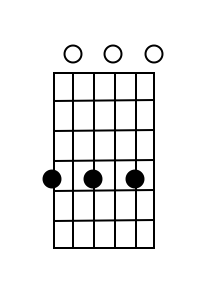
    I had no frickin’ idea that the Bad Body Building Contest would strike such a chord with readers. Granted, it’s not the prettiest of chords. I think it might be the one shown here.

    Seriously — in 24 hours, I received well over 100 creations. I am humbled. I am moved. I am nauseous.

    I’m posting a few “favorites” as a slideshow. This is only the tip of the iceberg. (“Iceberg” may not be the best metaphor, though. Perhaps if you envision a huge floating mass made of bacon grease, My Little Pony figurines, and moldy iceberg lettuce….) There are many, many amazing ones posted here.

    Luthier: AiXeLysD13

    Luthier: AiXeLysD13

    Luthier: Andrew Lund

    Luthier: Andrew Lund

    Luthier: Gavin

    Luthier: Gavin

    Luthier: Brian Sullivan

    Luthier: Brian Sullivan

    Luthier: Christopher Buyak

    Luthier: Christopher Buyak

    Luthier: Steve

    Luthier: Steve

    Luthier: Karen Campbell

    Luthier: Karen Campbell

    Luthier: wariomt

    Luthier: wariomt

    Luthier: Matt Fleming

    Luthier: Matt Fleming

    Luthier: Micah Houchin

    Luthier: Micah Houchin

    Luthier: Thee Mighty Mighty

    Luthier: Thee Mighty Mighty

    Luthier: Litos

    Luthier: Litos

    Luthier: AiXeLysD13 thumbnail
    Luthier: Andrew Lund thumbnail
    Luthier: Gavin thumbnail
    Luthier: Brian Sullivan thumbnail
    Luthier: Christopher Buyak thumbnail
    Luthier: Steve thumbnail
    Luthier: Karen Campbell thumbnail
    Luthier: wariomt thumbnail
    Luthier: Matt Fleming thumbnail
    Luthier: Micah Houchin thumbnail
    Luthier: Thee Mighty Mighty thumbnail
    Luthier: Litos thumbnail

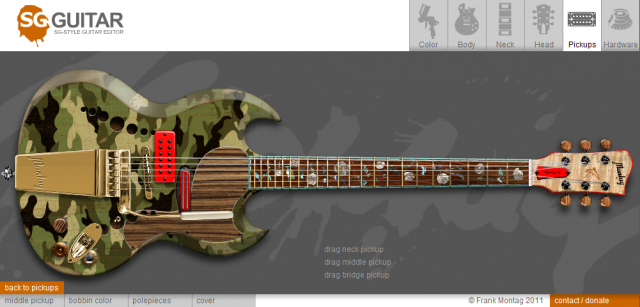
    It’s not too late to waste otherwise productive time making ugly pictures join the fun! Here’s a list of online guitar visualization tools:

    USA Custom Guitars
    Fender Guitar Builder
    Bailey Guitars
    Frank Montag
    Warmoth Body Builder

    The contest runs till Sunday at midnight, Pacific Coast Time (GMT-8). Winners get announced on Monday. Post your creations to comments.

  • Mini-Contest:Misadventures in Body Building

    Mini-Contest:
    Misadventures in Body Building

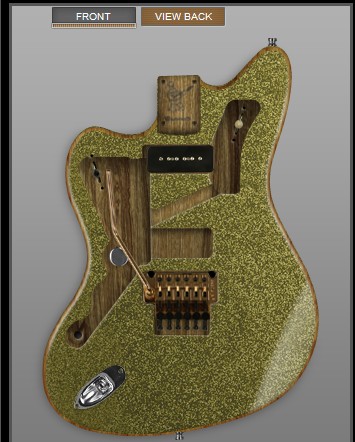
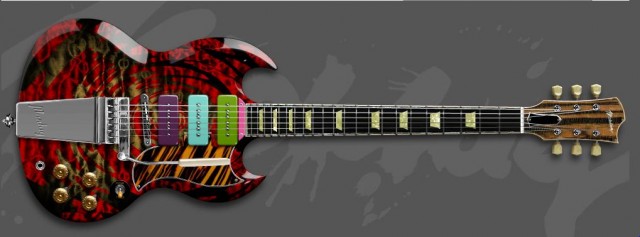
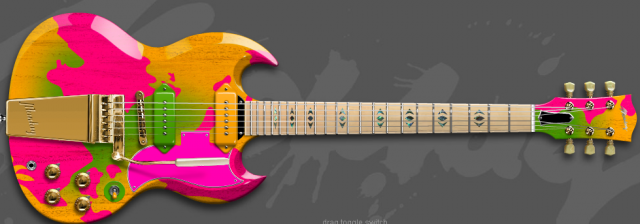
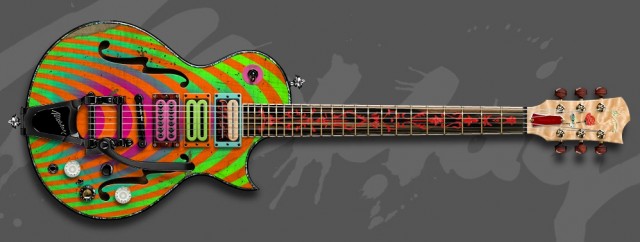
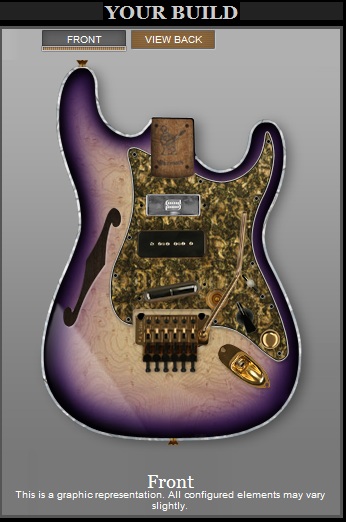
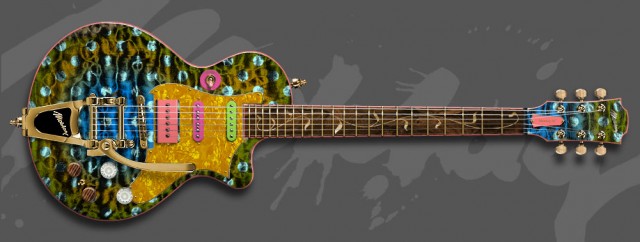
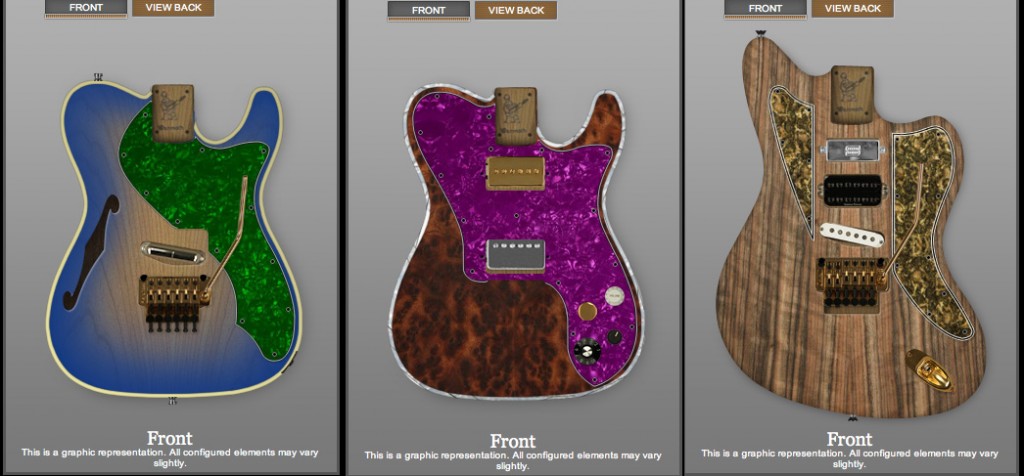
    Hey, has anyone checked out the super-cool “Body Builder” section over at Warmoth Custom Guitar Parts? It’s an incredibly fun interface that lets you select a guitar body and add all the appointments. Your dreams become reality before you very eyes.

    Which is all well and good — unless you have really bad dreams!

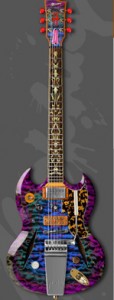
    How come nobody makes ’em like THIS?

    Which brings us to the latest Tonefiend contest. Mind you, it’s not much of a contest, but that’s cool — it’s not not much of a prize either.

    The “rules”:

    (more…)

  • New Audio Player: Loud & Cloud!

    New Audio Player: Loud & Cloud!

    Hi folks — I’m experimenting with a switch to the SoundCloud audio player. I’ve been eyeing it for a long time, but until now it’s been entirely Flash-based, which meant you couldn’t access SoundCloud clips from mobile devices. But they’ve just introduced HTML5 support, so I’m ready to make the plunge.

    The clip is an accompaniment to the post below about using unspotted Seth Lover pickups with the expanded Phase 2 version of the Jimmy Page wiring scheme.

    One of the coolest things about SoundCloud (beside the nifty waveform view) is the fact that it supports notes. Just click on the little icons beneath the waveform to read a description of which pickup settings are being heard at a particular point. Sweet.
    Work for you? Computer? Phone? Tablet? Any comments or questions? (Thanks in advance for for your unpaid beta testing!)


  • The Pagey Project: Postscript

    The Pagey Project: Postscript

    Does this guitar LOOK like it has over a hundred settings?

    Just a quick follow-up on the Pagey project, which first recreated the original Jimmy Page wiring scheme, and then explored an even  more extreme version using Seymour Duncan Triple Shot Mounting Rings.

    Once I’d finished the project, I had to decide whether to keep the guitar heavily modded, or revert to something simpler. It probably won’t surprise you to hear I decided to keep the extreme Phase 2 wiring, with its added germanium overdrive.

    But as cool as the Duncan ’59 model pickups sounded, I wanted to revisit the Duncan Seth Lover pickups I’d previously had in the guitar. They’re bright — twangy, even — compared to the ’59s, and I like the midrange honk they add by virtue of being unpotted. (I’ve written about the pros and cons of potting here.)

    I’ve recorded an example of how the guitar sounds with the Seth Lovers. (You can’t make exact comparisons with the previous Pagey videos, since I used an amp for those, while the new examples were recorded through an amp simulator, though the “Seth” character still shines through.) I’ve included the clip in the post after/above this one, because it’s my first audio example using SoundCloud, and I wanted to say a few words about that.

    "There's GOLD in that thar pickup!"

    And call me shallow, but…I really dig the way my guitar looks with the Seth Lovers installed. Between the teensy switches on the mounting rings and the push/pull pots, you really have to look hard to tell the guitar is not merely non-stock — it’s a morbidly overdeveloped tweak machine.

    Funny — I’ve always found gold hardware a little bit tacky. But now I’m so enthusiastic about the look of gold that I feel like this guy at the right.

  • A Loop-Oriented Laptop Guitar Rig

    A Loop-Oriented Laptop Guitar Rig

    I haz a band.

    My ol’ pals at Guitar Player magazine interviewed me for an instructional article on looping for next month’s issue. It was especially flattering to be invited, because the interviewer was Barry Cleveland, a fine guitarist and a leading figure in the looping community.

    I put together this little video to demo the digital rig I use onstage with my duo band, Mental 99, and I’ve cross-posted it here. It covers software, hardware loopers, looping techniques, and the like. Have a listen.

    (more…)