Categories
Amps

My Favorite New Amps: Carr Skylark & Lincoln

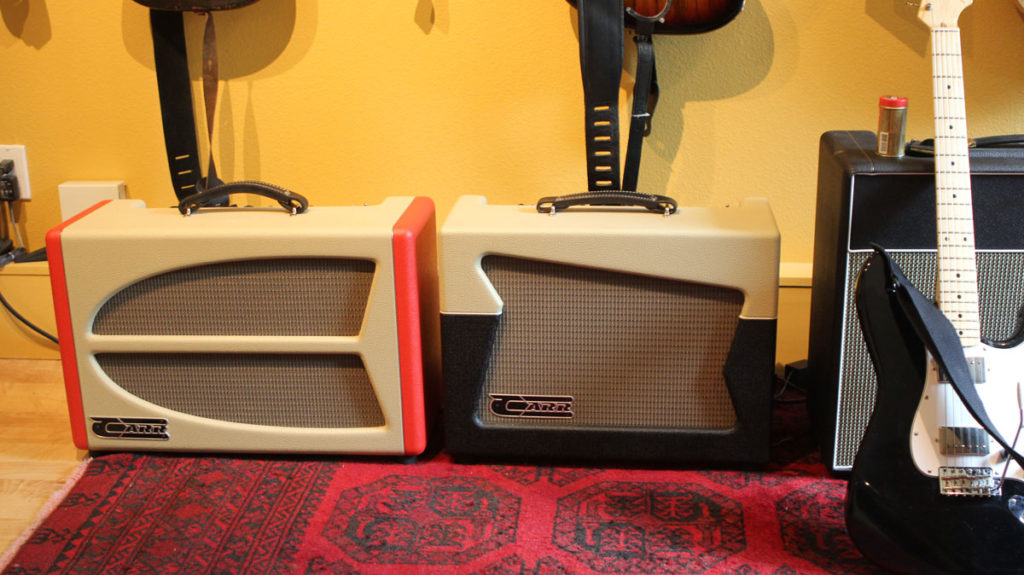
Carr Lincoln and Skylark amps.

I’ve been using my Carr Skylark amp incessantly for the last 18 months or so. I’d originally reviewed it for Premier Guitar magazine, and then I bought one for myself. I dig the fact that, while Skylark is inspired by 1960s Fender amps, builder Steve Carr made numerous departures from the Fullerton template. To my ear Skylark sounds better than my ’60s originals. That’s especially true of its re-voiced tone stack, where the ranges are smaller and subtler than on vintage Fenders, with more of a Matchless-style “no bad settings” sensibility.

For better or worse, history repeated itself earlier this year when I reviewed Carr’s Lincoln in PG. Lincoln is to Vox what Carr is to Fender — not a clone, but vintage-inspired model with its own character and unique twists. Its dual EL-84 architecture makes it a cousin of the AC-15. But I think of it more as a “fantasia on a theme by Vox.” It’s captures the Vox qualities I dig, minus the ones that can make dealing with vintage Voxes a major drag.
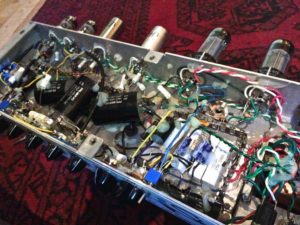
Carr-Skylark-Wiring-WEB
Skylark features true point-to-point wiring, with no circuit or turret board. (Lincoln, however, uses bits of circuit board for non-audio functions such as channel-switching.)

If you’ve listened to many of my videos and demo clips from the last year or so, you’ve heard these amps, so I figured I’d focus on them. For tech details, see the reviews. This video is more about how the amps inspire me musically.

From their flawless cabinetry to their ravishing tones, these amps are simply stunning. Cheap, they ain’t, but I felt like I was (RATIONALIZATION ALERT!) investing in musical art. Or maybe I’m making up for not buying a Trainwreck amp back in the ’90s when they were affordable.

I especially love how these Carr amps sound with my flatwound-strung guitars, and I used them on most of the demos for my pedals because they’re so very flattering. Ironically, I thought I’d given up buying new amps, because I was having so much fun building from kits. But trust me — both these instruments sound way better than any of my kit amps. Have a listen!

Categories
DIY Effects

Next Week on Fuzz Detective!

UPDATE: Based on cool info supplied by YOU, dear readers, I’m expanding the scope of this piece. I’m furiously wiring up clones of some very rare models, and I can promise many cool and interesting surprises. Thanks, guys! :beer:

Okay, now that we’ve all gotten that silly “reading” stuff out of our systems with Book Week, it’s time to get back to the real focus of this blog: nasty, filthy fuzz pedals.

Last time we were on the subject, we looked at the original version of Dallas-Arbiter Fuzz Face, and included Mitchell “super-freq” Hudson’s beautiful DIY instructions.

Those posts generated many interesting comments — plus some misinformation on my part. For example, I said that the original Fuzz Face circuit is a close cousin to the Tone Bender Mk I, which would mean, for example, that known Mk 1 user Mick Ronson was essentially using a Fuzz Face between his Les Paul and his Marshall. But subsequent listening and reading makes me believe I was wrong. So I figured it was time to play fuzz detective and sort the facts from the other stuff.

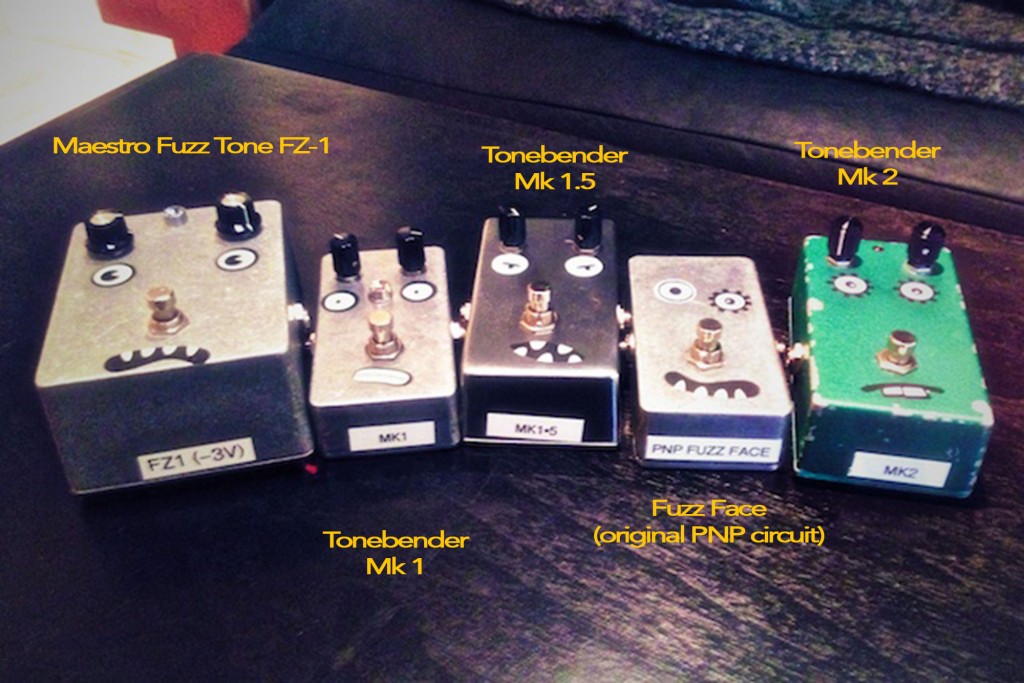
First, I made clones of all the early commercial fuzzes. I’ll be posting a compare-and-contrast video in the coming days. (The audio forensics will be quite incriminating.) Here’s the lineup:

The usual suspects. (Incriminating audio/video evidence to be posted soon!)

I’ve also re-read the experts, and man, even my most trusted sources contradict each other right and left, especially when it comes to those darn Tone Benders. While I have absolutely no inside dope on what actually transpired, I think David from D*A*M Stompboxes offers the most convincing Tone Bender chronology, which you can read here.

Anyway, here’s my best guess about how the early fuzz years unfolded:

Categories
Amps

The Class A vs. Class A/B Slugfest!

Which kick more ass? Class A or Class AB?

The recent experience making a DIY Class A Champ  reignites for me the eternal debate between the merits of Class A and Class A/B amps. (I link once more to Dave Hunter’s excellent short article on the topic, since he explains the distinction so much better than I can.)

Like most American players of a certain age, I grew up without access to great Class A amps. (I’m going to take the lazy way out here, and lump Voxes and their kin into the Class A category, despite the distinctions that Dave H. explains so well.) My initial exposure to various ’90s Vox reissues and other “Voxoids” of the era was enough to spark my interest. (And is “spark” the perfect verb for great Class A amps, or what?) But it wasn’t till I encountered Matchless amps and real vintage Voxes that I totally got it.

But still, I go back and forth constantly. And whenever I switch between categories, I think, “Ah! There’s what I was missing,” though I tend not to miss it when I’m playing an amp of the opposite type. So at least I’m usually happy.

Overall I’ve probably favored Vox-type amps over Fender- and Marshall-flavored ones, though I’m the sort of player who’s rarely interested in macho rock and metal distortion. (If that weren’t so, I’d be an A/B purist!) But having said that, my fave amp these days is the decidedly A/B brownface Tremolux I use in the lion’s share of my videos. So put me down as perennially undecided.

How about you? Do you pledge your allegiance to the explosive harmonic energy of Class A or the focused impact of Class A/B? And has anyone explored switchable schemes, as found on some Mesas and modded Marshalls?