I almost always play small combo amps of 20 watts or less. But I wanted something with a bit more clean headroom for a possible upcoming project — and to demo my stompboxes. I’ve always enjoyed playing JTM-45s when I’ve reviewed them for guitar mags, so I ordered Monotone’s British 45 kit.
I’d previously had a great experience building Mojotone’s Marshall 18 watt clone kit when I reviewed it for Premier Guitar a couple of years ago. It turned out great, and I use it regularly.
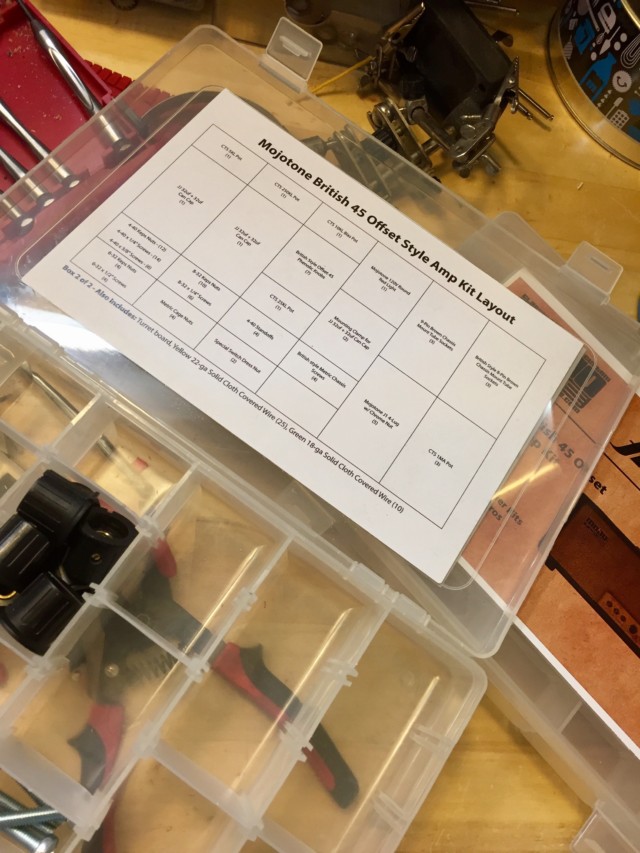
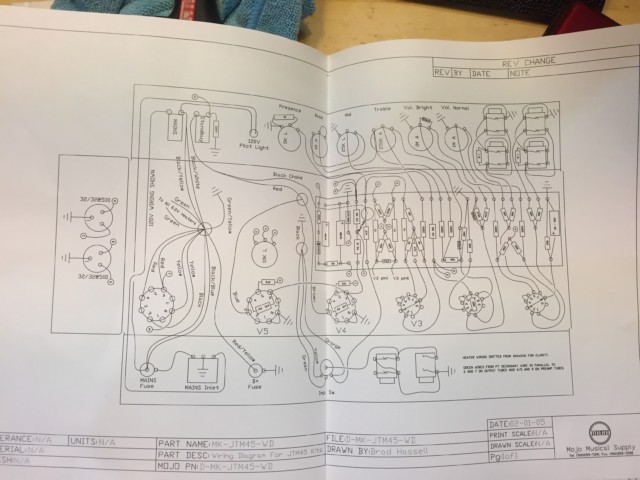
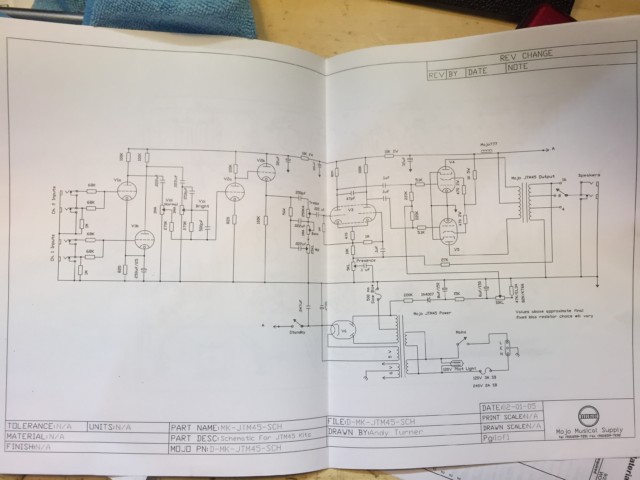
Mojotone provides high quality parts, nearly labelled and organized in plastic compartmented boxes. But beware: The company provides no build instructions — just a layout diagram and a schematic. You need amp building experience or help from an expert. Click play for a slideshow about he build:
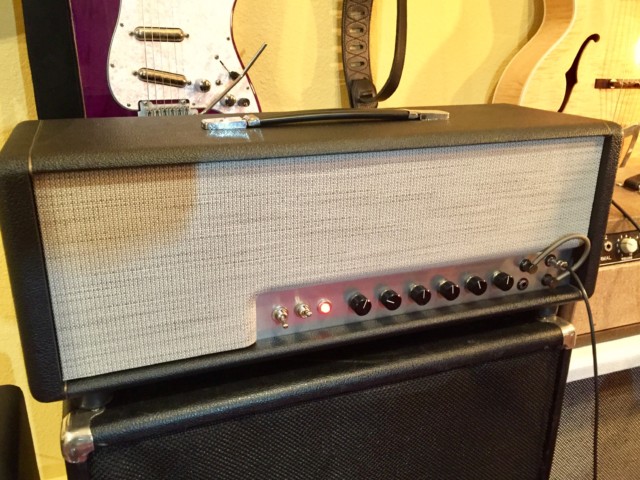
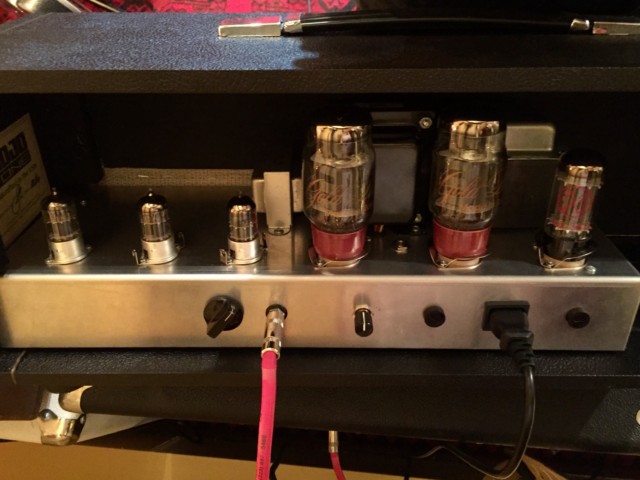
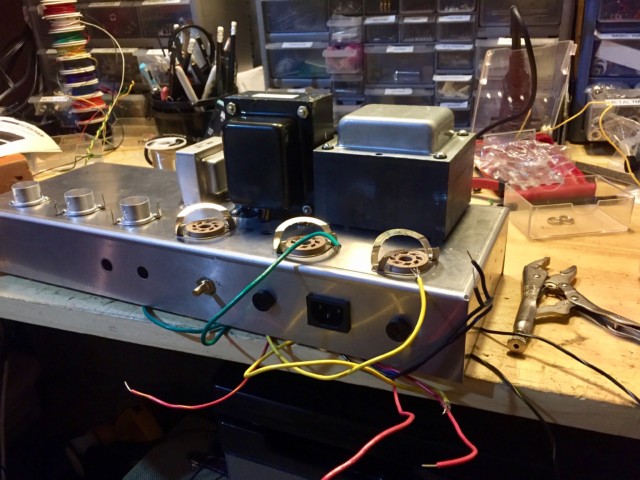
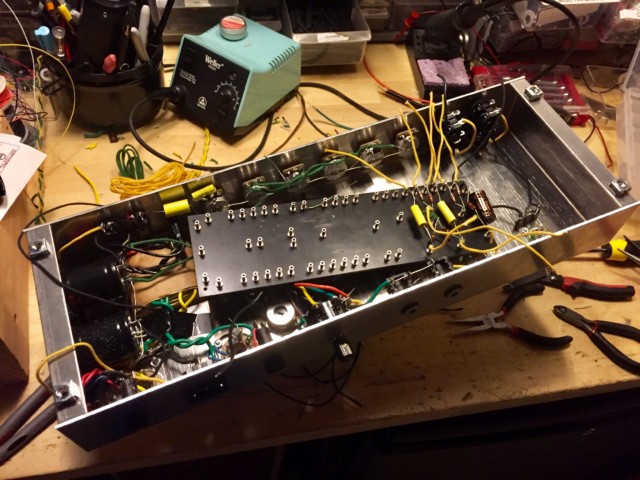
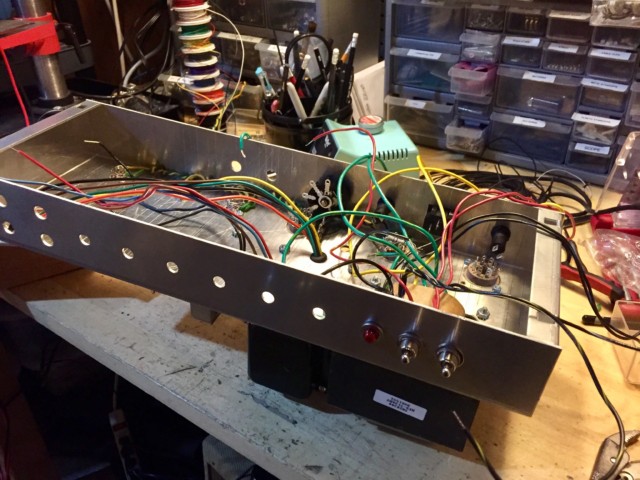
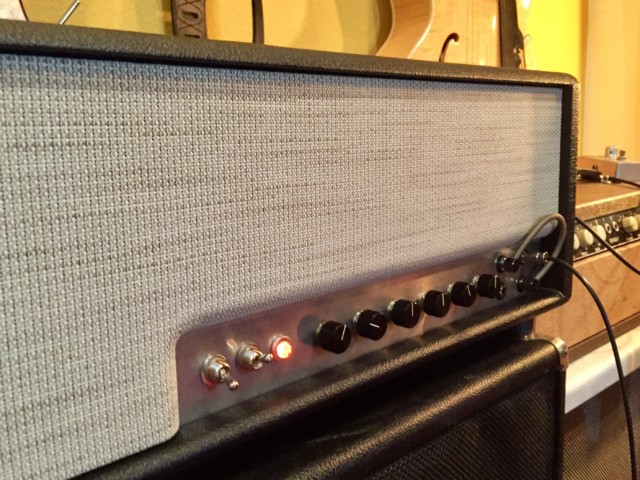


I nearly made it through myself. (Translation: I soldered everything together and it didn’t work.) So I had to hire Bruce Clement of BC Audio here in San Francisco to rescue me. (Bonus: Bruce loaned me one of his JTX50 heads. Man, it’s one of the best-sounding Marshall derivatives I’ve ever heard. It’s among his Octal-Plex series amps, which use octal preamp tubes in Marshall-inspired designs.)
While Bruce was sorting out my bonehead mistakes, I asked him to add a post-phase investor master volume (which sounds great, and provides convincing crunch at relatively low volumes). He also swapped a cap to make the bright channel even brighter, which is useful for mixing the bright and normal sound when the channels are jumpered. In fact, I tend to adjust tone that way, rather than via the tone stack. (If I did this build again, I’d link the two channels internally, as Bruce did on his JTX50.)
The JTM-45 is a very close cousin of the Fender tweed Bassman — the schematics are nearly identical. (I always figured that Marshall swiping Fender’s design was Leo’s karma for swiping the Bigsby headstock profile.) But even though the circuit is plagiarized, the use of British tubes, speakers, and enclosures lends a unique sound. The amp (or at least its combo version) is inevitably associated with Blues Breakers-era Clapton, so naturally I have zero desire to use it that way. While the amp provides gorgeous power-amp distortion, I’m tending to use it at cleanish settings, where it provides a nice showcase for my gnarly distortion pedals. It’s a loud contraption with tons of headroom, at least compared to my usual modest combos.
This was a great build experience, despite my tech shortcomings. The amp’s tone can stand up to any number of handmade JTM-45 derivatives costing twice as much. But I definitely don’t recommend it as a first DIY amp project. Better to start with Tube Depot’s cool little tweed Champ kit, a relatively simple circuit board build with superb assembly instructions by Rob Hull. (You can hear it here.)
Thanks to Logan Tabor and Andrew Simmons of Mojotone — and to Bruce Clement of BC Audio for rescuing my sorry workbench ass.


Leave a Reply