“Germanium” is a magical word among guitar gearheads, right up there with “pre-CBS,” “true bypass,” “matched tubes,” “point-to-point wiring,” and “scatter-wound.” And like those other phrases, it owes its cachet to a mix of fact and fancy.
Germanium was used extensively in electronic component production the 1950s and ’60s, but was abandoned in favor of silicon components, which boasted superior performance, consistency, and value. Today no one cares about rare and finicky germanium components except certain audio geeks — especially the ones who play guitars.
In the stompbox realm, you’re liable to encounter two types of germanium components: germanium diodes, which lend distortion pedals a softer, smoother tone relative to silicon diodes or LEDs, and germanium transistors, which are typically used in clones of ’60s drive and fuzz pedals. Germanium components are usually available only from specialized distributors, who inevitably sell them for many times the cost of their silicon equivalents.
Compared to silicon transistors, germaniums are . . . different.
Ordinarily, I’m a debunker of magical “mojo” parts. Whenever a boutique pedal merchant hypes their product on the basis of some rare/antique part, my B.S. detector starts humming.
When they say, “You need to use ’70s op amps to get a good overdrive tone,” I reply:
“Bull!” 
When they say, “My pedals sound fatter because I use only [tropical fish/oil-and-paper/Mesopotamian ceramic] capacitors, I cry:
“Double bull!”
When they say, “My pedal sounds warmer because I use carbon resistors.” I shriek:
“Triple crown of bull!” (P.S.: You are insane.)
But when someone says, “You can’t get the ’60s sound without old germanium transistors,” I mumble:
“Um, yeah.”
It’s difficult to describe the unique qualities of germanium transistors, though the words “smoother and spongier” seem relevant. They also have a distinctive harmonic profile. Their overtones shimmer sweetly. Feedback is rich and musical. They are unbelievably dynamic, yielding excellent and endlessly varied tones throughout the range of the guitar’s volume knob. Mmm.
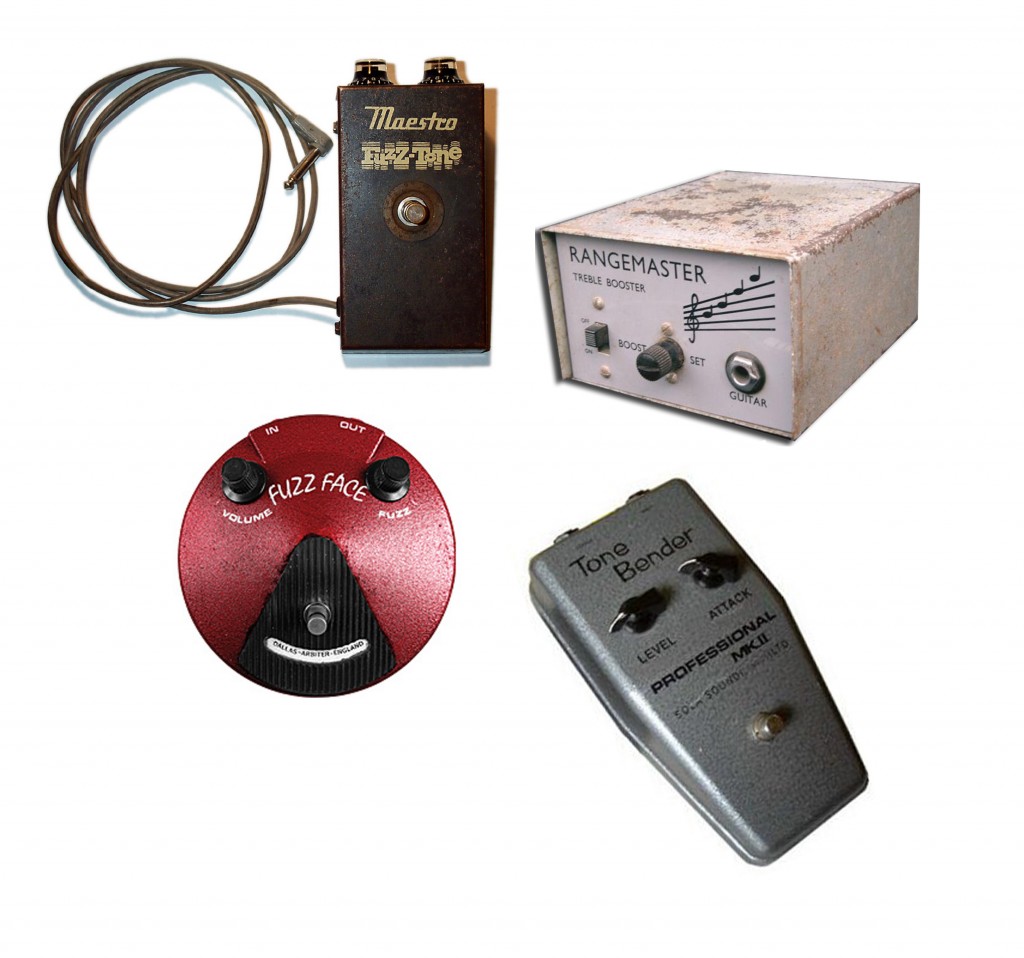
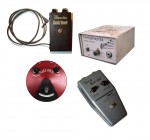
Not all vintage fuzz pedals use germanium: Mosrite Fuzzrites, Jordan Bosstones, Foxx Tone Machines, and Electro-Harmonix Big Muffs are just a few examples of great vintage fuzzes that used silicon transistors. But the Maestro Fuzz-Tone, the Dallas Rangemaster, the original Tonebenders, and early Fuzz Faces all used germanium.
There are many good reasons why manufacturers ditched germanium. There’s much variation in quality from transistor to transistor. They’re noisy. Their tone changes with the air temperature. And the vast majority of surviving germanium transistors are of the PNP variety, which means they’re engineered for positive-ground circuits, which were common in the ’60s, but nearly non-existent today. You can’t use a pedal with PNP transistors with a conventional negative-ground power supply unless you jigger with the schematic (which is exactly what we do in the Tonefiend DIY Club project based on the Rangemaster).
(You can find NPN, i.e., negative-ground, germanium transistors, but they’re rarer and more expensive, and don’t sound any better than the PNP ones. If a) you dig the germanium sound, and b) might want to build more germanium-powered pedals in the future, I recommend getting into the PNP habit. Some online authorities claim it’s a bad idea to deploy PNP transistors in negative-ground circuits because they weren’t engineered to be used that way. I’ll spare you the sight of more “poop” icons, but suffice it to say that I’ve built many, many stompboxes of this type, and have never encountered problems. If you don’t trust me on this, maybe you can trust stompbox A-lister Robert Keeley, who uses PNP germanium transistors in a negative-ground circuit for his Java Boost pedal, one of the best Rangemaster-inspired overdrives.)
A few more highly subjective observations:
- • It’s almost always a bad idea to substitute a silicon transistor for a germanium in a schematic. You can often jigger the circuit to sound good with silicon, but silicon will almost certainly sound awful unless you adjust other values. In fact, much of the bad rep of silicon fuzzes has to do with several decades of lousy-sounding Fuzz Faces that committed precisely this sin.
• One of the best things about the Rangemaster (and our Fiendmaster project) is that it requires only one germanium transistor to sound awesome. Two-transistor Fuzz Faces and three-transistor Tone Benders are trickier, because you not only need to round up more fussy parts, but voice them to play well with each other. However, there are a number of updated schematics that attain a vintage germanium sound with a single germanium transistor alongside one or two silicon ones. Sometimes these sound even better than the all-germanium originals.
• Every germanium transistor sounds a little bit different — or a lot different. And yes, there is a depressingly high percentage of crappy ones. But if you buy from reputable dealers, they’ll generally replace a dud. Some dealers even pre-test every single transistor.
• One the other hand, different models of germanium transistor may not sound as different as you might suppose. In my experience, almost any properly functioning germanium transistor can sound great in a distortion pedal. To cite one particular example: a certain British manufacturer sells Fuzz Face clones for the equivalent of US$600, based on his use of two rare old germanium transistors. I had an opportunity to listen to one of these side-by-side with a pedal made from BYOC’s $95 ESV Fuzz Kit, with its relatively common AC127s. The pedals sounded frickin’ identical. I mean, really, really identical. The point is, you can make great pedals using the (relatively) readily available germanium transistor supply. If anyone tells you need $200 transistors for best results, well, I’m going to have to start wielding that icon again!


Leave a Reply