

WARNING: THIS POST CONTAINS HOLIDAY MATERIAL. THOSE WITH SEASONAL MUSIC ALLERGIES SHOULD CONSULT THEIR THERAPISTS BEFORE PROCEEDING.
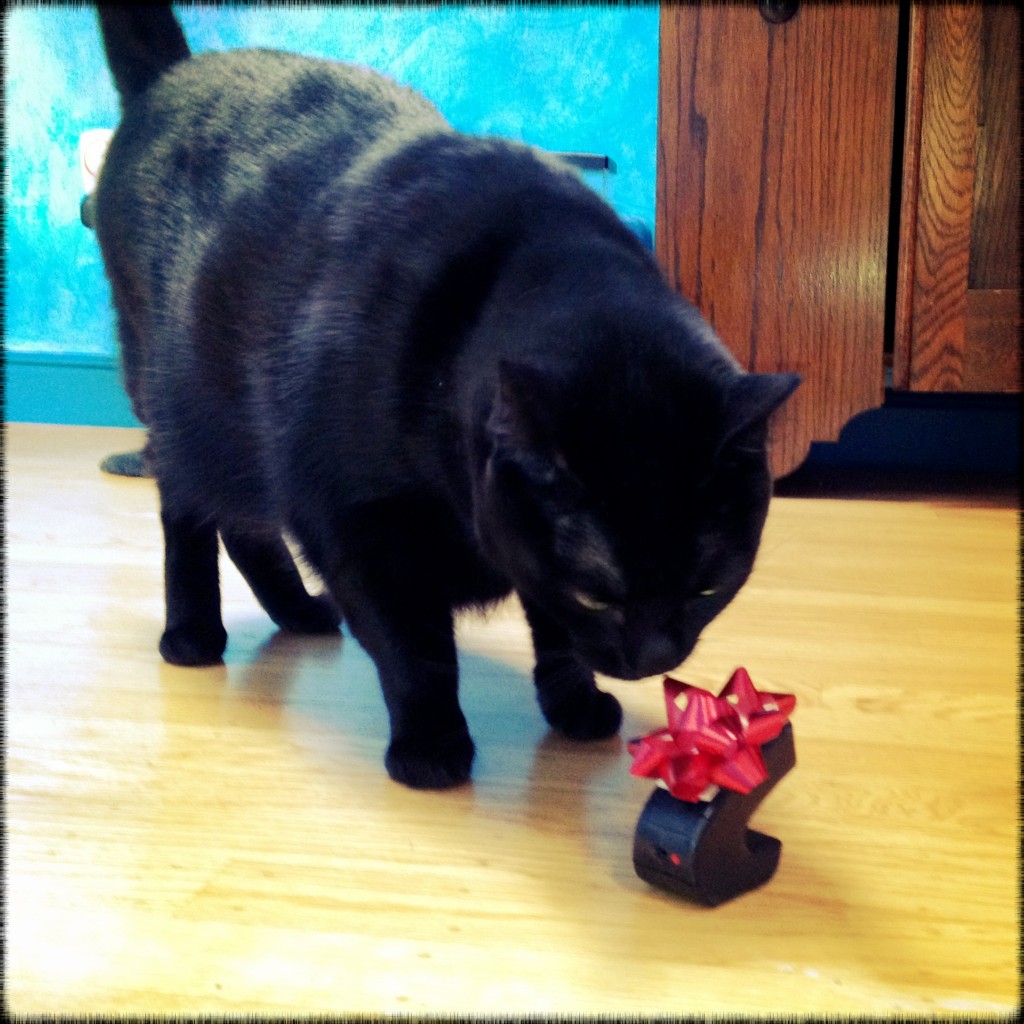
Nothing says “Christmas morning” like an ugly piece of molded plastic with a battery inside! But unlike so many cheap plastic toys, the EBow is a treasure that can delight you for decades.
While racking my brain for a holiday post without too much bad attitude, it occurred to me that “Silent Night” makes a perfect little EBow exercise. If you play it in G, starting on the the 7th fret of the third string, the melody spans almost the entire range of the string. And it includes lots of those melodic leaps that are so tough to play smoothly on EBow. In other words, this simple, familiar tune is a serious workout!
Have a listen to the version I recorded, featuring my Lowden acoustic guitar and a Hamer 20th Anniversary with Seymour Duncan Antiquity PAFs:
Silent Night for acoustic guitar and EBowNow, if you’re not an EBowmaniac, it probably doesn’t sound terribly impressive. The reason it’s challenging is because it’s voiced on one string. It’s easiest to perform if you use a single finger, simply sliding it from note to note. In other words, something like this:
Harsh EBow tone with noisy slidesThat’s not necessarily a bad sound. But for the ambitious EBowist, moving beyond that “slide every note” approach is one of the first technical hurdles. It’s not the only one: beginning and ending ending notes cleanly and voicing melodies across multiple strings are also challenging. But those are topics for another holiday — the lesson here is playing the melody as legato (that is, smooth and connected) as possible, without audible slides between notes.
Some tips:
- Always visualize of the next note you’ll note need to play, and be ready to shift your fretting-hand fast at the last possible instant. Even though the “Silent Night” melody is as slow as congealed eggnog, it’s a real speed exercise!
- Having a loose, stretchy fretting hand also helps. As an example, take the tune’s first four notes: The most intuitive fingering might be to play the first note at the 7th fret with your index finger, the next note at the 9th fret with your ring finger, back to the first note with the index finger, and then quickly sliding that finger down to the 4th fret for the fourth note. But that fingering makes it hard to play the third and fourth notes smoothly without sliding. Try this instead: Play the first note with your ring finger, stretch up with your pinky for the second note, return to the first note, and then while sustaining it, inch your index finger back toward the fourth fret. You may not be able to actually touch the fret in advance of sounding the note, but you can get close. (Take heart! After you’ve EBowed for a while, awkward fingerings like this start to feel more intuitive.)
- EBow is almost always played using only the neck pickup. Most often, the EBow is positioned a bit toward the bridge side of the pickup, rather than directly over it.
- The naked EBow tone, as heard in my second example, can be pretty harsh. It’s often a good idea to turn down your neck tone pot. In the first example, I’ve lowered the pot all all the way. That’s how you get that flute/clarinet-type timbre.
- Adding a touch of delay and/or reverb can make your melodies sound a little more legato than they actually are.
Give it a go! And no swearing — it’s almost Christmas!


Leave a Reply