Stay One Step Ahead with the Best Payment Methods for Online Casino Bonuses
When it comes to online gambling, finding the best MuchBetter casino sites can make all the difference in your gaming experience. MuchBetter is an innovative payment solution that allows players to make fast and secure transactions. With its seamless integration and user-friendly interface, this e-wallet has gained popularity among online casino enthusiasts. Whether you are a seasoned player or new to online gambling, choosing a MuchBetter casino can provide you with a convenient and enjoyable gaming experience.
One of the top MuchBetter casino sites is https://csiss.org/deposit-methods/muchbetter/. This online casino has embraced MuchBetter as a preferred payment method, ensuring that players can easily deposit and withdraw funds. CSISS offers a wide selection of casino games, including slots, table games, and live dealer options. With its user-friendly website and mobile app, players can enjoy their favorite casino games on the go. The casino also boasts a generous welcome bonus and regular promotions, ensuring that players have ample opportunities to boost their bankroll.
Another excellent MuchBetter casino option is csiss. Known for its extensive game selection, this online casino caters to players of all preferences. From classic slots to progressive jackpots and live casino games, there is something for everyone at CSISS. The site also features a sleek and modern design that allows for easy navigation, making it a pleasure to explore the wide range of games. With its integration of MuchBetter as a payment option, players can enjoy swift and secure transactions, ensuring that their gaming experience is hassle-free.
In conclusion, selecting the best MuchBetter casino sites can greatly enhance your online gambling experience. Not only does MuchBetter provide a convenient and secure payment solution, but it also allows for seamless integration with top online casinos like csiss.org. With its extensive game selection, user-friendly interface, and generous promotions, [CSISS] is an excellent choice for players looking for a top-notch gaming experience. So, why not give MuchBetter a try and enjoy the benefits it brings to your casino gaming?
When it comes to online gambling in Austria, one of the most important factors to consider is the withdrawal process. Players want to ensure that they can access their winnings quickly and conveniently. That`s why the best online casino instant withdrawal in Austria is in high demand among avid gamblers. One platform that stands out in this regard is https://online-casino-osterreich.org/sofort/. With its seamless and efficient withdrawal system, players can enjoy their winnings instantly.
One of the key reasons why this online casino is considered the best for instant withdrawals is its partnership with reputable payment providers. They offer a wide range of options, including popular e-wallets such as Skrill and Neteller, as well as traditional bank transfers. This means that players can choose the method that suits them best and receive their funds without any unnecessary delays. Additionally, the casino`s user-friendly interface and intuitive navigation contribute to a smooth withdrawal process.
Moreover, this platform also prioritizes security and fairness. It holds a valid gambling license, ensuring that players` transactions and personal information are protected. Furthermore, it provides a wide selection of high-quality games from renowned software providers, guaranteeing a fair gaming experience. Whether you prefer slots, table games, or live dealer options, this online casino has something to cater to every player`s taste.
In conclusion, if you`re looking for the best online casino with instant withdrawal options in Austria, online-casino-osterreichis the ideal choice. Its partnership with reputable payment providers, commitment to security and fairness, and extensive game selection make it a top-notch platform for any passionate gambler. Experience a seamless and convenient withdrawal process today by visiting their website.
When it comes to online casinos, one of the most important aspects for players is the availability of secure and convenient payment methods. This is where ecoPayz casinos online truly shine. As one of the best providers in the industry, ecoPayz ensures that players can enjoy a seamless and hassle-free gaming experience while keeping their financial information safe. With its user-friendly interface and widespread acceptance, ecoPayz is a preferred choice among online casino enthusiasts.
One of the top ecoPayz casinos online is https://online-casino-schweiz.org/ecopayz/. This casino not only offers a wide range of exciting games and lucrative bonuses but also provides the option to use ecoPayz for deposits and withdrawals. With just a few clicks, players can easily transfer funds, ensuring a smooth and efficient gaming experience. Additionally, this casino prioritizes customer security, utilizing advanced encryption technology to protect sensitive financial details.
Another reputable ecoPayz casino is [Your Anchor Text]. With its sleek and modern design, this casino attracts players from all over the world. Thanks to its collaboration with ecoPayz, players can enjoy quick deposits and withdrawals without any additional fees. Moreover, the casino offers a generous welcome bonus and ongoing promotions to enhance the overall gaming experience. With its extensive collection of games and seamless integration with ecoPayz, this casino is a top choice for online gamblers.
In conclusion, ecoPayz casinos online are excellent options for players looking for a secure and convenient payment method. With widespread acceptance and a commitment to user safety, ecoPayz ensures that players can enjoy their favorite casino games without any worries. By choosing top ecoPayz casinos like [Your Anchor Text], players can enjoy a seamless gaming experience while benefiting from quick and hassle-free financial transactions.
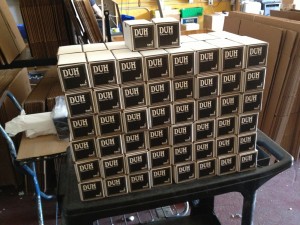
Wow — I can’t believe my eyes! After years of planning, scheming, and screwing around, my very first batch of production fuzz pedals has arrived at my distributor, ready for sale. Will they gather dust or sell like hotcakes? That depends on you, dear reader!
You can read about the Duh Remedial Fuzz, hear a demo, and place orders from the product page at Vintage King. (For now, Vintage King is my sole distributor.) If you’ve been following my videos, you’ve heard Duh already — I’ve got the circuit mounted inside some of my favorite guitars, including the Hello Kitty! and lipstick-tube Strats.
Excuse me for quoting again from the great review I got in Guitar Player — I’m just a proud pedal papa! Have a cigar.
“Remarkable … responsive dynamics and simultaneously fierce and expressive tone. This is a pedal that doesn’t give up even one less-than-spectacular sound. It reminds me of ’60s records where the fuzz sound jumped right out of the grooves and changed my world.” [Editor’s Pick Award recipient.] — Guitar Player magazine, 2014
I had a blast building and testing two Marshall 18-watt kits for a Premier Guitar story — and I emerged with new respect for this cool 1965 design.
These mini-Marshalls were neglected in their day, but are now treasured. The oft-heard claim that they provide plexi tones at reasonable volumes is only partially true — these are open-backed combos powered by a Vox-like pair of EL-84s tubes. But while they have roughy the same horsepower as the era’s Fender Deluxe and Vox AC15, their tone is undeniably ’60s Marshall. In the studio, they sound far larger than their actual size. And out of the studio, they’re still pretty darn loud.
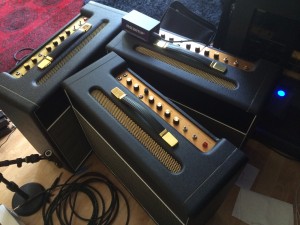 I’ve never seen three 18-watts in the same place before. Even though the Mojotone and Tube Depot kits I built share the same schematic (and identical cabinets, both made by Mojotone), the build experiences and final results differed greatly.
And just when I thought I’d scaled the Everest of 18-watt ecstasy, I get a real Marshall 18-watt reissue for an upcoming Premier Guitar review. Stay tuned.
Are any of you guys 18-watt fans? Any observations to share?
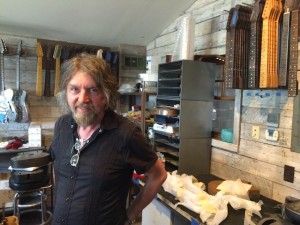
While in LA last weekend, I got to hang out with the guy who built my favorite modern guitar: the brilliant James Trussart.
I’ve been privileged to know many great luthiers over the years, but the thing that always impresses me about James is the way his instruments seem to be just one expression of a larger artistic sensibility. James grew up on a farm in rural France, but came to the States in the ’70s to play Cajun fiddle. He seems to have always been fascinated by vanishing Americana, be it an endangered folk music style, a faded and rotting road sign, or an ancient car rusting in a field. With their richly textured surfaces and variegated patinas, his metal-bodied guitars exude that same aesthetic. I’ve never known brand-new instruments to impart such a strong sense of the past.
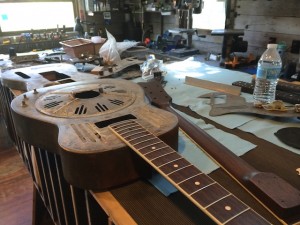 A Trussart resophonic under construction. James lives in a rambling old Arts and Crafts bungalow in LA’s Echo Park neighborhood, a place where every room possesses a rich texture of passing time. He’s surrounded by cool instruments — both his own and many lovely vintage guitars — and much beautiful metal work: doors, gates, plaques, and whatnot, all crafted by James. A detached building in back houses the workshop where James and his assistants build several hundred instruments per year.
One of James’s Steelcasters has been my favorite modern guitar for over a decade. (Here is a nice example of the guitar in action with Tracy Chapman, and here’s another example with the Eels.) Later I got in the habit of tuning the entire thing down a whole-step, with the lowest string dropped to C. I recorded the entire Mental 99 album in a day using this inspiring instrument. Thanks, James.
A highlight of this visit was James’s demo of his Percuphone — an electro-mechanical stringed instrument created in the ’70s by his friend Patrice Moullet. (Here’s a French-language Wikipedia article about the instrument, and here’s a YouTube video of a more recent model.) Check it out:
I always feel inspired after hanging out with James. And not just guitar inspiration, but an overarching desire to make, do, and surround myself with inspiring things. Merci beaucoup, mon ami. :beer:
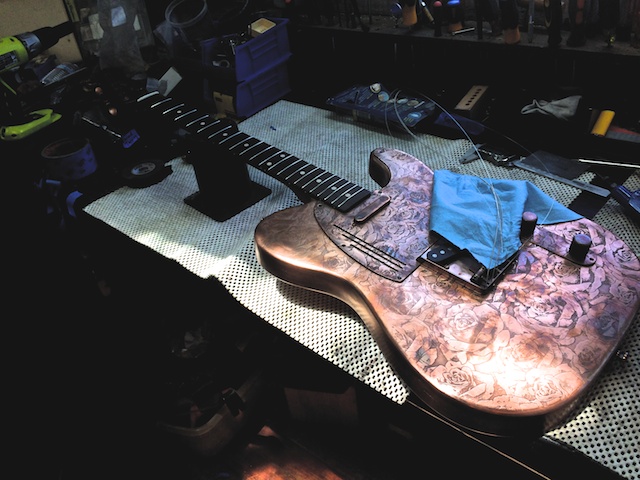
I had a lot of fun putting together an article for Premier Guitar on using non-tube distortion. It features a smorgasbord of digital tones guaranteed to horrify tube purists. (It’s certainly horrifying a few commentators on PG‘s Facebook page.)
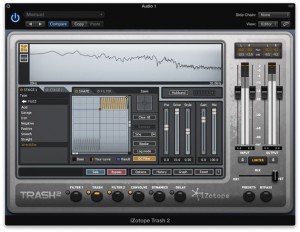 iZotope’s Trash 2 — like version 1, only trashier! It was also a chance for me to explore iZotope’s Trash 2, on the recombination of my ol’ pal Jeff Cross, who is one of the most super-genius of the super-genius audio guys I’ve worked with at Apple. I was a fan of the first version of Trash, though I didn’t have the opportunity to use it a lot. This generation is even cooler, and seems to focus less energy on conventional amp modeling than on being a wild and open-ended distortion-designing tool. I’ll definitely be spending some more time with this! I also enjoyed playing with FXpansion’s Maul, which covers much similar territory.
Have any of you guys played with some of these digital distortion-designer tools? Any observations?
I just watched an amazing documentary on Netflix: The Source Family, the story the early-’70s cult led by James “Father Yod” Baker. Baker’s Sunset Strip restaurant, the Source, was a fixture of my LA youth — a popular hang for both hippies and music-industry types. (You’ve probably seen it as the backdrop for the breakup scene in Woody Allen’s Annie Hall.)
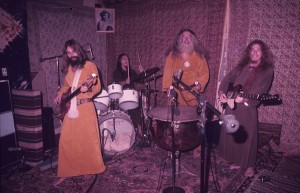 The hell with cowbell! We need more tympani!
James “Father Yod” Baker (with mallets towards none) fronting Ya Ho Wa 13. One of Baker’s less eccentric notions was to blow a fortune on music gear and a pro studio, where his self-styled “band,” Ya Ho Wa 13, reportedly recorded 65 albums’ worth of improvised music, much of which has been reissued in recent years. Prolific, chaotic, and fueled by a philosophy comprehensible only to its creator, the body of work is a bit reminiscent of Sun Ra’s, minus the talent.
Perhaps the best thing you can say about Baker is that he was no Manson. I don’t know that anyone died on his watch other than Baker himself (in an idiotic stunt I’ll refrain from sharing so as not to spoil the film’s stupefying denouement, though you can devour the details here if you like).
But he was a serial psycho-sexual abuser who acquired 14 very young wives while liberating hundreds of starry-eyed acolytes from their worldly possessions and cruising LA in a white Rolls Royce. Among the film’s most remarkable scenes are Ya Ho Wa 13’s recruiting concerts held at well-to-do West Side high schools and colleges, including my alma mater. Just … wow.
(Buttloads more audio/video here.)
To its credit, though, the film isn’t moralistic in the slightest — directors Maria Demopoulos and Jodi Wille tell the story via the words of its witnesses, supplemented by film and photos of the cult’s own Isis Aquarian, Baker’s anointed archivist. (They report — you gawp in astonishment.) Many surviving members appear onscreen, as do such rock admirers as Billy Corgan and Don Bolles of the Germs.
The film is a companion to Isis Aquarian’s 2007 book (co-written with fellow Source family member Electricity Aquarian), The Source: The Untold Story of Father Yod, Ya Ho Wa 13, and the Source Family. The book includes a CD of Ya Ho Wa 13’s music. I haven’t read it — but will now!
 Fictional mugshots of our fictional band’s fictional 1969 arrest, along with their fictional cult leader. I knew the general outlines of the Source story, but not the hundreds of bizarre details that make it so compelling. Elise Malmberg and I drew from it a decade ago while creating Clubbo Records, our “music fiction” project. We concocted the Fold, a fictional hippie cult band, using bits pilfered from various spiritual scams of the era, including the Source and the equally fascinating Process Church. (A fictionalized Process Church also figures in Last Days, a darn good horror novel by Adam Nevill, though not quite as awesome as Nevill’s The Ritual, with its Scandinavian black metal underpinnings. It’s as scary/funny as actual black metal.)
Naturally, our fake story isn’t one-tenth as interesting as the shit that actually happened. But it did produce “Into the Fold,” one of our best bits of counterfeit music, featuring the brilliant Chuck Prophet singing the Morrison-esque role of Gary “Shep” Shepheard, who fronted the Fold’s rock band under the direction of cult leader Maestro Ludgang. (Elise wrote the song, and I played the music, except the drums, which are by Patrick Campbell. Other friends served as photo models.)
Meanwhile, I’ve been working on a new piece that has some sounds and phrases I like, but has steadfastly refused to take shape. I tried recording it the other night, but every soloistic element I added sounded stupid. When live-looping, I’m so self-conscious about excessive repetition that I use every trick I can muster to vary the sound and move things along. This time, though — under the spiritual influence of The Source Family, perhaps? — I just let the loops roll, visualized my ego dissolving into a pool of pearlescent light, and dug on the trance. Man.
It’s called “Unfolded,” after the Fold, of course.
But please, folks — if I start calling myself Maestro Ludgang Aquarian, do me a favor and stage an intervention.
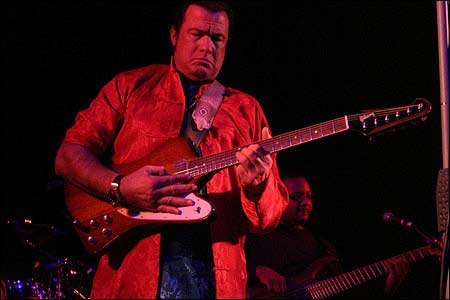 Actor Steven Seagal, who belongs to the homophobic (yet oddly homoerotic) Vladamir Putin cult, plays a reverse Firebird like the one that Ya Ho Wa 13 used. Coincidence? UPDATE [06.16.14]: Okay, this is too great: I just shared this post with my pal/fellow Premier Guitar editor Charlie Saufely, who told me he played for a Ya Ho Wa 13 tribute band that performed in front of original band members when this film premiered at San Francisco’s Roxy Theater. Afterwards he got to jam with Djin, the guitarist. “It was a thrill,” Charlie says. “He was way more into skronking than blues jamming. We kinda went off on a Thurston-and-Lee, hail of sonic scree barrage. He had the Firebird … it was surreal. He reached over at one point and started scraping my strings with his fingernails. That was pretty sweet!”
At long last, I reveal my blog’s sleazy ulterior motive: hoodwinking you into buying my crap! Bwa-ha-ha.
I exaggerate. But after several years of scheming, I’ve figured out a way to bring my stompbox designs to market that will permit me to keep doing stuff I love, like writing geeky stuff for my blog and music magazines, recording and gigging, and continuing to create new gizmos.
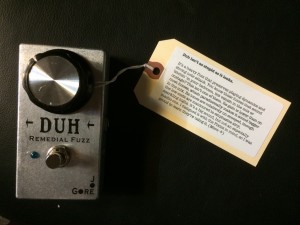 Can you help me figure out this super-complicated pedal? Here’s the deal: I’ve partnered with Vintage King, a leading purveyor of high-end audio gear, to sell my stompbox designs through their online store and their retail shops in LA and Nashville. (They also ship overseas.) They’re being manufactured to my specs by Cusack Music in Michigan. (In addition to their own highly regarded pedal line, Cusack builds for many other boutique brands, often anonymously.) I’m working with a brilliant young engineer named Tony Lott, who not only goes the extra mile to accommodate my weird requests, but routinely offers suggestions that improve my designs.
Here a little promo video for our first release, Duh Remedial Fuzz:
Look and sound familiar? Yeah, I’ve been using the circuit in recordings and demo videos for a couple of years now, either in stompbox form, or built right into guitars. The final, official version of Duh is on the cover of this month’s Guitar Player magazine, and GP’s Mike Molenda wrote a real sweetheart of a review:
Joe Gore treated me to a very early prototype of the Duh a few years ago, and its brilliant design—one knob (for “louder”), whimsical name, responsive dynamics (with both performance gestures and guitar-volume manipulations), and simultaneously fierce and expressive tone—ensured that the battered test version never left my pedalboard. The new, tough and ready for prime time, U.S.-made Duh is similarly remarkable. The additional R&D time has really paid off, as this is a pedal that doesn’t give up one less-than-spectacular sound. It reminds me of ’60s records where the fuzz sounds jumped right out of the grooves and changed my world forever.
Shucks, Mike! Guitar Player even bestowed their coveted Editors Pick award. Equally shucks-inducing is the fact that the Pixies have been using Duh since last year. Be still, my punk-pop heart.
What does it mean for this blog? Probably not much, beyond an occasional new product plug like this one.
I put together a little FAQ about my stompboxes. It’s here if you’re curious. You can order pedals from my Vintage King page. More releases are coming very soon, including improved versions of my Cult, Screech, Boring, Purr, Gross, Filth, Storybook, and Drive Without a Face pedals.
Till then, feel free to curse my sudden but inevitable betrayal. :satansmoking:
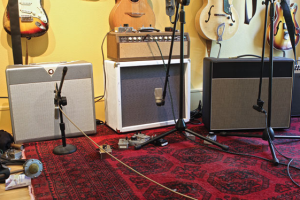 This photo was originally a line of 137 amps, but I had to crop it to fit this small space. Premier Guitar has just posted a new installment in my Recording Guitarist column. The topic: doubling riffs for fatter sounds. Using a single guitar part (and a great drum performance swiped from Dawn Richardson), I tried every doubling trick in the book. plus some ones that wise editors expunged from the book. We’re talking amps, mics, panning, processing, analog vs. digital—real OCD stuff.
Is it interesting enough to justify listening to the same part doubled 20 different ways? Depends how big a geek you are!
For the less geeky, here’s a concise executive summary:
Q. How many doubles do you need for maximum fatness?
A: Between zero and a lot.
Q: How many is too many?
A: Fewer than the 21 tracks in my last over-the-top example.
That, plus some helpful information, just to keep things lively. :smirk:
Few guitar pedals can rival the cult cachet of the Harmonic Percolator, a singularly ugly distortion stompbox produced in minuscule numbers in the early ’70s by Interfax, a small company based in Milwaukee, Wisconsin. And guess what? They sound ugly too, though they’re ugly in a cool and useful way.
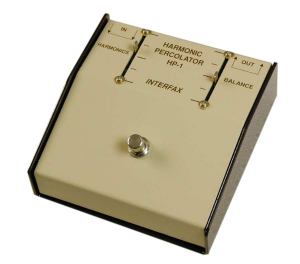 They don’t get much rarer — or uglier. (This is a cosmetically faithful reproduction from Theremaniacs.) I’ve been wanting to write about these for years, but was hindered by the fact that I don’t have access to one. No one does! Well, except the pedal’s best-known user, producer/guitarist Steve Albini. (Steve has posted several popular YouTube videos in which he sings the praises of the original and evaluates it against modern clones.)
But I revisited the idea recently when Christian Magee, who runs Tube Depot, sent me a couple of old 2N404A transistors from a stash he recently acquired. This rare PNP germanium transistor appeared in the original, along with an NPN 2N3565 (also rare, but not as ridiculously rare as the 2N404A). Yes—this pedal uses both a positive-ground germanium transistor and a negative-ground silicon transistor in the same circuit. (Another Fuzz Face/Tone Bender clone, this ain’t!)
I whipped up several variants:
• a clone using the original parts
• a near-clone using more readily available alternatives
• a Harmonic Jerkulator, an all-silicon/no-diodes variation created by DIY stompbox titan Tim Escobedo
• an experimental version with extra controls
Survey the wreckage:
Post-mortem after the jump.
MORE→

The Cro-Mag Comedy Competition polls have closed. We have a winner and two runners-up tied for second.
The gold medalist is wrangle, for his touching coming-of-age tale about the day he learned there’s a reason musicians say “One two three four” before they start playing. Tied for second: Mark Spangler’s harrowing near-death experience as Jeff Beck’s hand-picked opening act, and Roel Torres’s terrifying tale of being hoisted skyward by stage machinery. (Think twice before wearing a hoodie onstage, kids!) Both are worthy of reenactment on one of my fave guilty-pleasure TV shows, I Shouldn’t Be Alive.
Winners, send me your snail mail addresses, and I’ll send you something noisy.
Thanks to everyone who submitted a story, voted in the poll, or just read the stories and spewed coffee on their computers. Thanks for holding court while I was traveling, and for giving me plenty of good laughs on the road. In the meantime, I’ve pretty much gotten over jetlag, flu, and a mountain of postponed paying work, and I’ve got some cool and intriguing posts planned for the coming days!
You can read all the entires here. Or just the finalists here. Or just the winners after the jump.
MORE→
Part of my recent trip to Europe was a scholar-led tour of Late Paleolithic cave art, starting in the Vézère river valley of France’s Dordogne and working west to northern Spain’s Cantabria region. I’m no expert on the era — just an armchair history geek with a lifelong early art fascination. I could bore you to tears with my holiday pics, but since this is theoretically a guitar/music blog, I’ll keep things brief and music-focused.
 This sculpture of an early hominid from the Museum of Human Evolution in Burgos, Spain, has nothing to do with the fully modern homo sapiens who decorated the caves. Furthermore, recent research calls into question the historical accuracy for her guitar. Some scholars even suspect that it may have been Photoshopped into this photo. Basically, I got to visit many of the best cave art sites not closed to the public, as both Lascaux and Altimira have been for many years. By sheer coincidence, one fellow geek was Hollywood composer Craig Safan, perhaps best known as the composer for Cheers. In addition to being a cool, smart, and fun guy, Craig has been obsessed with these caves since he visited them decades ago as a young man, and is planning a major composition inspired by them. Unlike me, he was up to date on all the latest research about music and musical instruments of the era, mostly based on fragments of simple flutes, bull roarers, and such.
Craig was traveling with a tiny Zoom recorder, a little ocarina, and a pair of small resonant stones. As we’d tour various cave sites as Font de Gaume, Pech Merle, El Castillo, and Isturitz, he discretely record little clacks, whistles, and tongue clicks, cave ambience and all.
Now, the last thing I’d planned for this vacation was an impulse response reverb experiment, especially after having recently written about the technology in this blog and for Premier Guitar. But it occurred to me that we might be able to capture the ambience as impulse responses in order to reproduce it later in the studio. I didn’t have a proper device for playing back a test tone, though I might have tried it on a phone or iPad. But Craig’s clacks and clicks seemed like they might work. He sent me a few audio files after we both got back to California. With a little editing and EQing, they worked pretty well — have a listen below, and help yourself to a couple of reverb files if you like. Some of the nicest are from the deepest gallery of Pech Merle.
MORE→
|
|