Author: joe

  • The Pagey Project, Phase One!

    The Pagey Project, Phase One!

    Hey kids! You’re never too young to mod your guitars!
    Now get off my lawn.

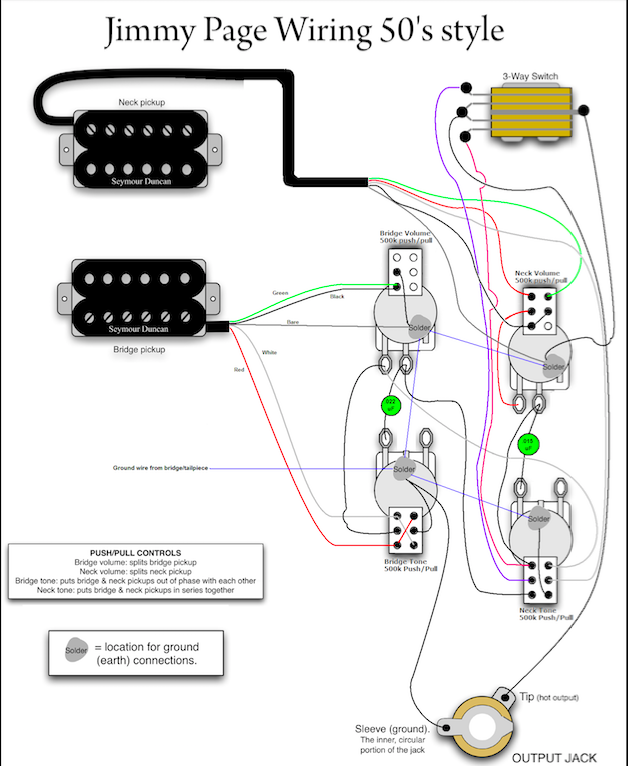
    As promised, here are a demo video and tech notes for the first phase of the Pagey Project, which recreates Jimmy Page’s original Les Paul wiring scheme. (The upcoming Phase Two will expand on the idea with even more crazy options.)

    All I can say is, sheesh! Why did it take me decades to try out this awesome Les Paul mod?

    I think it’s because I had a nasty dual-humbucker guitar many years ago with series and coil-split switches. Even though I knew the pickups were crap, it still prejudiced me against alternate humbucker wirings. “Just pick up a Fender!” I’d think.

    Another factor: I lacked the sophistication to know that, while many of the tones unlocked by the Pagey wiring sound thin and/or weird on their own, they can be quite useful in context.

    And make no mistake — except for the series switch, all the alternate Page sounds are smaller than stock Les Paul sounds. And that’s a good thing! They’re great for crystalline clean tones, ratty faux-P-90 distortion, and simply making the regular Les Paul sounds seem gigantic by contrast.

    Have a listen. There video starts with a 90-second overview, then works through the system in detail: (more…)

  • The Pagey Project: Prelude

    The Pagey Project: Prelude

    Double the sounds available from your axe!

    Man, preparing the Pagey project has been a real eye-opener! Expect some surprising results! (Hint: There’s much of interest, even for players who have zero desire to sound like Page.)

    I’ll be posting the first video and tech walk-through after the weekend, but in the meantime, I wanted to update you on the game plan, which, frankly, only became clear once I started soldering.

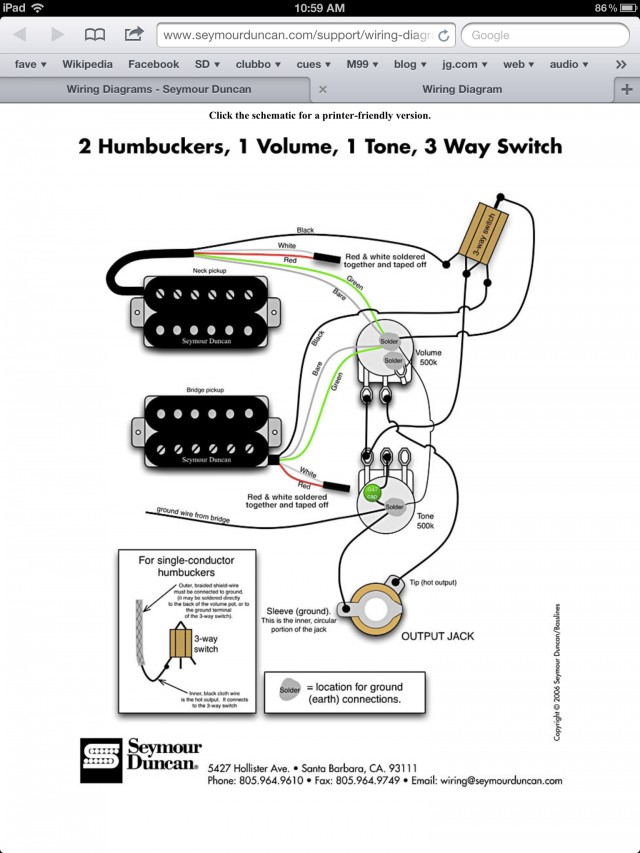
    If you haven’t downloaded the relevant schematics, you can snag them here. (Reader Jeff pointed out pointed out a difference between the two versions of the four-push/pull wiring. I have no idea which version page used, but I went with the version from Scott Miller’s Guitar Player magazine article because it offers a bit more control — and this project is all about control!)

    We’re going to tackle the project in two phases. First, we’ll look at the original Pagey wiring, using four push-pull pots and period-accurate pickups (I went with Duncan ’59s with four-connector cable). I’ve wired up my ’82 Les Paul in exactly this fashion, and it’s pretty dang cool. Yes, it’s a complicated job, but not as tough as anticipated. Amazingly (for me) it turned out great on the first attempt. (more…)

  • This Charming Riff

    This Charming Riff

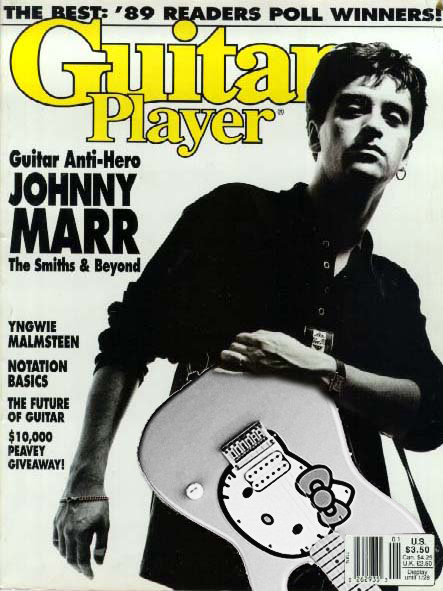
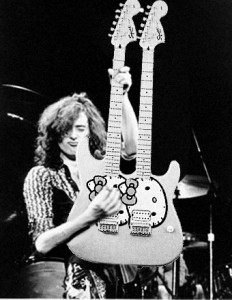
    Weird — back when I wrote this GP cover story, I never even noticed the Hello Kitty guitar!

    Maybe it’s because of the crescendo of chatter about a Smiths reunion, but I’ve had Johnny Marr on the brain lately. (Full disclosure: I am a total, drooling fan.) I keep coming back to how deceptively simple his parts are, with an emphasis on the “deception” part. There’s always much more happening than initially meets the ear.

    Perfect example: “This Charming Man,” the band’s first single. It’s always been my favorite Smiths guitar performance — even more than the apocalyptic tremolo and harmonizer work of “How Soon Is Now?” Maybe it’s because I’m still astounded by the originality and sheer chutzpah of the young guitarist, who was all of 19 when the track was released.

    “This Charming Man” is a perfect little pop guitar part, with an African highlife-inflected head and lots of pretty open-string chiming throughout. But the deeper you dig, the more you uncover. And you won’t believe what I uncovered during my latest Smiths geek-out: (more…)

  • The Ultimate Mongrel Strat? (with Obsessive/Compulsive Tone Control!)

    The Ultimate Mongrel Strat? (with Obsessive/Compulsive Tone Control!)

    Not for everybody: The sickest mongrel strat yet.

    Okay, I lied.

    In the previous installment of our ongoing mongrel strat series, I experimented with a version of Gibson’s oddball Vari-Tone circuit. I said it was too fussy and complex, and that I wanted to experiment with a simplified version.

    So naturally, I built a “parts” Strat with a Vari-Tone twice as complicated as the original — a configuration I’ve dubbed the “Obsessive/Compulsive Tone Control.” I also deployed some of my favorite quirks and wiring tricks from previous strat experiments, plus a few new hardware discoveries. Result: a weird-ass guitar that only a geek could love a cool, one-of-a-kind instrument.

    Check out the demo. Post-mortem after.
    (more…)

  • Nut Case

    Nut Case

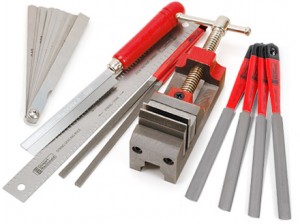
    Better tools than I deserve: The Stew-Mac Essential Nut Making Tool Kit

    Not something I’d recommend to everyone, but…

    …as part of an ongoing series on mongrel/hybrid Strats, I’ve built a new Strat from parts to house all the cool little tricks and quirks I stumbled upon during the series. (Wait till you hear the “Obsessive/Compulsive Capacitance” tone control!) I’ll be doing a post on the guitar next week.

    Anyway, lazy slob perfectionist that I am, I usually take my instruments to my local guitar tech/genius Gary Brawer for setup work, especially for carving and fine-tuning the all-important nut. But feeling brave, I ordered a few blanks from Stewart MacDonald and tried making a nut from scratch.

    Numerous times, actually.

    The first attempt was, of course, an unmitigated disaster. The second one was a little better — I’d call it a mitigated disaster.

    Only a poor craftsmen blames his tools, so I blamed my tools. I sprung for Stew-Mac’s Essential Nut Making Tool Kit, with all the proper files, saws, feeler gauges, and a nifty little vise. And it actually did help — thanks to some great instructions from the ever-reliable Dan Erlewine, which you can find here. (Understand that my workbench skills are a joke. I’m the kind of guy who grabs a screwdriver to pound a nail rather than take 30 seconds to fetch the…whatever the hell you’re supposed to use.)

    Anyway, I saved a fortune! My new nut cost less than ten bucks — plus $200 in tools and about $2,000 in labor.

    Am I bitter? No way! I learned a ton, and the next time I need a nut, whether it’s made by me or someone competent, I’ll have a much better idea what to go for. I kept comparing it to making one’s own shoes — not something most of us are dumb enough to try, but man, you’d sure learn a few things about the contours of your feet!

    I’m not posting a pic of my work because it looks really nasty, and Gary Brawer might see it and laugh at me. But ugly as it looks, my third home-cut nut actually feels and sounds great. (BTW, I tried working with both real bone and the simulated stuff from Tusq. Both materials have their staunch advocates, but I can’t claim to perceive all that much difference in tone or workability.)

    Anyone else tried this at home? (I’m not talking to you, pro luthiers — I mean regular people!)

  • Join the Pagey Project — If You Dare!

    Join the Pagey Project — If You Dare!

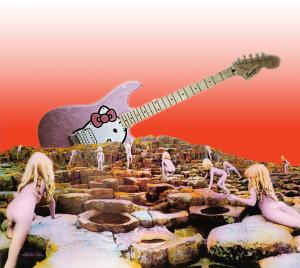
    True fact: While Jimmy Page is usually pictured with a Les Paul, he recorded many of Led Zeppelin's greatest tracks with Fender guitars. (Artist's conception.)

    All aboard, mateys! Join our ship of fools as we sail the fiercest seas of guitar electronics: Yes, the legendary Jimmy Page wiring scheme. There will be NO QUARTER for pickup pussies!

    Actually, there will be a great deal of quarter as we help each other with this cool but tricky project. I’ll be disembolwing the black Les Paul Custom I wrote about here. My hope is that many of you will join me on this voyage. We can troubleshoot together, share tips, and commiserate after we’ve destroyed a bunch of nice guitars other things.

    As you probably know, this complex wiring scheme transforms a standard Les Paul into an über-versatile tone machine with added series/parallel, phase-canceling, and split-coil options. It was the means by which Pagey reproduced the many Telecaster and Danectro parts from Zep’s studio albums when performing live.

    We’ll cover the classic arrangement, with four push/pull pots. Then we’ll go a step further: If you add a pair of Seymour Duncan Triple Shot Mounting Rings to the mix, you get many more options than with the original scheme. Yes, we can all be bigger badasses than Pagey.   :shake:

    (FWIW, I’m less interested in cloning Page’s setup than in mastering the ins and outs of alternative humbucker wiring. So think of this as a chance to explore all available options, and refine a mod that works best for you.)

    Here’s what you must have before setting sail:

    (more…)

  • The Workbench & Rehearsal Room iPad:My Top 10 Apps

    The Workbench & Rehearsal Room iPad:
    My Top 10 Apps

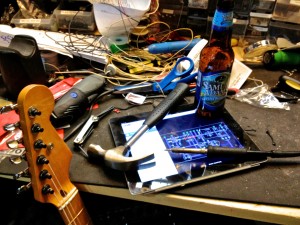
    iPad: Your pathway to a more productive and better organized workspace!
    It’s not as if Apple needs more free publicity, but IMHO, the iPad is the greatest workbench and rehearsal room innovation since the Mesopotamians perfected beer.*

    Seriously — I find myself reaching for the thing as often as I reach for the soldering iron. In fact, I sometimes confuse the two, which probably explains the sketchy wiring in my pedals and the mysterious burns on my fingertips.

    Marketing hype notwithstanding, there’s isn’t always “an app for that.” (In particular, I eagerly await the “Why Doesn’t This $^%&Y# Thing Work?” app.)

    But I would like to share a few tools that proven consistenly useful in the two years since the iPad’s debut. Prices range from free to a whopping $5.99 for Electronic Toolbox Pro.

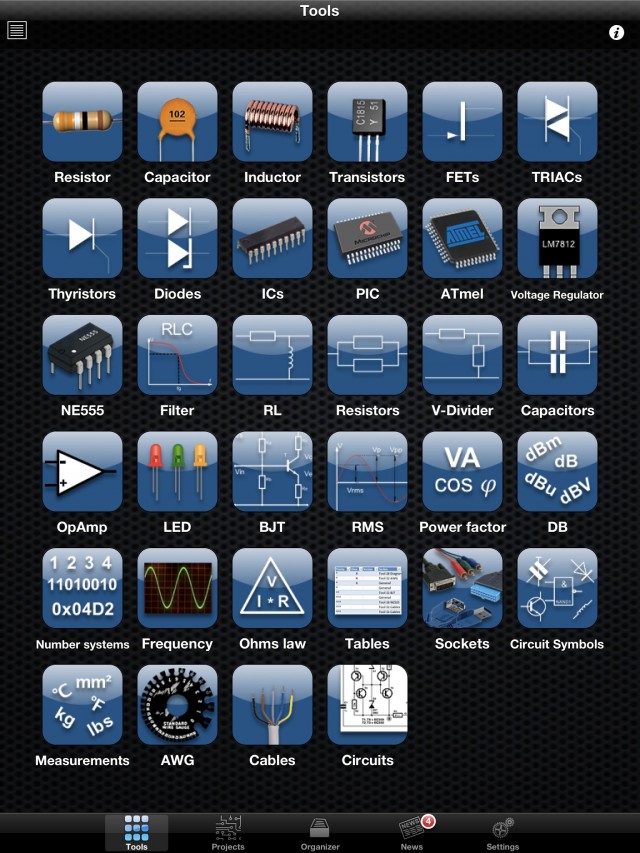
    01. Electronic Toolbox

    Electronic Toolbox Pro

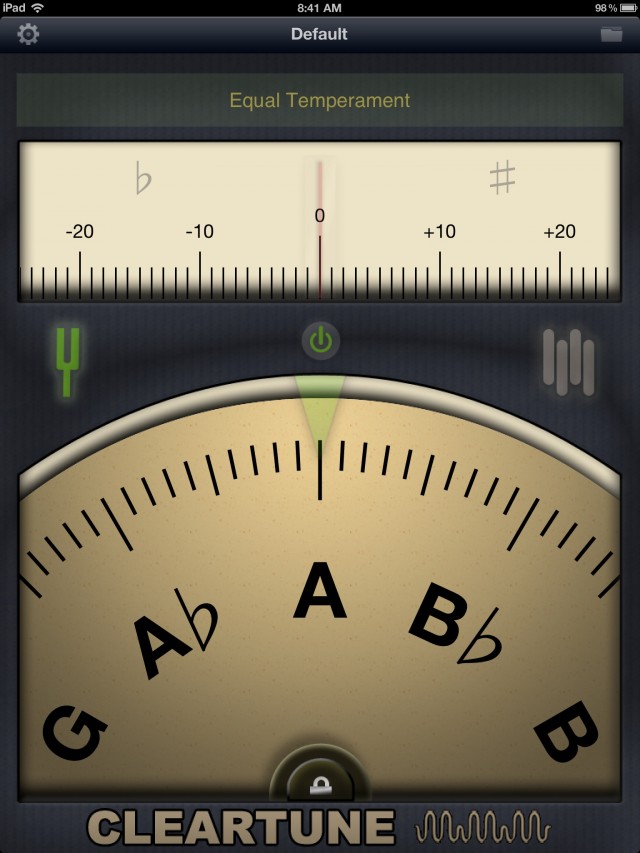
    02. Cleartune

    Cleartune Chromatic Tuner

    03. Safari

    Safari Web Browser

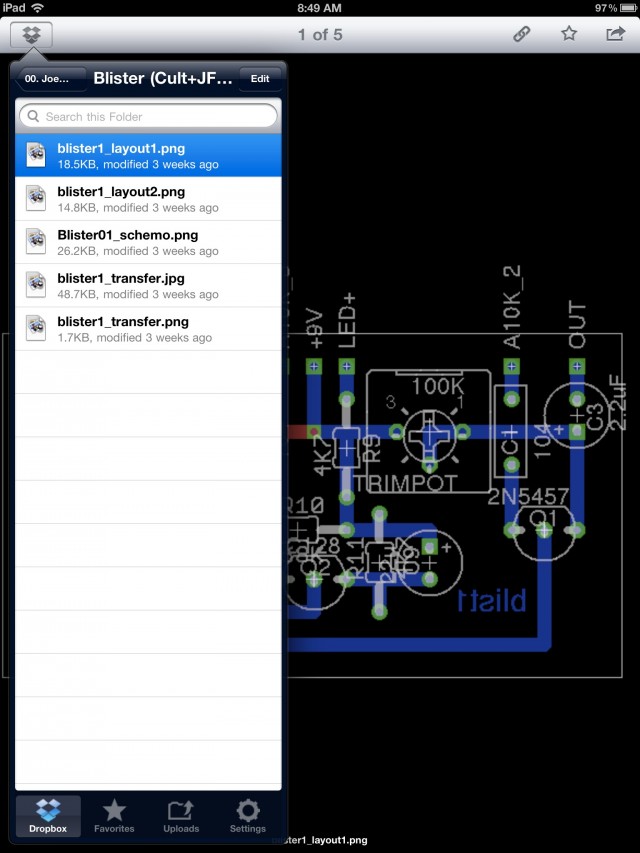
    04. Dropbox

    Dropbox

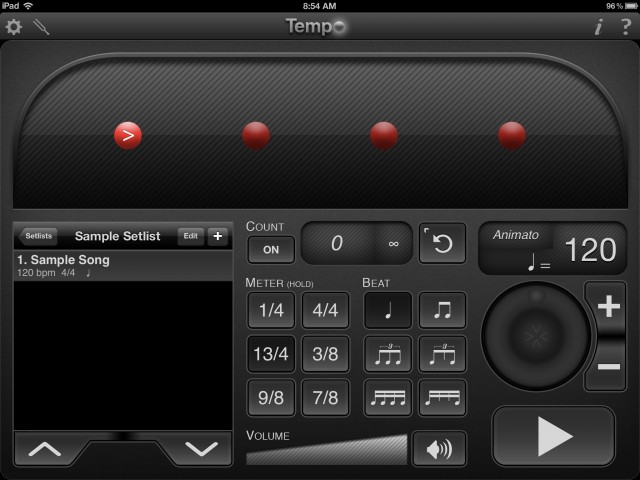
    05. Metronome™

    Metronome™

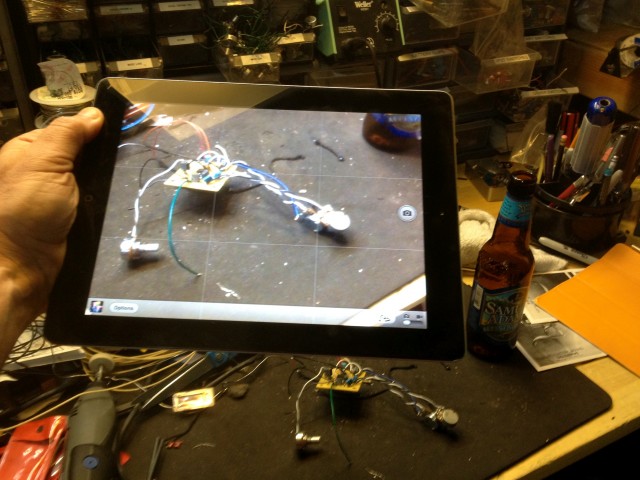
    06. Camera

    Camera

    06. Kindle

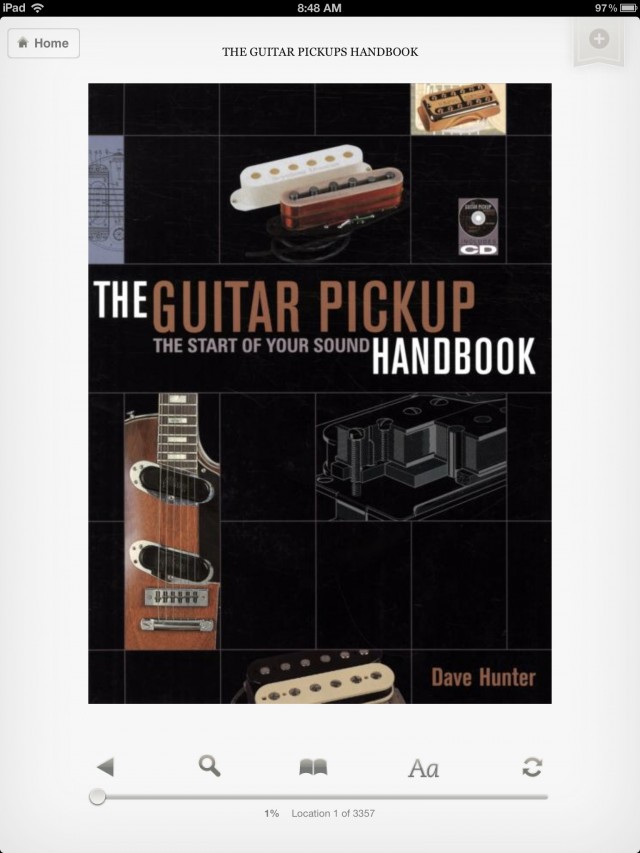
    Kindle and/or iBooks

    Noteshelf
    08. StreamToMe

    StreamToMe

    09. Voice Memos

    Voice Memos

    10. iCircuit

    iCircuit

    11. Plants vs. Zombies

    Plants vs. Zombies

    01. Electronic Toolbox thumbnail
    02. Cleartune thumbnail
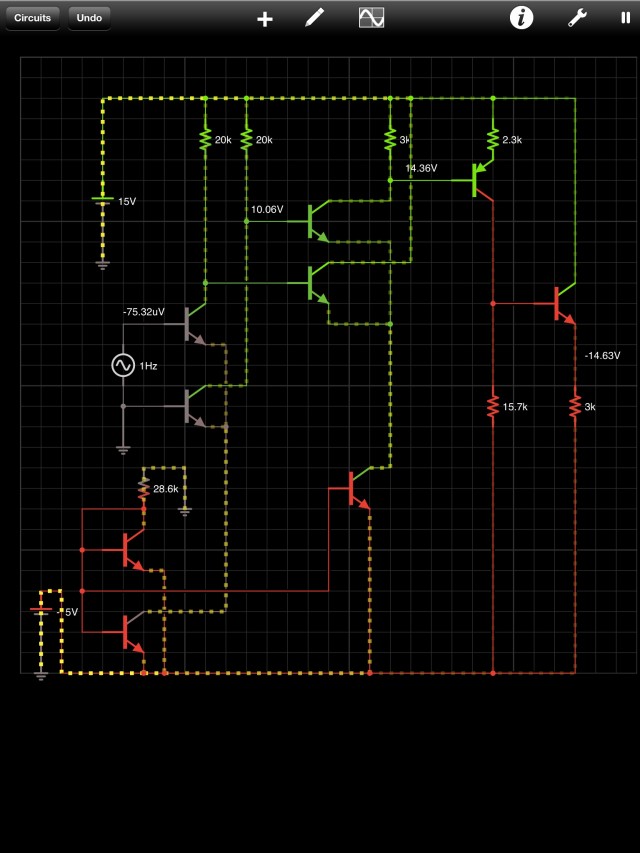
    03. Safari thumbnail
    04. Dropbox thumbnail
    05. Metronome™ thumbnail
    06. Camera thumbnail
    06. Kindle thumbnail
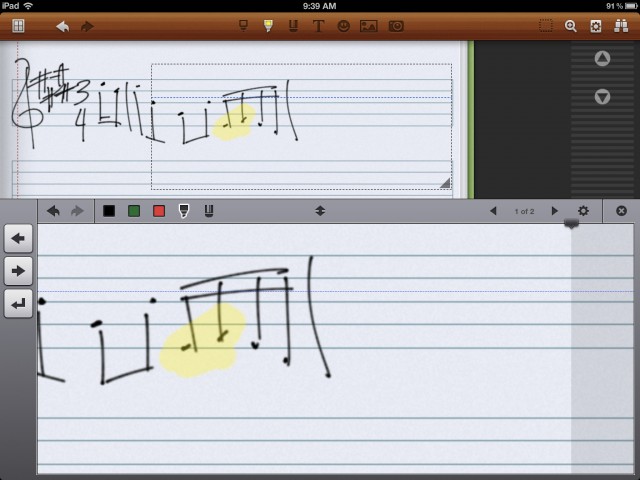
    07. Noteshelf thumbnail
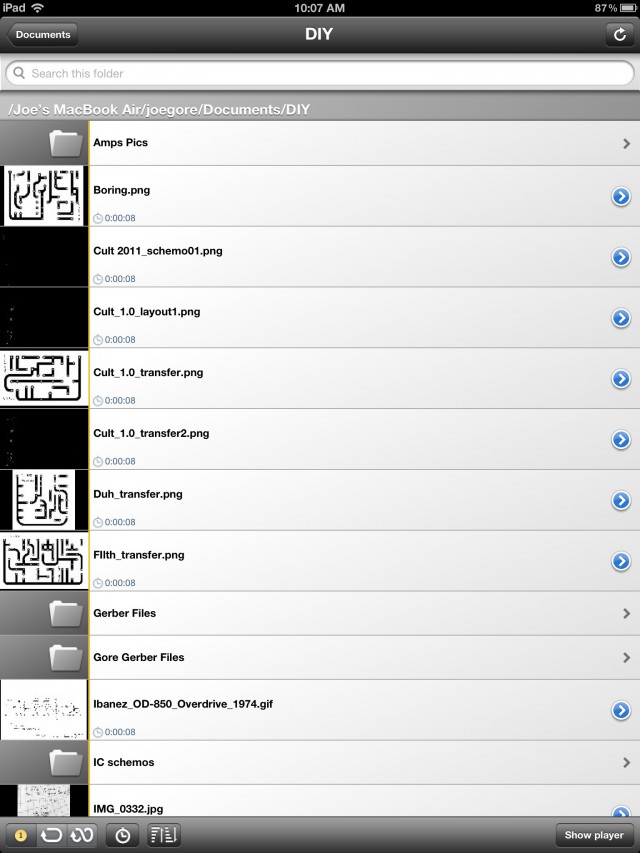
    08. StreamToMe thumbnail
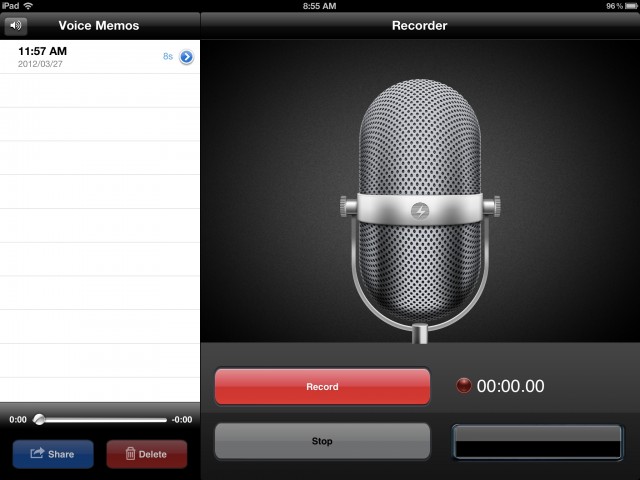
    09. Voice Memos thumbnail
    10. iCircuit thumbnail
    11. Plants vs. Zombies thumbnail

    Is anyone else foolhardy enough to expose their expensive mobile devices to hazardous workbench and rehearsal room environments? What are your observations? Recommendations? Bitter regrets? Do tell.

    * Just kidding. Kids, don’t drink and solder.

  • The World Just Got a Lot Quieter

    The World Just Got a Lot Quieter

    Sad news: Jim Marshall of Marshall Amplification has passed away at age 88. More info here.

    He was a nice guy. I once ran into him, of all places, in a elevator in Tokyo.

  • Credit Where It’s Due — Please!

    Credit Where It’s Due — Please!

    Move along — there's nothing to see here.

    Ordinarily I wouldn’t publicize “causes” on this site, but this one has special relevance for musicians and music fans.

    My pal Count, a producer/mixer who’s done work for Radiohead, DJ Shadow, New Order, the Stones, No Doubt, and many other artists, is launching an online campaign to get musicians, producers, engineers, and other contributors credited on iTunes, Pandora, and other digital music services.

    Consider the absurdity of the current situation: Why, in the digital age, are we granted only a fraction of the info available in the analog age? Why should fans be denied the details of their favorite recordings? And for underpaid musicians and technicians, the credit is often the only meaningful payment for services, a possible path to future work. The current state of affairs is just plain wrong!

    If you agree that this is worthy goal, check out the page for Count’s Credit Is Due Facebook campaign.

  • The Joe Bonamassa Pickup Set: It’s Not Just for Blues!

    The Joe Bonamassa Pickup Set: It’s Not Just for Blues!

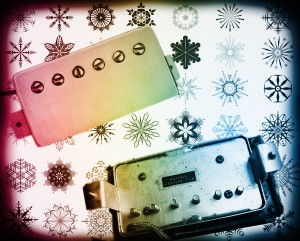
    Vintage P.A.F. pickups are like snowflakes — only a lot louder and a lot more expensive.

    Aficionados of the P.A.F.pickup, the original humbucker, often say that vintage models are like snowflakes — no two are identical, due chiefly to the the pre-digital inconsistencies of their windings.

    One particularly memorable pair of snowflakes resides in Joe Bonamassa’s 1959 Les Paul, the crown jewel of Joe’s insanely huge guitar collection. Joe and Seymour Duncan teamed up to duplicate their sound, and have released the results as the Joe Bonamassa Signature Pickup Set. As a rabid fan of Seymour P.A.F.-inspired Seth Lover and Antiquity Humbucker models, I couldn’t wait to smear greasy fingerprints all over the new set.

    I got to hang out in the studio with Joe a few years ago during a project I was working on for Apple. He’s a phenomenal player, a nice guy, and a walking encyclopedia of guitar gear. There aren’t many players who better understand the glory of a great P.A.F. — and how to make the most of it.

    As promised, these pickups provide superb P.A.F. tones, and they have a sonic personality quite distinct from Duncan’s other P.A.F. models. Check out this little demo I recorded:

    (more…)