Monday: Theory and Technique
Tuesday: Gear
Wednesday: Repairs and DIY
Thursday: Biography
Friday: Fiction
Tonefiend Book Week is simple: I discuss a few titles I’ve found particularly enlightening, useful, or entertaining, and then you jump in and do the same. I’ve organized the days of this week by subject matter. Today’s topics are musical biographies and autobiographies.
Classic rock fans have been rewarded with many cool autobiographies in recent years: Keith Richards’ Life, Patti Smith’s Just Kids, Bob Dylan’s Chronicles, Neil Young’s Waging Heavy Peace, and Pete Townshend’s Who Am I: A Memoir, to name a few. I’ve read Richards and Smith, and I plan to read the others. Any thoughts about those and similar titles?
And then there are the great jazz autobiographies, such as Miles Davis’s Miles and Duke Ellington’s Music is My Mistress. Despite their alleged omissions and inaccuracies, both are epic accounts of epic lives dedicated to epic music. (So which is better: a lively, lying-through-the-teeth autobiography, or a dry but truthful biography?)
But my favorite musical autobiography is Hector Berlioz’s Mémoires, first issued in 1865.
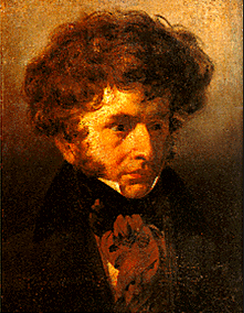
This, admittedly, isn’t a book for all musicians, or even most musicians. It concerns the explosive classical music scene of 19th-century Europe. If that topic holds no interest, the Mémoires probably won’t either.
But consider: Berlioz (1803-1869) is, along with Debussy, France’s greatest composer. He was a founder of Romanticism, and the first composer to fuse literature and instrumental music on a grand scale. He helped create the modern concept of orchestration and wrote the first orchestration manual. And of all the great composers, Berlioz is hands-down the best writer. He is arrogant, irreverent, sarcastic, and blisteringly funny. If you enjoy, say, the acidic humor of Mark Twain’s essays, you’ll dig Berlioz’s voice.
And like Twain, Berlioz played guitar. (More on that in a bit.)
The Mémoires drip attitude from page 1:
Needless to say, I was brought up in the Catholic faith. This charming religion (so attractive since it gave up burning people) was for seven whole years the joy of my life, and although we have long since fallen out, I have always kept the most tender memories of it.

…and it never lets up. We meet the era’s greatest composers and performers and learn what it was like to be a professional musician in an era before recorded music. Concerts were longer. Audiences were more passionate. Wars were waged in the music journals. If you think going on tour today is demanding, imagine it in an era of unpaved roads and horse-drawn carriages.
And as if the music and world around him weren’t dramatic enough, Berlioz spices things up with much wild behavior, notably his near-psychotic obsession with an Irish stage star, which inspired his greatest work, the Symphonie Fantastique, subtitled An Episode in the Life of an Artist.
What kind of episode? The kind where a lovesick artist OD’s on opium, only to have his beloved pursue him through his doped dreams. Things don’t end well: The artist meets the guillotine (the music depicts his head thumping down the scaffold steps). But wait — there’s more! He awakens at an orgiastic witch’s sabbath, where his love appears in grotesquely transfigured form before a nightmarish finale.
That’s our Hector! :satansmoking:
Berlioz was one of the few great composers who couldn’t play keyboards — and he was proud of the fact! His main instruments were flute and guitar. He left no music for the guitar, but he always kept one on hand, and probably used it as a compositional aid. Yet he did most of his work with only pencil and paper in order to avoid what we’d call “muscle memory” — the tendency for technically adept players to fall into comfortable but clichéd patterns. It’s certainly a frequent topic on this blog.
Berlioz wrote:
My father would never let me learn the piano. If he had, no doubt, I would have joined the noble army of piano-thumpers, just like 40,000 others….Sometimes I regret my ignorance, but when I think of the ghastly heap of platitudes for which that unfortunate piano is made the daily excuse — insipid and shameless productions that would be impossible if their perpetrators had to rely, as they ought, on pencil and paper alone — then I thank the fates that have forced me to compose silently and freely by saving me from the tyranny of finger-work, that grave of original thought.
“Finger-work…grave of original thought.” How true is that?
Finally, I have to quote one Mémoires passage that feels as if was written specifically for “guitar journalists.” Berlioz wrote frequently for the music periodicals of his day, but didn’t always enjoy the work.
I returned to my treadmill — journalism — once more, and oh, the horror of it!
The misery of writing an article to order on nothing in particular — or on things that, as far as I was concerned, simply did not exist because they excited in me no feeling whatsoever. Long ago I remember spending three days over a critique without being able to write one word. I cannot remember the subject, but I remember my torment.
I strode up and down, my brain on fire. I gazed at the setting sun, the neighboring gardens, the heights of Montmartre, my thoughts a thousand miles away. Then, as I turned and saw that confounded white paper with no lines on it, I flew into the wildest rage.
My unoffending guitar leaned against the wall. I kicked it to bits.
Man, are you sure you never worked at Guitar Player? That’s exactly how I felt when I had to write that idiotic cover story on [REDACTED].
You can download a digital copy of an old public domain translation of the Mémoires for free here. It reads well, though I prefer the 1969 David Cairns translation (out of print, but widely available used). It’s also easy to find public domain copies of the Mémoires in the original French, if you’re of that persuasion.
Hector gets the final word:
Time is a great teacher, but unfortunately it kills all its pupils.

But that’s another story.
Okay — your turn! What are your favorite accounts of musicians’ lives?


Leave a Reply