Categories
Music

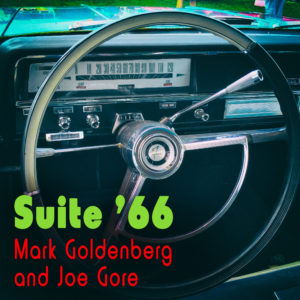
Suite ’66: Free EP by Goldenberg & Gore!

suite-66-cover

A free EP from we to thee!

Guitar genius Mark Goldenberg and I recently recorded Suite ’66, a set of improvised duets on four tunes from 1966, in honor of the 50th Anniversary of one of the greatest years in pop music.

We teased this “release” a few months ago with this rehearsal video. The EP features a more developed version of the same tune, plus three others.

Even if you’re not familiar with Mark’s name, you’ve probably heard his playing. Mark has been a leading LA sideman and session player for decades. He’s worked with Jackson Browne, Linda Ronstadt, Bonnie Raiit, Waylon Jennings, Chris Isaak, Willie Nelson, Hugh Laurie, Natalie Imbruglia, and most impressively, William Shatner.

Less well known is Mark’s beautiful solo style, which resides at the intersection of rock, classical, and jazz. I was instantly smitten when I first heard Mark play in person at one of Teja Gerken‘s solo guitar events a couple of years ago. Mark’s musicianship flabbergasted me, plus we bonded over the fact that we shared the same teacher, the late Ted Greene. (Though I studied with Ted when I was a teen, so much of his wisdom went over my head. Mark, however, worked with Ted after becoming one of LA’s most respected players, so he absorbed Ted’s insights on a far deeper level.)

Listening to Mark play is sheer musical ecstasy, whether or not I happen to be picking along with him. He’s been one of my greatest musical inspirations of the last few years. (Translation: I’ve ripped him off more times than I can count.)

Listen and download via SoundCloud:

Tech notes: We recorded and mixed this in my basement studio. I’m on the left channel throughout, and Mark’s on the right. (There are no overdubs.) My instruments are a Gretsch Spectra Sonic electric baritone guitar (kindly loaned by Xander Soren), a Veillette Avant Gryphon octave 12-string, and a Taylor 150e 12-string. Mark plays two magnificent guitars: his Kenny Hill classical and a Collings 001MH steel-string.

IMPORTANT: This non-commercial recording is shared as a gift between us and our friends. It may not be reused for any purposes, especially commercial ones. We’re simply inviting you to listen in on our jam session.
Categories
Acoustic Recording

Tribute to Leonard Cohen

I’m working on this version of Leonard Cohen’s “Suzanne” as part of album in progress: a collection of radically reinterpreted songs from 1967. I haven’t nailed down the final song list. (If you review the list of amazing songs from that year, you’ll understand why. And that link only cites the songs that charted, and doesn’t include classics like the first Velvet Underground album, some great Jobim tunes, random stuff like “Some Velvet Morning,” and lots more.) By hook or by crook, I hope to have the project done before year’s end in time to cynically capitalize on pay tribute to the 50th anniversary of that musically monumental year.

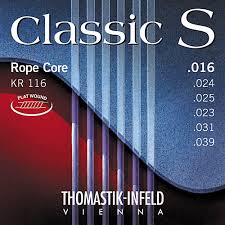
Some interesting tech notes: I’ve you followed this blog, you’re no doubt sick to death of my evangelizing for Thomastik-Infeld rope-core strings. But this is the first time I’ve put them on my Lowden S-25, my main acoustic guitar for nearly 20 years. Its default tone is super loud and bright. (Larry Fishman once referred to it as “a fucking cannon.”) But these days my ears are drawn to darker, softer tones. The Classic S transformed this laser-bright acoustic into an expressive crooner.

Meanwhile, I’ve become a bit alienated from traditional nylon strings over the years, but these, with their hybrid nylon/steel sound, hit just the right sweet spot for me. They’re extremely quiet (though they don’t sound like it when close-miked like this), but they have vast dynamic range and a smooth, sexy feel.

classic_s

I’d previously written that this set is the same as the (cheaper in the U.S.) John Pearse Folk Series Fingerpicking strings, but I was mistaken. The story I hear was that the late Mr. Pearse, working with Thomastik-Infeld, devised this set for Brazilian guitar monster Bola Sete. But on the current Pearse set, the bass strings have nylon cores, while the Classic S bass strings have steel cores. That means you can use the TI set with a magnetic soundhole pickup, allowing you to plug into amps and effects. (I’ll be posting an example soon as a companion piece to this video.) But both sets sound lovely, and both allow you to bend strings as you would on an electric guitar — something you definitely can’t accomplish on conventional classical strings.

I don’t have a ton to add about the sublime Leonard Cohen. But “Suzanne” has always exerted a deep emotional spell on me — even, as here, minus the lyrics.

Categories
Music

“God Only Knows”: A Golden Anniversary Tribute

It probably wins my vote for prettiest pop-rock song of all time, and it’s a far-from-controversial opinion. “God Only Knows” and all the other great tracks from the Beach Boys’ incomparable Pet Sounds album are 50 years old. (The album was released on May 26th, 1966.)

I owe a big thanks to my pal Mark Goldenberg who inspired me to really learn the entire tune. Mark performs an exquisite solo version, far more lyrical and poetic than my relatively motoric reading. He and I are also preparing a duo version for an album project in the works.

I say “really learn” because you don’t appreciate the number of perverse composition tricks in the tune until you study it bar by bar. Example: the jarring leap into the bridge after the second verse. Or the way that chromatically snaking bridge seems to usher in a return to the chorus, but it’s only a three-bar tease (and in the “wrong” key at that) before a exquisite harmonic pirouette into the final verse. Or the fact that many, if not most, chords in the song don’t feature their root note in the bass. (Especially that verse! The voice leading simply makes no sense on paper, but it’s perfection in practice.) And while countless musicians have praised the outro’s beautiful choral polyphony, I haven’t got much to add, except to say that it’s frickin’ hard trying to cover all those parts! (I didn’t succeed — I only played as many as I could cram into my left hand.)

And oh, the guitar: It’s the latest installment in the ongoing Mongrel Strat Project.I’ve been hacking away at the same sad parts for years. Literally hacking, in this case: I had to route out the pickup cavity to accommodate a pair of über-retro PAFs (a Duncan Joe Bonamassa signature set). Yeah, a Strat with humbuckers isn’t a new idea. But the pickups used are almost always high-gain models designed for macho soloing. I wanted to try something low-gain and unpotted for relatively bright, resonant sounds not quite so far removed from traditional Strat tones. I’m finishing up a video about the project, and I’ll post it in the next few days.

Anyway: Happy birthday, beautiful. You wear your age well.:)

Categories
Music

“Eleanor Rigby” Rehearsal

Lucky me: I just started rehearsing for a duo project with one of my guitar heroes, the brilliant Mark Goldenberg. Here’s a run-through of “Eleanor Rigby,” one of the tunes we’re working on. It’s pretty rough still, and the recording quality ain’t great. But I love Mark’s playing so much here that I couldn’t resist sharing.

I’ve only known Mark a year or two, but we hit it off as soon as we met at one of Teja Gerkin’s solo guitar events. Mark played ravishing solo version of so many of my favorites: “God Only Knows,” “Shenandoah,” “Wichita Lineman,” “Mood Indigo,” and more. I love his ultra-dynamic touch and beautiful Bill Evans-style harmonies. Plus he’s just an cool guy.

And it turns out we both studied with the same teacher: the late Ted Greene. (I took lessons from Ted as a teen, with a few more sessions 20 years later. Mark studied with Ted long after he became a leading LA sideman and session player.) You can read more about Mark on his website. He’s recorded and toured with Jackson Browne, Bonnie Raitt, Linda Ronstadt, Eels, Natalie Imbruglia, Chris Isaak, Waylon Jennings, Willie Nelson, Peter Frampton and — hehehe — William Shatner. It’s a real thrill to collaborate with such an inspired player.

I’m playing a Gretsch TV Jones baritone on loan from my pal Xander Soren. Mark’s playing his magnificent mahogany Collings.

Categories
Music

Tribute to Mancini: “Lujon” for Solo Guitar and Looper

I was polishing up my solo solo version of this lesser-known Mancini tune, and I was reminded once again of the late composer’s genius. Sure, we all know he was a great tunesmith and brilliant orchestrator. But the deeper you dig into his compositions, the more remarkable things you uncover.

Even though Mancini worked exclusively in pop idioms, I rank Hank as one of the 20th century’s greatest composers. Everything he composed seems to have some remarkable and unlikely compositional twist, even the best-known tunes we take for granted. Consider the slippery chromaticism and crunchy minor-3rd modulations of the Pink Panther theme. Or the familiar “Baby Elephant Walk” melody — if you take a step back, you realize how bizarre it is, rocketing up as an arpeggio before leaping down to a dissonant note. It’s also easy to forget how shocking the Peter Gunn theme was, with those violent dissonant accents, not to mention its unprecedented fusion of brainy Stan Kenton harmonies and greasy guitar rock. (Jobim is the only parallel I can draw in terms of writing wildly original chromatic themes that somehow become universally beloved pop melodies.)

This song is Mancini’s take on the exotica style created by the likes of Martin Denny and Les Baxter. (Mancini was far too tasteful to include exotica’s signature big-call effects, but I lack such restraint.) But check out the cool melody and the way is straddles the underlying harmonies:

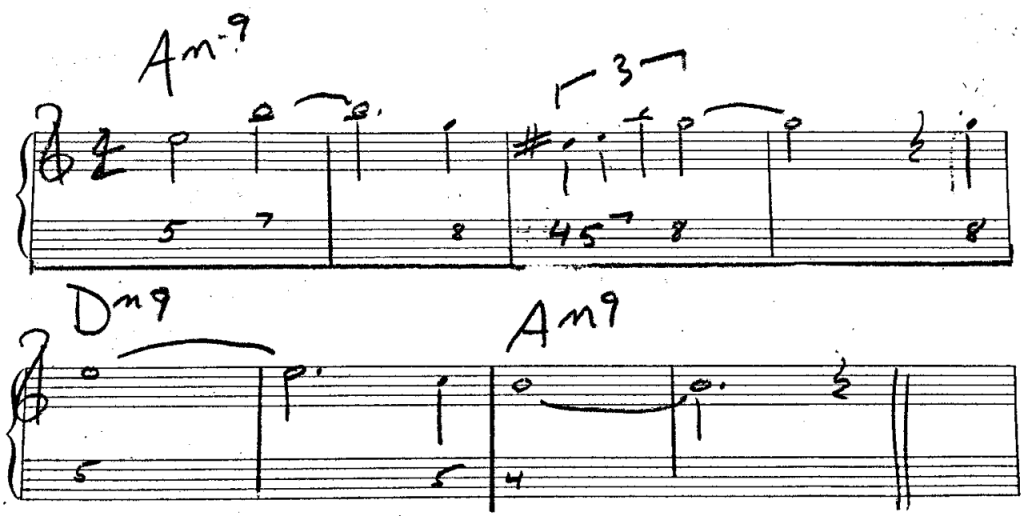
Lujon music

We’re in A minor, but no A notes appear in the main melody. Instead, the tune lingers on the 9th, emphasizing B over the Am7 chord and E over the Dm7. Eventually an A does appear — but not till the downbeat of the B second, by which point we’ve embarked on a long, twisted trail of chromatic modulation.

My Mancini obsession goes way back. In the ’90s, I was privileged to play in Oranj Symphonette, a jazz group lead by cellist Mat Brubeck (yeah, Dave’s son) that also included peerless keyboardist Robbie Burger, mad multi-instrumentalist Ralph Carney, and drum titan Scott Amendola (later replaced by the equally awesome Pat Campbell). Sadly, our two Rykodisc albums are out of print, but there’s buttloads of our stuff on YouTube.

Damn, I miss that band. Reunion, anyone?

Categories
guitar Music Technique

My Favorite Rock ’n’ Roll Solo (It’s Not on Guitar)

I’ve long been obsessed with Sam “The Man” Taylor’s epic sax solo on the Chords seminal 1954 rock ’n’ roll hit, “Sh-Boom.” But I never got around to learning, transcribing, and analyzing it till now. I heard it about 100 times while making and editing this video, and it still thrills me on every listen.

If you’re like me, you know it’s wise to study performances by non-guitarists, but seldom get around to doing it systematically. For once I followed through, and — at risk of sounding like a pedantic dork — I’ve analyzed what I heard and suggested ways to incorporate the concepts in styles far removed from the original doo-wop context.

You can download my transcription (in standard notation and guitar tab) here.

The final part of the video is a rant about how segregation shaped the course of early rock and roll, in which I piss all over the Crew Cuts’ tepid cover version of “Sh-Boom.” (Spoiler alert: It blows.) This was partially inspired by recent despicable comments from musical felon Pat Boone. I’ve linked to the following videos before, but I’m posting them again because the cost of quality music is eternal vigilance against sonic shit-shovelers.

Holy crap! It’s the coolest man in the universe! This foreshadows Hendrix, Prince, and the Beatles. Even lip-synched, it’s everything badass in one minute and 50 seconds. (And it speaks volumes about segregation in midcentury America.)

And then there’s this:

Unholy crap! It’s the least cool man in the universe. And this foreshadows nothing except the worst music of the last 60 years (though it too speaks volumes about race in 20th-century America).

Why beat this dead horse? Why pick on ol’ Pat 60 years after the fact? Maybe he regrets his musical misdeeds. Maybe he’s even developed a more nuanced view of race and racism.

Naw. When self-avowed white supremacist Dylann Roof murdered nine African-American churchgoers on June 17th, 2015, Boone leapt into action, penning an angry editorial that condemned … politicians who dared to refer to the atrocity as “racist.”

FUPB. There’s no statute of limitations on your crimes.

Categories
Digital guitar Music Technique

Less-Boring Looping (“Pumped-Up Kicks” Cover)

For a while I’ve been playing this loop-based cover of Foster the People’s “Pumped-Up Kicks” at solo gigs and with my duo band, Mental 99. At risk of sounding like a pompous dick, I’ve annotated the performance, highlighting techniques I’ve found useful for making loop-based performances livelier and less predictable.

I’ve covered some of this ground before, particularly in this Premier Guitar looping-technique article. But here I call out the techniques mid-performance, and I’ve included a few new ones. I hope you find some of them useful.

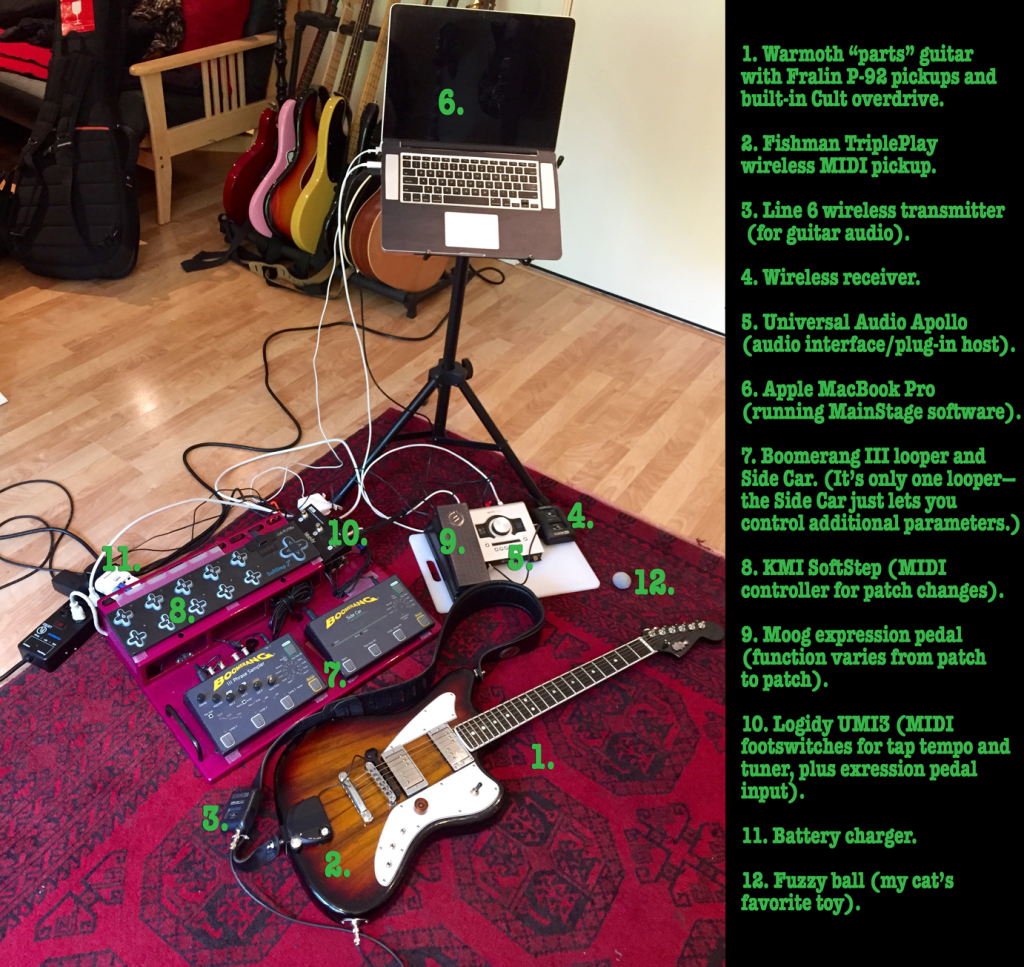
Likewise, I’ve already written about my live looping rig, but it’s changed a bit since then, and I’ve recently integrated a Universal Audio Apollo Twin interface (plus the stellar plug-ins it allows me to run). An updated overview:

Pedalboard-Diagram

The arrangement perform nicely, and I dig the individual components. But I dislike the system’s Rube Goldberg complexity—it’s a royal pain to set up and schlep. I’m always looking for ways to simply. (Other than, you know, just plugging the guitar into a frickin’ amp.) I’m open to suggestions for streamlining!

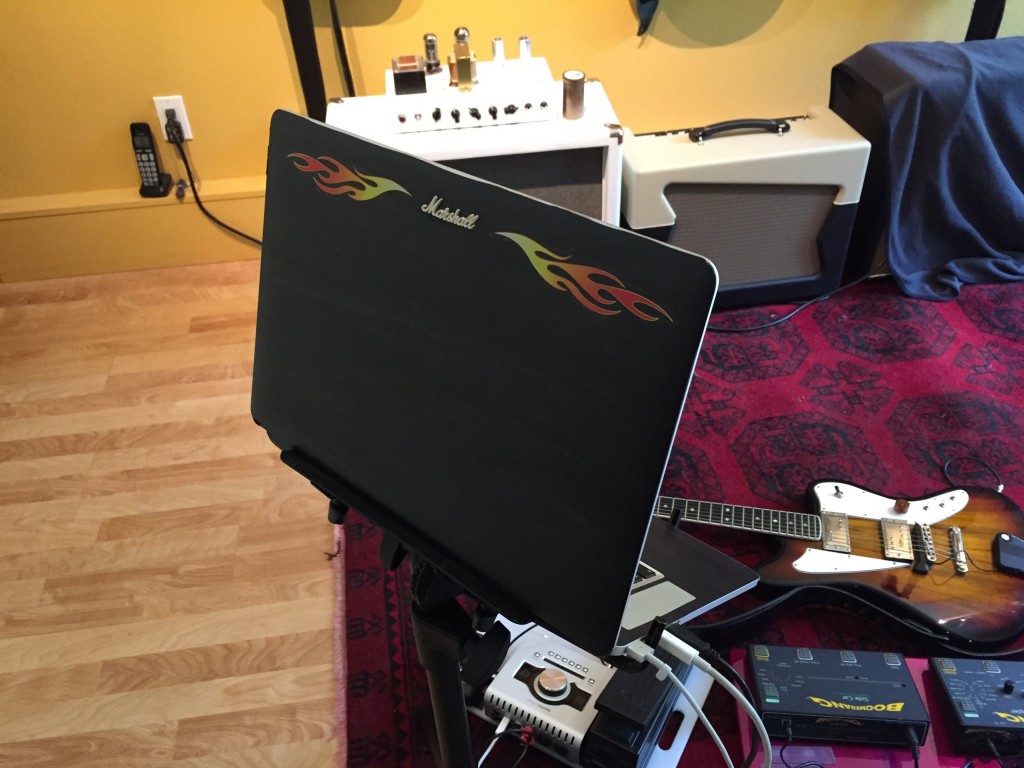
Black Mac
I love Apple products, but I hate having Macs onstage (mainly ’cause they’re so much better looking than me). Covering it in black wrap makes it less obtrusive. The Marshall logo is from one of those “toy” stacks (which, of course, can be far more than toys in the studio).
Categories
Digital Effects guitar

Double Double MIDI Trouble

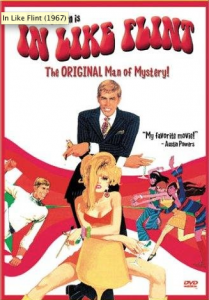
I just recorded a solo version of one of my fave film themes: Jerry Goldsmith’s main title to the 1967 spy spoof In Like Flint. I’ve adored the melody since childhood, and I blame it for instilling the love of chromaticism that made possible my extraordinarily uncommercial career.

I’d previously posted another version of this tune, performed upside-down on a friend’s lefty guitar. But that was all-analog — this time it’s digital. And I’ve used the video to highlight a favorite MIDI technique: doubling recognizable guitar sounds with non-guitar synths and samples.

I've been obsessed with this score since dinosaurs ruled the earth.
I’ve been obsessed with this score since dinosaurs ruled the earth.

It’s funny — being able to trigger pretty much any sound from the guitar isn’t necessarily as liberating as you might think. Sure, when you first try it out, it’s thrilling to conjure an electric piano sound from the fretboard. But who wants to hear some schmo noodle aimlessly on electric piano when they could be noodling aimlessly on guitar?

For better or worse, I find myself using this technique repeatedly. When I double a part effectively, the result still seems like part of the guitar cosmos. It feels like expanding the palette, as opposed to vomiting on it. (Not that I’d be above vomiting on a palette if it helped create a cool painting.)

Did anyone else encounter this sort of childhood musical contamination? A melody, progression, or tone that infected you early on, and colored everything after? I’m not talking image, like falling in love with the Beatles on Ed Sullivan or Nickelback on the CBC because they were so frickin’ cool. I mean a primal sonic imprint. Anyone?

Categories
Acoustic guitar

Strange, Strange Strings

No longer ridiculously expensive — just REGULAR expensive.
No longer ridiculously expensive. Now they’re just very expensive.

I spent last week covering the Musikmesse musical instrument trade show in Frankfurt, Germany, for Premier Guitar. I had a blast, and Chris Kies and I posted details and pics of more than 70 new products. (Here’s the short list of our personal faves.) Kies shot lots of video, and will be posting more than 50 demo segments to the PG site in the coming weeks.

But Messe is hellishly loud, far noisier than NAMM. When I finally got home and picked up a guitar, it was an acoustic. I was trying something new, based on info I obtained from Mary Faith Rhoads-Lewis, CEO of Breezy Ridge, a company that distributes several brands for acoustic musicians, including John Pearse strings.

I’d previously geeked out here about about the strangest and most expensive guitar strings I’d ever tried: this “rope core” set from Austria’s Thomastik-Infeld. Reader/cool guy Al Milburn turned me on to them, and I wrote about them here. And I recently posted this video demonstrating how the transformed my old Martin 0-17 into a compelling steel/nylon hybrid with a unique and expressive voice.

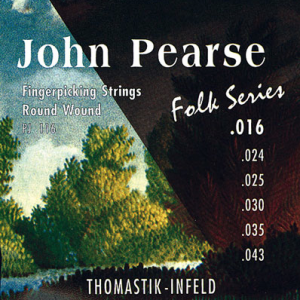
Anyway, Ms. Rhoads-Lewis told me that the late John Pearse originally created this set for Thomastik, and that the John Pearse Folk Fingerpicking set [PJ116] is identical to what the Austrian company sells. Best part: You can get them in the States for under $20, as opposed to a walloping $35 for the Thomastiks. She also told me that their magic works in reverse: You can put this relatively low-tension set on a classical guitar for a very different sort of hybrid steel-string sound. (This, she said, is exactly what the great Brazilian player Bola Sete used to do.)

I popped a set on my old Yairi classical. The feel was — totally strange, and in precisely the opposite way as on the Martin. The tone was edgy and exciting, but the tension seemed a little too extreme. If just seemed a little too … high-strung, in every sense. Then I tried lowering the entire tuning a whole step, with the sixth dropped all the way to C.

And … oh, my. Check it out:

Summary: Holy cannoli, I love how this sounds. And there’s something psychologically satisfying about the transformation too. See, this guitar has always been a bit … tragic to me. I got it when I was 16. My classical guitar prof at UCLA said I needed a better instrument, and my every-supportive folks, bless ’em, helped me buy this Alvarez Yairi for around $700 (in 1970s dollars). It was a top-tier model for Alvarez, signed by luthier Kazuo Yairi, and boasting lovely Brazilian rosewood backs and sides. It was a huge upgrade for me, but as I got deeper into classical playing, its shortcomings emerged. Had I not shifted my studies to composition, I’d have needed to upgrade again. I envied the Igancio Fleta y Hijos models my two teachers played, but at around $3,000, they were beyond my budget, even with parental help. (Pity — their current value is approaching $50,000.) So I’ve used this instrument as a limited but decent-sounding model suitable for pop work, if not serious classical concertizing.

Categories
DIY Effects guitar Pickups

Hello Kitty Strat: Not for Pussies!

Would this be anything less than awesome? I think not.

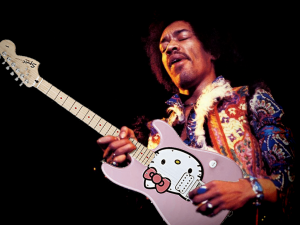
As I gloated last week, Jane Wiedlin gave me her Hello Kitty Stratocaster  — the most bitchin’ $99 guitar ever conceived! I finally had a chance to destroy/customize it yesterday, in what will no doubt be the first of many desecrations/enhancements.

I’d ordered one of those Synyster Gates Duncan Invaders with the pretty white pole pieces for the guitar, but just couldn’t wait to experiment, so I browsed through the ol’ pickup collection, and found a nice Duncan Phat Cat I’d used in a Les Paul experiment some months ago.

I don’t generally recommend choosing pickups because of their names, but come on! Kitty + Cat? How could I resist?

Turns out it was a lucky choice. I hadn’t planned to install a pickup that was actually lower in output than the stock humbucker, but it lets me get nicer clean sounds, and coughs up more than enough crunch when goosed with distortion. Speaking of which: the other custom feature is a built-in-distortion circuit activated via push-pull pot (I took lots of pics of the process for a DIY built-in-effects tutorial I’ll be posting very soon.)

View the carnage in this little video. Thanks, Jane Weidlin! Sorry, Stevie Nicks!