Categories
Acoustic Recording

Tribute to Leonard Cohen

I’m working on this version of Leonard Cohen’s “Suzanne” as part of album in progress: a collection of radically reinterpreted songs from 1967. I haven’t nailed down the final song list. (If you review the list of amazing songs from that year, you’ll understand why. And that link only cites the songs that charted, and doesn’t include classics like the first Velvet Underground album, some great Jobim tunes, random stuff like “Some Velvet Morning,” and lots more.) By hook or by crook, I hope to have the project done before year’s end in time to cynically capitalize on pay tribute to the 50th anniversary of that musically monumental year.

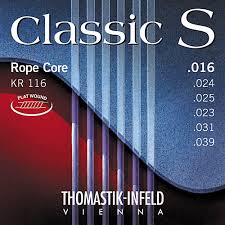
Some interesting tech notes: I’ve you followed this blog, you’re no doubt sick to death of my evangelizing for Thomastik-Infeld rope-core strings. But this is the first time I’ve put them on my Lowden S-25, my main acoustic guitar for nearly 20 years. Its default tone is super loud and bright. (Larry Fishman once referred to it as “a fucking cannon.”) But these days my ears are drawn to darker, softer tones. The Classic S transformed this laser-bright acoustic into an expressive crooner.

Meanwhile, I’ve become a bit alienated from traditional nylon strings over the years, but these, with their hybrid nylon/steel sound, hit just the right sweet spot for me. They’re extremely quiet (though they don’t sound like it when close-miked like this), but they have vast dynamic range and a smooth, sexy feel.
classic_s

I’d previously written that this set is the same as the (cheaper in the U.S.) John Pearse Folk Series Fingerpicking strings, but I was mistaken. The story I hear was that the late Mr. Pearse, working with Thomastik-Infeld, devised this set for Brazilian guitar monster Bola Sete. But on the current Pearse set, the bass strings have nylon cores, while the Classic S bass strings have steel cores. That means you can use the TI set with a magnetic soundhole pickup, allowing you to plug into amps and effects. (I’ll be posting an example soon as a companion piece to this video.) But both sets sound lovely, and both allow you to bend strings as you would on an electric guitar — something you definitely can’t accomplish on conventional classical strings.

I don’t have a ton to add about the sublime Leonard Cohen. But “Suzanne” has always exerted a deep emotional spell on me — even, as here, minus the lyrics.


Categories
Acoustic

Acoustic Strings: Bronze vs. Nickel

Like Talos the Giant from Jason & the Argonauts, most modern acoustic strings are made from bronze. Like him, they can be cruel and inflexible.

UPDATE: I’ve updated the audio examples to include 80/20 bronze strings, as detailed in this newer post.

Can I share my steel-string psychodrama?

I’m lucky enough to own many electric guitars, but I’ve played one steel-string acoustic almost exclusively for many years — a small-bodied Lowden with a tone that a very famous manufacturer of acoustic pickups once described as “like a f%^$ing cannon!” Its sizzling-bright treble and modest low-end make it a great recording instrument. (Engineers often boost highs and roll off lows when processing acoustic guitar, but this model is practically “pre-EQ’ed.”)

But it’s not an easy guitar to play. It seems to amplify string noise, flubbed notes, and all other playing imperfections. “This is a ‘tough love’ guitar,” muttered one singer/songwriter friend.

So when I bought a second steel-string recently, I wanted something warmer, softer, and more flattering, and I found it in a pretty old small-bodied Martin. The day I bought it, I restrung it with treble strings to record my recent Nashville high-strung demo, then popped on a set of the phosphor-bronze strings I’ve been using for years on the Lowden.

And I was seriously bummed out by the tone, as I lamented over at the forum.

The problem was, my sweet, soft antique suddenly sounded a hell of a lot like the Lowden, with blistering treble and cruel string noise. And I realized in a flash that a lot of the qualities I’d attributed to the Lowden were, in fact, a result of the modern, coated phosphor bronze string I’d been using. So I ordered some alternatives and made a few test recordings to demonstrate how dramatic the differences are.

Have a listen:

Categories
Acoustic Amps Effects Gigs

Amped-Up Acoustic Guitars

What could possibly go wrong?

There are two ways to approach amplifying an acoustic guitar: trying to duplicate the natural sound, only louder, and NOT trying to sound naturalistic at all. This post is about the second approach.

I love playing acoustic through an electric guitar amp (as opposed to a dedicated acoustic amp). True, the tubes and speakers amputate all high frequencies. But if you think of the instrument not as an acoustic guitar, but an idiosyncratic electric variant, it opens up amazing possibilities.

More often than not, I prefer to play acoustic gigs that way. I did a fun benefit show last year playing rock and R&B covers with a band consisting of Flea, Tracy Chapman, and drummer Dawn Richardson. Tracy had a beautiful, ultra-hi-fi acoustic tone, and the ratty, rumbling sound of my acoustic through a small combo was — well, let’s just say it was a very strong contrast.

Admittedly, relatively few  players exploit this technique. One notable exception is Daniel Lanois. He’s best known as a producer (U2, Peter Gabriel, Bob Dylan, etc.), but he’s also a phenomenal player who does amazing things with an acoustic guitar, an inexpensive magnetic soundhole mic, and small vintage Fender amps. I’ve watched him play up-close a few times, and he’s incredibly adept at conjuring a variety of tones and controlled feedback from this setup.

It’s definitely a white-knuckle playing experience. You have to listen carefully and nix unwanted feedback with quick damping technique. But it can be so expressive!

I’ll talk more about the technique in a bit. But first, check out this short video demo featuring distortion and other stompbox effects, controlled (and not-so-controlled) feedback, and a lot of awkward twisting and turning as I grapple with the tone: