Categories
Pickups

Charlie Christian (and That Pickup)

Despite being obsessed with Charlie Christian for decades, I’ve never played a Gibson ES-150, the guitar he made famous. I’ve never even messed with a “Charlie Christian pickup,” even though it’s been a fairly common retrofit ever since the late Danny Gatton installed one in his Tele’s neck position. But I’ve always wondered: Could the C.C. pickup work in styles other than jazz? How would it sound in the bridge position? (The ES-150 had only a neck pickup.) And most of all, how would it sound with nasty fuzz?

Lollar Pickups helped me answer those questions with a loaner of three humbucker-sized Charlie Christian pickups. These differ cosmetically from the originals, lacking the cumbersome mounting hardware and the ornamental top plate. But they’re convincing sound-alikes, with similar magnets, wires, windings, blades, and modest output. (Their DC resistance is just under 3k ohms). Here’s what I discovered!

Clearly, it’s not a pickup for every rock guitarist (though it’s perfect for a swing-era jazz sound). Still, I found its non-jazz sounds strange and compelling, and I can definitely imagine using them in the studio. What do you think?

While making comparisons, I spend hours reacquainting myself with Charlie’s recordings, of which there are only a few dozen. His career was absurdly brief — it was less than three years from his first recordings with Benny Goodman through his death from tuberculosis (and probably other bad stuff) at age 25. But that was long enough to forever alter the guitar’s history.

Categories
Bass

Just How Heavy Can a U-Bass Get?

I've had this cool Kala U-Bass for a few years. (I did a video on it back when I got it.) I've used it on a few things, especially when I want a sort of Latin-flavored Ampeg Baby Bass sound. (That solidbody upright from the 1960s is largely forgotten, except in Latin dance bands, where it's considered the classic bass.)

But I've recently started rehearsing with a new band featuring my pals Jane Wiedlin, Pietro Straccia, and Dawn Richardson. And for perversity's sake, I decided to try using this little uke bass as the sole bass in band. (And Dawn hits those drums pretty hard!)

The above video demos some sounds I concocted using Fractal's AX8, the "light" pedalboard version of Axe-FX II, the company's flagship amp/effect modeler. I'm quite encouraged by the results! AX8 has no power amp, so I've been plugging into one or both of the Fishman LoudBoxes I use for my solo looping gigs. And if we play somewhere with good monitoring, I can just bring the uke bass and a small shoulder bag. Total lazy old guy gig!

The sonic missions were pretty simple: Amp up the lows. Nix as much of the ugly piezo pickup quack as possible. Concoct enough patches to make a nice, interesting palette for a set. There's still more to do, especially in terms of modifying my technique for the instrument. I'm still not quite comfy to the super-short scale. Also, I'm too accustomed to resting my picking hand on the body or bridge, and the piezo loves to amplify those thumping and scraping sounds.

But overall, I'm encouraged. Plus it's just sick fun. :)

Categories
Effects guitar

The One Weird Thing About Gold Foil Pickups

Okay, the funky gold foil pickups found in cheapo Japanese and American gutiars in the 1950s and ’60s are popular again. And trend slut that I am, I’m smitten with them. But they do this one really weird thing ….

It has to do with the capacitive relationship between the guitar volume knob, pickups, and downstream pedals and amps. If you don’t use your guitar’s volume knob as an expressive device, this behavior probably doesn’t matter. But if you do, this is potentially a big deal, one worth considering before purchasing a pair of gold foils.

I first realized this as I was preparing my Gore Pedals demo for the NAMM show. Many of my pedal designs depend on the ability to alter tones from the guitar — it’s how I get away with using relatively few knobs. It’s the quality you hear in the first minute of my Cult pedal demo:

You just can’t do that with gold foils. Apparently, the rubber magnets in gold foil have a different capacitive relationship with downstream gear, relative to conventional alnico- and ceramic-magnet pickups. Some of the peaky, high-resonance sound you get when rolling back the volume knob on a guitar with gold foils are pretty cool, and I can certainly imagine using them. But I definitely have to modify my technique when using gold foils.

I recently reviewed one of the bitchin’ new Supro guitars for Premier Guitar. Their pickups are based on a different historic gold foil model, but they exhibit the exact behavior demoed in my first video above. After writing that review I spoke with Ken Calvet of Roadhouse Pickups, who created the excellent-sounding Valco-style gold foils for Supro. He acknowledged the unusual volume knob behavior and attributed it to the rubber magnets used in historically accurate gold foils.

My first video above demonstrates this property using a capacitance-dependent vintage-style Fuzz Face. Not only do you encounter the same thing with many non-buffered (i.e., cool) fuzzes and boosters, but also when plugging directly into an overdriven amp. You can’t summon clean sounds from a dirty amp via the guitar volume knob the way you can with most conventional passive pickups.

But despite all of that, I’m still crazy for the Lollar Gold Foils in my DIY Resistocaster:

Has anyone else noticed this quirky characteristic?

Categories
DIY Effects guitar

The Prettiest Pedalboard! (Plus: A New DIY Lipstick Tube Guitar)

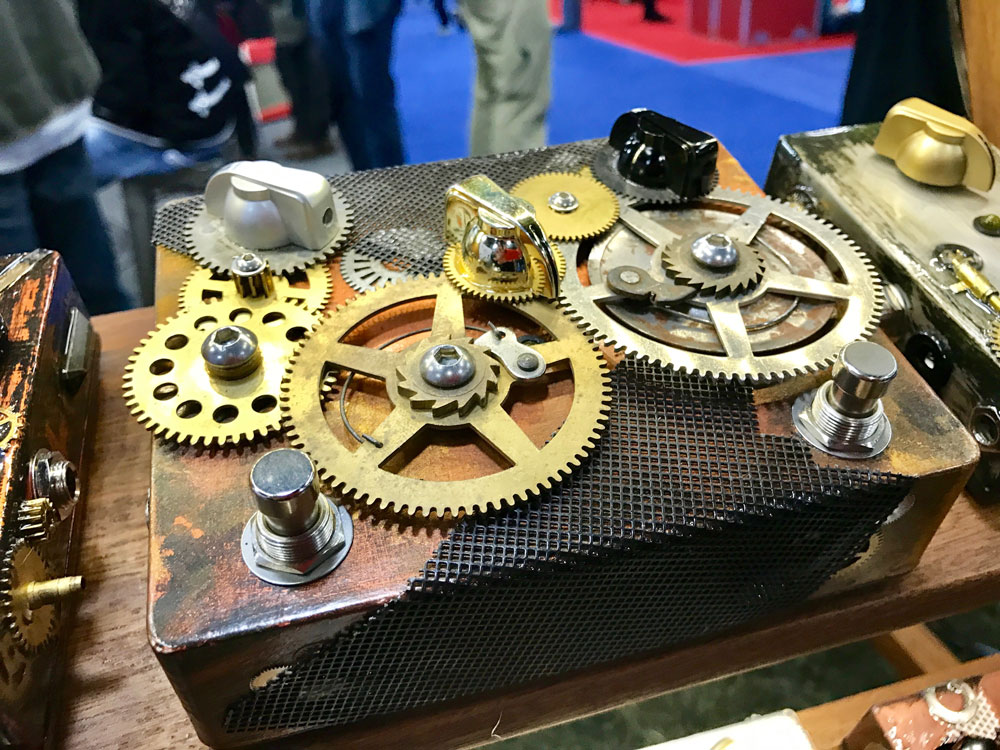
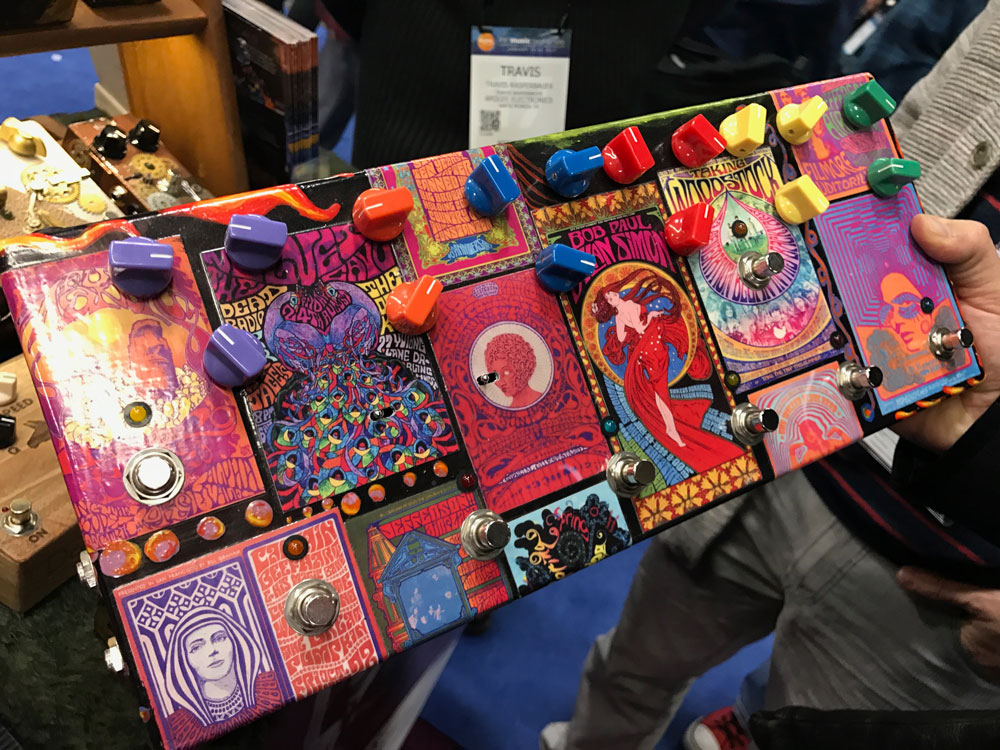
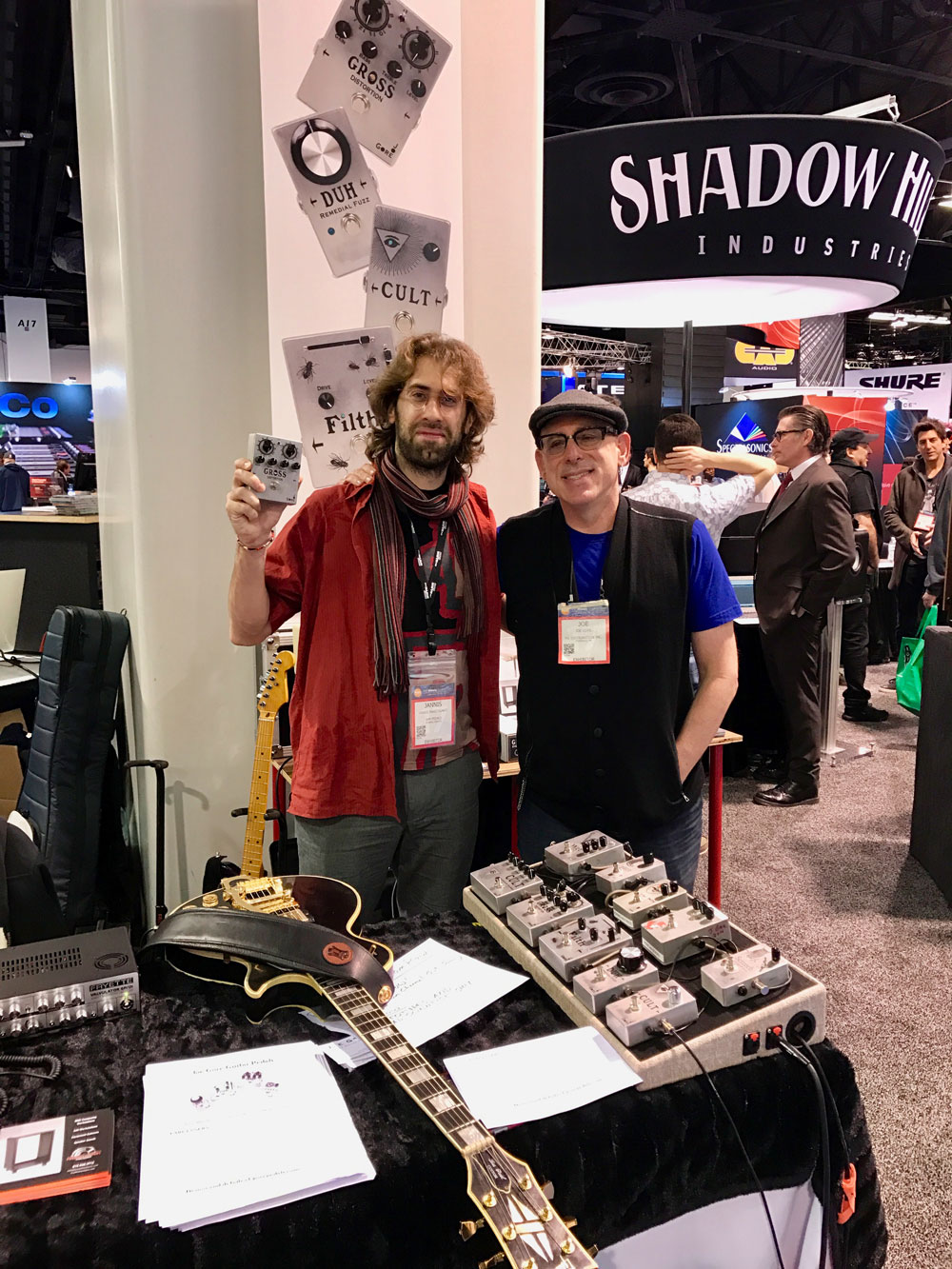
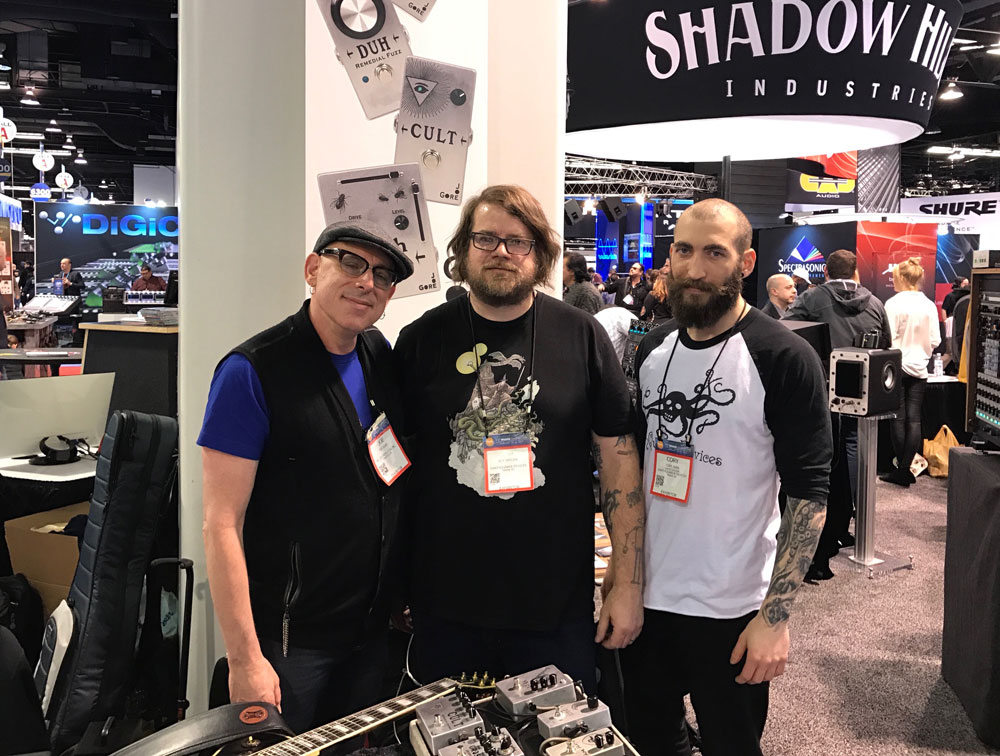
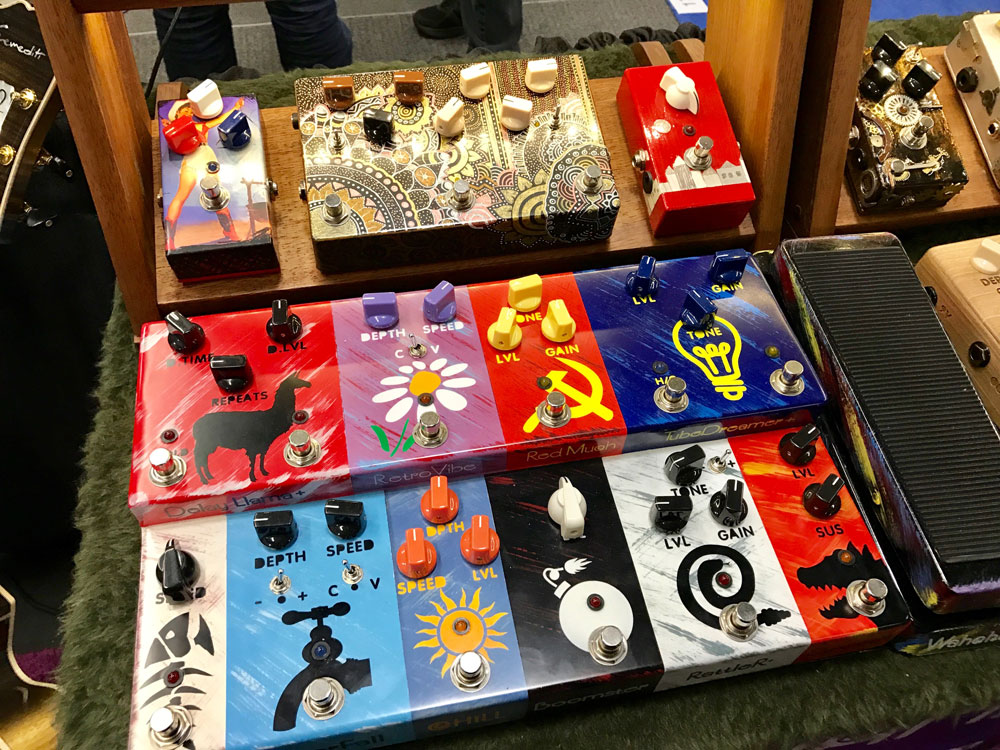
You know what sucks about attending NAMM as a manufacturer rather than a gear writer? I was epoxied to my booth all day, and I barely saw anything other than my guitar pedals. But on one rare break, I got to hang out with Jannis Anastasakis and his crew from JAM Pedals of Athens, Greece. (I highlighted some of their beautiful work in my pathetically skimpy “NAMM report.”)

Happily, there’s more to celebrate here than great visuals. JAM builds lovely versions of many classic analog effects. Their sounds and production quality are stellar, and JAM often adds modern updates such as realtime expression control, extra knobs, and internal trim pots for customizing tones. It’s quality stuff, used by many a guitar star.

And guess what? Jannis loaned me one of his magnificent Custom Shop analog pedalboards. Γαμώτο!

Sadly, I must now pack up and return this pretty pedalboard. But I’ll be getting my own JAM Delay Llama Supreme, an expanded version of the analog delay heard here, with tap tempo, a cool modulation section, and the almighty infinite-hold switch. (I reviewed it for Premier Guitar a few months ago.)

In the meantime, this experience makes me want to try my own DIY pedalboards. Not as an item for sale — just as a way to group related effects in a single enclosure for stage use. Gears are spinning ….

Categories
guitar

Meet the Resistocaster!

Here’s a new guitar I put together using Warmoth parts and Lollar Gold Foil pickups.

Around the time I started assembling the Resistocaster, I reviewed the cool new Supro Westbury — another guitar with gold-foil pickups — for Premier Guitar. It was an interesting juxtaposition, because the Lollar pickups are cloned from the models in vintage Teisco guitars from Japan, while the nouveau Supro pickups are based on the gold foils made in the ’50s and ’60s by Chicago-based Valco and used in several of the brands the company produced.

While the two sets don’t sound identical, they have much in common. Both provide full-frequency tones, with warm, cushy bass and open-sounding highs. Like vintage lipstick tube pickups, they have an attractively “hollow” character that always reminds me of an acoustic guitar. Gold foils are gorgeous for clean sounds, while overdriven tones are big and buttery, albeit it rather loose-sounding. (Though adding a bass-cut circuit to this guitar let me dial in tighter sounds.)

Another odd property: With almost all pickups, pulling back the guitar’s level cleans up tones on overdriven amps and dynamically responsive distortion pedals. (That behavior is pretty much the entire premise of my Cult pedal demo.)

But with gold foils, that just doesn’t work! As you lower the guitar volume when playing through distortion-producing gear, tones don’t clean up — they get a little quieter, then sputter out in the pot’s lower range. This isn’t intrinsically a good or bad thing, but as a player who tries to exploit the tonal shifts produced by varied guitar output, I was startled by this property.

At NAMM, I mentioned this behavior to Ken Calvet of Roadhouse Pickups, who created the Valco-style gold foils for the new Supros. He nodded in acknowledgement, and said it was due to the idiosyncrasies of the rubber magnets used in gold foils. (I probably wouldn’t understand the science even if he’d had time to explain it to me.)

But while it took me a while to get comfortable with the gold foils’ unusual dynamic behavior, I needed zero time to fall in love with their warm, character-rich tones. (This, by the way, is the same set of gold foils I recently demoed in my alternative Strat pickups video.

I love how this guitar turned out, and I expect to use it a lot this year. 🙂

Categories
Effects guitar

Nice NAMM Things

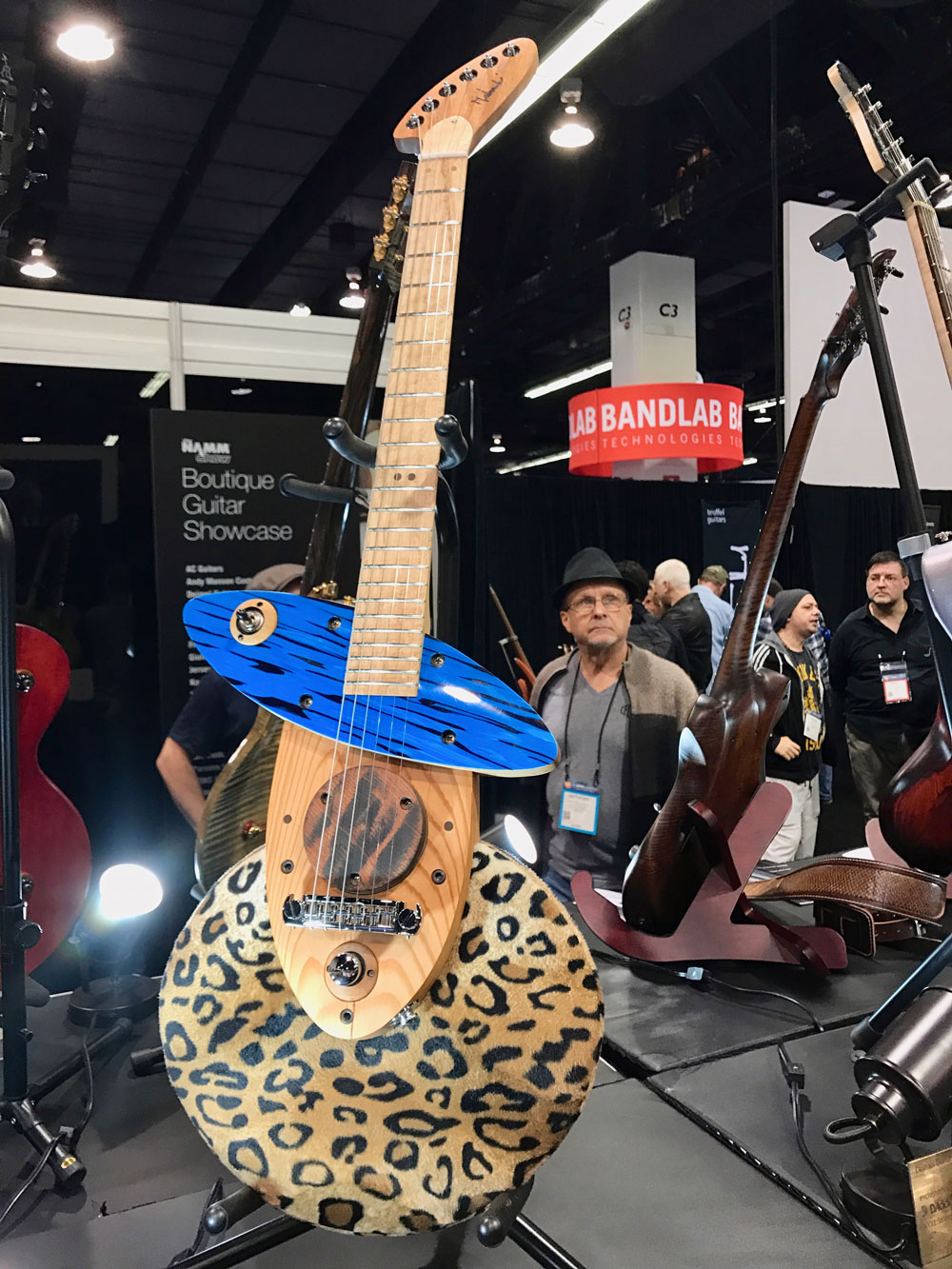
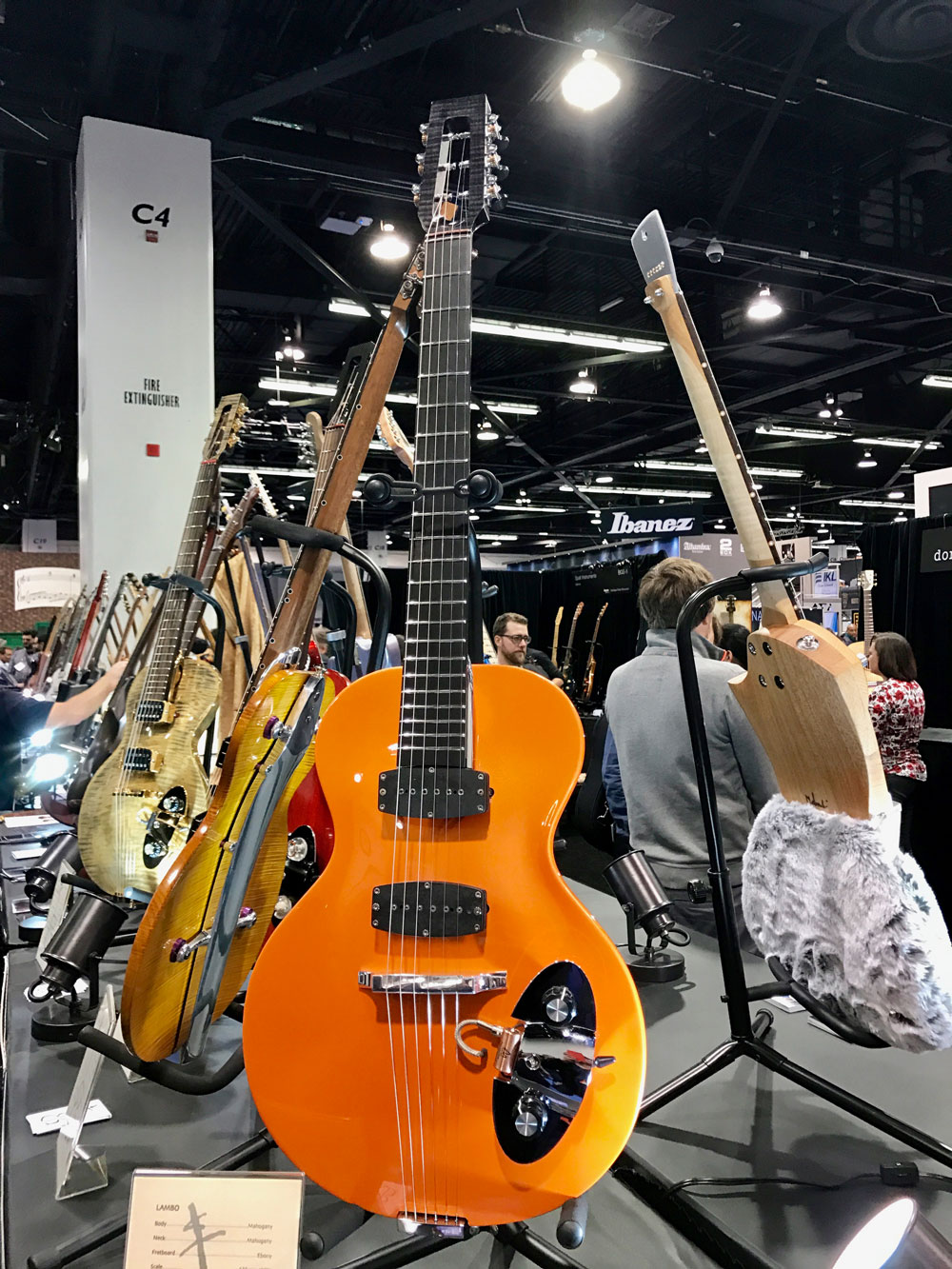
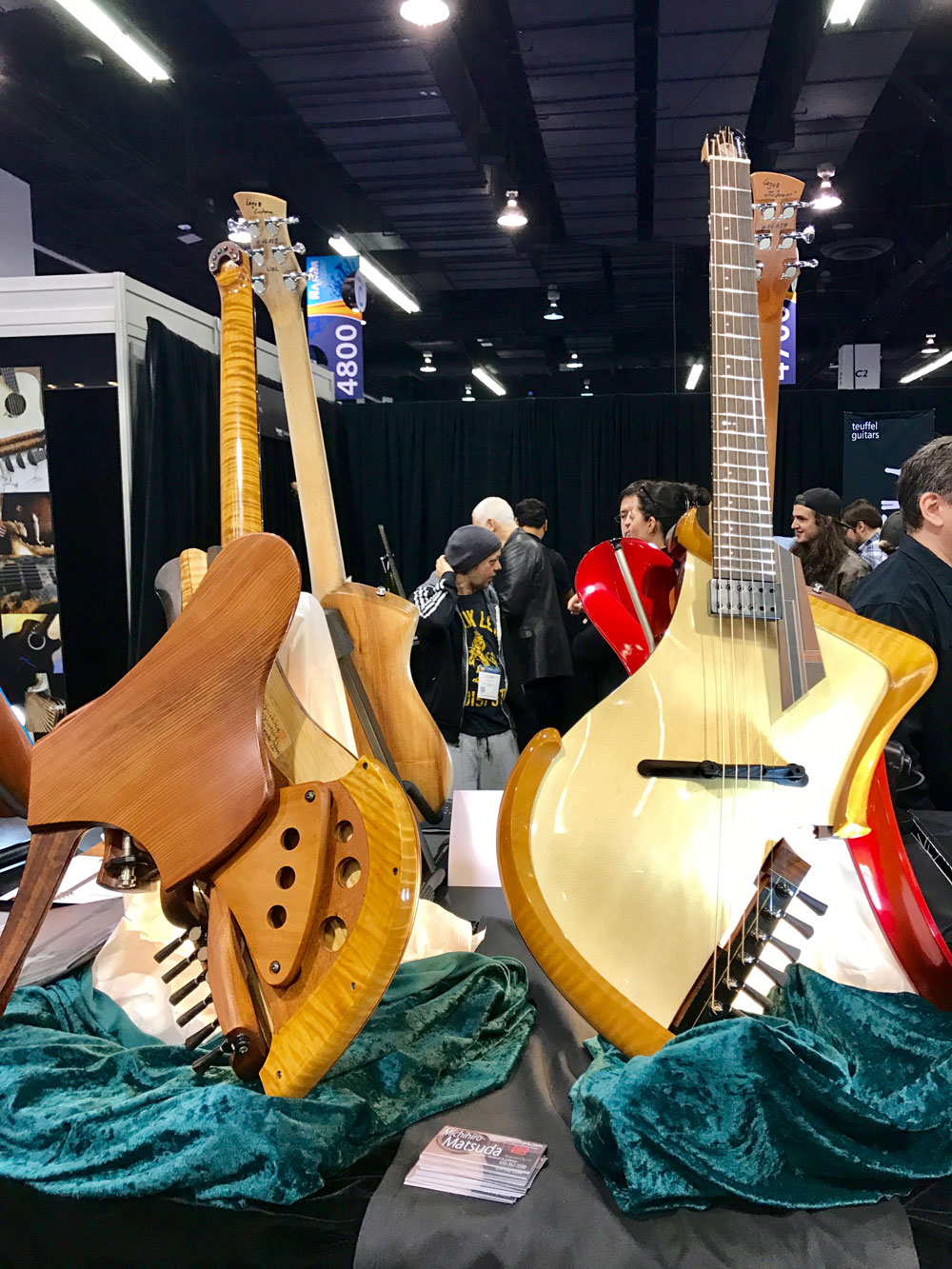
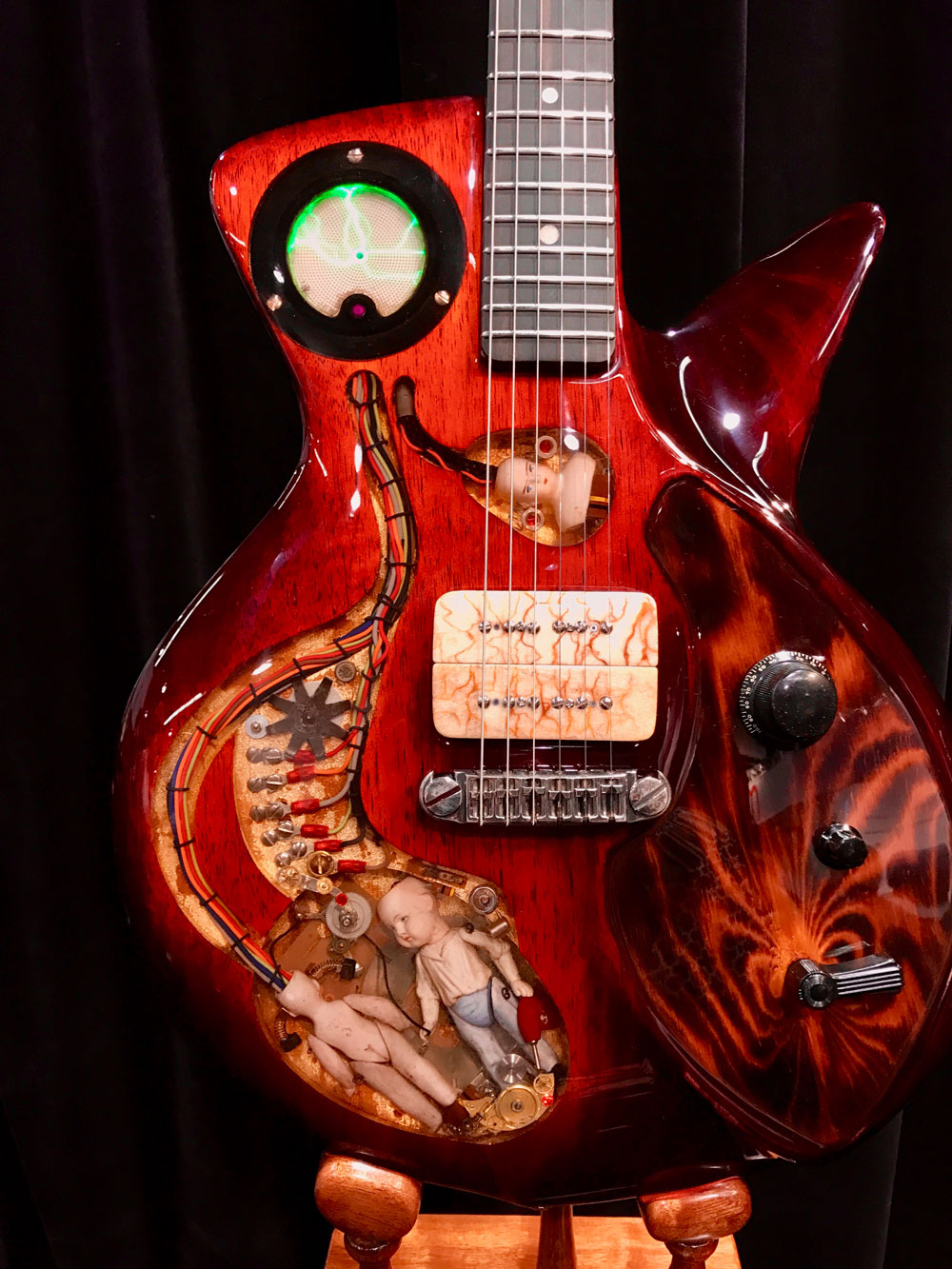
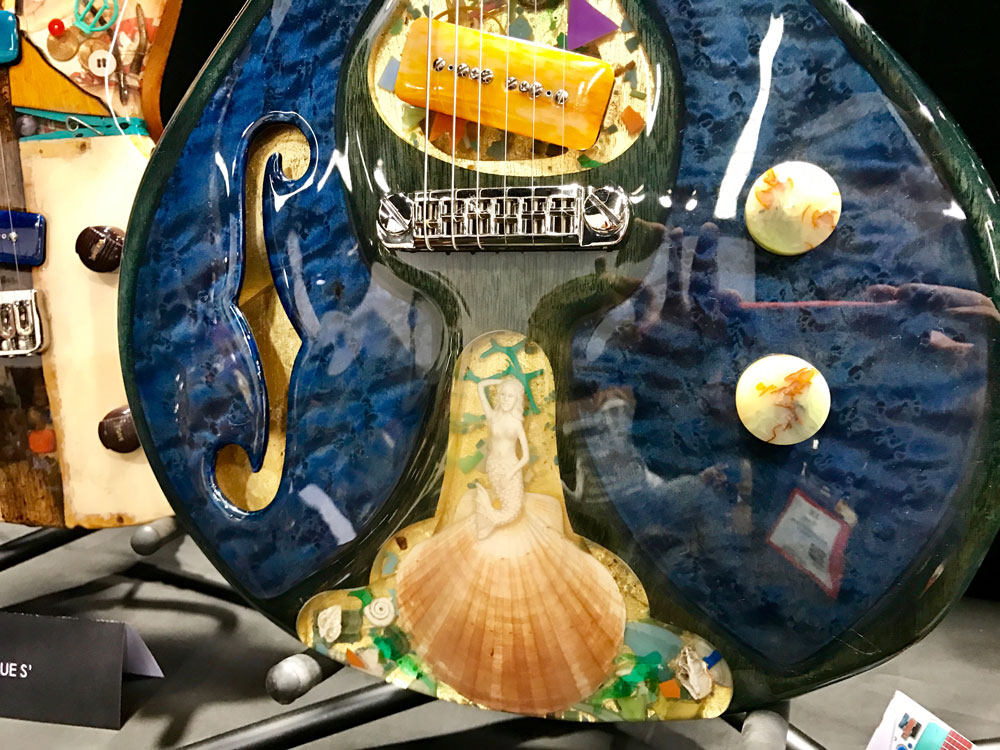
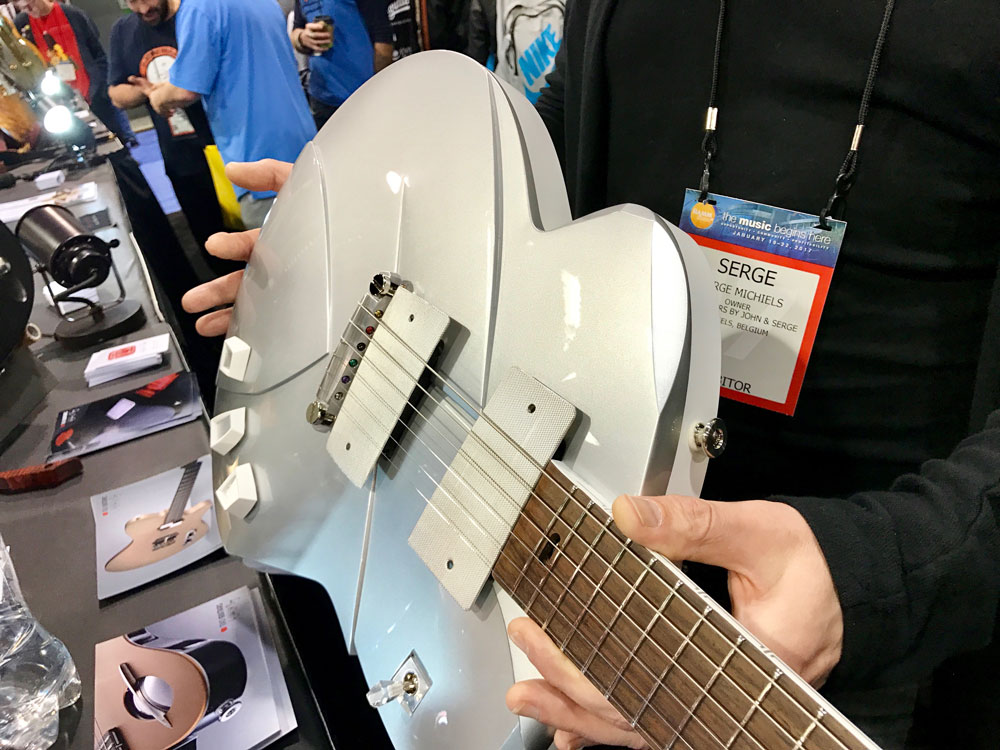
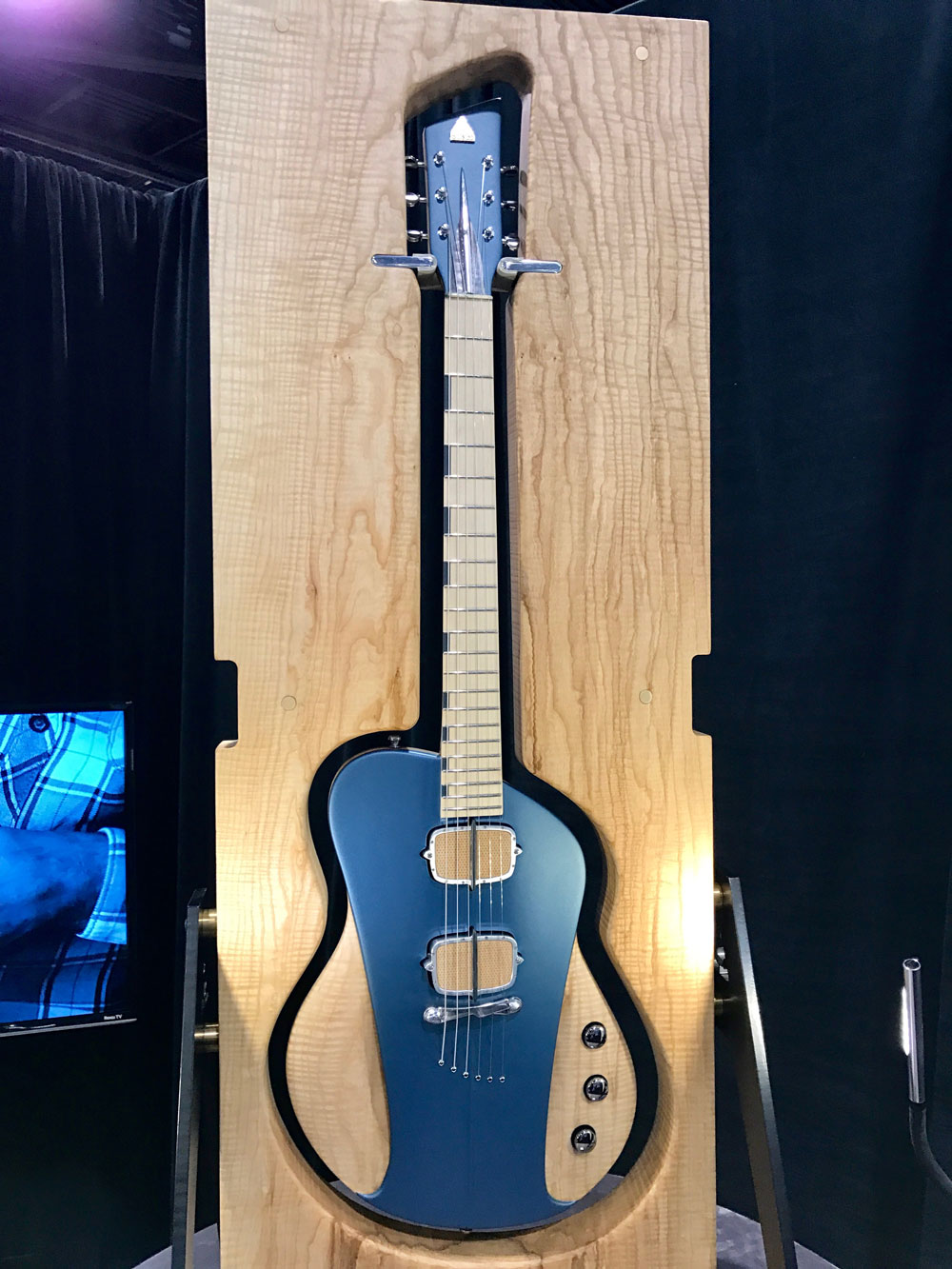
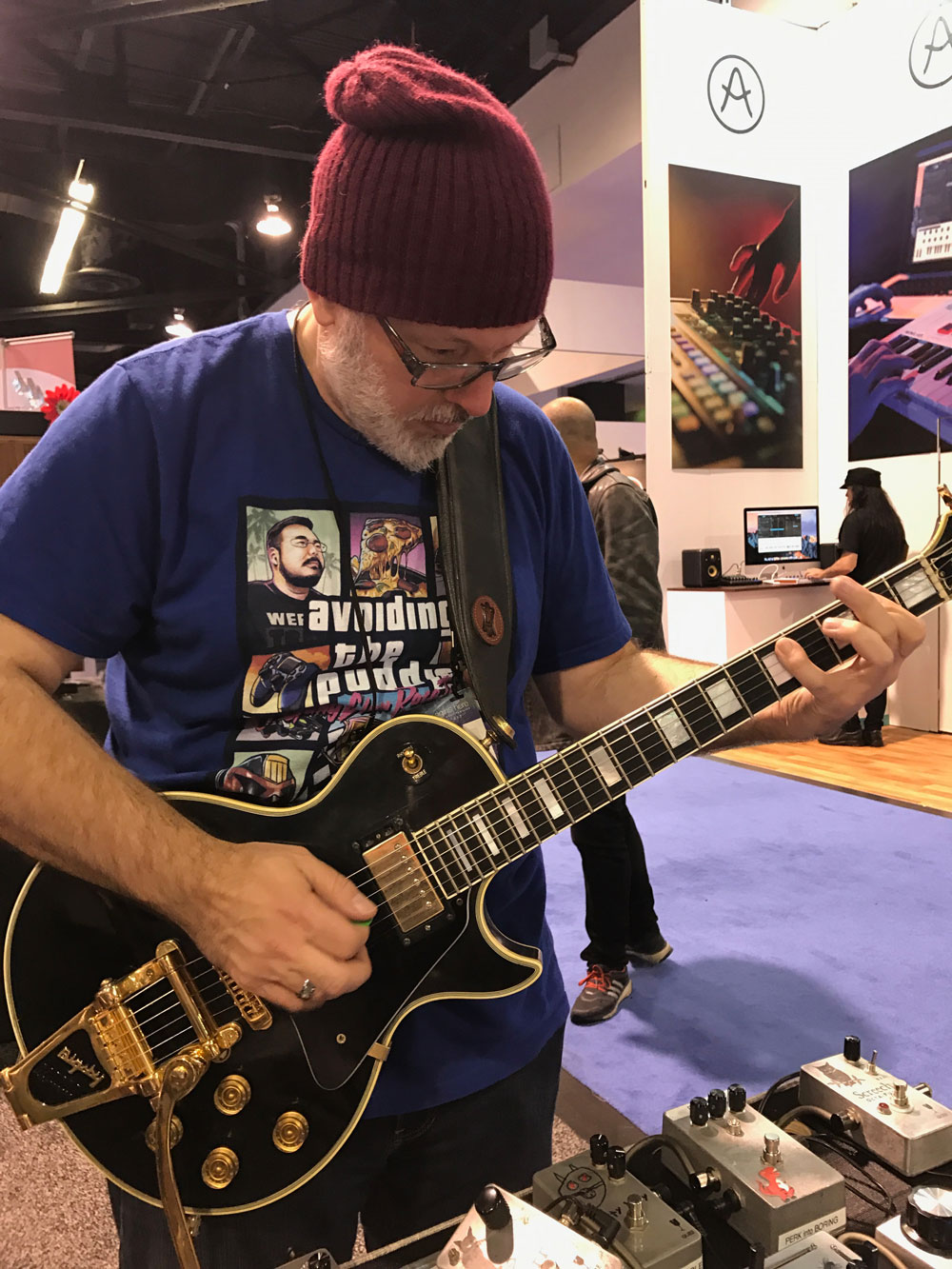
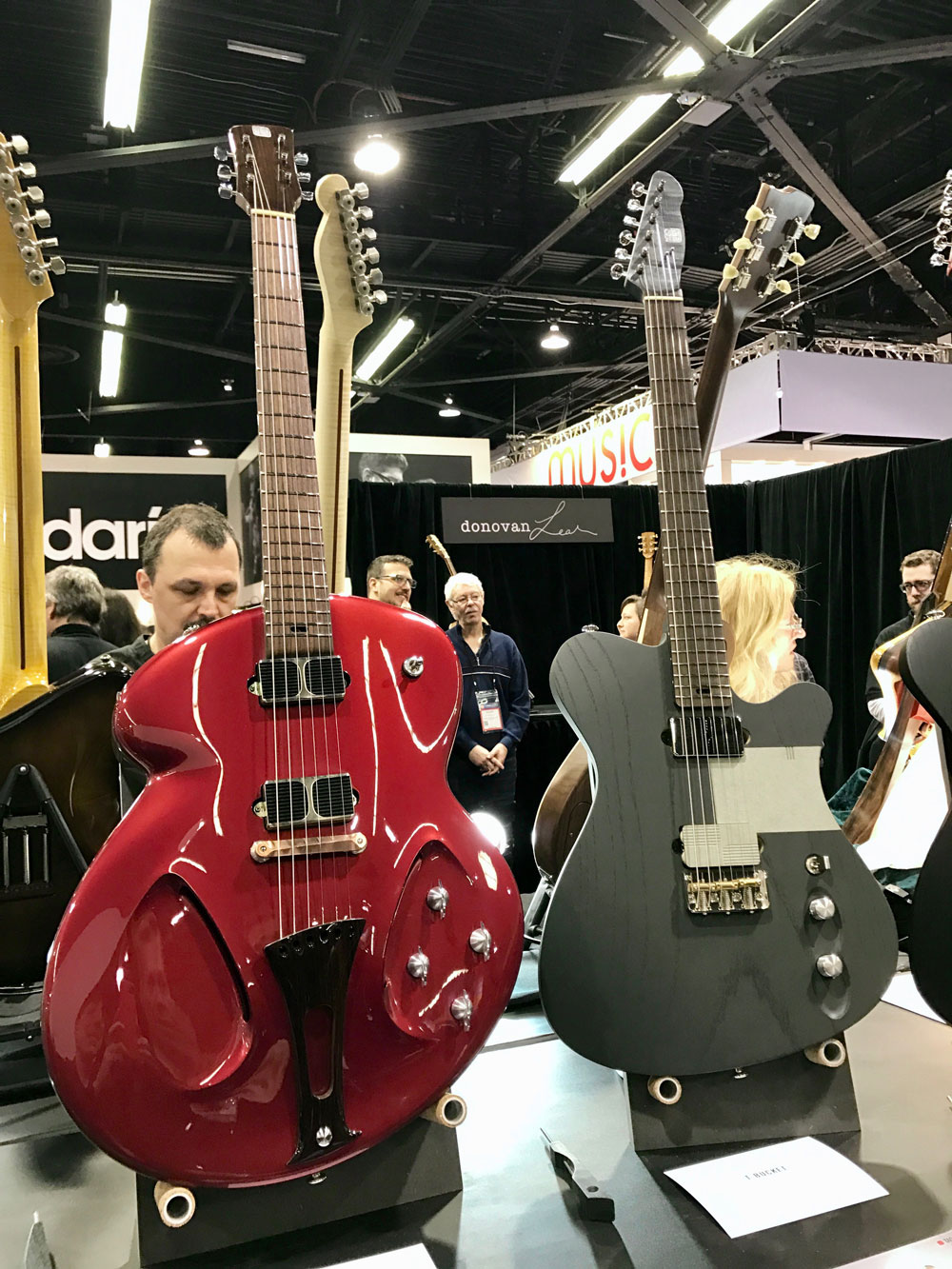
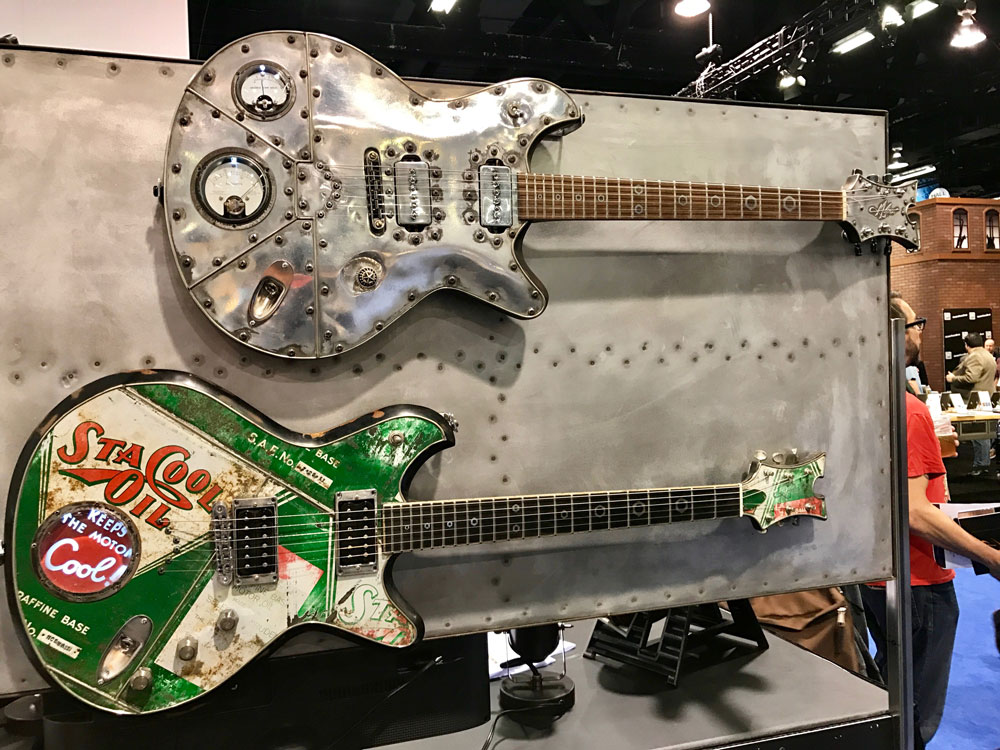
This doesn’t qualify as any kind of NAMM report. I was imprisoned behind the desk at my Gore Pedals booth, relieved only for bathroom breaks and a couple of visits with old friends. Even so, I saw some lovely and inspiring things, especially the visionary instruments at the Boutique Guitar Showcase and the ravishing stompbox visuals from Greece’s JAM Pedals. (JAM pedals sound great too.) Plus a few old friends dropped by. It was so fun, I went minutes at a time without thinking about the inauguration.

Jannis Anastasakis of JAM Pedals was kind enough to loan me one of the eye-popping pedalboards from his display (the last image in the slideshow). I’ll be posting a demo here soon!

Categories
Effects

NAMM I Am

I has a sign.

Is anyone attending the 2017 NAMM thing next week in Anaheim? I’ll be there demoing my pedals and checking out the latest guitars and gizmos. If you’re there, stop by and say hi! I’ll be at booth #6820 in Hall A (that is, the pro audio room where guitarists fear to tread) with M1, my distributor (and sister company of my partners, Vintage King). I’ll be playing and talking about my stuff, and there will also be headphone stations where you can try them out for yourself.

The headphone rigs are newfangled Valvulators from Fryette Amplification. These are cool 1-watt tube amps for direct recording, with amp-style controls plus speaker emulations. There will also be a set of my pedals at Fryette’s booth, #4844 in guitar-intensive Hall C.

After writing about other people’s gear for so many years, it’s still difficult for me to wrap my head around the notion that I’m attending the show as a manufacturer, not a “journalist.” But I just completed a key manufacturer’s rite of passage: I order a 24″ x 80″ retractable sign hyping my boxes, just so I can stand in its shadow. It feels so … grown-up.

I’m not officially announcing our 2017 releases ’cause we’re not 100% what they’ll be yet. But I will be bringing a box full of experiments and prototypes, which should be amusing, assuming my sketchy demo builds survive the road trip. I’m also bringing a couple of new DIY guitars that I haven’t shared here yet.

I’m not really up to speed yet on what new gear to expect, so I haven’t yet put together a must-see list. Is there anything you are particularly eager to check out? Anything I should know about? Thanks in advance for your tips!

Categories
Pickups

Ten Unusual Strat Pickups Tested

I should have been out buying nice presents for you all. Instead I sat around inhaling solder fumes. When the smoke cleared (mostly, anyway) I’d tested ten unusual Strat pickups in the same poor guitar.

Tested pickups sets:

Jason Lollar Gold Foils
Lindy Fralin Big Singles
Seymour Duncan Antiquity II Mini-Humbuckers
Jason Lollar Staple/P-90 set
Allparts Gold Foils

Verdicts? I dig them all, and not just ’cause I’m too polite/chicken to say otherwise.

I love the Lollar Gold Foils so much I’m assembling a new parts guitar to surround them. I’m going to keep the Fralin Big Singles in the demo Strat, at least till the next Mongrel Strat Project. I’m going to try putting the mini-humbuckers in a “parts” Tele at some point. I originally reviewed the Lollar P-90 set for Premier Guitar (where I evaluated them the “right” way: in a Gibson guitar), so they go back to manufacturer, though I’d sure like to own a set someday. Meanwhile, the Allparts set isn’t in the same league as its high-end competitors, but at a mere $30 per pickup, it costs about 1/4 the price of its expensive rivals. You could definitely do a lot of lo-fi damage with a pair of these surprisingly solid-sounding pickups!

This article joins the long list of experiments in the Mongrel Strat Project archive.

And how about you? Have you but stuffing any pickups into places where they don’t belong? Maybe that’s why Santa left you sucky presents this year.

Categories
Music

You Go, Gill!

My friend John Bohlinger from Premier Guitar just shot a Rig Rundown video with one of my utmost guitar heroes, Andy Gill.

I’ve rhapsodized about Gill’s guitar voice more times than I can count. But the aspect of his playing that I love the most is the way he created such a definitive voice with zero reference to prior rock and blues. If I’d ever worked at Art Forum like my wife did, I could probably draw comparisons to Luigi Russolo’s futurism and Jean Dubuffet’s art brut, but really, I just dig Gill’s blunt, brutal badass-ness.

The big surprise for me in this interview: These days Gill plays through a laptop running Logic, and he’s using some of the stuff that I helped make while sound-designing guitar components for Apple. This news makes my year (though given the year we’ve all been through, walking to the corner store without breaking my ankle would probably also make my year).

Nice work, JB! And thanks, Andy, for the endless inspiration since 1979’s Entertainment!

Categories
Acoustic

“Surf’s Up” for Guitar Quartet

I’ve been nursing the idea of arranging this most exquisite of Brian Wilson songs for multiple guitars for a long time. But two recent developments spurred me to finally do it.

Spirit of ’67
The first was my plan to record my first-ever solo album — a collection of heavily reinterpreted songs from 1967, tentatively titled Sixty-Seven Ghosts, marking the 50th anniversary of that memorable musical year. I was eight years old then, too young to play the music, but old enough that the music’s “ghosts crowded the young child’s fragile eggshell mind.” (I quote Jim Morrison, one of many crucial artists who debuted in that year.)

When I started playing music seriously a few years later, I had a sense that I’d missed the party, and that the music of ’67 was simply more meaningful than my early-’70s middle-school soundtrack. (I was wrong, of course. Subsequent decades have proven that if anything, the first years of the new decade produced at least as much great stuff. Yet 1967 had a mythic aura for me, and much of that year’s music has pursued me for a half-century.)

I wasn’t hip to “Surf’s Up” till those middle-school years, when the Beach Boys belatedly included the track on their 1971 album of the same title. The FM radio hits from that disc were “Long Promised Road” and “Feel Flows” — “Surf’s Up” was simply the record’s quirky coda. A few years later I discovered “Surf’s Up” lyricist Van Dyke Parks’ solo albums, with their similarly surreal lyrics and left-field song structures.

The Smile Mythos
But I had no inkling of the song’s true provenance till some 20 years later, when pop fans began to grow obsessed with Pet Sounds and its “follow-up that never was,” Smile. Only then did I learn that “Surf’s Up” was originally from ’67, the intended centerpiece for that literally legendary album. By then we all knew the Brain Wilson crackup story, with its echoes of Greek tragedy. He’d held the music of the gods in the palm of his hand — so legend had it — only to have it ripped away by demons of self-doubt. Madness and self-destruction ensued.

My personal Smile mythology was heavily influenced by Lewis Shiner’s 1993 novel Glimpses (which I wrote about here). In it, a modern music fan realizes he can go back in time to the moments when great musical masterpieces were lost. (Sounds silly, but trust me — it’s not.) The highlight for me was the Wilson sequence, where our protagonist meets Brian at his peak moment of genius and fragility, right before everything went off the rails. The scene where Brian played the brilliant new songs for his hater bandmates haunted me: