This first installment of my 2013 NAMM report focuses on products for the digital guitarist. In the coming days I’ll be doing posts on analog amps, guitar, stompboxes, and accessories. (But maybe not as quickly as I’d like, because I’ve also got to cover MacWorld in San Francisco this weekend.) This is cross-posted from Create Digital Music, one of the few music sites I visit every frickin’ day.
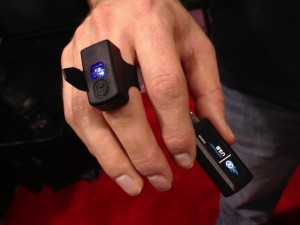
We guitarists tend to be a technologically conservative bunch, yet there was no shortage of forward-looking products at NAMM 2013.
Not that everyone was looking in the same direction. Guitar processors are getting smarter, but they’re doing so in different ways. Are we entering an era when every guitar, amp, and pedal in our effect chain will boast powerful processors and a dedicated editing environment? Or will we just simply centralize everything in some future i-device? (I suspect that latter, and tend to think that smart pedals and smart amps represent an evolutionary cul-de-sac. But that cul-de-sac might be a real nice place to hang out for a couple of years.)
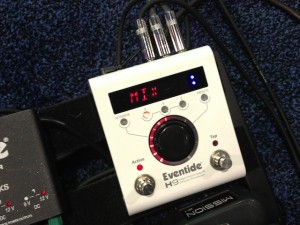
One release I found particularly telling was Eventide’s H9, the latest addition to the company’s software-intensive stompbox line. The H9 has few new sounds, but can run all the DSP algorithms from Eventide’s other guitar stompboxes. The $499 box will ship late this quarter, preloaded with 9 of Eventide’s 43 current algorithms. Players hungry for more will be able to purchase them а la carte from an online store. (Eventide hasn’t yet finalized the add-on pricing.) The H9 also includes a handsome and full-featured iOS app for editing and managing patches via Bluetooth. There are no current plans to release an editor for OSX or Windows. (more…)