Categories
Music

Bring Out Your Lists!

Man, pontificating ain’t easy! KMI, who make the SoftStep controller I use almost every day, solicited a “Albums That Meant a Lot to You” list for their website, and I replied with “Ten Albums That Made My Head Explode,” which just went live on their site. And that made me want to hear your lists.
01_Top 10

I don’t know why exercises like this can be so hard. First you can’t think of enough … and then too many … and then you worry you forgot an important one … and then you spend an hour reflecting on whether Joni Mitchell or Béla Bartók is more important … and then you read the whole thing through and realize how insufferably pretentious you sound. At some point, you just surrender and hit SEND. And that’s the moment you start second-guessing the whole thing.

For such a low-stakes effort, the pressure is high! And now I’m putting the pressure on you: I’d love to read your lists of mind-exploding music. Please post them to comments below, and add as much detail as you like.  (And feel free to use the “runners up” dodge — I certainly did.)

I’m not sure if there’s much difference between “music that altered my mind” and “best music” lists. I guess it depends on how much importance you place on music that leaves brain specks all over your walls. For me, the brain-speck stuff usually is the best music.

I realized after the fact that only about half my picks have audible guitar parts. How about yours?

Categories
Music

Does Musical Geography Still Matter?

Sorry my blog posts have been a bit scarce lately. A few weeks ago, my super-cool 91-year-old dad (who sometimes posts here) went to Joshua Tree, tripped, and fractured his hip. So to help out, I’ve been shuttling the 400 miles from my home in San Francisco to West Covina, the right-wing, smog-shrouded LA suburb where I grew up, and where Dad still lives with his equally cool wife. (He’s mending well, BTW, and is running his physical therapists ragged.)

On my last road trip, I got to thinking about musical geography in America, and how it once defined our music. Not too many decades ago, we associated musical styles with the regions that produced them. Cities had sounds: Detroit. Frisco. Philly. Memphis. Do those distinctions retain any meaning whatsoever? Or has music succumbed to the mass-media homogeneity that transformed the once vibrant medium of radio into the soulless monolith of Clear Channel, and once-glorious roadside America into an bleak expanse of Walmarts and Olive Gardens?

Should you embrace your hometown influences? Or flee them? [Pictured: West Covina dipshits.]
Should you embrace your hometown influences or flee them? (The dipshits I encountered on my last visit to West Covina made a strong case for “flee.”)

My general question is rhetorical — of course we’ve sacrificed regional color to a beige, big-box economy! But there’s a more specific underlying question: Does where you come from continue to have any bearing whatsoever on what your music sounds like? Is it different for a middle-aged guy like me — who spent at least a few formative years at a time when musical geography mattered — than for young musicians coming up today? And most important, what about you? Is where you learned to play reflected in how you play?

I’d fled LA literally and conceptually by the time I was 20. (A stupid move, perhaps — I’d probably have a more successful career had I stayed.) But do I still have Southern California in my hands? Have subsequent decades in Northern California overwritten them? Or does that stuff even matter anymore?

It’s hard to tell, looking at myself. I conform to some San Francisco musical stereotypes but not others. (I’m freaky and free-spirited, but I hate meandering stoner jams.) Meanwhile, LA continues to represent much I loathe musically, but I bear the permanent mark of the kitschy SoCal pop of the ’60s my mom played when I was a little kid. The Association, Herb Alpert, the Fifth Dimension. (You know — the real sound of the ’60s.) And while I’m probably just flattering myself, I’ve always felt a kinship with the warped perspectives on roots music provided by outsider Southern Californians like Waits, Cooder, and Van Vliet.

How about you? Does your country, state, or city color your music? Can we hear where you’re from when you strum?

Categories
guitar Music

Tonefiend Book Week 2013
Friday: Musical Fiction

Monday: Theory and Technique
Tuesday: Gear
Wednesday: Repairs and DIY
Thursday: Biography
Friday: Fiction

Tonefiend Book Week is simple: I discuss a few titles I’ve found particularly enlightening, useful, or entertaining, and then you jump in and do the same. I’ve organized the days of this week by subject matter. Today’s topic: musical fiction.

In comments to yesterday’s installment on musical autobiographies, several folks mentioned the Real Frank Zappa Book. Which reminds me of a quote often (and apparently incorrectly) attributed to Frank: “Writing about music is like dancing about architecture.”

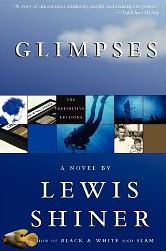
Glimpses
A music fan rescues ’60s rock via time travel. (Not as dorky as I’m making it sound!)

The line probably originated in reference to music journalism, but it applies just as well to fiction about music. Countless novelists and screenwriters are ardent music lovers. Yet there aren’t many novels or films that capture the act of music creation — what’s it’s like to be a musician.

The problem isn’t a lack of passion for music. Leo Tolstoy, Thomas Mann, and Victor Hugo were knowledgable listeners who channeled the emotions they perceived in great music into equally great prose. But even among literary titans, depictions of the music-making process tend to be as bogus as that clichéd Hollywood montage: Composer paces room. Furiously crumbles aborted manuscript page. Howls at moon. And then — Eureka! — a Masterpiece is born. [CUT TO END OF CONCERT, STANDING OVATION.]

Writers seem to do better depicting the worlds that surround music. For example, Jennifer Egan’s 2011 novel A Visit from the Goon Squad includes scenes set in the old San Francisco punk scene, and she nails the vibe. Many fine younger writers — Egan, Dave Eggers, Jonathan Lethem — are obvious rock geeks who skillfully evoke the experience of music consumption. There are also memorable depictions of fandom, notably Nick Hornby’s 1996 novel High Fidelity. But few books attempt to provide glimpses into the musicianly mind. (Actually, I haven’t yet read Lethem’s You Don’t Love Me Yet, which is set in the indie rock scene. Have any of you? I sure love his Motherless Brooklyn and Fortress of Solitude.)

At worst, smart writers sound stupid when attempting to write knowingly of music creation. I dig most Salman Rushdie I’ve read, but man, his 2000 “rock” novel, The Ground Beneath Her Feet is a stinker. Rushdie attempts an alternate rock history via his signature South Asian magic realism, and the result isn’t fantastical — it’s bunk. Sorry, partying with members of U2 doesn’t automatically afford vast insight into the musicianly mind. Or at least that’s been my experience. 😉

Categories
Music

Tonefiend Book Week 2013
Thursday: Musical Biographies

Monday: Theory and Technique
Tuesday: Gear
Wednesday: Repairs and DIY
Thursday: Biography
Friday: Fiction

Tonefiend Book Week is simple: I discuss a few titles I’ve found particularly enlightening, useful, or entertaining, and then you jump in and do the same. I’ve organized the days of this week by subject matter. Today’s topics are musical biographies and autobiographies.

Classic rock fans have been rewarded with many cool autobiographies in recent years: Keith Richards’ Life, Patti Smith’s Just Kids, Bob Dylan’s Chronicles, Neil Young’s Waging Heavy Peace, and Pete Townshend’s Who Am I: A Memoir, to name a few. I’ve read Richards and Smith, and I plan to read the others. Any thoughts about those and similar titles?

And then there are the great jazz autobiographies, such as Miles Davis’s Miles and Duke Ellington’s Music is My Mistress. Despite their alleged omissions and inaccuracies, both are epic accounts of epic lives dedicated to epic music. (So which is better: a lively, lying-through-the-teeth autobiography, or a dry but truthful biography?)

But my favorite musical autobiography is Hector Berlioz’s Mémoires, first issued in 1865.

Screen Shot 2013-06-05 at 2.36.11 PM
Hector Berlioz: total punk!

This, admittedly, isn’t a book for all musicians, or even most musicians. It concerns the explosive classical music scene of 19th-century Europe. If that topic holds no interest, the Mémoires probably won’t either.

But consider: Berlioz (1803-1869) is, along with Debussy, France’s greatest composer. He was a founder of Romanticism, and the first composer to fuse literature and instrumental music on a grand scale. He helped create the modern concept of orchestration and wrote the first orchestration manual. And of all the great composers, Berlioz is hands-down the best writer. He is arrogant, irreverent, sarcastic, and blisteringly funny. If you enjoy, say, the acidic humor of Mark Twain’s essays, you’ll dig Berlioz’s voice.

And like Twain, Berlioz played guitar. (More on that in a bit.)

The Mémoires drip attitude from page 1:

Needless to say, I was brought up in the Catholic faith. This charming religion (so attractive since it gave up burning people) was for seven whole years the joy of my life, and although we have long since fallen out, I have always kept the most tender memories of it.

Berlioz's music was often less than subtle. Here's how one cartoonist depicted it.
Berlioz’s music was often less than subtle. Here’s one contemporary caricature.

…and it never lets up. We meet the era’s greatest composers and performers and learn what it was like to be a professional musician in an era before recorded music. Concerts were longer. Audiences were more passionate. Wars were waged in the music journals. If you think going on tour today is demanding, imagine it in an era of unpaved roads and horse-drawn carriages.

Categories
Music

14th-Century Freakout!

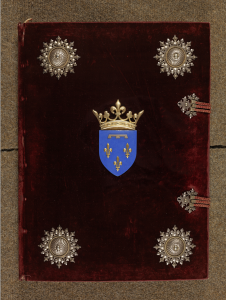
Codex Chantilly
Codex Chantilly: the electrifying page-turner that blew the lid off the perverse musical excesses of the late Middle Ages!
NOTE: I am a known perpetrator of musical hoaxes, but this isn’t one of them. This bizarre composition really is over 600 years old.

As Marsellus Wallace once quipped: “I’m’a get medieval on your ass.”

I’ve been obsessing again on a medieval composition that’s fascinated me since my geeky teens. It’s Fumeux fume par fumee, a bizarre artifact from a bizarre moment in music history: France in the final years of the 14th century.

(If you’re wondering why I was listening to medieval and Renaissance music when I was 17 instead of Zep and Floyd, and what the stuff brings to my guitar playing today, read on. But first, that freaky music!)

The world that produced Fumeux fume par fumee wasn’t your storybook Middle Ages. We’re talking Hundred Years War, Black Death, Papal Schism — and a radical musical style of head-spinning complexity and abstraction. It was dissonant music for dissonant times. The death rattle of the Dark Ages.

The 14th century had witnessed the rise of ars nova, a florid and intellectual style characterized by bold new approaches to counterpoint and musical structure. But by the 1380s or so, ars nova had mutated into ars subtilior, an even more abstract and experimental style.

“Ars nova” means “new art.” It was.

“Ars subtilior” means “more subtle art.” It wasn’t — unless by “subtle,” you mean “characterized by extreme dissonance and chaotic rhythms.” And Fumeux is a perfect embodiment of this radical style.

Here’s what I’m talking about:

WTF, right?

You probably don’t need me to specify why this music is so freaky, but I will anyway: 

Categories
guitar Music

The Best Music Notation Software for Guitarists?

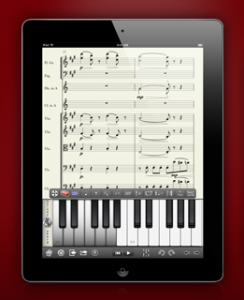
Since New Year resolutions expire at midnight, January 7th, I’m racing to realize my goal of finally becoming fluent with music notation software before the sands run out.

A new way to feign productivity in cafes!

I’d like to share some initial impressions about Notion. This isn’t a full-fledged product review — just a few thoughts about a half-dozen features I dig. (Most also apply to Notion’s sister app, Progression, which compiles all of Notion’s fretted-instrument tools, but omits the orchestral stuff. If you only plan to notate for guitar, the lower-priced Progression is probably all you need.)

1. Appropriate complexity. Two programs, Sibelius and Finale, dominate the music notation field. Both are powerful, deep programs. Most notation pros use them because they’re packed with features essential to “music engraving” (the archaic and pretentious term for the process of preparing music for publication).

Categories
Bass guitar Music

Resolutions, Anyone?

Resolutions 2013

I tend to regard the New Year’s resolution like New Year’s drinking: not necessarily a bad tradition, but one I feel no guilt about ignoring most years.

But since I have some specific musical goals in 2013, I figured I’d share ’em — and open the floor to anyone who feels inspired to disclose his or her sonic goals for the coming year. Please post your personal promises to comments!

Here’s my short list:

Categories
Acoustic Amps Bass Digital DIY Effects Gigs guitar Music Pickups Recording Technique

Who Dares Predict Our Fretboard Future?

“We are all interested in the future, for that is where you and I are going to spend the rest of our lives.” — Criswell, Plan 9 from Outer Space

UPDATE: Wow, I can’t believe all the cool stuff folks have been posting to comments. I find myself feeling quite inspired about the future of instrument — when I’m not laughing so hard I spit coffee all over my laptop. Thanks for all great ideas. Keep ’em coming! 🙂 :thumbup:

Prophecy is for suckers. Who’s stupid enough to go on record with bold prognostications about the future of music and music-making, given the near-certainty that the words will reappear someday to bite you on the ass?

Well, me. And, I hope, you.

So I invite my fellow foolhardy loudmouths to join me in sharing their half-assed guesses wise and well-informed predictions about our brave new fretboard future.

The author of the most compelling prediction wins one of my hand-built stompboxes. So does the author of the one that makes me laugh hardest.

Post your predictions to comments. I’ll go first. 🙂

Categories
Music

Hey, Gates: Do You Know Your Dots?

“Yes, but can you read bass clef too?”

My incoherent headline is inspired by one of my favorite music quotes, from the 1947 film The Song of the Thin Man: Detective William Powell is pursuing a clue based on a classical music theme, and suspicion falls on a hipster jazz musician. Powell asks another jazz musician whether the suspect was the sort of player who would use classical themes in his solos.

Absolutely not, sniffs the musician: “Swingin’ the classics is strictly off the cob! A gate who knows his dots takes his Beethoven and Brahms straight.”

Vintage translation: “It’s corny to mix classical and jazz. A swinger who can read music tends to prefer classical music in its unadulterated form.”

Modern translation: “Fusion sucks. Gimme the pure shit.”

Do you know your dots? Do you care? I happen to be a dot geek, and I don’t regret it. But really, it’s not that big a deal. And if I rattle off my favorite non-classical musicians (especially guitarists), well, the vast majority ain’t readers. I wish I could play as well as any number of guitarists who wouldn’t recognize middle C if it poked them in the eye.

Categories
Bass guitar Music Technique

What’s Your “Basic Concept?”

“They call me mad, but I’m actually a HAPPY scientist!”

There’s an interesting thread over on the Forum, started by reader Double D, who asked:

“Do you have a central core concept or inspiration that drives your playing? Are you squirrelled away with obscure harmony texts, or practising modes till your fingers bleed? Do you have go-to chord substitutions that define your sound? Do you have a creamy harmonic centre?”

Like most great questions, it’s really hard to answer (though some folks managed to reply in extremely articulate and compelling ways). I’ve been pondering it myself for the last few days, and the best answer I can come up with is something along the lines of what I hinted at in this recent post on chromaticism, namely a liquid sense of modality based on the notion that most of us Westerners really only perceive two modes — major and minor — but that there’s a vast amount if “wiggle room” when it comes to placing individual scale degrees.

To put it another way, most of what I play is based on simple tonic triads, major or minor, but the placement of all the other scale degrees is highly negotiable. For me, the advantage of viewing scales this way is that they remain grounded in harmony, and vice-versa. As opposed to the way many of us were taught modes: as purely mathematical sets of intervals divorced from their chordal implications — or just a bunch of diatonic scales that start on the “wrong” notes.

Hey, why is everyone nodding off, staring out the window, or checking their phones? Wake up and talk about the methods of your madness!

:cuckoo: