Categories
Pickups

Charlie Christian (and That Pickup)

Despite being obsessed with Charlie Christian for decades, I’ve never played a Gibson ES-150, the guitar he made famous. I’ve never even messed with a “Charlie Christian pickup,” even though it’s been a fairly common retrofit ever since the late Danny Gatton installed one in his Tele’s neck position. But I’ve always wondered: Could the C.C. pickup work in styles other than jazz? How would it sound in the bridge position? (The ES-150 had only a neck pickup.) And most of all, how would it sound with nasty fuzz?

Lollar Pickups helped me answer those questions with a loaner of three humbucker-sized Charlie Christian pickups. These differ cosmetically from the originals, lacking the cumbersome mounting hardware and the ornamental top plate. But they’re convincing sound-alikes, with similar magnets, wires, windings, blades, and modest output. (Their DC resistance is just under 3k ohms). Here’s what I discovered!

Clearly, it’s not a pickup for every rock guitarist (though it’s perfect for a swing-era jazz sound). Still, I found its non-jazz sounds strange and compelling, and I can definitely imagine using them in the studio. What do you think?

While making comparisons, I spend hours reacquainting myself with Charlie’s recordings, of which there are only a few dozen. His career was absurdly brief — it was less than three years from his first recordings with Benny Goodman through his death from tuberculosis (and probably other bad stuff) at age 25. But that was long enough to forever alter the guitar’s history.

Categories
Music

Suite ’66: Free EP by Goldenberg & Gore!

suite-66-cover

A free EP from we to thee!

Guitar genius Mark Goldenberg and I recently recorded Suite ’66, a set of improvised duets on four tunes from 1966, in honor of the 50th Anniversary of one of the greatest years in pop music.

We teased this “release” a few months ago with this rehearsal video. The EP features a more developed version of the same tune, plus three others.

Even if you’re not familiar with Mark’s name, you’ve probably heard his playing. Mark has been a leading LA sideman and session player for decades. He’s worked with Jackson Browne, Linda Ronstadt, Bonnie Raiit, Waylon Jennings, Chris Isaak, Willie Nelson, Hugh Laurie, Natalie Imbruglia, and most impressively, William Shatner.

Less well known is Mark’s beautiful solo style, which resides at the intersection of rock, classical, and jazz. I was instantly smitten when I first heard Mark play in person at one of Teja Gerken‘s solo guitar events a couple of years ago. Mark’s musicianship flabbergasted me, plus we bonded over the fact that we shared the same teacher, the late Ted Greene. (Though I studied with Ted when I was a teen, so much of his wisdom went over my head. Mark, however, worked with Ted after becoming one of LA’s most respected players, so he absorbed Ted’s insights on a far deeper level.)

Listening to Mark play is sheer musical ecstasy, whether or not I happen to be picking along with him. He’s been one of my greatest musical inspirations of the last few years. (Translation: I’ve ripped him off more times than I can count.)

Listen and download via SoundCloud:

Tech notes: We recorded and mixed this in my basement studio. I’m on the left channel throughout, and Mark’s on the right. (There are no overdubs.) My instruments are a Gretsch Spectra Sonic electric baritone guitar (kindly loaned by Xander Soren), a Veillette Avant Gryphon octave 12-string, and a Taylor 150e 12-string. Mark plays two magnificent guitars: his Kenny Hill classical and a Collings 001MH steel-string.

IMPORTANT: This non-commercial recording is shared as a gift between us and our friends. It may not be reused for any purposes, especially commercial ones. We’re simply inviting you to listen in on our jam session.

Categories
guitar Music

Tonefiend Book Week 2013
Friday: Musical Fiction

Monday: Theory and Technique
Tuesday: Gear
Wednesday: Repairs and DIY
Thursday: Biography
Friday: Fiction

Tonefiend Book Week is simple: I discuss a few titles I’ve found particularly enlightening, useful, or entertaining, and then you jump in and do the same. I’ve organized the days of this week by subject matter. Today’s topic: musical fiction.

In comments to yesterday’s installment on musical autobiographies, several folks mentioned the Real Frank Zappa Book. Which reminds me of a quote often (and apparently incorrectly) attributed to Frank: “Writing about music is like dancing about architecture.”

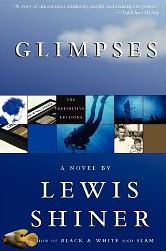
Glimpses
A music fan rescues ’60s rock via time travel. (Not as dorky as I’m making it sound!)

The line probably originated in reference to music journalism, but it applies just as well to fiction about music. Countless novelists and screenwriters are ardent music lovers. Yet there aren’t many novels or films that capture the act of music creation — what’s it’s like to be a musician.

The problem isn’t a lack of passion for music. Leo Tolstoy, Thomas Mann, and Victor Hugo were knowledgable listeners who channeled the emotions they perceived in great music into equally great prose. But even among literary titans, depictions of the music-making process tend to be as bogus as that clichéd Hollywood montage: Composer paces room. Furiously crumbles aborted manuscript page. Howls at moon. And then — Eureka! — a Masterpiece is born. [CUT TO END OF CONCERT, STANDING OVATION.]

Writers seem to do better depicting the worlds that surround music. For example, Jennifer Egan’s 2011 novel A Visit from the Goon Squad includes scenes set in the old San Francisco punk scene, and she nails the vibe. Many fine younger writers — Egan, Dave Eggers, Jonathan Lethem — are obvious rock geeks who skillfully evoke the experience of music consumption. There are also memorable depictions of fandom, notably Nick Hornby’s 1996 novel High Fidelity. But few books attempt to provide glimpses into the musicianly mind. (Actually, I haven’t yet read Lethem’s You Don’t Love Me Yet, which is set in the indie rock scene. Have any of you? I sure love his Motherless Brooklyn and Fortress of Solitude.)

At worst, smart writers sound stupid when attempting to write knowingly of music creation. I dig most Salman Rushdie I’ve read, but man, his 2000 “rock” novel, The Ground Beneath Her Feet is a stinker. Rushdie attempts an alternate rock history via his signature South Asian magic realism, and the result isn’t fantastical — it’s bunk. Sorry, partying with members of U2 doesn’t automatically afford vast insight into the musicianly mind. Or at least that’s been my experience. 😉