Tag: tone

  • Just How Heavy Can a U-Bass Get?

    I've had this cool Kala U-Bass for a few years. (I did a video on it back when I got it.) I've used it on a few things, especially when I want a sort of Latin-flavored Ampeg Baby Bass sound. (That solidbody upright from the 1960s is largely forgotten, except in Latin dance bands, where it's considered the classic bass.)

    But I've recently started rehearsing with a new band featuring my pals Jane Wiedlin, Pietro Straccia, and Dawn Richardson. And for perversity's sake, I decided to try using this little uke bass as the sole bass in band. (And Dawn hits those drums pretty hard!)

    The above video demos some sounds I concocted using Fractal's AX8, the "light" pedalboard version of Axe-FX II, the company's flagship amp/effect modeler. I'm quite encouraged by the results! AX8 has no power amp, so I've been plugging into one or both of the Fishman LoudBoxes I use for my solo looping gigs. And if we play somewhere with good monitoring, I can just bring the uke bass and a small shoulder bag. Total lazy old guy gig!

    The sonic missions were pretty simple: Amp up the lows. Nix as much of the ugly piezo pickup quack as possible. Concoct enough patches to make a nice, interesting palette for a set. There's still more to do, especially in terms of modifying my technique for the instrument. I'm still not quite comfy to the super-short scale. Also, I'm too accustomed to resting my picking hand on the body or bridge, and the piezo loves to amplify those thumping and scraping sounds.

    But overall, I'm encouraged. Plus it's just sick fun. :)
  • The One Weird Thing About Gold Foil Pickups

    Okay, the funky gold foil pickups found in cheapo Japanese and American gutiars in the 1950s and ’60s are popular again. And trend slut that I am, I’m smitten with them. But they do this one really weird thing ….

    It has to do with the capacitive relationship between the guitar volume knob, pickups, and downstream pedals and amps. If you don’t use your guitar’s volume knob as an expressive device, this behavior probably doesn’t matter. But if you do, this is potentially a big deal, one worth considering before purchasing a pair of gold foils.

    I first realized this as I was preparing my Gore Pedals demo for the NAMM show. Many of my pedal designs depend on the ability to alter tones from the guitar — it’s how I get away with using relatively few knobs. It’s the quality you hear in the first minute of my Cult pedal demo:

    You just can’t do that with gold foils. Apparently, the rubber magnets in gold foil have a different capacitive relationship with downstream gear, relative to conventional alnico- and ceramic-magnet pickups. Some of the peaky, high-resonance sound you get when rolling back the volume knob on a guitar with gold foils are pretty cool, and I can certainly imagine using them. But I definitely have to modify my technique when using gold foils.

    I recently reviewed one of the bitchin’ new Supro guitars for Premier Guitar. Their pickups are based on a different historic gold foil model, but they exhibit the exact behavior demoed in my first video above. After writing that review I spoke with Ken Calvet of Roadhouse Pickups, who created the excellent-sounding Valco-style gold foils for Supro. He acknowledged the unusual volume knob behavior and attributed it to the rubber magnets used in historically accurate gold foils.

    My first video above demonstrates this property using a capacitance-dependent vintage-style Fuzz Face. Not only do you encounter the same thing with many non-buffered (i.e., cool) fuzzes and boosters, but also when plugging directly into an overdriven amp. You can’t summon clean sounds from a dirty amp via the guitar volume knob the way you can with most conventional passive pickups.

    But despite all of that, I’m still crazy for the Lollar Gold Foils in my DIY Resistocaster:

    Has anyone else noticed this quirky characteristic?

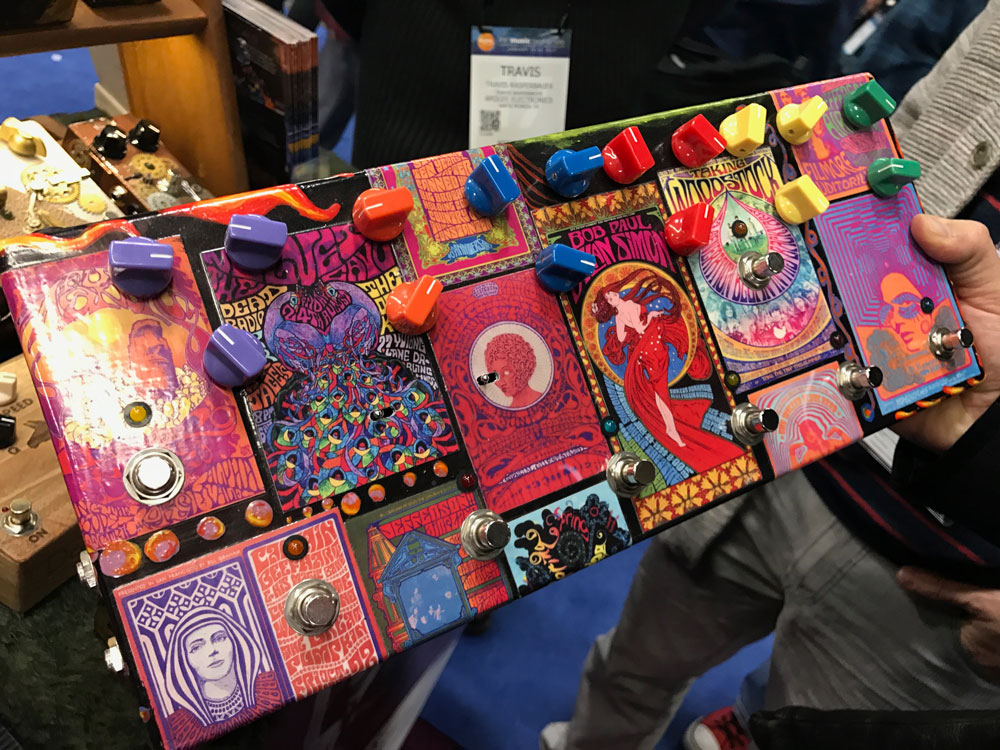
  • The Prettiest Pedalboard! (Plus: A New DIY Lipstick Tube Guitar)

    The Prettiest Pedalboard! (Plus: A New DIY Lipstick Tube Guitar)

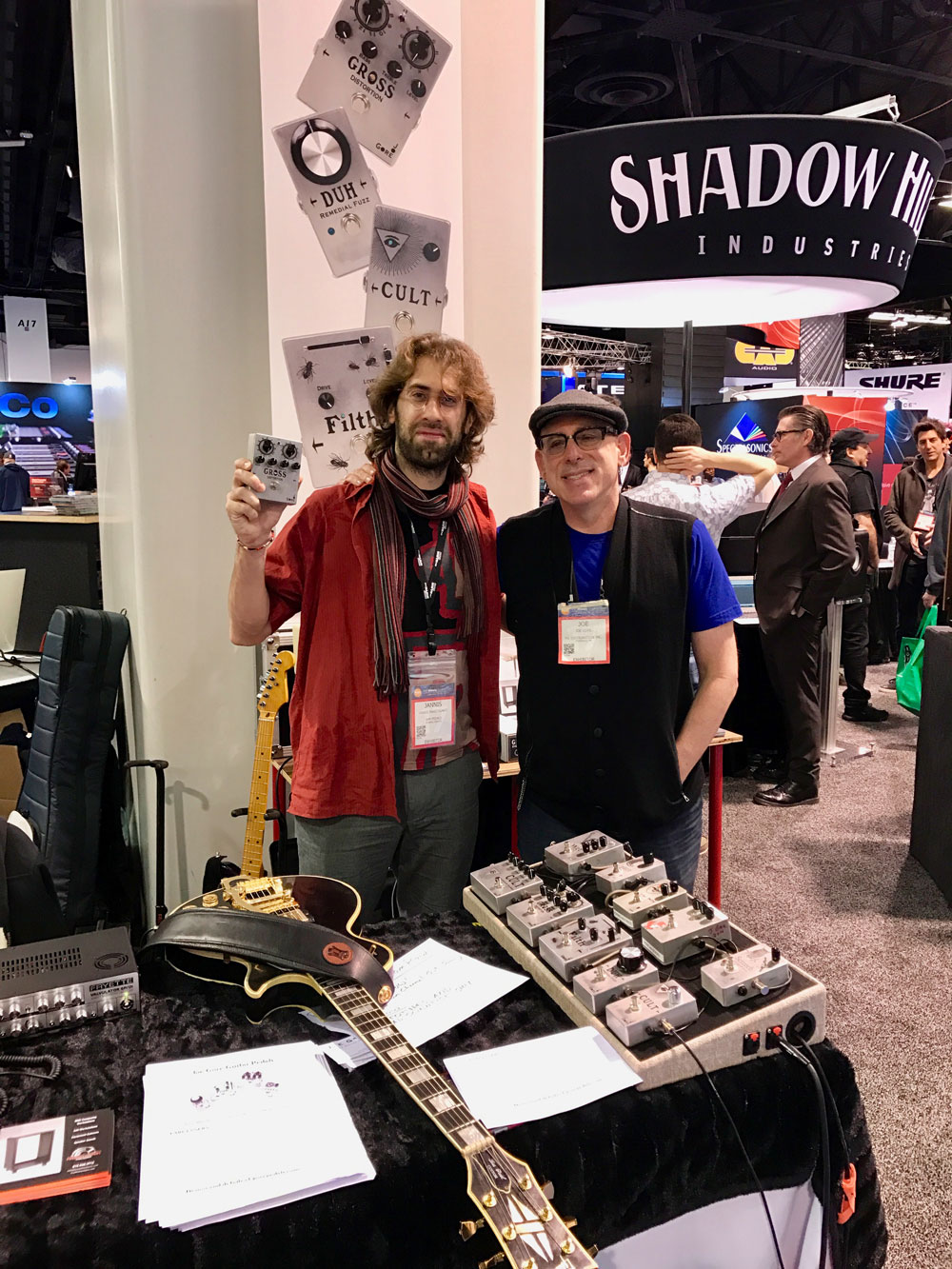
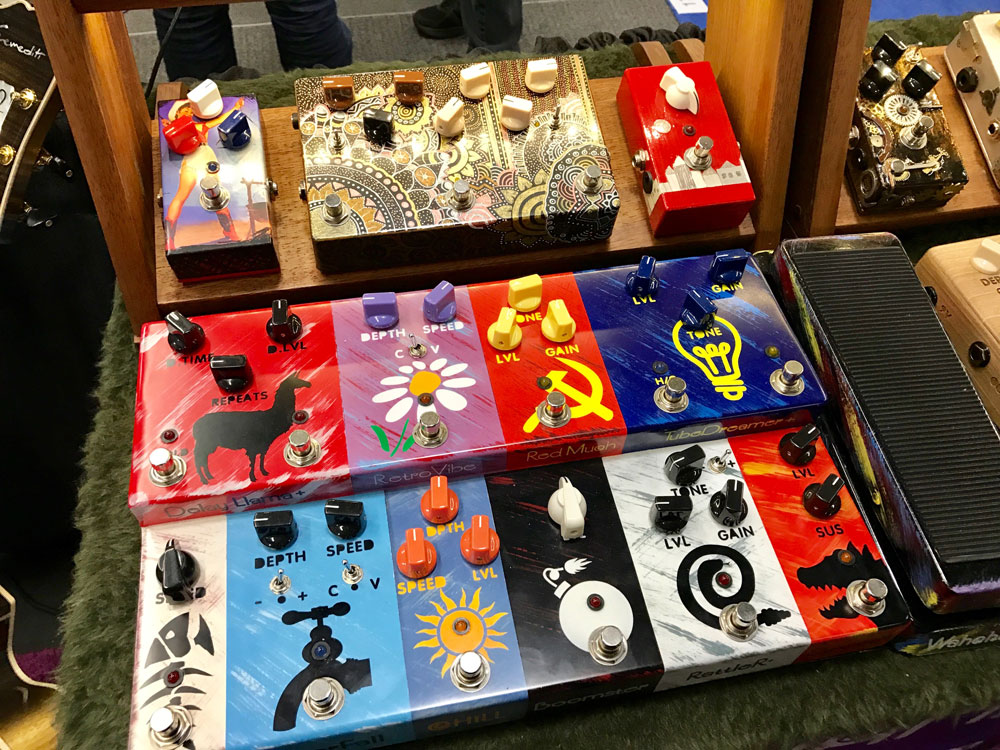
    You know what sucks about attending NAMM as a manufacturer rather than a gear writer? I was epoxied to my booth all day, and I barely saw anything other than my guitar pedals. But on one rare break, I got to hang out with Jannis Anastasakis and his crew from JAM Pedals of Athens, Greece. (I highlighted some of their beautiful work in my pathetically skimpy “NAMM report.”)

    Happily, there’s more to celebrate here than great visuals. JAM builds lovely versions of many classic analog effects. Their sounds and production quality are stellar, and JAM often adds modern updates such as realtime expression control, extra knobs, and internal trim pots for customizing tones. It’s quality stuff, used by many a guitar star.

    And guess what? Jannis loaned me one of his magnificent Custom Shop analog pedalboards. Γαμώτο!

    Sadly, I must now pack up and return this pretty pedalboard. But I’ll be getting my own JAM Delay Llama Supreme, an expanded version of the analog delay heard here, with tap tempo, a cool modulation section, and the almighty infinite-hold switch. (I reviewed it for Premier Guitar a few months ago.)

    In the meantime, this experience makes me want to try my own DIY pedalboards. Not as an item for sale — just as a way to group related effects in a single enclosure for stage use. Gears are spinning ….

  • Meet the Resistocaster!

    Here’s a new guitar I put together using Warmoth parts and Lollar Gold Foil pickups.

    Around the time I started assembling the Resistocaster, I reviewed the cool new Supro Westbury — another guitar with gold-foil pickups — for Premier Guitar. It was an interesting juxtaposition, because the Lollar pickups are cloned from the models in vintage Teisco guitars from Japan, while the nouveau Supro pickups are based on the gold foils made in the ’50s and ’60s by Chicago-based Valco and used in several of the brands the company produced.

    While the two sets don’t sound identical, they have much in common. Both provide full-frequency tones, with warm, cushy bass and open-sounding highs. Like vintage lipstick tube pickups, they have an attractively “hollow” character that always reminds me of an acoustic guitar. Gold foils are gorgeous for clean sounds, while overdriven tones are big and buttery, albeit it rather loose-sounding. (Though adding a bass-cut circuit to this guitar let me dial in tighter sounds.)

    Another odd property: With almost all pickups, pulling back the guitar’s level cleans up tones on overdriven amps and dynamically responsive distortion pedals. (That behavior is pretty much the entire premise of my Cult pedal demo.)

    But with gold foils, that just doesn’t work! As you lower the guitar volume when playing through distortion-producing gear, tones don’t clean up — they get a little quieter, then sputter out in the pot’s lower range. This isn’t intrinsically a good or bad thing, but as a player who tries to exploit the tonal shifts produced by varied guitar output, I was startled by this property.

    At NAMM, I mentioned this behavior to Ken Calvet of Roadhouse Pickups, who created the Valco-style gold foils for the new Supros. He nodded in acknowledgement, and said it was due to the idiosyncrasies of the rubber magnets used in gold foils. (I probably wouldn’t understand the science even if he’d had time to explain it to me.)

    But while it took me a while to get comfortable with the gold foils’ unusual dynamic behavior, I needed zero time to fall in love with their warm, character-rich tones. (This, by the way, is the same set of gold foils I recently demoed in my alternative Strat pickups video.

    I love how this guitar turned out, and I expect to use it a lot this year. 🙂

  • Nice NAMM Things

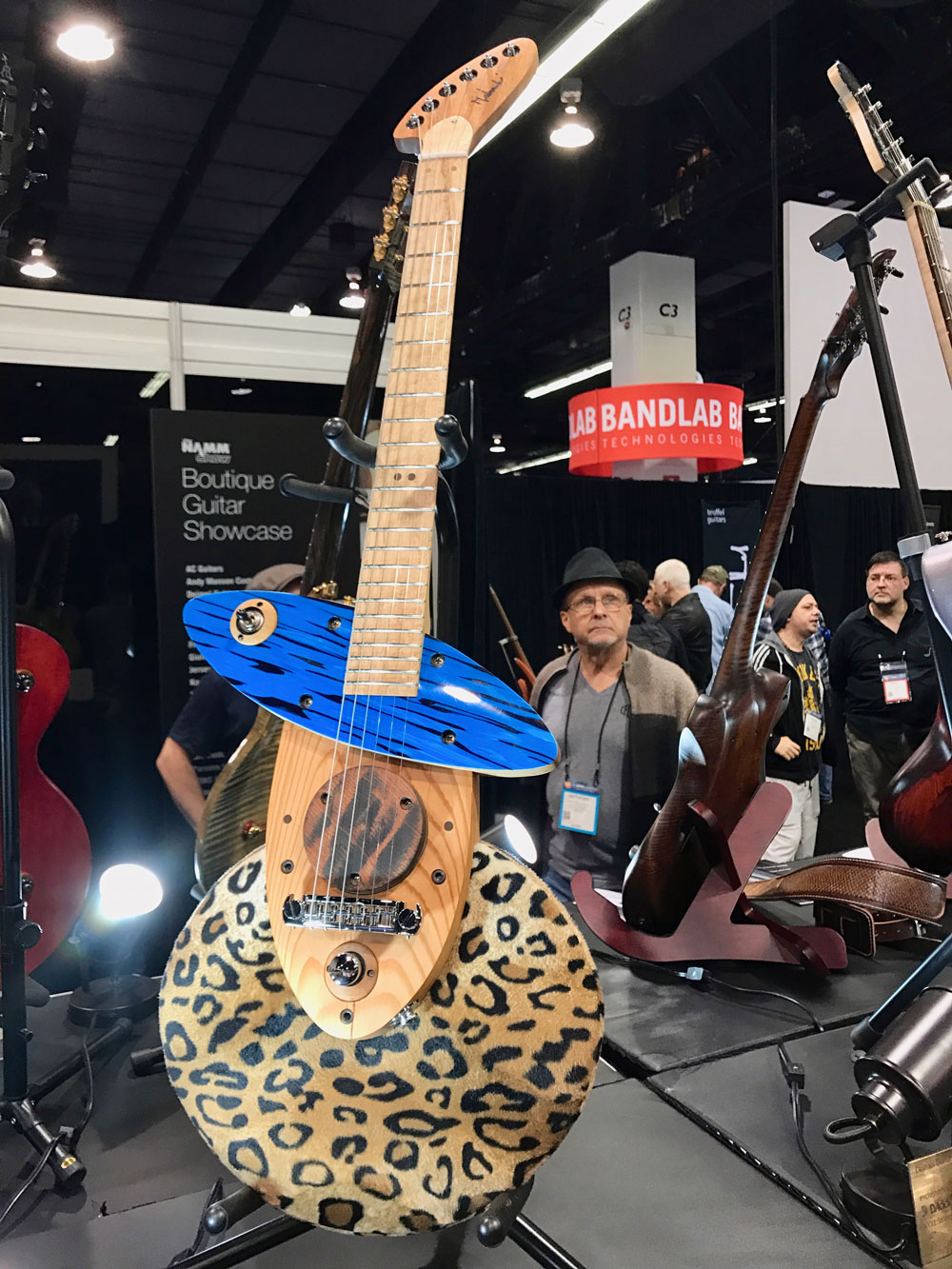
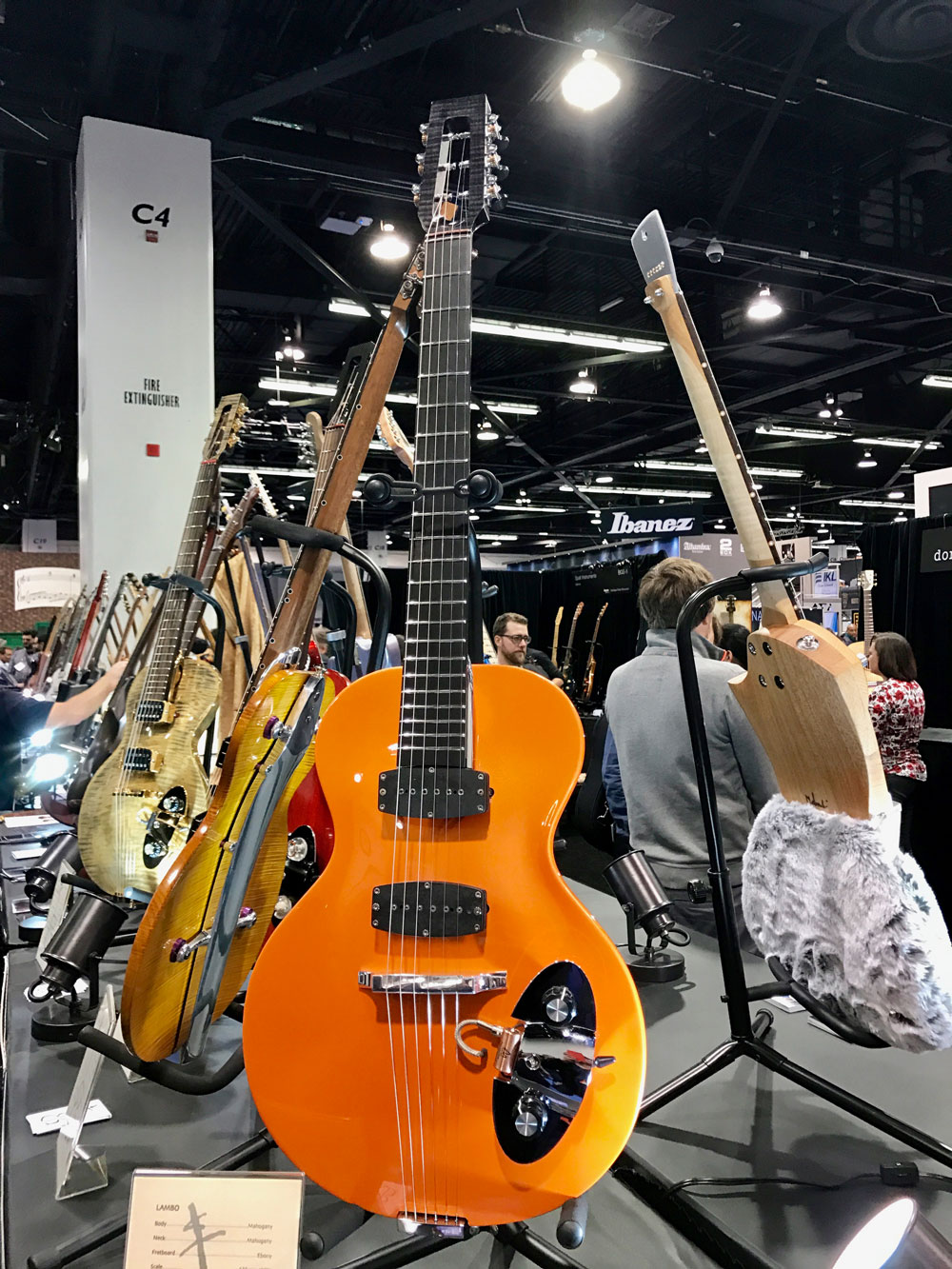
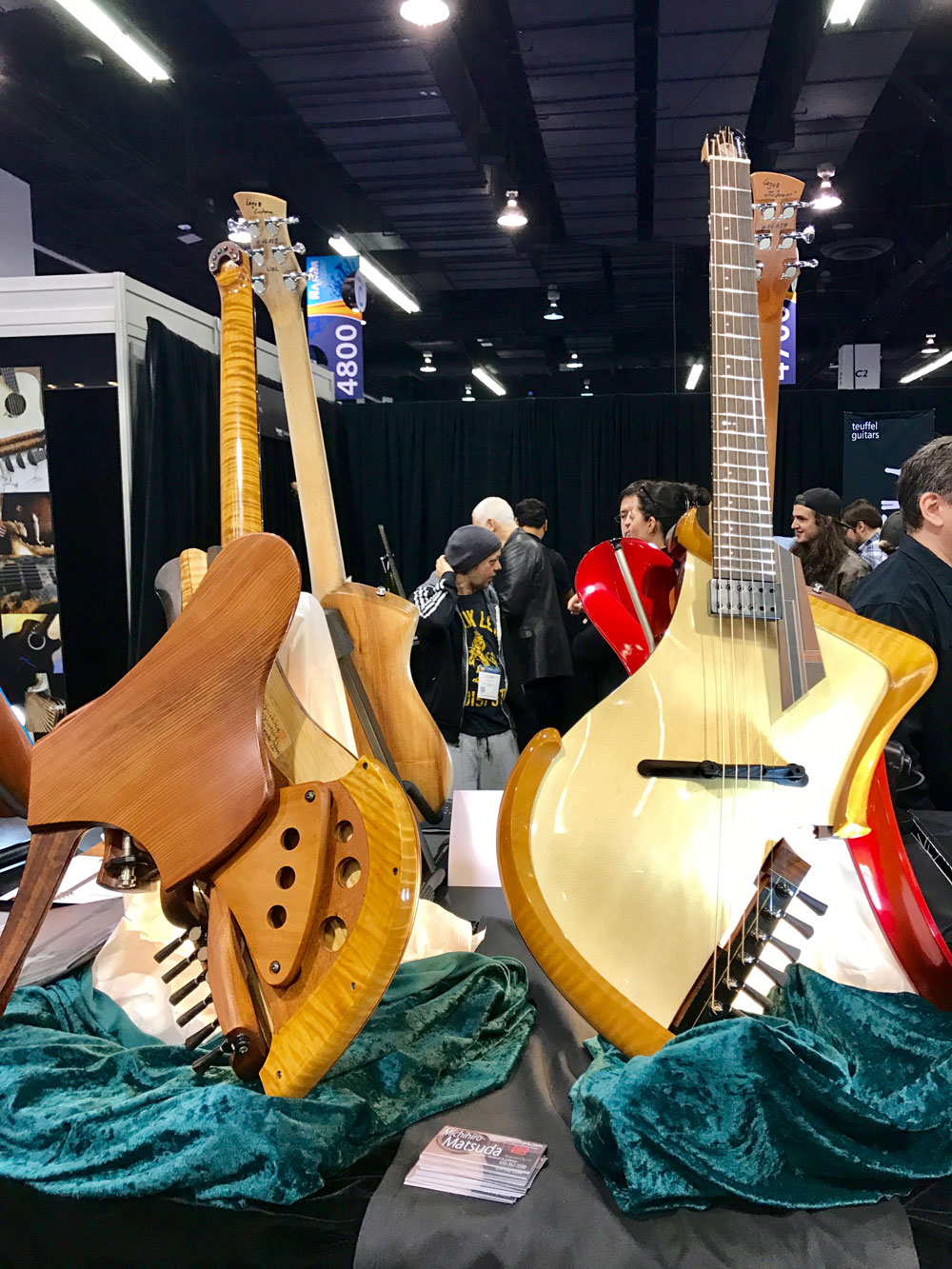
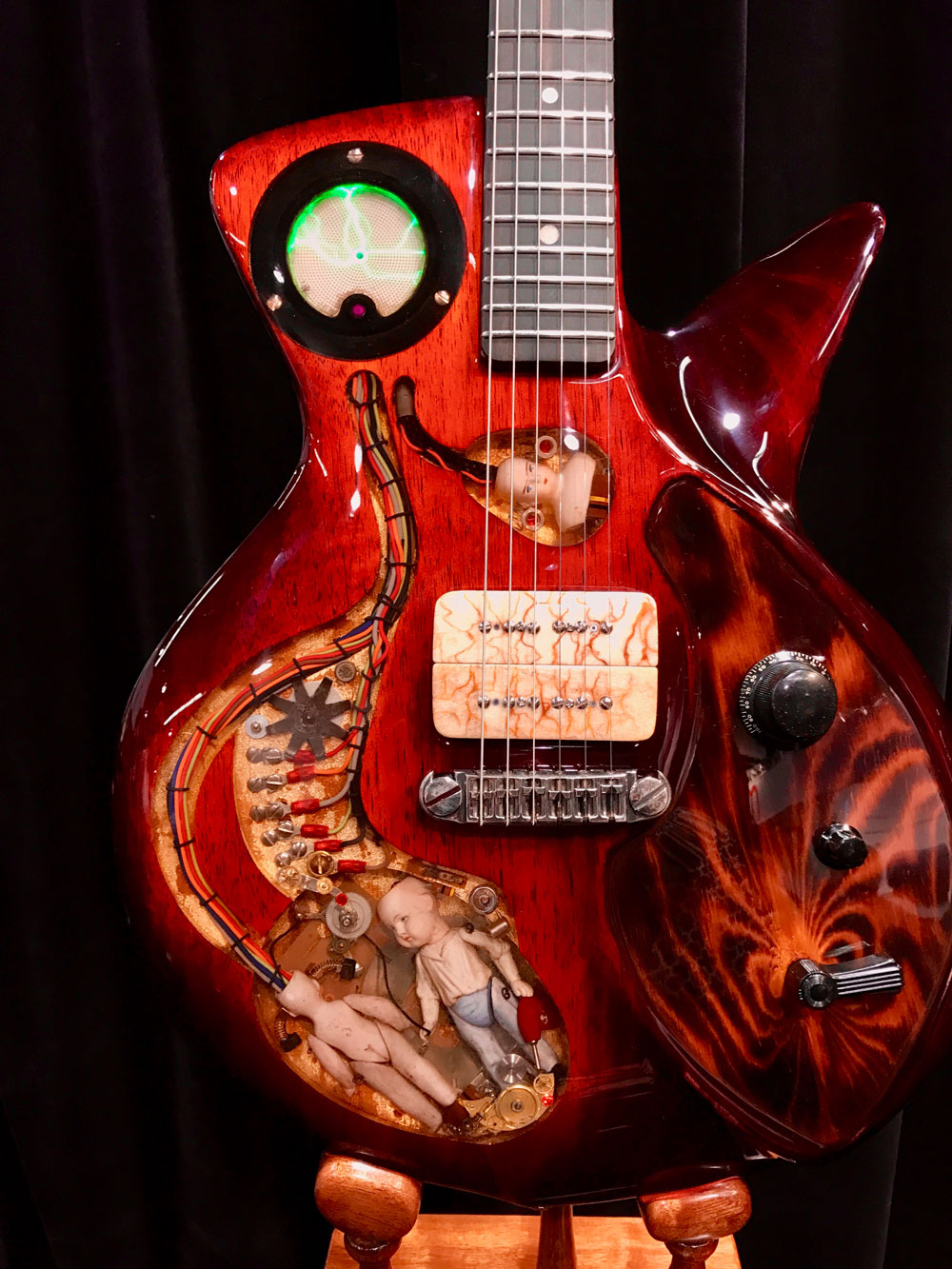
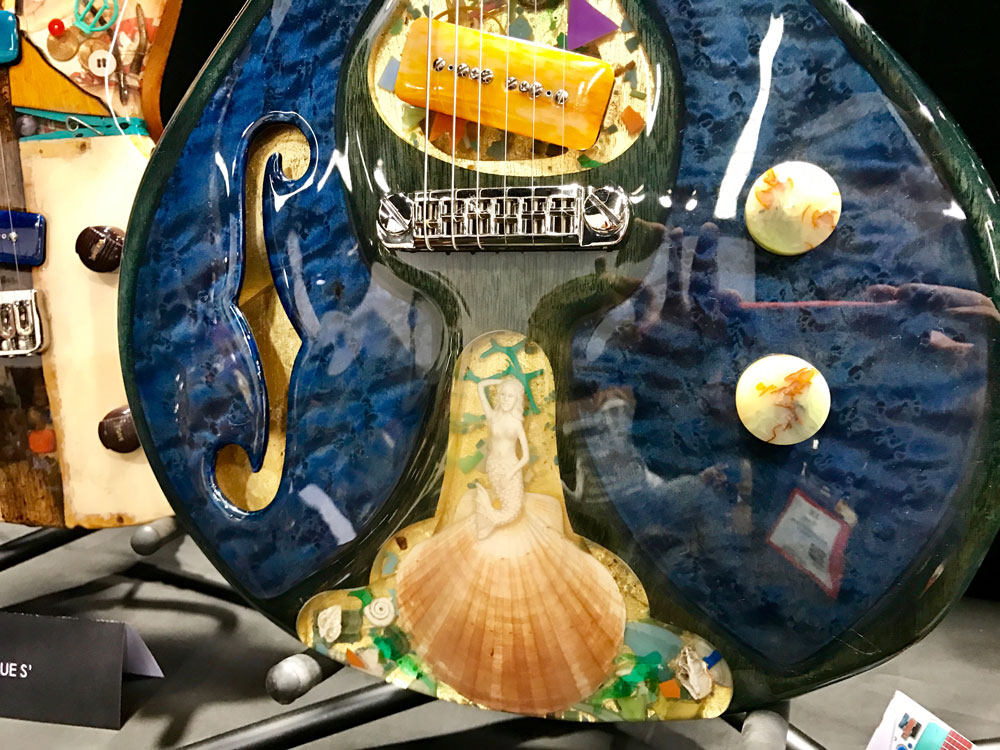
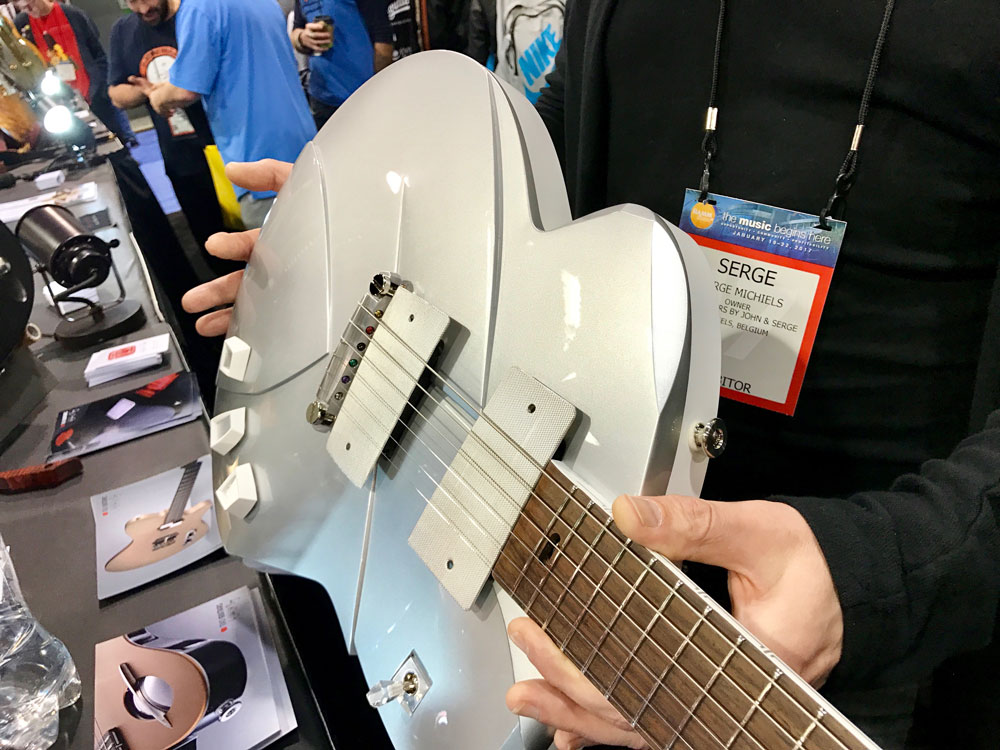
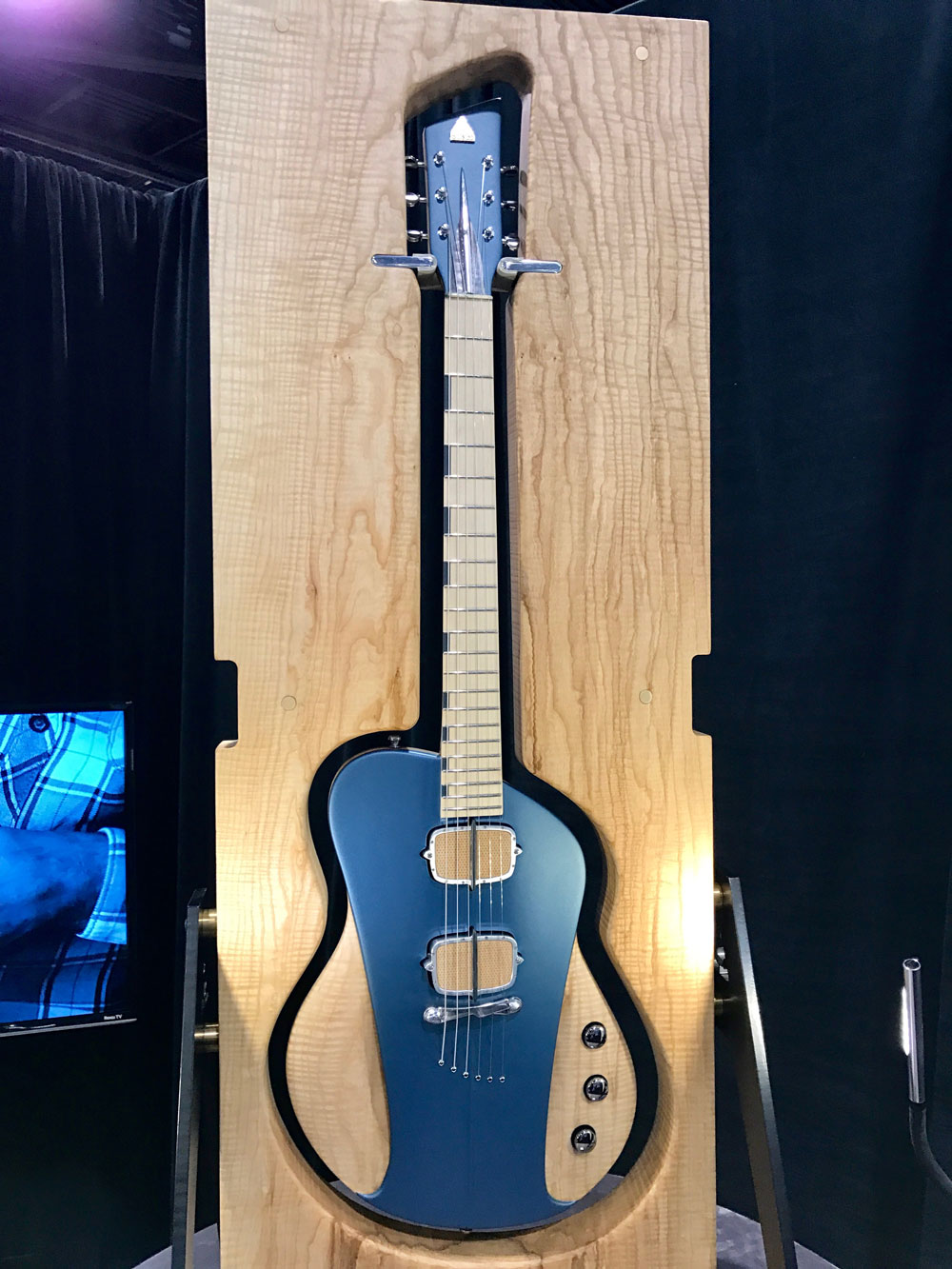
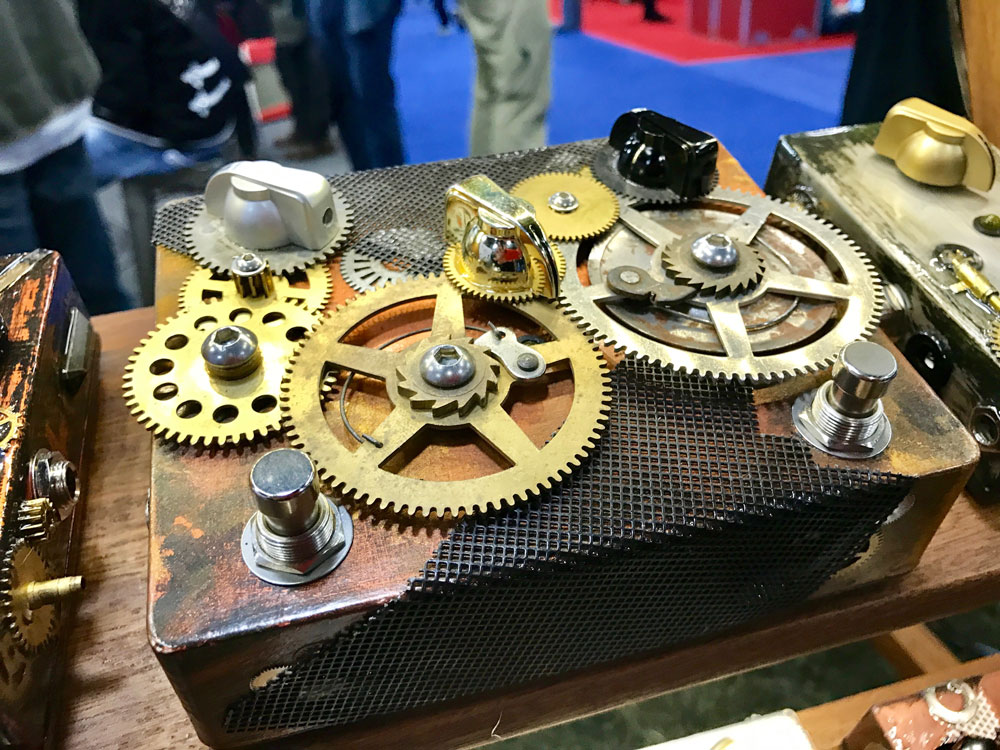
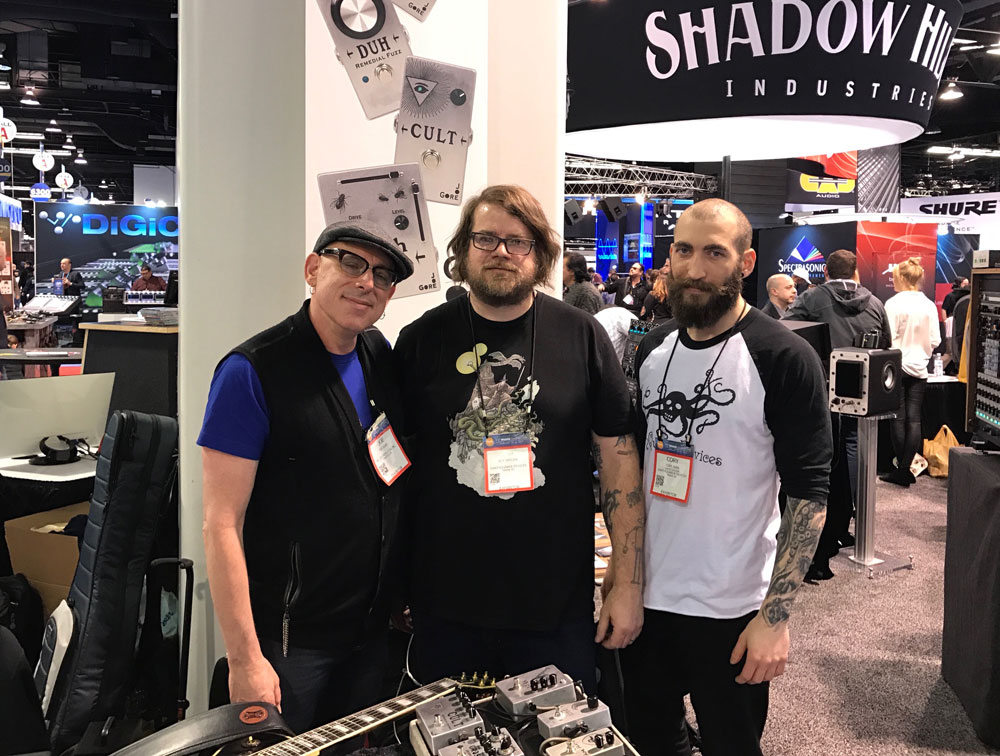
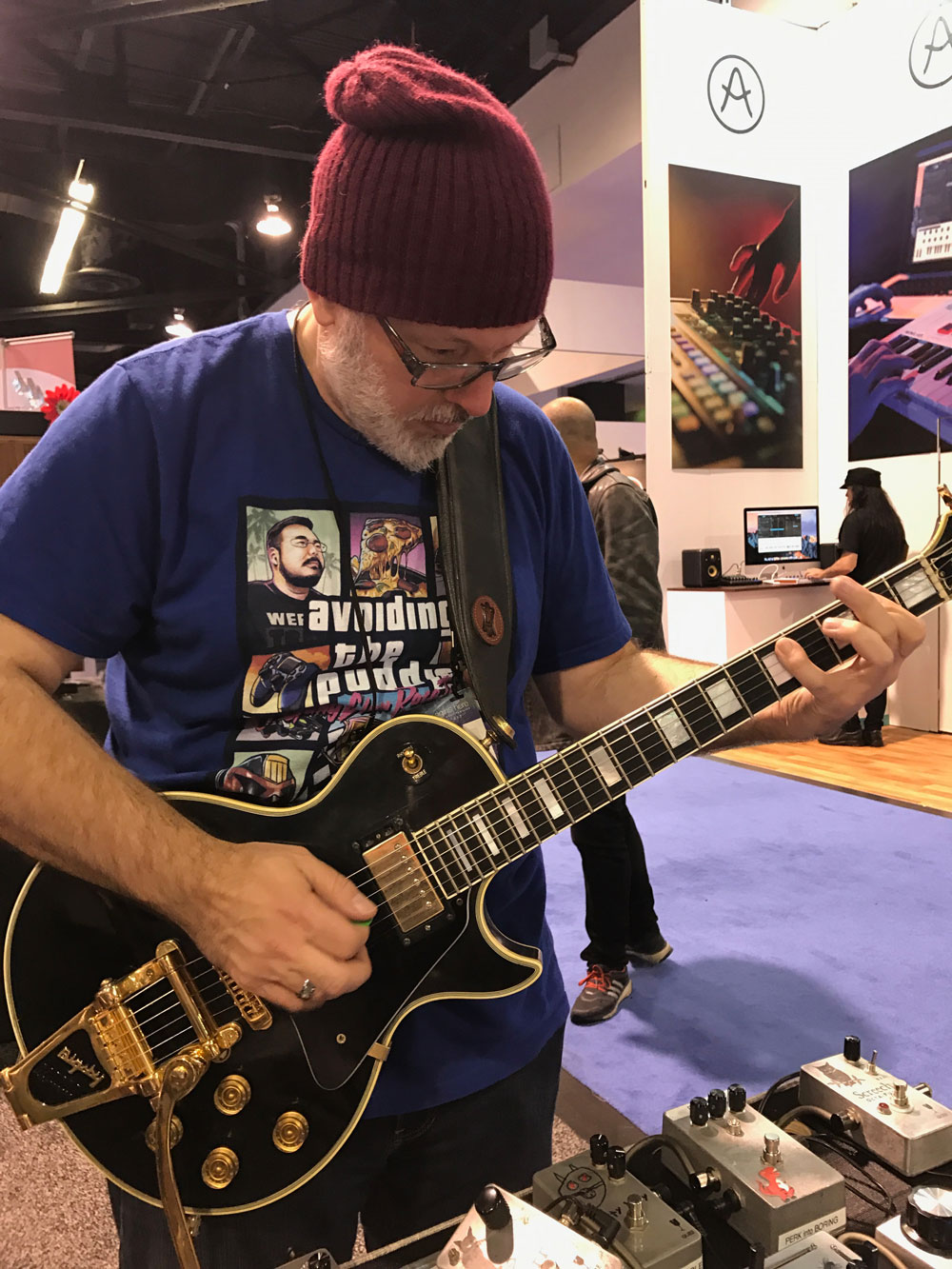
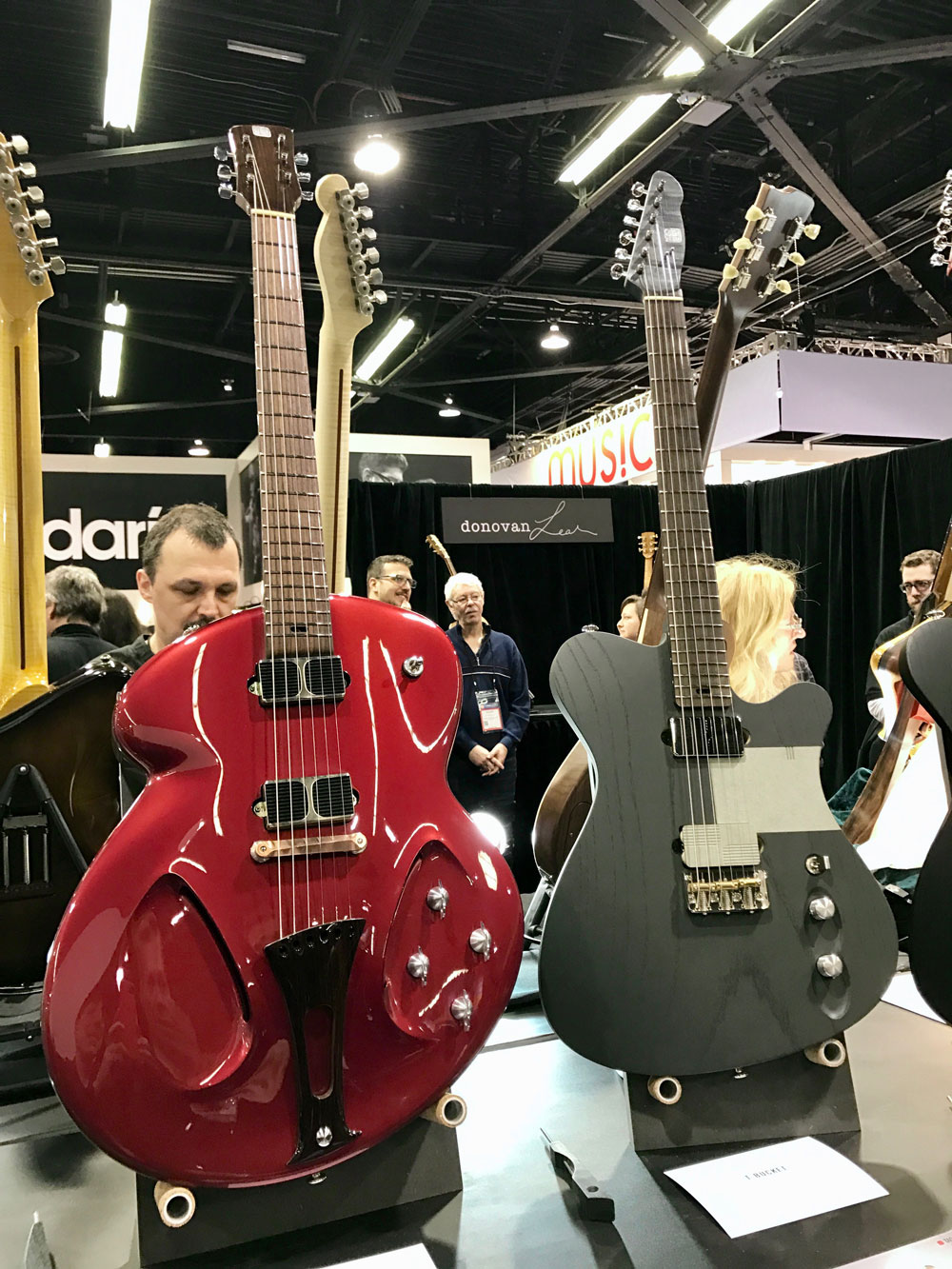
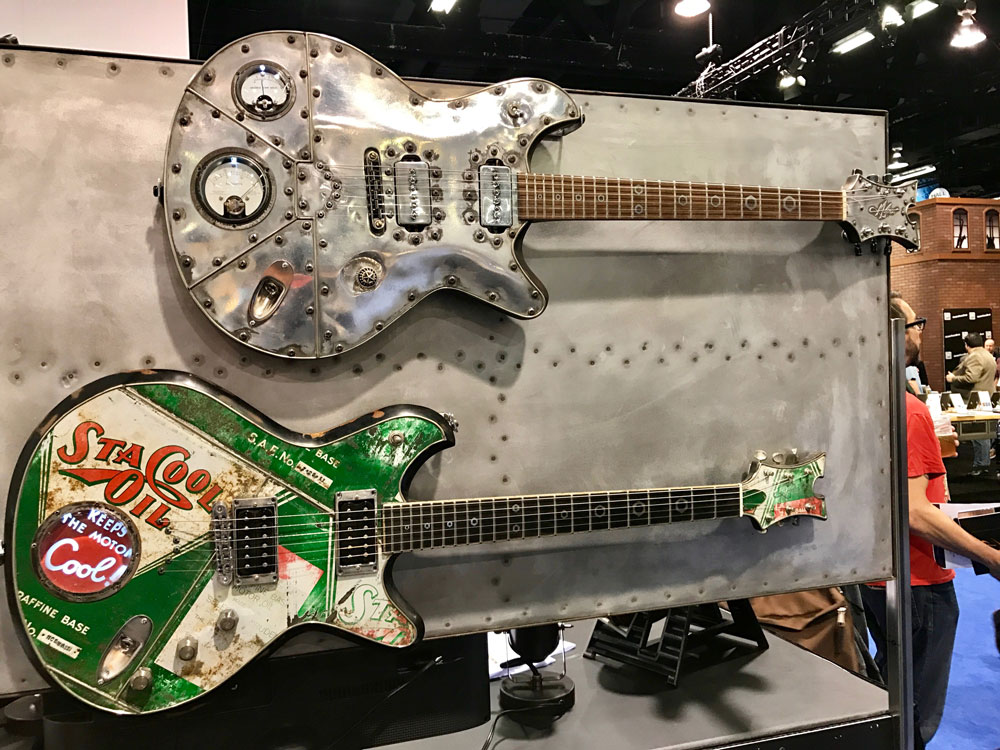
    This doesn’t qualify as any kind of NAMM report. I was imprisoned behind the desk at my Gore Pedals booth, relieved only for bathroom breaks and a couple of visits with old friends. Even so, I saw some lovely and inspiring things, especially the visionary instruments at the Boutique Guitar Showcase and the ravishing stompbox visuals from Greece’s JAM Pedals. (JAM pedals sound great too.) Plus a few old friends dropped by. It was so fun, I went minutes at a time without thinking about the inauguration.

    Jannis Anastasakis of JAM Pedals was kind enough to loan me one of the eye-popping pedalboards from his display (the last image in the slideshow). I’ll be posting a demo here soon!

  • NAMM I Am

    NAMM I Am

    I has a sign.

    Is anyone attending the 2017 NAMM thing next week in Anaheim? I’ll be there demoing my pedals and checking out the latest guitars and gizmos. If you’re there, stop by and say hi! I’ll be at booth #6820 in Hall A (that is, the pro audio room where guitarists fear to tread) with M1, my distributor (and sister company of my partners, Vintage King). I’ll be playing and talking about my stuff, and there will also be headphone stations where you can try them out for yourself.

    The headphone rigs are newfangled Valvulators from Fryette Amplification. These are cool 1-watt tube amps for direct recording, with amp-style controls plus speaker emulations. There will also be a set of my pedals at Fryette’s booth, #4844 in guitar-intensive Hall C.

    After writing about other people’s gear for so many years, it’s still difficult for me to wrap my head around the notion that I’m attending the show as a manufacturer, not a “journalist.” But I just completed a key manufacturer’s rite of passage: I order a 24″ x 80″ retractable sign hyping my boxes, just so I can stand in its shadow. It feels so … grown-up.

    I’m not officially announcing our 2017 releases ’cause we’re not 100% what they’ll be yet. But I will be bringing a box full of experiments and prototypes, which should be amusing, assuming my sketchy demo builds survive the road trip. I’m also bringing a couple of new DIY guitars that I haven’t shared here yet.

    I’m not really up to speed yet on what new gear to expect, so I haven’t yet put together a must-see list. Is there anything you are particularly eager to check out? Anything I should know about? Thanks in advance for your tips!

  • Ten Unusual Strat Pickups Tested

    I should have been out buying nice presents for you all. Instead I sat around inhaling solder fumes. When the smoke cleared (mostly, anyway) I’d tested ten unusual Strat pickups in the same poor guitar.

    Tested pickups sets:

    Jason Lollar Gold Foils
    Lindy Fralin Big Singles
    Seymour Duncan Antiquity II Mini-Humbuckers
    Jason Lollar Staple/P-90 set
    Allparts Gold Foils

    Verdicts? I dig them all, and not just ’cause I’m too polite/chicken to say otherwise.

    I love the Lollar Gold Foils so much I’m assembling a new parts guitar to surround them. I’m going to keep the Fralin Big Singles in the demo Strat, at least till the next Mongrel Strat Project. I’m going to try putting the mini-humbuckers in a “parts” Tele at some point. I originally reviewed the Lollar P-90 set for Premier Guitar (where I evaluated them the “right” way: in a Gibson guitar), so they go back to manufacturer, though I’d sure like to own a set someday. Meanwhile, the Allparts set isn’t in the same league as its high-end competitors, but at a mere $30 per pickup, it costs about 1/4 the price of its expensive rivals. You could definitely do a lot of lo-fi damage with a pair of these surprisingly solid-sounding pickups!

    This article joins the long list of experiments in the Mongrel Strat Project archive.

    And how about you? Have you but stuffing any pickups into places where they don’t belong? Maybe that’s why Santa left you sucky presents this year.

  • Born of Torn

    Eff me, he’s just soooo good.

    David Torn just posted a recording of a stupendous looped improv recorded with my Filth pedal. I’m speechless with admiration.

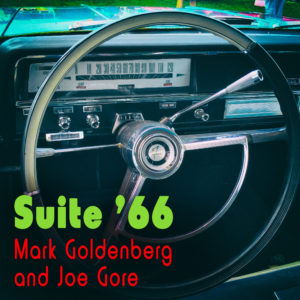
  • Suite ’66: Free EP by Goldenberg & Gore!

    suite-66-cover

    A free EP from we to thee!

    Guitar genius Mark Goldenberg and I recently recorded Suite ’66, a set of improvised duets on four tunes from 1966, in honor of the 50th Anniversary of one of the greatest years in pop music.

    We teased this “release” a few months ago with this rehearsal video. The EP features a more developed version of the same tune, plus three others.

    Even if you’re not familiar with Mark’s name, you’ve probably heard his playing. Mark has been a leading LA sideman and session player for decades. He’s worked with Jackson Browne, Linda Ronstadt, Bonnie Raiit, Waylon Jennings, Chris Isaak, Willie Nelson, Hugh Laurie, Natalie Imbruglia, and most impressively, William Shatner.

    Less well known is Mark’s beautiful solo style, which resides at the intersection of rock, classical, and jazz. I was instantly smitten when I first heard Mark play in person at one of Teja Gerken‘s solo guitar events a couple of years ago. Mark’s musicianship flabbergasted me, plus we bonded over the fact that we shared the same teacher, the late Ted Greene. (Though I studied with Ted when I was a teen, so much of his wisdom went over my head. Mark, however, worked with Ted after becoming one of LA’s most respected players, so he absorbed Ted’s insights on a far deeper level.)

    Listening to Mark play is sheer musical ecstasy, whether or not I happen to be picking along with him. He’s been one of my greatest musical inspirations of the last few years. (Translation: I’ve ripped him off more times than I can count.)

    Listen and download via SoundCloud:

    Tech notes: We recorded and mixed this in my basement studio. I’m on the left channel throughout, and Mark’s on the right. (There are no overdubs.) My instruments are a Gretsch Spectra Sonic electric baritone guitar (kindly loaned by Xander Soren), a Veillette Avant Gryphon octave 12-string, and a Taylor 150e 12-string. Mark plays two magnificent guitars: his Kenny Hill classical and a Collings 001MH steel-string.

    IMPORTANT: This non-commercial recording is shared as a gift between us and our friends. It may not be reused for any purposes, especially commercial ones. We’re simply inviting you to listen in on our jam session.

  • Tribute to Leonard Cohen

    I’m working on this version of Leonard Cohen’s “Suzanne” as part of album in progress: a collection of radically reinterpreted songs from 1967. I haven’t nailed down the final song list. (If you review the list of amazing songs from that year, you’ll understand why. And that link only cites the songs that charted, and doesn’t include classics like the first Velvet Underground album, some great Jobim tunes, random stuff like “Some Velvet Morning,” and lots more.) By hook or by crook, I hope to have the project done before year’s end in time to cynically capitalize on pay tribute to the 50th anniversary of that musically monumental year.

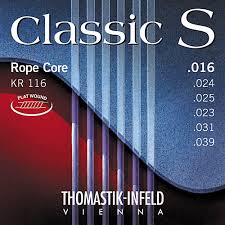
    Some interesting tech notes: I’ve you followed this blog, you’re no doubt sick to death of my evangelizing for Thomastik-Infeld rope-core strings. But this is the first time I’ve put them on my Lowden S-25, my main acoustic guitar for nearly 20 years. Its default tone is super loud and bright. (Larry Fishman once referred to it as “a fucking cannon.”) But these days my ears are drawn to darker, softer tones. The Classic S transformed this laser-bright acoustic into an expressive crooner.

    Meanwhile, I’ve become a bit alienated from traditional nylon strings over the years, but these, with their hybrid nylon/steel sound, hit just the right sweet spot for me. They’re extremely quiet (though they don’t sound like it when close-miked like this), but they have vast dynamic range and a smooth, sexy feel.

    classic_s

    I’d previously written that this set is the same as the (cheaper in the U.S.) John Pearse Folk Series Fingerpicking strings, but I was mistaken. The story I hear was that the late Mr. Pearse, working with Thomastik-Infeld, devised this set for Brazilian guitar monster Bola Sete. But on the current Pearse set, the bass strings have nylon cores, while the Classic S bass strings have steel cores. That means you can use the TI set with a magnetic soundhole pickup, allowing you to plug into amps and effects. (I’ll be posting an example soon as a companion piece to this video.) But both sets sound lovely, and both allow you to bend strings as you would on an electric guitar — something you definitely can’t accomplish on conventional classical strings.

    I don’t have a ton to add about the sublime Leonard Cohen. But “Suzanne” has always exerted a deep emotional spell on me — even, as here, minus the lyrics.