
Category: guitar

  • Join the Pagey Project — If You Dare!

    Join the Pagey Project — If You Dare!

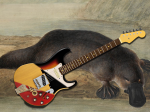
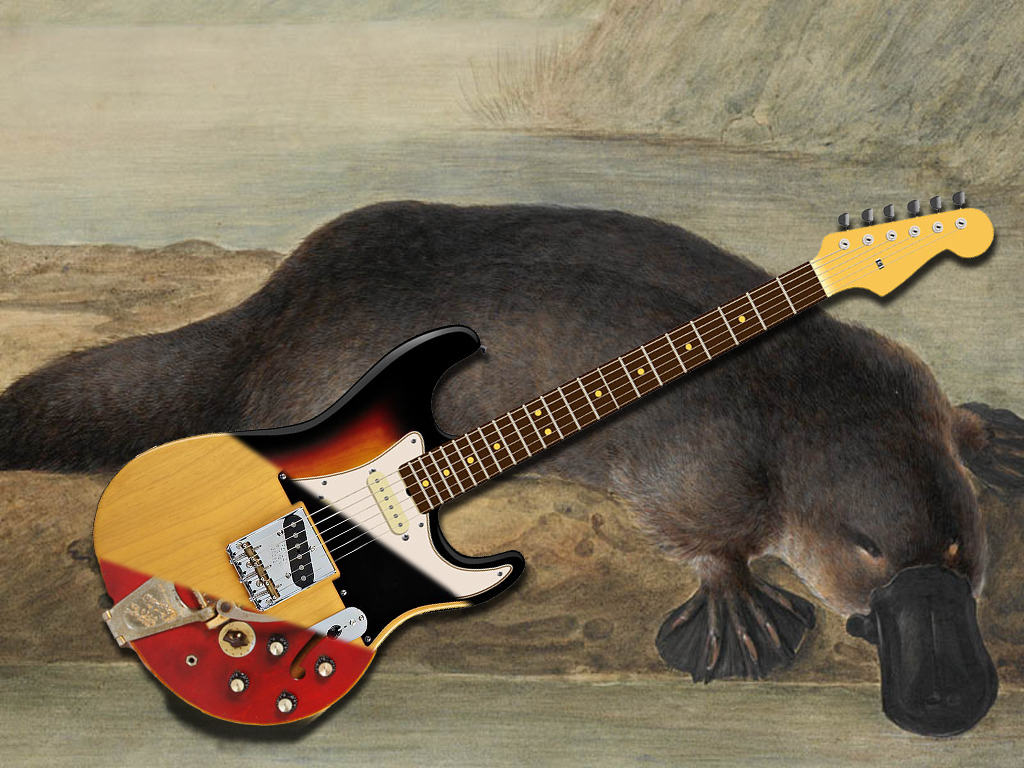
    True fact: While Jimmy Page is usually pictured with a Les Paul, he recorded many of Led Zeppelin's greatest tracks with Fender guitars. (Artist's conception.)

    All aboard, mateys! Join our ship of fools as we sail the fiercest seas of guitar electronics: Yes, the legendary Jimmy Page wiring scheme. There will be NO QUARTER for pickup pussies!

    Actually, there will be a great deal of quarter as we help each other with this cool but tricky project. I’ll be disembolwing the black Les Paul Custom I wrote about here. My hope is that many of you will join me on this voyage. We can troubleshoot together, share tips, and commiserate after we’ve destroyed a bunch of nice guitars other things.

    As you probably know, this complex wiring scheme transforms a standard Les Paul into an über-versatile tone machine with added series/parallel, phase-canceling, and split-coil options. It was the means by which Pagey reproduced the many Telecaster and Danectro parts from Zep’s studio albums when performing live.

    We’ll cover the classic arrangement, with four push/pull pots. Then we’ll go a step further: If you add a pair of Seymour Duncan Triple Shot Mounting Rings to the mix, you get many more options than with the original scheme. Yes, we can all be bigger badasses than Pagey.   :shake:

    (FWIW, I’m less interested in cloning Page’s setup than in mastering the ins and outs of alternative humbucker wiring. So think of this as a chance to explore all available options, and refine a mod that works best for you.)

    Here’s what you must have before setting sail:
    (more…)

  • Credit Where It’s Due — Please!

    Credit Where It’s Due — Please!

    Move along — there's nothing to see here.

    Ordinarily I wouldn’t publicize “causes” on this site, but this one has special relevance for musicians and music fans.

    My pal Count, a producer/mixer who’s done work for Radiohead, DJ Shadow, New Order, the Stones, No Doubt, and many other artists, is launching an online campaign to get musicians, producers, engineers, and other contributors credited on iTunes, Pandora, and other digital music services.

    Consider the absurdity of the current situation: Why, in the digital age, are we granted only a fraction of the info available in the analog age? Why should fans be denied the details of their favorite recordings? And for underpaid musicians and technicians, the credit is often the only meaningful payment for services, a possible path to future work. The current state of affairs is just plain wrong!

    If you agree that this is worthy goal, check out the page for Count’s Credit Is Due Facebook campaign.

  • The Joe Bonamassa Pickup Set: It’s Not Just for Blues!

    The Joe Bonamassa Pickup Set: It’s Not Just for Blues!

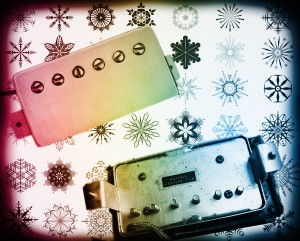
    Vintage P.A.F. pickups are like snowflakes — only a lot louder and a lot more expensive.

    Aficionados of the P.A.F.pickup, the original humbucker, often say that vintage models are like snowflakes — no two are identical, due chiefly to the the pre-digital inconsistencies of their windings.

    One particularly memorable pair of snowflakes resides in Joe Bonamassa’s 1959 Les Paul, the crown jewel of Joe’s insanely huge guitar collection. Joe and Seymour Duncan teamed up to duplicate their sound, and have released the results as the Joe Bonamassa Signature Pickup Set. As a rabid fan of Seymour P.A.F.-inspired Seth Lover and Antiquity Humbucker models, I couldn’t wait to smear greasy fingerprints all over the new set.

    I got to hang out in the studio with Joe a few years ago during a project I was working on for Apple. He’s a phenomenal player, a nice guy, and a walking encyclopedia of guitar gear. There aren’t many players who better understand the glory of a great P.A.F. — and how to make the most of it.

    As promised, these pickups provide superb P.A.F. tones, and they have a sonic personality quite distinct from Duncan’s other P.A.F. models. Check out this little demo I recorded:

    (more…)

  • The Bass VI Boss

    Dang — I wish I had a white turtleneck and a Mosrite electric resophonic!

    After some of the long-running contests around here, it was nice having a quickie for a change. San Diego-based steel guitarist Doug Meyer was the first of several readers to correctly identify the four iconic Bass VI riffs in the post on ancient strings. He wins a Seymour Duncan Pickup Booster, a cool clean boost pedal that sound fabulous on 6-string bass, not to mention standard-tuned guitars.

    The tunes were, in order of appearance:

    1. Glen Campbell’s “Wichita Lineman”
    2. Glen Campbell’s “Galveston”
    3. Elmer Bernstein’s “Theme from The Magnificent Seven
    4. Steve Earle’s “Guitar Town”

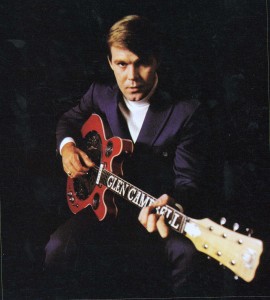
    Glen Campbell not only sang those two classic Jimmy Webb songs, but played the beautiful 6-string bass parts. As most ’60s pop fans know, Campbell was a leading L.A. session player before becoming a star — he played with Elvis, the Everly Brothers, the Monkees, and on many Beach Boys sessions, including Pet Sounds (that’s him playing electric 12-string on “Sloop John B.”) [CORRECTION IN COMMENTS.]

    About the ’90s reissue Bass VI that inspired my original post: I’ve always liked it, and I’ve used it on a zillion sessions, but I never thought it sounded as good as an original. Now I realize that it sounds just like an original — all it needed was the right strings! 🙂

  • In Search of Ancient Strings

    In Search of Ancient Strings

    PLUS: New Contest! Name the Classic 6-String Bass Riffs and Win a Seymour Duncan Pickup Booster Pedal!

    "We both love candlelight, long walks on the beach, and really expensive old-school strings."

    NOTE: The contest is at the bottom of this post. You can skip ahead if you don’t care about rare and expensive guitar strings.

    What do the classical guitar and the Fender Bass VI have in common?

    Both instruments were developed using types of strings that are practically extinct.

    First, let’s talk nylon strings. When these appeared after WWII, classical guitarists, led by Andrés Segovia, ditched gut overnight. Nylon strings were louder and brighter, and they offered better consistency, superior intonation, and longer life.

    Few living guitarists have ever actually played gut strings, which really are made from animal guts (usually cows, goats, or sheep). I’ve never tried them myself.

    But one of my darkest secrets is the fact that I started out as a teenaged lute player. (I have a photo of myself playing on a hay bale at a Renaissance Faire, wearing a feathered tudor cap and white tights. And you will never, ever see it.) I experimented with gut lute strings, only to run screaming. Total tuning nightmare, especially on an Elizabethan-era axe with friction tuning pegs, not to mention lots of unison- and octave-tuned strings. Guitarists were smart when they ditched the stuff.

    But I recently bought a new ukelele, which came strung a set of Aquila strings from Italy. They have several lines of faux-gut nylon strings made from a proprietary material called — wait for it — “nylgut,” which allege to capture the sound of gut without the tears. They sounded cool on the uke, so I ordered a few guitar sets. At between $12 and $21 dollars per set, depending on the bass-string wrap material, they’re pricy, but not crazy expensive — about the same as other high-end, E.U.-made brands, like Savarez or Thomastik-Infeld. (Aquila’s US distributor is Just Strings.)

    And holy cow, do I love ’em! They don’t look anything like gut strings, which resemble, well, dried-out intestines. But they really do capture a lot of “gutness.” Their tone is quieter and warmer than conventional nylon, with markedly less string noise (a great thing for a very rusty classical player like me). Check out this demo:

    (more…)

  • Onboard Distortion Without a Battery?

    Onboard Distortion Without a Battery?

    Low-Voltage Chunk from Diode Distortion!

    Did you know you can add a simple circuit to your guitar or bass that produces onboard distortion — without using a battery?

    The idea is pretty simple — you attach a pair of diodes to the guitar’s output via a pot or switch. With the diodes connected to ground, you get a fairly nice distortion sound. With the connection to ground broken, you get your regular tones. It’s the same method used to create distortion in a several ’70s distortion pedals, notable the MXR Distortion+ and the DOD 250.

    You can purchase the necessary components in a sleek black housing under the name Black Ice for $27.50, or you can do a DIY version for about $2 in parts. I’ll explain how after this brief video demo:
    (more…)

  • Twang Bangers, Vari-Tones & More Strat Strangeness

    Twang Bangers, Vari-Tones & More Strat Strangeness

    The latest Mongrel Strat (artist's conception).

    Welcome to the second installment in the Mongrel Strat Series!

    If I were a sensible person, I would have split this week’s experiments into several posts. But much like eating pistachios, it’s tough to know when to stop .

    Anyway, this project tackles three topics:

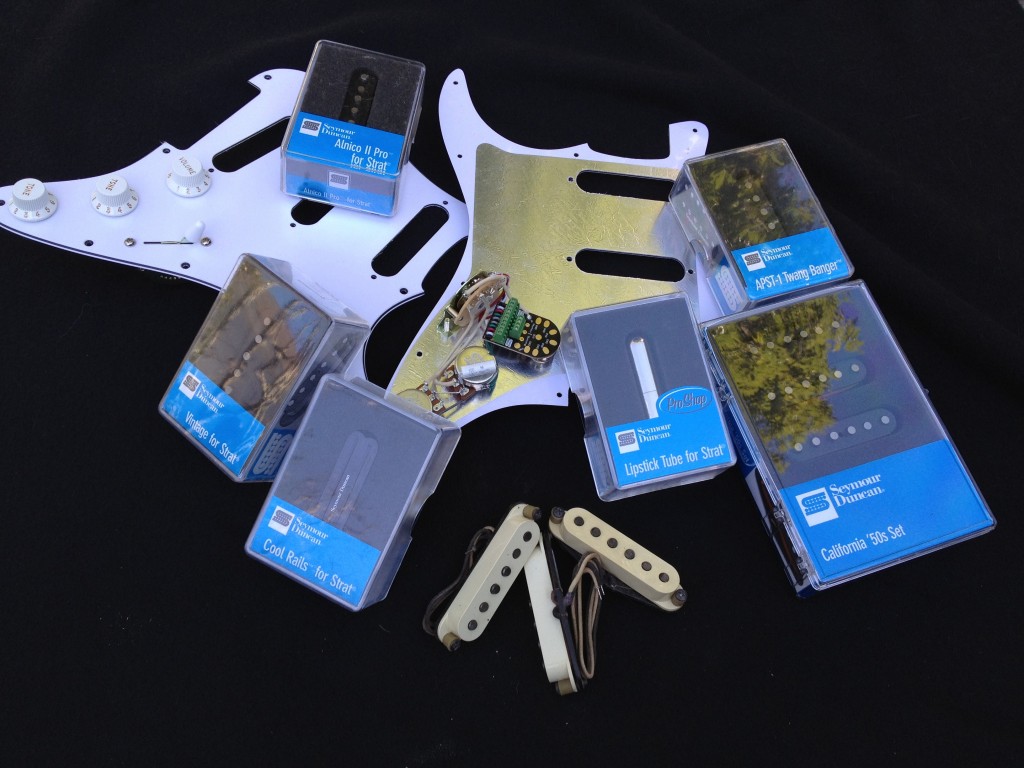
    1. Several readers dug the sound of the Telecaster-inspired Seymour Duncan Twang Banger pickup used in Mongrel #1, where I  paired it with a Duncan Lipstick Tube for Strat neck pickup and a Alnico II Pro middle. But I wanted to hear how the Twang Banger sounded in a more traditional Strat array, so this time I paired it was a couple of vintage-accurate SSL-1s, with a reverse-wound, reverse-polarity model in the middle position.

    2. Over in The Secret Room, a participant brought up the subject of the Vari-Tone control used in the Gibson ES-345. I wanted to learn more about this often misunderstood circuit (well, I never understood it, anway) and explore whether it had relevance for Strats.

    3. In response to another Secret Room topic, I wanted to resolve whether there’s any sonic benefit in bypassing the tone circuit completely.

    And the results? You tell me — here’s the video:

    (more…)

  • Meet Mongrel Strat #1

    Meet Mongrel Strat #1

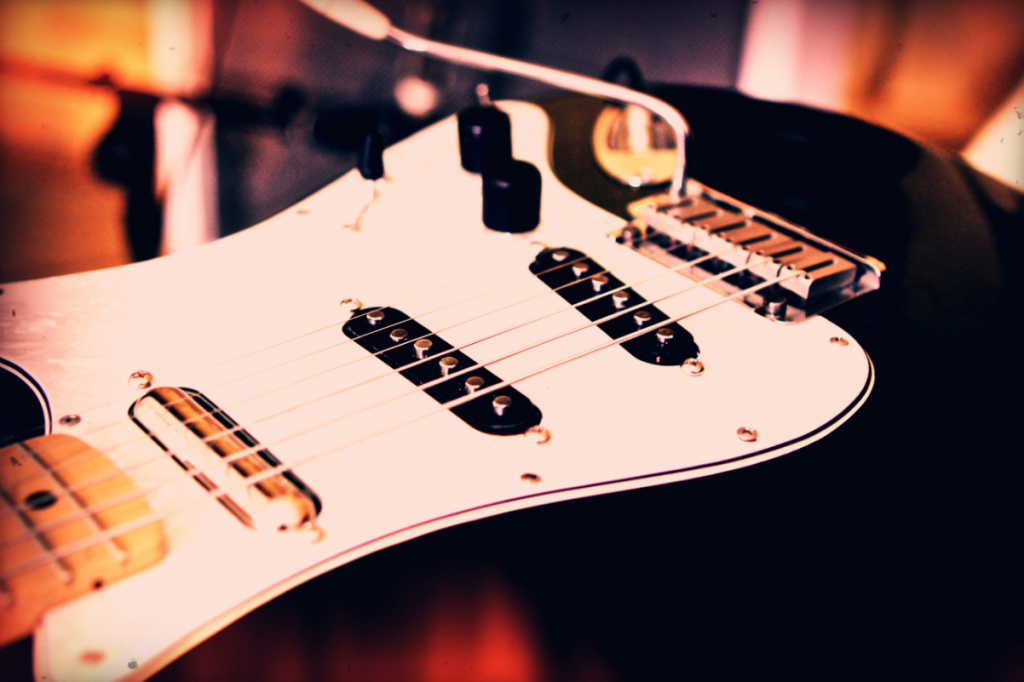
    Three "mismatched" Duncan pickups in an off-the-rack Mexican Strat. (Left to right: Lipstick Tube for Strat, Alnico II Pro Staggered, Twang Banger)

    As previously threatened, here’s the first installment in a series on unusual Strat pickup combinations, inspired by a big box of Duncan pickups and a couple of prewired “BYOP” pickguards. I tried a couple of meh combinations that I didn’t like enough to record, but this third experiment seemed worth sharing. Dig this odd combo: Lipstick Tube neck. Alnico II Pro middle. Twang Banger bridge. Comments and post mortem after the clip. Have a listen! (more…)

  • Expensive Picks, Part 2: V-Picks

    Expensive Picks, Part 2: V-Picks

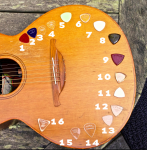
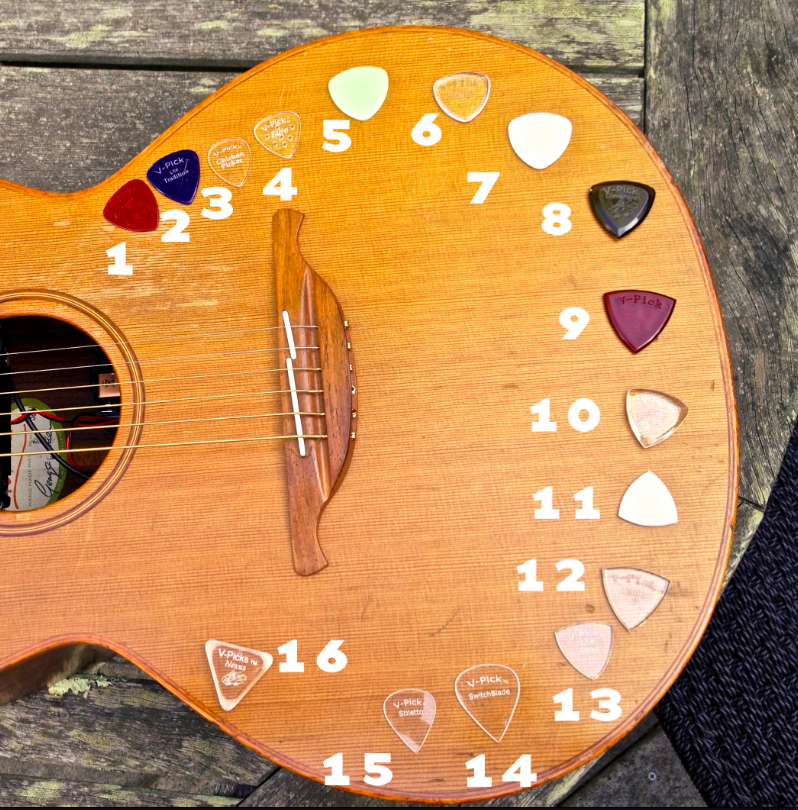
    Sixteen Current V-Pick Models (clockwise from upper left): 1. Ruby Red Traditon Ultra Lite; 2. Tradition Lite Sapphire Blue; 3. Chicken Picker; 4. Euro; 5. Nite-Glow Medium Rounded; 6. Pearly Gates Medium Round; 7. Medium Rounded; 8. Dimension Buffed Smokey Mountain Series; 9. Ruby Red Medium Pointed; 10. Dimension Junior Buffed; 11. Pearly Gates Small Pointed; 12. Medium Pointed; 13. Small Pointed Lite; 14. Switchblade; 15. Stiletto, 16. Nexus Unbuffed.

    Readers had a lot to say about a recent post on high-end guitar picks. I focused on some of those ultra-hard picks made from natural materials, such as stone, bone, wood, and horn, plus ones made from synthetics designed to mimic those materials, such as GraphTech’s Tusq series. I’d concluded that, while these picks cost a lot more than garden-variety plastic picks, they offer unique benefits, including stronger fundamentals, more low-end mass, and varying amounts of percussive treble “slice” that can help a guitar track stand out in a mix.

    Anyway, several readers spoke highly of V-Picks, a small handmade pick company from Nashville run by Vinni and Nancy Smith. I bought a few, and was deeply impressed. So I got a bunch more and made the set of reference recordings included here. Have a listen! (more…)

  • The Mongrel Strat Project!

    I've got a box of strat pickups and I'm not afraid to use it!

    Okay, this should be an interesting experiment!

    I’ve scored a box stuffed with wildy varied Seymour Duncan replacement pickups for Strat™ guitars, plus a couple of the company’s just-announced BYOP Liberator Pickguards. (These are prewired pickguard assemblies, minus the actual pickups — “BYOP” stands for “Bring Your Own Pickups.”) That means I can pop in whatever pickup I want to try without even firing up the soldering iron.

    No, I’m not going to make comparison recordings of different replacement pickup sets (though that would be a worthwhile project). Instead, I’m going to experiment with unusual/unlikely pickup combinations, searching for something cool and unique.

    Will I strike pickup-pairing pay dirt? I guess we’ll find out together!

    I’ll also be taking a look at some of the alternate three-pickup wiring schemes we’ve been talking about over in The Secret Room, such as the bridge-pickup on/off switch and the middle-pickup fader option.

    In the meantime, I’d love to hear about your experiences in choosing pickups for Strat-style guitars — especially any successes you’ve had in combining pickups that weren’t necessarily intended to go together. If you have a story to share, cough it up in comments!

    I have a hunch we’ll uncover some cool new things. Stay tuned.