Category: guitar

  • Vintage Meets Not-So-Vintage:The 59/Custom Hybrid Humbucker

    Vintage Meets Not-So-Vintage:
    The 59/Custom Hybrid Humbucker

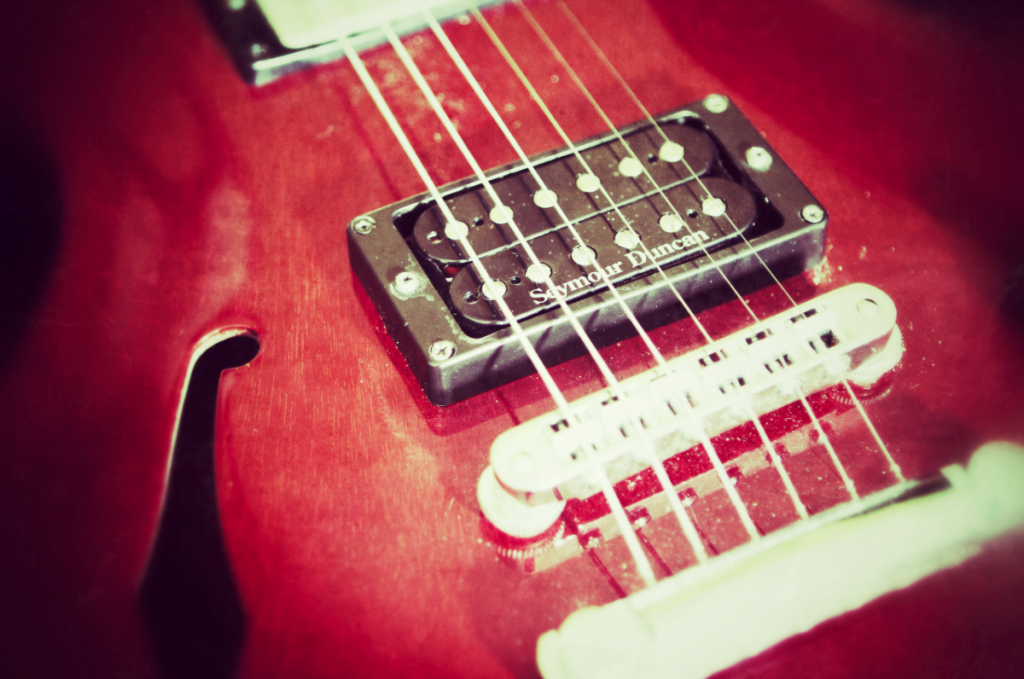
    Seymour Duncan's 59/Custom Hybrid humbucker is a compromise between a vintage PAF and a higher-output pickup.

    My ears perked up when I heard about Seymour Duncan’s new 59/Custom Hybrid bridge humbucker. I’d never tried a pickup that combined coils from two very different pickups — in this case, the ’59, a vintage-accurate PAF, and the Custom, long described as “a PAF on steroids.”

    I was eager to hear how a  hybrid pickup would blend with a vintage-style neck PAF. My test guitar was a Hamer 20th Anniversary retrofitted with Antiquity Humbuckers. (It originally had a JB/’59 pair.)

    I had several burning questions:

    • Could I could get a hotter bridge tone without losing too much treble definition?
    • Would the more powerful bridge pickup overpower the neck pickup?
    • Could I still get a delicate, chiming clean tone?
    • How would it sound in split-coil mode (which solos the hotter Custom coil)?
    • How would the split-coil bridge blend with the neck pickup?

    I made some before-and-after recordings. Have a listen:
    (more…)

  • About Those Expensive Picks . . .

    About Those Expensive Picks . . .

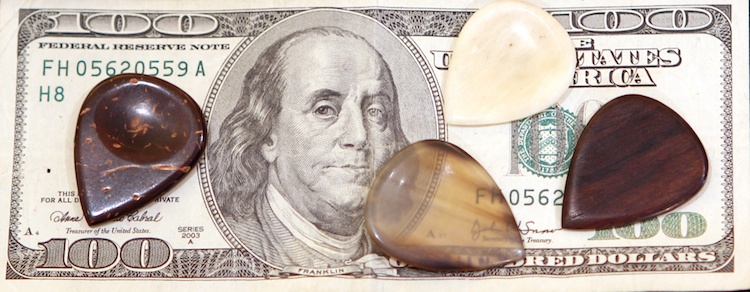
    UPDATE: I’m proud to announce that the first part of my report on high-end picks has been selected to appear in the debut issue of Pure Guitar, a new digital guitar mag whose editorial staff includes my two music journo mentors : Tom Wheeler and Jas Obrecht. Also on board: jazz ace Wayne Goins, session superhero Tim Pierce,  Nashville’s leading guitar tech, Joe Glaser, and other preeminent axe experts.

    You’ll find my article here — but frankly, I recommend starting at the homepage of issue #1 and reading all the way through!

    Congrats, guys, on the new mag. I’m psyched to be part of it.  :beer:

  • Introducing the Secret Room

    Introducing the Secret Room

    UPDATE: Wow! I’m overwhelmed by the initial response. Hundreds of cool tips! Please bear with me as I process them and send out the access info. I could automate the process, but I want this to be more than just a bunch of random posts, and I want to weed out the silly stuff. —Joe

    Do you have a secret? I want it!

    No, not your credit card number, or the truth about what you were really doing on the night of September 23rd. Just a cool tip about anything that makes you play better or sound better. The kind of hard-won musical wisdom that’s almost too good to share.

    And in exchange for surrendering a precious secret, you get access to the best secrets of many other players, including some whose names you know.

    Just contribute a cool tone secret, and you’ll get access to this password-protected site. While there, you’ll be able to comment on the secrets and add ratings. Just to keep things lively, the authors of the highest-rated secrets will win cool gear prizes. In fact, whoever creates the highest-rated post between now and March 1st will receive a Godin Natural Summit CT, a lovely and versatile carved-top solidbody electric guitar that sells for $1,000. The authors of the second and third most popular posts win a their choice of Seymour Duncan pickup sets. (Custom Shop sets excluded.)

    The site is already looking pretty cool — but it will be cooler if you contribute! Learn more (and submit a secret) here.

  • NAMM-O-Rama!

    NAMM-O-Rama!

    Amazing things at NAMM, #1,287: Bootsy Collins's right hand.

    Just got back from a couple of days at the 2012 NAMM convention in Anaheim. And I’m glad to be writing about it rather than talking about it, because I have no voice left from screaming over several days of unbelievably loud ambient noise. How ironic that we evaluate the musical instrument industry’s new creations in one of the earth’s most acoustically abysmal environments.

    Still, I had a blast. I saw tons of cool new things that will appear on this blog as they become available. I got to see lots of old pals and hobnob with great musicians, brilliant builders, visionary designers, and amusing crackpots. Fun was had.

    I didn’t prepare anything like a comprehensive report. For an overview of all the product announcements and press releases, just go here. This is just a short video documenting the misbehavior of my friends and colleagues some cool stuff I saw. (more…)

  • The Nam Show

    The Nam Show

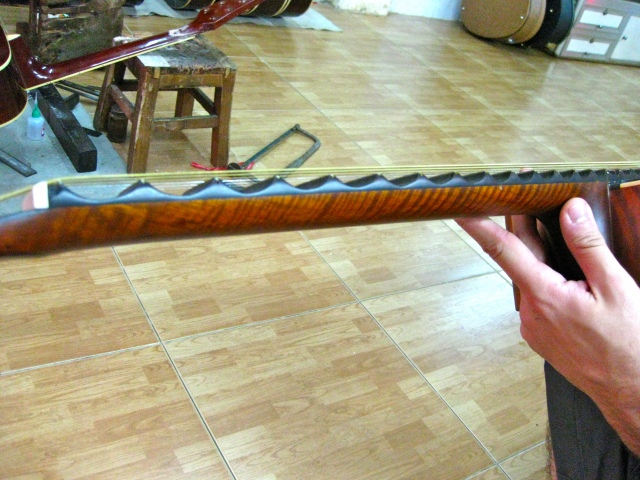
    This is not a Swedish guitar. (Photo by Candace Burnham.)

    Everyone’s talking about the upcoming Nam show, so I figured I should post something relevant. I’ve never been to Southeast Asia, though everyone I know who has loves the place. And I’ve been floored by the beauty and originality of those Vietnamese electric guitarists who scallop their fretboards not because they love Yngwie, but to replicate the wild swoops and expressive quavering of their indigenous folk instruments. Put it all through a cheap solid-state amp and vulgar digital reverb, and it’s…perfection.

    I’m no expert on the style, so I turned to Scott Collins, who’s posted here a few times. He’s a dauntingly knowledgable player and teacher who runs an interesting site called Guitarchitecture. The centerpiece is a comprehensive guitar method he’s created that applies visual metaphors to the process of mastering the fretboard.

    Anyway, Scott hastens to point out that he’s no expert on Vietnamese guitar either, yet he’s created a beautiful little piece on the topic. He visited Viet Nam with an eager ear, a respectful attitude, and keen powers of observation. You won’t be bored. —Joe

    (more…)

  • A New Look at an Old Wiring Scheme(and another cheap guitar makeover!)

    A New Look at an Old Wiring Scheme
    (and another cheap guitar makeover!)

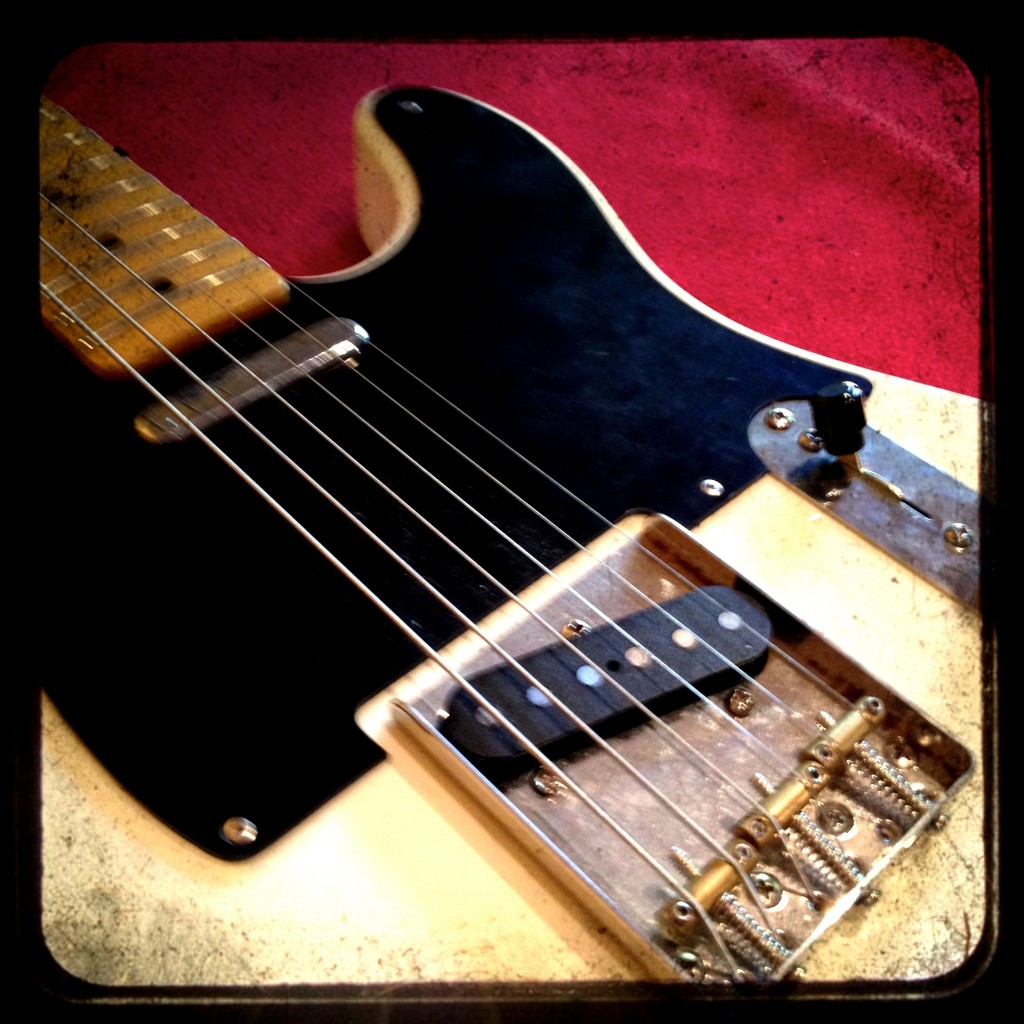
    An iPhone photo app makes this new Squier Tele look old. Duncan’s Vintage Broadcaster Set makes it SOUND old.

    Sometimes an antiquated idea can acquire new relevance.

    Example: The ancient Fender Broadcaster wiring scheme, in which the guitar has no tone control per se, but the second knob acts as a pickup-blend control. I wired up a guitar this old-fashioned way, with some very surprising results.

    My experiment had other motives: I wanted to check out Seymour Duncan’sVintage Broadcaster Set, which replicates those earliest Telecaster-family pickups. And once again, I wanted to see just how much of a sonic upgrade a simple pickup replacement could bestow on a humble guitar: in this case, a cheap, Chinese-made Squier Telecaster.

    Check out the results in the demo video.

    (more…)

  • Build the World’s Wickedest Overdrive(for less than $30)

    Build the World’s Wickedest Overdrive
    (for less than $30)

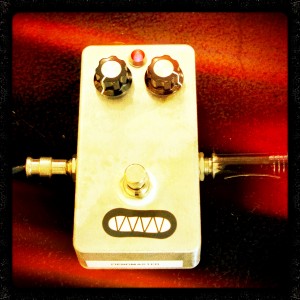
    "Who are you callin' ugly?"

    UPDATE: My thanks to reader William Badjek, who found in error on page 31 of the v01 project file, which would have prevented the tone control from working properly. (The schematics, however, were correct in v01.) If you’ve encountered that issue, please revisit that page of the v02 project file, now available at the link below. My apologies to anyone who got stuck on this!

    Hey, DIY victims fans!

    Here’s the project file for Tonefiend DIY Club Project #4: the Fiendmaster, a fab-sounding update of the Dallas Rangemaster, the circuit that put the punch in so much classic British rock. If your record collection includes a lot of albums from around 1970 featuring skinny guys with long hair and flared trousers, you need one of these!

    It sounds incredible. It’s a relatively easy build. And unlike strict clones, this version runs on a regular modern power supply like the rest of your pedals. It also includes a knob that fades between the original’s bright, snappy Brit blues sound, and the humungous sludgetone that spawned Sabbath. You can round up all the parts from the usual suppliers for less the 30 bucks, or just order a pre-assembled kit from Mammoth Electronics.

    View a brief demo video of the final product here. Learn more about the circuit’s significance here. And fill your cranium with everything you need to know about germanium here. Happy soldering!

  • Roll Your Own Reverbs!Simulate Spaces with Impulse Responses

    Roll Your Own Reverbs!
    Simulate Spaces with Impulse Responses

    Location, location, location: IR reverbs can make your guitar sound like it was recorded ANYWHERE!

    Impulse response reverbs are one of the handiest tools in the digital-audio junk drawer. If you’re new to the concept, prepare to be amazed. (And if you’re familiar with the technology, jump to the end of this post to score some cool free reverb sounds.)

    Impulse response reverbs, also known as IR or convolution reverbs, fake the sounds of genuine acoustic spaces. Say you want to be make your tracks sound as if they were recorded in a 12th-century dungeon: Just visit your nearest medieval castle and set up a small PA system in the dungeon. Next, play a test signal (usually a sine-wave sweep or a starter-pistol shot) and make a recording of it echoing in the space. Back at your studio, your IR software compares the new recording to the original test tone, and creates a reverb preset that you can apply to any audio source. Just slap it on a guitar track, say, and voilà — you’re rocking out in the dungeon, minus rats, mildew, and torture implements.

    But wait, there’s more! You can use the same technology to mimic hardware effects and speakers. Just run the test signal through an amp or effect, and you’ll have a digital clone of the physical device. Here’s a brief video demonstrating the idea:

    (more…)

  • Another ’60s Rock Mystery…

    Another ’60s Rock Mystery…

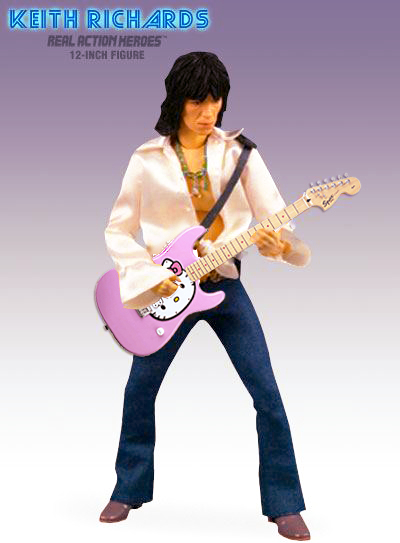
    This action figure not available in stores!

    It’s hard to discuss the Beatles without summoning their shadow: the Stones. Since posting last week about Randy Bachman solving the mystery of the “Hard Day’s Night” chord, I can’t stop thinking about another 1960s conundrum: Who played the solo on “Sympathy for the Devil?”

    There’s one key reason why so many listeners suspect that it wasn’t Keith Richards: It simply doesn’t sound like anything else he ever recorded, and certainly nothing like his solos on the  many live versions of the song.

    A couple of years ago a wrote a short piece on the solo for a “100 greatest guitar solos” anthology. Sadly, the project remains unpublished for legal reasons — a pity, since it boasted contributions from many great guitar-centric music writers. But I’m rather relieved my piece never appeared, since I argued that Keith did in fact play the solo. Now I suspect the opposite. Here’s what I wrote:

    (more…)

  • A Very EBow Christmas!

    A Very EBow Christmas!

    Sustain that seasonal spirit!

    WARNING: THIS POST CONTAINS HOLIDAY MATERIAL. THOSE WITH SEASONAL MUSIC ALLERGIES SHOULD CONSULT THEIR THERAPISTS BEFORE PROCEEDING.

    Nothing says “Christmas morning” like an ugly piece of molded plastic with a battery inside! But unlike so many cheap plastic toys, the EBow is a treasure that can delight you for decades.

    While racking my brain for a holiday post without too much bad attitude, it occurred to me that “Silent Night” makes a perfect little EBow exercise. If you play it in G, starting on the the 7th fret of the third string, the melody spans almost the entire range of the string. And it includes lots of those melodic leaps that are so tough to play smoothly on EBow. In other words, this simple, familiar tune is a serious workout! (more…)