Category: Technique

  • MIDI Guitar Meltdown

    Okay, I promise: tonefiend is not going to become an all-digital blog. I’ve got two new DIY analog pedal projects in the pipe, plus a piece on that delightfully retro technology, the book.

    But while there’s more to life than MIDI, for the last few months my particular life has been all MIDI, all the time. I worked on the documentation for the Fishman TriplePlay MIDI guitar system, then demoed the product at MacWorld and Musikmesse. And now that the smoke has cleared and I’m off the Fishman clock, I’m still obsessed with the musical possibilities here. In fact, I’m just getting to the fun part: bending the technology to taste and making weird-ass music for weird-ass people compelling new sounds.

    I’m posting two new pieces spun off from my Musikmesse demos. Technical and musical comments after the videos.

    In my first TriplePlay demo, I used simple, recognizable acoustic instrument samples. For the second one, I focused on aggressive/distorted sounds. But now I’m getting into what really interests me: solo guitar arrangements featuring hybrid colors, deployed so that it’s often difficult to tell the guitar sounds from the synths and samples.
    (more…)

  • Playing with Pain

    ouch

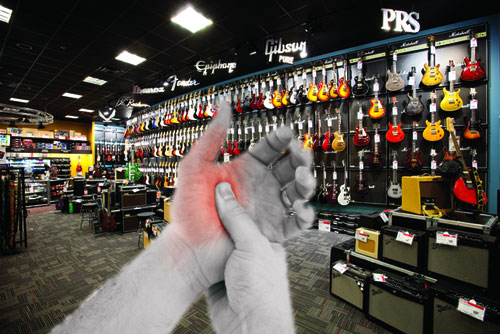
    I’m lucky — I’ve never suffered from any playing-related pain. (I mean, other than expected stuff, like spurting blood all over a guitar when you bash it a little too hard, or picking up a soldering iron by the wrong end.) But I’ve been blissfully untouched by carpal tunnel syndrome, numbness, arthritis, etc.

    Until recently.

    A few months ago, my left thumb joint started aching. It didn’t directly affect my playing — all those clams in my videos happened on their own! But it scared the crap out of me.

    My doctor suggested it might be non-degenerative arthritis.

    Arthritis?” I squawked. “But I’m only . . . oh, yeah, probably arthritis.”

    Which it may well be. But it also occurred to me that I had been indulging in a new behavior for the last year or two, and wondered whether it might be contributing to the problem. See, I’m almost as addicted to my iPad as I am to flatwound strings. I’ve embraced the post-paper lifestyle, and I use the iPad for most of my reading and much of my correspondence. I keep it on my workbench while I solder, use it as a remote in the studio, watch movies while working out, and most important, use it to read comic books in the bathtub. I usually support it with my left hand, with the modest but constant 1.44 lb. weight centered right where I was hurting. I migrated to a .68 lb. iPad Mini a few months ago. Lo and behold, the pain has receded — for now, anyway.

    That's got to hurt!
    That’s got to hurt!

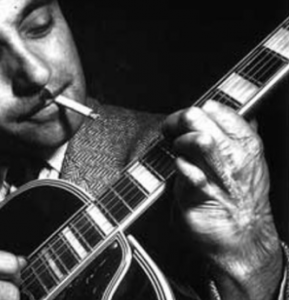
    But it makes me realize how much I take for granted the simple act of pain-free playing. Then I think of all the players who have either been derailed by playing-related pain, or who persevere despite it. And that’s not even taking into account injury-related pain. (Hello, Django!)

    So has guitar playing ever become a pain for you? (No, working with singers doesn’t count.) Were you able to overcome it by modifying your technique, or through therapy? Any words of wisdom to share?

  • Who Dares Predict Our Fretboard Future?

    Who Dares Predict Our Fretboard Future?

    “We are all interested in the future, for that is where you and I are going to spend the rest of our lives.” — Criswell, Plan 9 from Outer Space

    UPDATE: Wow, I can’t believe all the cool stuff folks have been posting to comments. I find myself feeling quite inspired about the future of instrument — when I’m not laughing so hard I spit coffee all over my laptop. Thanks for all great ideas. Keep ’em coming! 🙂 :thumbup:

    Prophecy is for suckers. Who’s stupid enough to go on record with bold prognostications about the future of music and music-making, given the near-certainty that the words will reappear someday to bite you on the ass?

    Well, me. And, I hope, you.

    So I invite my fellow foolhardy loudmouths to join me in sharing their half-assed guesses wise and well-informed predictions about our brave new fretboard future.

    The author of the most compelling prediction wins one of my hand-built stompboxes. So does the author of the one that makes me laugh hardest.

    Post your predictions to comments. I’ll go first. 🙂

  • Welcome to Fingerstyle Boot Camp!

    Welcome to Fingerstyle Boot Camp!

    I’m 200 years old, but I can still kick your ass, punk!

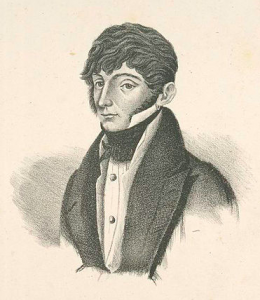
    UPDATE: I’m proud to announce that my fingerstyle video lesson based on the 200-year-old etudes of Mauro Giuliani has been selected to appear in the debut issue of Pure Guitar, a new digital guitar mag whose editorial staff includes my two music journo mentors : Tom Wheeler and Jas Obrecht. Also on board: jazz ace Wayne Goins, session superhero Tim Pierce, Nashville’s leading guitar tech, Joe Glaser, and other preeminent axe experts.

    You’ll find my article here — but frankly, I recommend starting at the homepage of issue #1 and reading all the way through!

    Congrats, guys, on the new mag. I’m psyched to be part of it. :beer:

  • What’s Your “Basic Concept?”

    What’s Your “Basic Concept?”

    “They call me mad, but I’m actually a HAPPY scientist!”

    There’s an interesting thread over on the Forum, started by reader Double D, who asked:

    “Do you have a central core concept or inspiration that drives your playing? Are you squirrelled away with obscure harmony texts, or practising modes till your fingers bleed? Do you have go-to chord substitutions that define your sound? Do you have a creamy harmonic centre?”

    Like most great questions, it’s really hard to answer (though some folks managed to reply in extremely articulate and compelling ways). I’ve been pondering it myself for the last few days, and the best answer I can come up with is something along the lines of what I hinted at in this recent post on chromaticism, namely a liquid sense of modality based on the notion that most of us Westerners really only perceive two modes — major and minor — but that there’s a vast amount if “wiggle room” when it comes to placing individual scale degrees.

    To put it another way, most of what I play is based on simple tonic triads, major or minor, but the placement of all the other scale degrees is highly negotiable. For me, the advantage of viewing scales this way is that they remain grounded in harmony, and vice-versa. As opposed to the way many of us were taught modes: as purely mathematical sets of intervals divorced from their chordal implications — or just a bunch of diatonic scales that start on the “wrong” notes.

    Hey, why is everyone nodding off, staring out the window, or checking their phones? Wake up and talk about the methods of your madness!

    :cuckoo:

  • Cool Chromaticism: Using Lowered Seconds

    Cool Chromaticism:
    Using Lowered Seconds

    Of the dozens of videos I’ve posted at the tonefiend YouTube channel, most have dealt with gear, and a few with general technique. But this is the first one I’ve done dealing with music theory. Which is sort of odd, since I’m a terminal music theory geek.

    Aside from covering a cool and underused melodic/harmonic device, this video opens a Pandora’s box of modal theory. I have some crackpot interesting theories about this, and I enjoy sharing them, especially when I’m trying to get house guests to depart after a long party.

    I’d like to post more stuff along these lines if folks find it useful. Let me know!

  • Contest: Build the Tonefiend Forum!

    Contest: Build the Tonefiend Forum!

    tonefiend forum
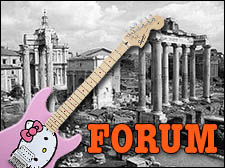
    A sad, desolate place — but not for long!

    One cool thing about going indie with tonefiend  is that fact that I can finally host my own geek forum! It’s already up and running — but it’s a sad, vacant space that desperately needs to be populated by cool people and cool ideas.

    How to get there? Sleazy bribes! Cool prizes!

    Here’s the deal: I’ve pre-populated the forum with a few topics and threads. Just come on over, register, and chime in on any thread that interests you — or better yet, start one of your own. And on September 1st, 2012, the three forum members who have consistently contributed the liveliest content as judged by some dork me will get a bitchin’ stompbox laboriously hand-built by the same dork me. I can’t disclose exactly what the pedals will do, but I can promise they will be cool, useful, and genuinely unique — original designs, not some lame-ass Screamer clones. And if I manage not to vaporize my hand with the TechShop laser-cutter I’ve been learning to use, they’ll even have wicked laser-etched enclosures.

    Naturally, I hope the tonefiend forum will also be cool and unique, and that you’ll enjoy geeking out there even when there’s no contest. But hey, I’m not above greasing the skids with free stompboxes as needed.

    Please read the forum rules, though.

    FORUM RULES: Be cool.

  • The Secret Room: Not So Secret Anymore

    The Secret Room: Not So Secret Anymore

    Now with more secrets — and less secrecy.

    Last winter I tried an odd experiment: a website where players were encouraged to post their best tone secrets — the kinds of tricks and techniques that are almost too good to share. But in order to get, you had to give: The site was password-protected, and the password was only sent to those who contributed secrets.

    Musicians responded, no doubt encouraged by the cool prizes awarded to the top secrets, as judged by user ratings. I also asked some cool musician friends to contribute the first round of secrets, yielding tips from the likes of composer/virtuoso Lyle Workman, metallurgist-turned jazzbo Alex Skolnick, original Chili Peppers guitarist Jack Sherman, boy genius Blake Mills, and other great players.

    Once the contest ended, traffic slowed, but the site has slowly but surely grown. And now, as an experiment, I’ve removed the password protection. Now anyone can visit the Secret Room, AKA tonesecret.com, even if they haven’t coughed up a secret. So please do!

    It’s a fascinating document. Naturally, the quality of secrets varies, as does the level of expertise needed to make the most of them. I exerted a light editorial hand — only silly or flat-out-wrong tips were vetoed, and I didn’t do much in the way of spelling and grammar repair. Sometimes the contents are a little repetitious — but trust me, there is much wisdom and originality throughout.

    I hope you find something helpful — and I hope you’re moved to contribute some secrets yourself using the site’s submission form. And who knows? There may be more tawdry bribes fabulous prizes lurking around the corner…

  • Those Times When It’s Good to NOT Play Like Yourself…

    Those Times When It’s Good to NOT Play Like Yourself…

    Can we all agree that it’s a good thing when guitarists and bassists cultivate their own style? Even a jaded old cuss experienced music journalist like me still gets a thrill upon discovering a new player with a startlingly original voice.

    I am not any of these people —but I pretended to be them.

    But there are times when it’s worth pursuing the opposite approach. (And not just for pragmatic reasons, such as the likelihood that you’ll get canned from your cover band gig if you mix it up too much, or the fact that the jingle client can’t afford to license that Black Keys song, but will happily pay you to record something “similar.”) Sometimes disconnecting your ego and completely immersing yourself in another player’s point of view can make you a better, and paradoxically, more original player. (I’m reminded of a Marc Ribot interview I once edited where the brilliant guitarist talked about learning Chuck Berry songs, clams and all — the “bad” notes, he suggested, were as much a part of Berry style as the “good” ones.)

    I had a chance to take this idea to an extreme a few years go when writer/composer Elise Malmberg and I collaborated on a massive internet hoax: a bogus website alleging to be the 50-year history of a “legendary” indie record label. Clubbo Records is easily the most obsessive-compulsive project I’ve undertaken. The site features hundreds of pages of music, bios, photos, and memorabilia memorializing dozens of fictitious artists. Even many external links are fake — we just made a lot of little mini-hoax websites.

    (Example: We licensed a photo of a beautiful ’60s blonde in a leopard-skin coat, which inspired a story about Ava & the Avalanches, the best known group of the Swiss Invasion. We wrote a story about how wearing the coat for the photo shoot horrified her, and launched her on a life path of animal activism. Where would she be now, we wondered? Running a big cat rescue charity, of course! Which inspired more than a few queries from journalists, including one from the BBC, asking to put us in touch with the non-existent Ava. And Ava’s signature “hit,” “Ski Baby Ski” has been licensed over and over, most recently for the silly Jonah Hill comedy The Babysitter.)

    (more…)

  • Does a Guitar Ever Play You?

    The other day I posted a demo for a high-gain pickup, and I’m usually a lower-gain guy. Zyon said in comments that it sounded like Santana. (It sort of did, if you can imagine a clumsy, out-of-tune Santana with a really short attention span.)

    But I assure you, Carlos was far from my conscious mind. (Or at least 20 miles away at his place across the bridge.) It’s just that the pickup’s unaccustomed searing attack and saturated tone made me hork up those emotive, minor-key melodies.

    Which makes me pose this question:

    Isn’t it a rather pathetic rationale for having one of the main reasons for having a bunch of guitars? Not just the sounds they make, but sounds they force you to make?

    It’s not just me, is it?