Tag: Stratocaster

  • Fuzz Face:The Daiquiri of Distortion Pedals?

    Fuzz Face:
    The Daiquiri of Distortion Pedals?

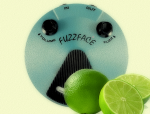
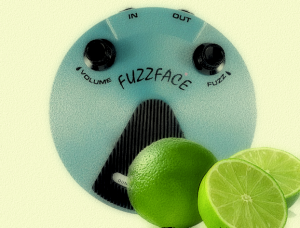
    fuzzlimeMost sentient guitarists love Hendrix, but not everyone is equally fond of his signature distortion pedal.

    So what’s your take on the Fuzz Face?

    I used to hate them — but only because my sole exposure to them was via the crappy reissues of the ’70s, ’80s, and ’90s. They sounded so brittle and harsh! Not till this century did I encounter the pedal in its original incarnation.

    What a difference!

    Vintage-style Fuzz Faces produce tones that are warm, rich, and unbelievably dynamic. It was like the first time I tasted a vintage-style daiquiri. Like the Fuzz Face, the classic daiquiri is a delicate concoction made from a few simple yet complexly interactive ingredients — nothing like those nasty blended drinks that taste like Slurpees spiked with Everclear.

    Here’s everything I love about vintage Fuzz Faces, compressed into 60 seconds:

    My DIY version is based on inventor Ivor Arbiter’s original 1966 schematic. That’s also the basis for a new DIY project created by my stompbox-buildin’ pal Mitchell Hudson, who runs the cool DIY site Super-Freq. We’ll both be posting it on our sites in the next few days. You can source the parts on your own, or order a kit for less than $50 — not as cheap as some of our other DIY projects, thanks to its two relatively pricy germanium transistors.

    Most lore about “mojo” stompbox parts is utter nonsense, but there is something harmonically unique about the germanium transistors used in ’60s fuzz pedals, including original Fuzz Faces. (See my “Germanium Mystique” post/rant for more info.) You don’t need germanium for a good fuzz sound — there are many great tones available via silicon transistors, integrated circuits, and digital modeling. But one problem with those god-awful Fuzz Face reissues was that they often simply substituted high-gain silicon transistors for germanium ones without modifying anything else in the circuit. The result was more gain, but at the cost of harsh, excessively bright tones and inferior dynamic response.

    In the last decade or so, builders have wised up. Numerous manufacturers offer authentic ’60s-style replicas. Meanwhile, the DIY community has created countless variations, many of which use post-germanium parts to great effect. These days it’s pretty easy to find a Fuzz Face that doesn’t suck.

    I’ve build many Fuzz Face variants, but until Mitchell created his Fuzz Face project, I’d never done a strict original, with positive-ground wiring, PNP transistors, and few latter-day “refinements.” (Don’t sweat it if those terms mean nothing to you — they’re all explained within the project.)

    Anyway, that’s the circuit you hear in the video above. It’s not a fuzz for all seasons — it doesn’t have a ton of gain, and its loose, spongy distortion is unsuitable for metal and modern hard rock. But I love its warm, non-macho timbre and phenomenal dynamic response. It’s simple, classic, and delicious, much like this.

  • Meet the REAL Spiders from Mars!
    Bartók on Electric Guitar

    Bartók: Smarter than math-rock — and way more violent.
    Bartók: Smarter than math-rock — and way more violent.

    My Bowie fandom is second to none. Yet I’ve always felt a vague sense of disappointment that the Spiders from Mars didn’t really sound much like spiders from Mars.

    On the other hand, the fourth movement from Béla Bartók‘s Fourth String Quartet really does sound like Martian spiders — assuming the critters in question had been force-fed a diet of chord clusters, mathematics, Hungarian folk music, and some of the most astonishing counterpoint this side of J.S. Bach.

    And dig it: This white-hot blast of dissonant modernism was composed in 1928!

    And how does this string quartet music sound on guitars? Awesome, IMHO — largely because the movement is played entirely pizzicato (plucked, not bowed). Very few modifications were needed to adopt it for four electric guitars.

    (more…)

  • A Very Vintage Strat

    A Very Vintage Strat

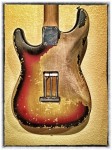
    The ’80s were tough on guitars.

    Last weekend I went to a memorial service for a music pal I hadn’t seen since the ’80s. Judging by the pictures I saw and the stories I heard, Brett remained the gentle, generous music lover I’d remembered till he died in his sleep a few weeks ago.

    I ran into lots of old music friends and bandmates, and we alternately smiled and winced as our old photos and concert videos flashed on the big screen. Were we really that skinny? Did we actually wear that stuff without being coerced at gunpoint?

    Like we tend to do at such moments, I left brimming with resolutions: Appreciate life. Cherish friends. Remember that music is a joy as well as a job. And do something nice for my sad old Strat, the guitar in all those old photos and videos.

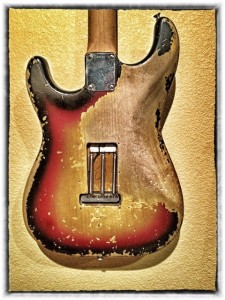
    See, back then I only had one guitar — an all-original ’63 Strat I’d picked up in 1980, when pre-CBS Fenders were still perched on the precipice between collectible and affordable. (I paid $450, a staggering investment for me at the time.) It remained my only serious guitar for a decade. It was in near-perfect condition when I bought it, and it was a battered ruin by decade’s end. (The ’80s were a tough time for guitars, what with all those studded belts.) I was a young player with a bad attitude and little concern for collectibility, as opposed to the middle-aged player with a bad attitude and little concern for collectibility that I am today.

    I’ll some thoughts about Strats then and now. But first, have a listen:

    (more…)

  • Mixing Magnets in One Pickup

    Mixing Magnets in One Pickup

    Aggressive on the bass side, sweet on the top.

    I was talking to Seymour the other day about the types of magnets used in vintage Fender pickups. I knew that Fender used strong, punchy alnico V magnets in most of their models, but I didn’t know that the earliest Teles used softer-sounding alnico IIs, or that the first Strats used even softer-sounding alnico IIIs, a detail confirmed by Fender’s page on the topic.

    I recently had a chance to compare the sound of alnico II and alnico V while hacking together guitars for the Mongrel Strat Project. I’d tried an Alnico II Pro in the middle position of this mongrel, and liked it. But as I continued to experiment, I gravitated back to the more traditional alnico V sound — maybe because I play so much in lowered tunings, and in bands without bass, so I really like the strong, defined fundamental you get from an alnico V.

    But until now I’d never tried literally splitting the difference via Duncan’s Five-Two, a hybrid that has three alnico V rods for the bass strings and three alnico II rods for the trebles. The idea behind this arrangement is to deliver a bold, snappy sound in the low resister, but with some softening and sweetness on top.

    How does it sound? You tell me — here’s a demo video I made. Plus, there’s a micro-contest: The first person to name the tune I’m playing will have their name immortalized for the ages mentioned in an upcoming post. (That might be better than a poke in the eye, depending on whose eye it is.)

    Have a listen: (more…)

  • Behold the Synyster Kitty!

    Behold the Synyster Kitty!

    Kitty power!!!

    Okay, as promised: One more quick video featuring the Hello Kitty Strat, this time with one of those new Duncan Synyster Gates Invader pickups. I’m told the ceramic-magnet Invader is literally the hottest possible non-active pickup. I’m inclined to believe it.

    Take this one with a grain of salt. As much as I love trying to make a pink $99 guitar and a Lunchbox amp sound as heavy as possible, this pickup just might sound a wee bit heavier with a big-ass mahogany guitar and a big-ass tube-dude amp. But still.

    FYI, here’s the earlier post I did using a Duncan Phat Cat pickup, plus the same built-in fuzz.

    Behold, mortals: (more…)

  • Hello Kitty Strat: Not for Pussies!

    Hello Kitty Strat: Not for Pussies!

    Would this be anything less than awesome? I think not.

    As I gloated last week, Jane Wiedlin gave me her Hello Kitty Stratocaster  — the most bitchin’ $99 guitar ever conceived! I finally had a chance to destroy/customize it yesterday, in what will no doubt be the first of many desecrations/enhancements.

    I’d ordered one of those Synyster Gates Duncan Invaders with the pretty white pole pieces for the guitar, but just couldn’t wait to experiment, so I browsed through the ol’ pickup collection, and found a nice Duncan Phat Cat I’d used in a Les Paul experiment some months ago.

    I don’t generally recommend choosing pickups because of their names, but come on! Kitty + Cat? How could I resist?

    Turns out it was a lucky choice. I hadn’t planned to install a pickup that was actually lower in output than the stock humbucker, but it lets me get nicer clean sounds, and coughs up more than enough crunch when goosed with distortion. Speaking of which: the other custom feature is a built-in-distortion circuit activated via push-pull pot (I took lots of pics of the process for a DIY built-in-effects tutorial I’ll be posting very soon.)

    View the carnage in this little video. Thanks, Jane Weidlin! Sorry, Stevie Nicks!

    (more…)

  • It Pays to Have Cool Rock Star Friends!

    It Pays to Have Cool Rock Star Friends!

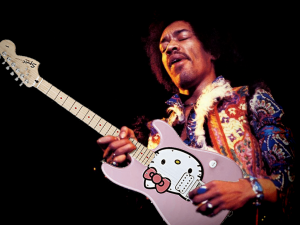
    Sadly, it's ony Photoshop. Jane just WISHES she had a Hello Kitty triple-neck!

    It was a perfect weekend here in SF: Unseasonably warm weather. BBQ in the garden. A fun recording session for a new project by Jane Wiedlin and Belinda Carlisle of the Go-Gos. And there was something else. . .

    Oh yeah — Jane frickin’ gave me her Fender Hello Kitty Strat! Yes, the very same model played by Jimmy Page, John Lennon, Keith Richards, and Johnny Marr. (At least in my imagination.)

    I love you, Jane!

    So of course we started talking about how to customize it. Travis Kasperbauer, Jane’s engineer/husband, proposed installing an Seymour Duncan Invader pickup (maybe one of those white-capped Synyster Gates models…)

    Jane suggested blinging it out with lots of beads and jewels and other eye-catching decor. And Jane know her eye-catching decor — her place is filled to bursting with mid-20th century kitsch, and her steampunk-themed studio could be the Addams Family basement where Wednesday and Pugsley rehearse with their punk band while Lurch runs Pro Tools. How often do you get to record 12-string overdubs while sitting next to a disembodied brain floating in a tank?

    (more…)

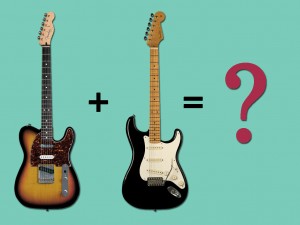
  • “Nashville” Tele Wiring . . . in a Strat?!

    “Nashville” Tele Wiring . . . in a Strat?!

    What do you get when you cross . . .

    I’ve been coveting one of those “Nashville-Style” Telecasters — you know, the hot-rodded, three-pickup versions popularized by Nashville session superhero Brent Mason, and now a regular Fender production model.

    Then it dawned on me: Since some of Mongrel Strats I’ve been playing with have strong Tele tendencies, why not flip the equation? Instead of a Tele that acts like a Strat, why not a Strat that thinks it’s a Tele?

    The Fender version replaces the usual Tele 3-way switch with a 5-way, as shown in this wiring diagram, though many players prefer to keep the 3-way switch and add the middle pickup via a blend knob, as in this other wiring diagram.

    I took the latter approach, and I am flipping out over all the new tones it unlocks. Check out this little video demo:

    (more…)

  • The Ultimate Mongrel Strat? (with Obsessive/Compulsive Tone Control!)

    The Ultimate Mongrel Strat? (with Obsessive/Compulsive Tone Control!)

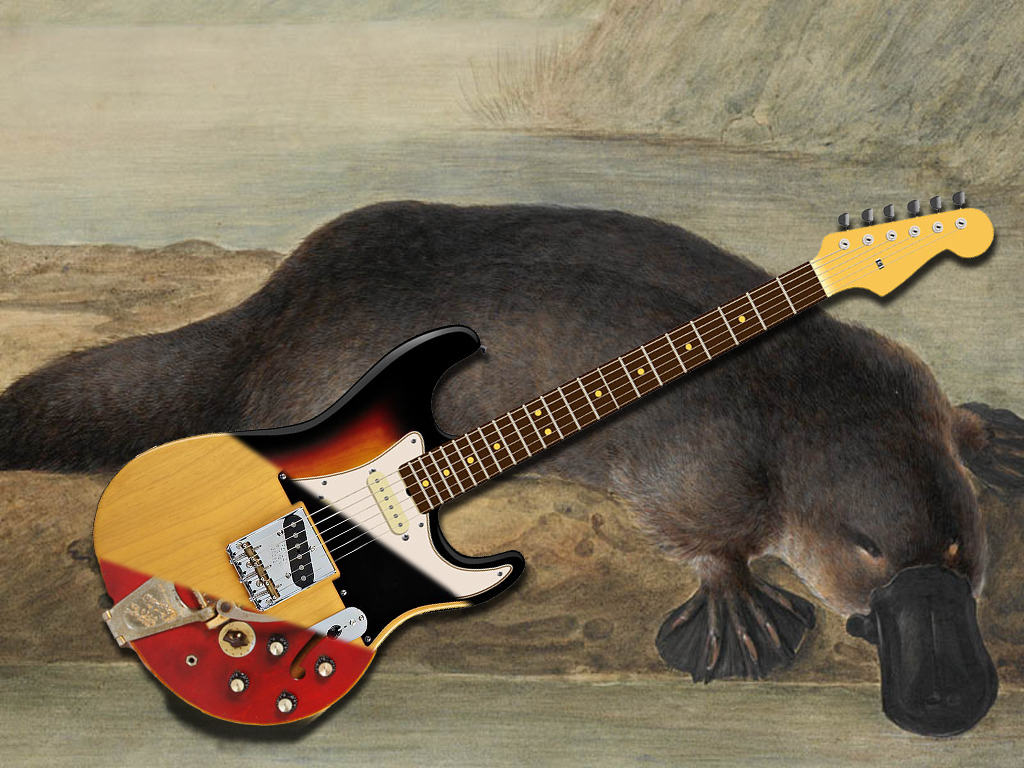
    Not for everybody: The sickest mongrel strat yet.

    Okay, I lied.

    In the previous installment of our ongoing mongrel strat series, I experimented with a version of Gibson’s oddball Vari-Tone circuit. I said it was too fussy and complex, and that I wanted to experiment with a simplified version.

    So naturally, I built a “parts” Strat with a Vari-Tone twice as complicated as the original — a configuration I’ve dubbed the “Obsessive/Compulsive Tone Control.” I also deployed some of my favorite quirks and wiring tricks from previous strat experiments, plus a few new hardware discoveries. Result: a weird-ass guitar that only a geek could love a cool, one-of-a-kind instrument.

    Check out the demo. Post-mortem after.
    (more…)

  • Twang Bangers, Vari-Tones & More Strat Strangeness

    Twang Bangers, Vari-Tones & More Strat Strangeness

    The latest Mongrel Strat (artist's conception).

    Welcome to the second installment in the Mongrel Strat Series!

    If I were a sensible person, I would have split this week’s experiments into several posts. But much like eating pistachios, it’s tough to know when to stop .

    Anyway, this project tackles three topics:

    1. Several readers dug the sound of the Telecaster-inspired Seymour Duncan Twang Banger pickup used in Mongrel #1, where I  paired it with a Duncan Lipstick Tube for Strat neck pickup and a Alnico II Pro middle. But I wanted to hear how the Twang Banger sounded in a more traditional Strat array, so this time I paired it was a couple of vintage-accurate SSL-1s, with a reverse-wound, reverse-polarity model in the middle position.

    2. Over in The Secret Room, a participant brought up the subject of the Vari-Tone control used in the Gibson ES-345. I wanted to learn more about this often misunderstood circuit (well, I never understood it, anway) and explore whether it had relevance for Strats.

    3. In response to another Secret Room topic, I wanted to resolve whether there’s any sonic benefit in bypassing the tone circuit completely.

    And the results? You tell me — here’s the video:

    (more…)