Tag: guitar

  • 14th-Century Freakout!

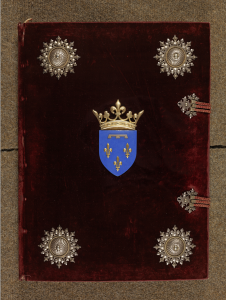
    Codex Chantilly
    Codex Chantilly: the electrifying page-turner that blew the lid off the perverse musical excesses of the late Middle Ages!
    NOTE: I am a known perpetrator of musical hoaxes, but this isn’t one of them. This bizarre composition really is over 600 years old.

    As Marsellus Wallace once quipped: “I’m’a get medieval on your ass.”

    I’ve been obsessing again on a medieval composition that’s fascinated me since my geeky teens. It’s Fumeux fume par fumee, a bizarre artifact from a bizarre moment in music history: France in the final years of the 14th century.

    (If you’re wondering why I was listening to medieval and Renaissance music when I was 17 instead of Zep and Floyd, and what the stuff brings to my guitar playing today, read on. But first, that freaky music!)

    The world that produced Fumeux fume par fumee wasn’t your storybook Middle Ages. We’re talking Hundred Years War, Black Death, Papal Schism — and a radical musical style of head-spinning complexity and abstraction. It was dissonant music for dissonant times. The death rattle of the Dark Ages.

    The 14th century had witnessed the rise of ars nova, a florid and intellectual style characterized by bold new approaches to counterpoint and musical structure. But by the 1380s or so, ars nova had mutated into ars subtilior, an even more abstract and experimental style.

    “Ars nova” means “new art.” It was.

    “Ars subtilior” means “more subtle art.” It wasn’t — unless by “subtle,” you mean “characterized by extreme dissonance and chaotic rhythms.” And Fumeux is a perfect embodiment of this radical style.

    Here’s what I’m talking about:

    WTF, right?

    You probably don’t need me to specify why this music is so freaky, but I will anyway:  (more…)
  • The “Super-Fiend” DIY Fuzz Face!

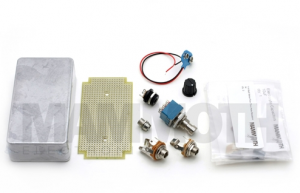
    You can purchase a kit, or source your own parts.
    You can purchase a kit, or source your own parts.

    UPDATE [06.16.2013]: Build instructions updated to v02.

    The Fuzz Face has inspired countless spinoffs since Ivor Arbiter unveiled the device in 1966. Some introduced meaningful improvements. Many didn’t.

    The goal of this project, created by my friend Mitchell “Super-Freq” Hudson, is to create a pedal very similar to the original. It’s a great way to explore one of the iconic sounds of ’60s rock (and lots of ’60s-influenced rock).

    The instructions are available here. [19MB PDF.]

    You can order a kit from Mammoth for $45. (Disclosure: Neither tonefiend nor super-freq has any financial stake in these kits. I simply asked the Mammoth guys to create one for your parts-sourcing convenience. All necessary parts are readily available from other vendors.)

    But before you attempt the project, please be aware of some of its quirks. (And if you’re curious, you can read about how I customized the pedal I used in my video demo.) (more…)

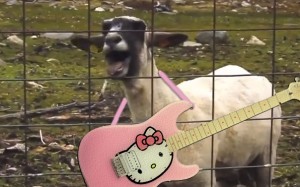
  • Guitars That Yell Like Goats That Yell Like Humans

    This is the sound you've been searching for!
    This is the sound you’ve been searching for!

    If you like reading about internet memes that have just passed their sell-by date, tonefiend is the place to be!

    Witness this brief video on triggering goat sound via guitar, created in a fit of desperation when a planned DIY post was delayed divine inspiration.

    It’s based, of course, on the unbelievably popular video of unbelievably weird goats making unbelievably human-like sounds. It’s inspired countless spinoffs, including mine. I made these in my hotel room in Frankfurt during Musikmesse, feeling grateful the entire time that I live in an era when you can do crap like this in a German hotel room at midnight. Because trust me, there weren’t a lot of alternatives.

    Tech details: homemade Strat, Fishman TriplePlay, Apple MainStage software hosting NI’s Kontakt sampler, goats.

    Do you too wish you had guitars that yell like goats that yell like humans? Grab the raw samples here, or download this Kontakt Instrument, which should play just fine using using the free Kontakt Player.

    And yes — that new 100% retro-analog DIY project will be here SOON! 🙂

  • MIDI Guitar Meltdown

    Okay, I promise: tonefiend is not going to become an all-digital blog. I’ve got two new DIY analog pedal projects in the pipe, plus a piece on that delightfully retro technology, the book.

    But while there’s more to life than MIDI, for the last few months my particular life has been all MIDI, all the time. I worked on the documentation for the Fishman TriplePlay MIDI guitar system, then demoed the product at MacWorld and Musikmesse. And now that the smoke has cleared and I’m off the Fishman clock, I’m still obsessed with the musical possibilities here. In fact, I’m just getting to the fun part: bending the technology to taste and making weird-ass music for weird-ass people compelling new sounds.

    I’m posting two new pieces spun off from my Musikmesse demos. Technical and musical comments after the videos.

    In my first TriplePlay demo, I used simple, recognizable acoustic instrument samples. For the second one, I focused on aggressive/distorted sounds. But now I’m getting into what really interests me: solo guitar arrangements featuring hybrid colors, deployed so that it’s often difficult to tell the guitar sounds from the synths and samples.

    (more…)

  • The MacGuyver Flanger & Other Goodies

    MacGuyver Flanger

    My pal Jeff Cross from Apple sent me a brief email:

    please tell me you’ve seen these…

    https://www.youtube.com/watch?v=PSsl1h8RhqU

    https://www.youtube.com/watch?v=XT7bsX2qNWQ

    https://www.youtube.com/watch?v=rC170m-Hcyg

    No, I had not. And they’re soooo good. All three are from YouTube user MotorGoblin. I don’t know anything about him, beyond the fact that he’s clever, funny, and very musical.

    Anyone have any similar techniques to share? (I’ve been meaning to do a post on my “plastic tube Leslie”…)

  • My Half-Assed Musikmesse 2013 Report

    While responsible guitar journalists like my ol’ pal Art Thompson from Guitar Player and the fine young fellows from Premier Guitar scoured Musikmesse 2013 tirelessly and systematically, I did the opposite, randomly stumbling through the vast exhibition halls in a jet-lagged daze between my performances, aiming my iPhone at anything vaguely cool or weird.

    The result: this collection of poorly focused images and poorly researched comments. But since I wasn’t being paid to cover the show, I have nothing to lose except your respect, dear reader.

    My headline is charitable — this is more of a quarter-assed Musikmesse report. :poop:

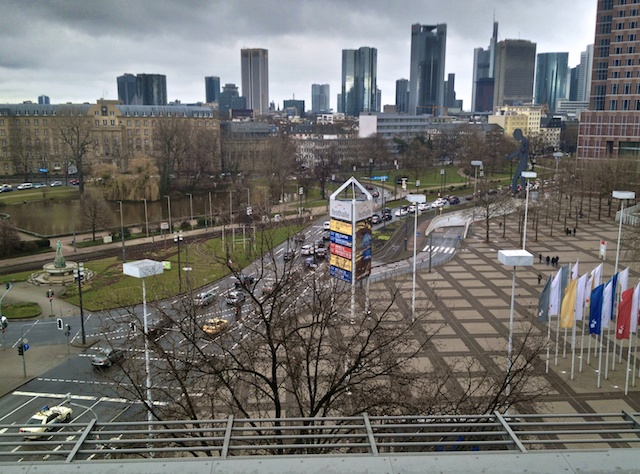
    Musikmesse 2013

    Like the African elephant, Musikmesse is huge but endangered. It’s way larger than NAMM, but participation decreases year by year. Manufacturers resent the high exhibition costs, and both consumers and instrument companies seem to find the event less essential in the internet era.

    1993

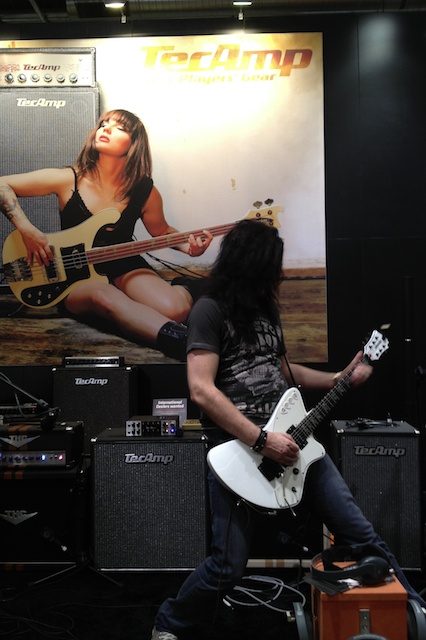
    When it comes to EDM innovation, Europe leads the way. But in the unbelievably loud electric guitar hall, the vibe is strictly 1993. You don’t hear nearly as much bad shred guitar at NAMM these days, but that’s pretty much ALL you hear at Messe.

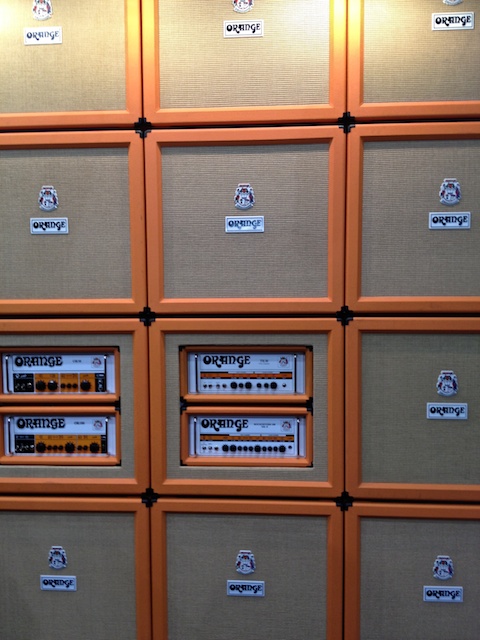
    Orange wall

    Did I mention that the electric guitar hall was loud? It makes NAMM sound like a library.

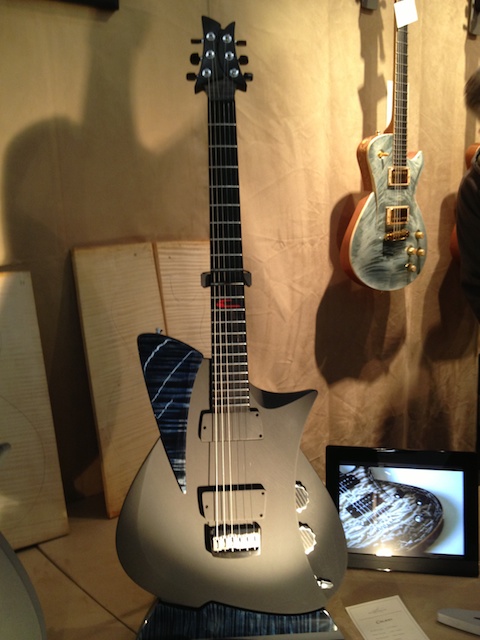
    Hartung Caligo

    I love the expressionist look of the Caligo model from German luthier Frank Hartung. He’s clearly been watching the same movie as Robert Smith.

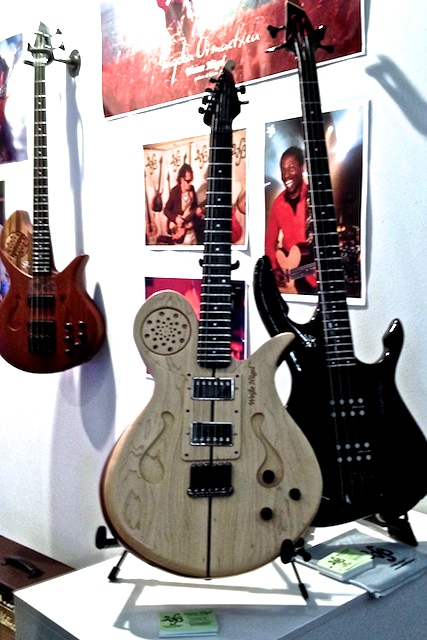
    Amathone

    The Amathone model from Barcelona’s Weiss-Hügel Guitars looks like a crazy, mad-scientist ax, and it is! I had a blast playing it. That rosette on the upper bout is an adjustable baffle whose setting fine-tunes the high-end content. I don’t quite understand it, but the Weiss-Hügel website explains:

    “When in Weisse Hügel we consider to make an instrument of hollow box, we think of creating something that was supporting the indispensable qualities of this type of guitars and that, in turn, had the most common problems completely decisive of these: Feedback problematic Final touch, Definition, Frequencies of cancellation (Notes of shade), Is absent of sustain in many cases, besides a relative versatility. The result has been the Amathone.”

    That should clarify matters.

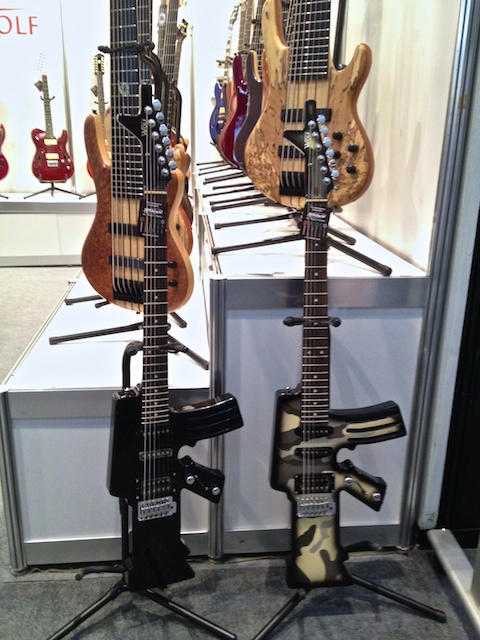
    AK-47

    I hope they get these guitars back to South Korea before Kim Jong Un makes his move!

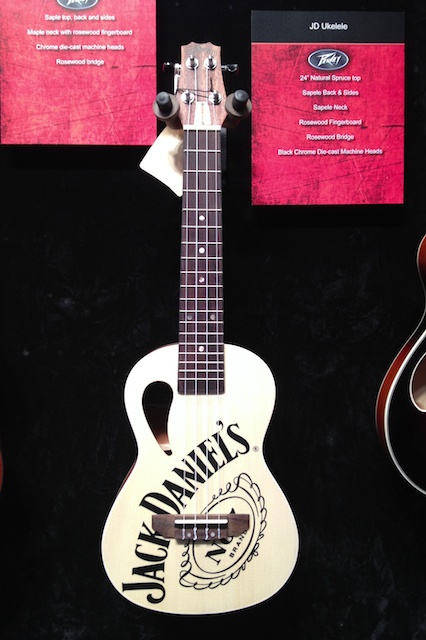
    Kentucky uke

    Peavey created this uke for the upcoming FX series Justified Five-O.

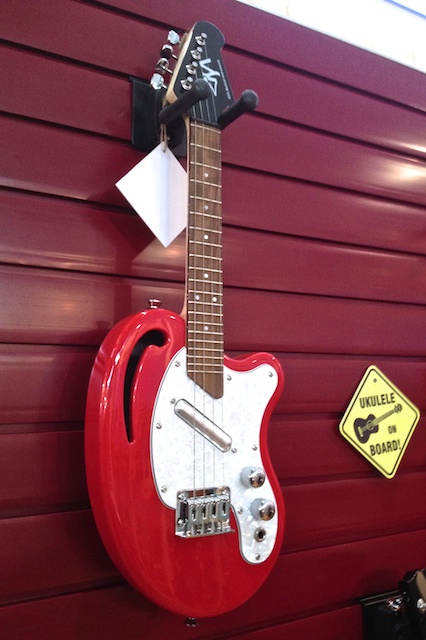
    RISA uke

    At least you could play surf music on this lipstick-tube electric uke, from Germany’s RISA.

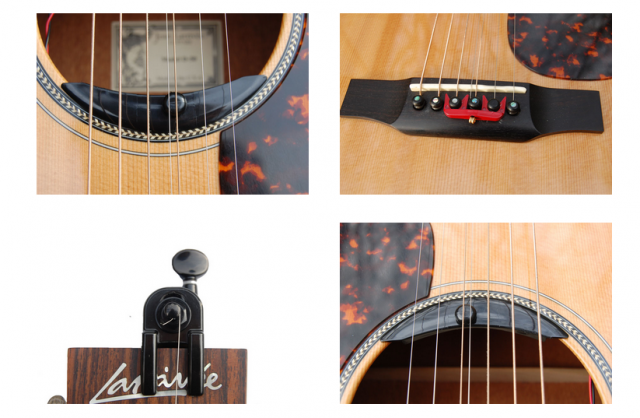
    addstring

    Ever notice how much of the shimmery 12-string effect is really all about the high G string? This clever Dutch gizmo from Addventor mimics the effect via a removable seventh-string. You can even temporarily nix the effect by clipping the added string under the soundhole-mounted button. The only needed guitar modification is an extra notch in the nut.

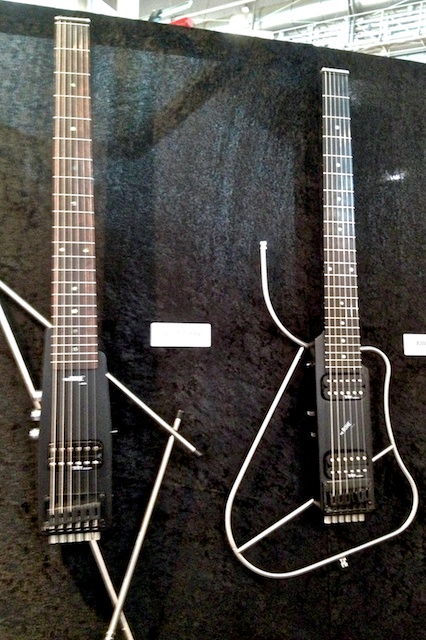
    The Bone

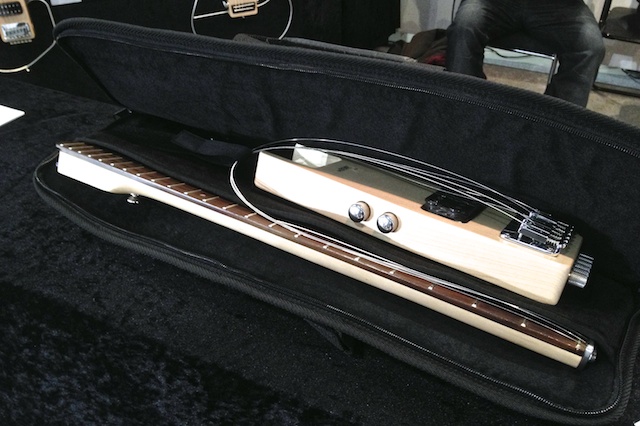
    If your Steinberger is feeling too bulky, consider The Bone from Switzerland. These micro-guitars actually sound pretty decent, with more low end than you’d expect. They also make a MIDI guitar and a faux-acoustic with a piezo bridge pickup.

    Mosquito

    The smallest Bone of all, the Mosquito, weighs in at under three pounds.

    T-Rex Haircuts

    T-Rex Effects was offering free haircuts. I would have taken advantage of the offer if I had hair. Those nice Danish boys were kind enough to loan me a power supply after mine fried on Euro-voltage.

    Nylon-string bass

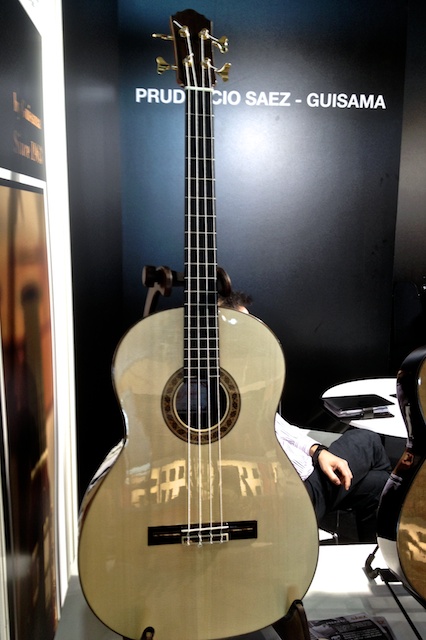
    Oh man, I’d love to have a nylon-string classical bass like this one from Prudiencio Saez.

    GuitarGrip

    I was set up near this Guitar Grip installation. It received far more attention than I did.

    Mey chair

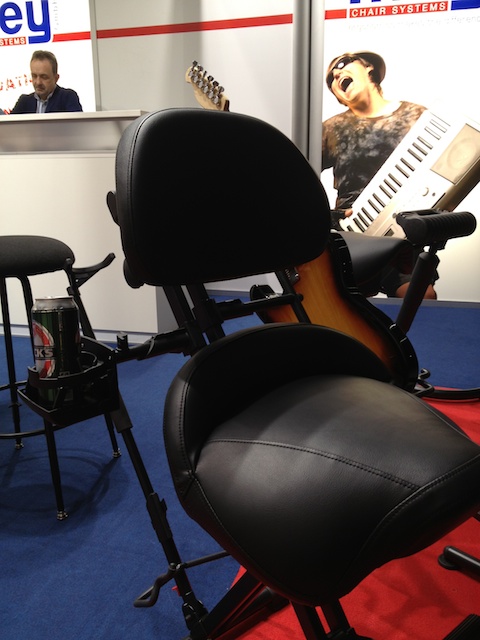
    You’ll be strumming in style perched in your Mey Chair System, especially if you add the optional guitar and beer holders. They have many styles to choose from . . .

    Mey country

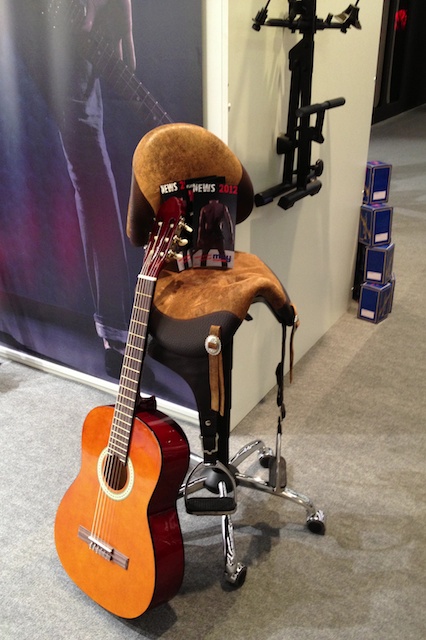
    . . . including this special country-and-western edition.

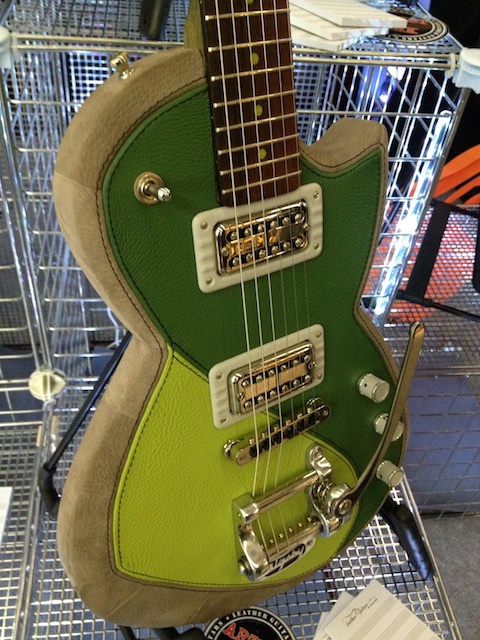
    Leather guitar

    German luthier Georg Beïs specializes in guitars made from nature’s finest tonewood: leather! Shown here: the Samaria Nature model.

    Smokers' Pole

    Folks smoke more in Europe than in the States. As a result, they’ve developed some highly idiosyncratic tobacco-based practices.

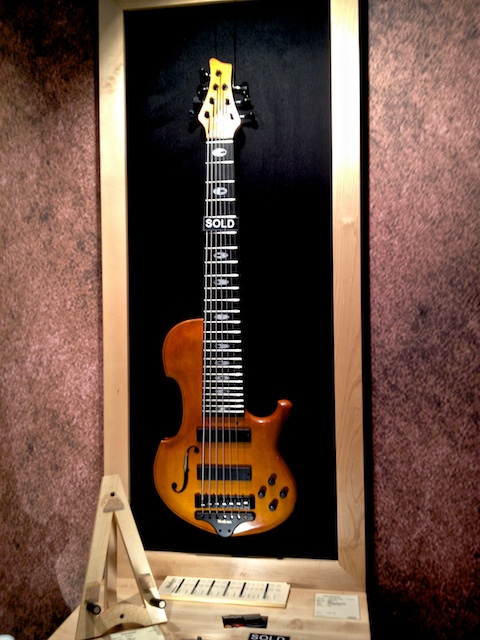
    Marleaux

    There’s a special breed of bassists for whom six strings simply aren’t enough. Such players require a Marleaux.

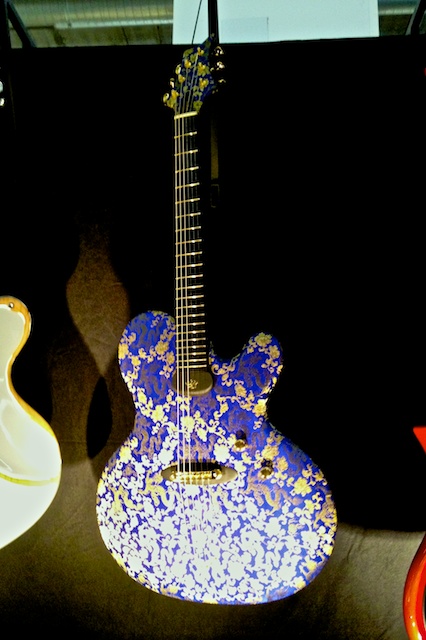
    damascene

    This crappy photo doesn’t do justice to the this remarkable damascene finish on this Jens Ritter guitar.

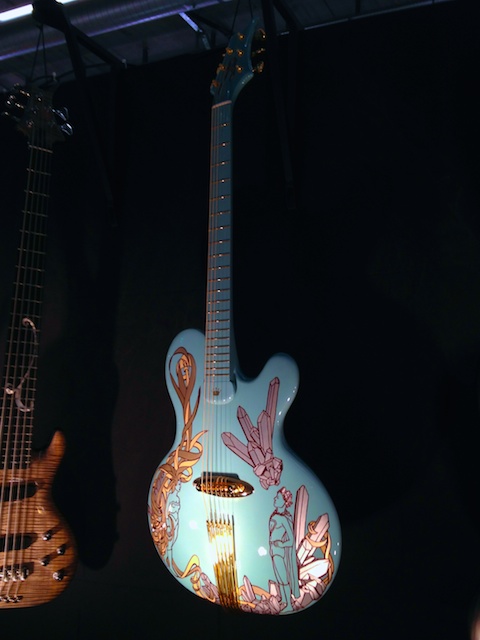
    crystal

    Yeah, I could make some hippie-crystal joke, but Jens Ritter‘s workmanship is too remarkable to mock.

    Ramirez bag

    You already knew that Madrid’s José Ramirez workshop crafts some of the world’s finest classical guitars. But did you also know they made the world’s prettiest shopping bag?

    handbag

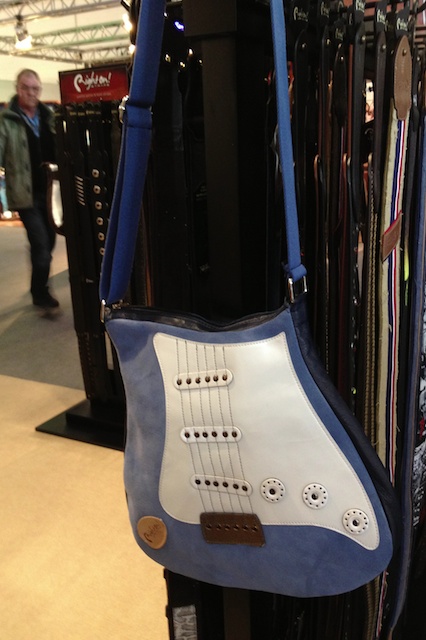
    Speaking of bags! But now I want a handbag-shaped guitar.

    big scott

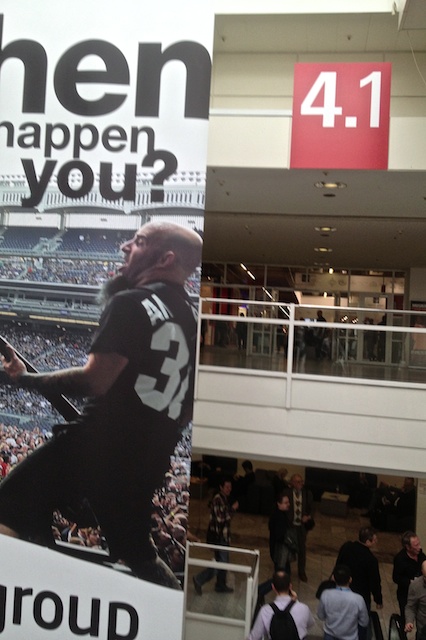
    I dig Anthrax’s Scott Ian. Especially when he’s three stories tall!

    Rocksmith

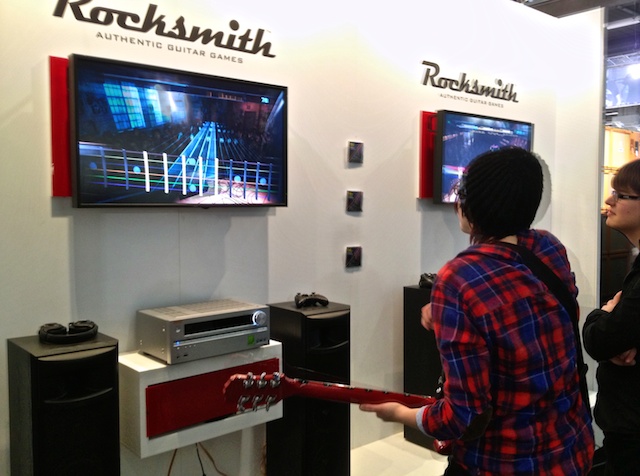
    Rocksmith seems to be the opposite of Guitar Hero: a video game where the ability to play is actually an advantage.

    BodyBeat Sync

    In a perfect world, guitarists wouldn’t need help keeping a steady beat. But we live in this world, so the BodyBeat Sync from Peterson Tuners could be a very helpful tool.

    Greenland

    From 30,000 feet up, Greenland seems appealingly quiet.

    Musikmesse 2013 thumbnail
    1993 thumbnail
    Orange wall thumbnail
    Hartung Caligo thumbnail
    Amathone thumbnail
    AK-47 thumbnail
    Kentucky uke thumbnail
    RISA uke thumbnail
    addstring thumbnail
    The Bone thumbnail
    Mosquito thumbnail
    T-Rex Haircuts thumbnail
    Nylon-string bass thumbnail
    GuitarGrip thumbnail
    Mey chair thumbnail
    Mey country thumbnail
    Leather guitar thumbnail
    Smokers' Pole thumbnail
    Marleaux thumbnail
    damascene thumbnail
    crystal thumbnail
    Ramirez bag thumbnail
    handbag thumbnail
    big scott thumbnail
    Rocksmith thumbnail
    BodyBeat Sync thumbnail
    Greenland thumbnail
  • Heard Compressorhead Yet?

    Heard Compressorhead Yet?

    Prolly the best artist demo I’ve heard at Frankfurt (partly because it has no goddamned soloing).

    This is real. They were playing out in the plaza at Musikmesse. I tried to shoot my own footage, but it was just too crowded. (Though I did score a thrilling video of the back of Craig Anderton’s head.)

    Gibson Guitars sponsored Compressorhead’s performance. There’s more on the band website.

  • Fishman TriplePlay Demo: Now with More Nasty!

    Fishman TriplePlay Demo:
    Now with More Nasty!

    For the first Fishman TriplePlay demo I posted last month, I featured pretty, naturalistic acoustic sounds. This time around I went for something a little less polite.

    I’ve been having a blast — albeit a humbling blast — trying to play real-time drum parts from the guitar. I still suck if it’s much more complicated than what I play here, but I can imagine learning to do it well. It’s also fun using the guitar to access the big keyboard sound libraries I’ve built over the years. Perhaps most exciting of all are the hybrid guitar/synth/sample sounds I’m starting to develop. (There aren’t any in this demo — the sounds are either samples or processed guitar, though I blur the lines with guitar-ish samples and guitars processed to sound like machinery. Next time, though, I’ll try to showcase some of those unholy hybrids.)

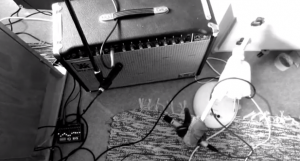
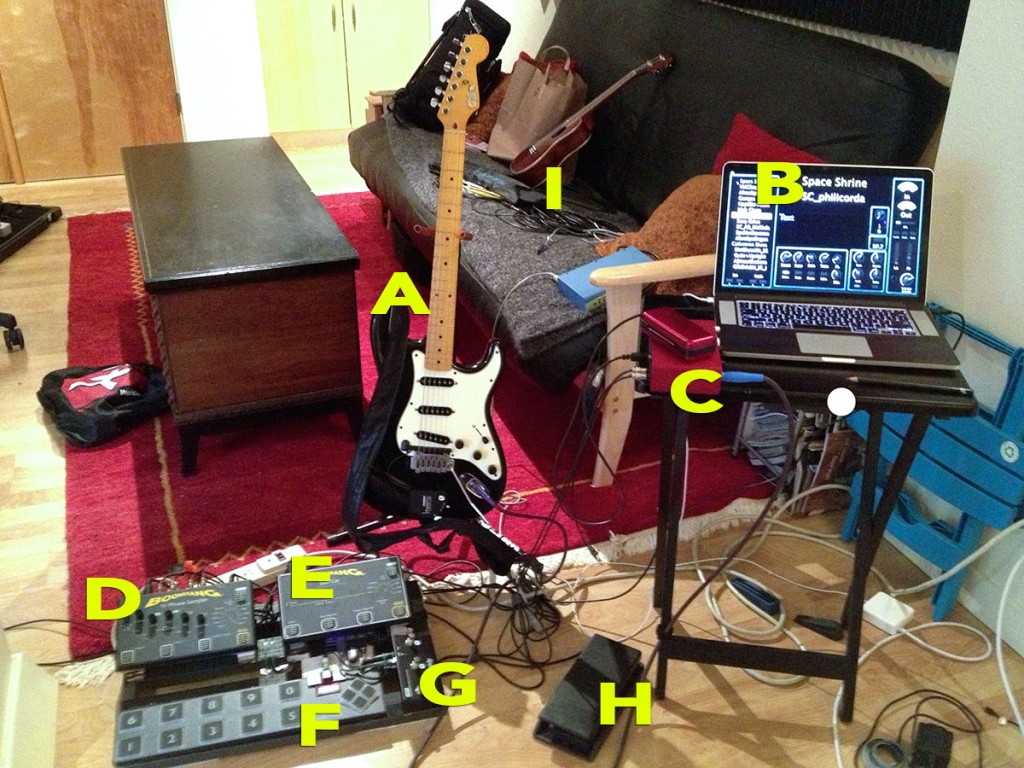
    Here’s how the setup looks from my perspective. (I’m not trying to be secretive about what’s on the floor — it’s just hard to fit into the frame, even with a wide-angle lens.)

    Joe's looping/MIDI rig.
    Joe’s looping/MIDI rig.
    1. Homemade strat with Fishman controller/pickup. MIDI transmitted wirelessly.
    2. MacBook Pro running Apple’s MainStage software. I use a ridiculous number of plug-ins and some ridiculously huge sample libraries. My main sampler is NI Kontakt.
    3. Focusrite Scarlett interface. All the prosumer interfaces sound pretty decent to me these days, though I like the fact that this one isn’t made out of cheapo plastic.
    4. Boomerang III looper. I love its ergonomics and smooth looping points. I screw up my loop points constantly, but I have fewer disasters with the Boomerang than with anything else I’ve tried.
    5. Boomerang Sidecar. Basically just extra buttons for the Boomerang so you can access more features without reprogramming it or performing awkward foot moves.
    6. Keith McMillen SoftStep MIDI controller. Powerful, rugged, feather-light, and not too expensive.
    7. Logidy UMI3. A nice, rugged, and inexpensive USB MIDI controller — just to have a few extra switches.
    8. Generic controller pedal. Its role varies from patch to patch. It might be a mod wheel, a pan pot, a fader, a filter cutoff control, etc.
    9. Piles of crap. These magically materialize every time I start messing with this stuff.

    Just to be clear — these sounds are from my collection, and are not included with TriplePlay. Also, I used TriplePlay in “simple mode” for this video — in other words, I’m not using the dedicated TriplePlay application, but simply using TriplePlay as a generic MIDI controller to trigger sounds loaded into MainStage.

    BTW, I’m about to head out for Musik Messe in Frankfurt, Germany, where I’ll be demoing this contraption. Oddly, I’ve never been to this vast musical instruments show, which has been described as a much larger NAMM show with more sausage, beer, and accordions. I’ll be sure to tell you about any cool stuff I see!

    DISCLOSURE: Fishman, Apple, and Keith McMillen are among my clients, but no one paid me to make or post this video.

  • Behind the Bridge: Hendrix, Korea-Style

    Behind the Bridge:
    Hendrix, Korea-Style

    This is perfectly awesome:

    Luna Lee is playing a gayageum, a Korean zither related to the Japanese koto, Vietnamesese dàn tranh, and the Chinese guzheng. She’e got other fun blues and rock covers posted on her YouTube page. Lee’s version of “Voodoo Chile” is the internet hit, but I dig her “Bold as Love” because the canned backing tracks are less intrusive, plus it’s my fave Hendrix song. 🙂

    The drumstick as bridge.
    The drumstick as bridge.

    Like many guitarists exposed to Asian zither players, I find myself envying the movable bridges they have on each string. By positioning the bridge relatively close to the center of the string (and not, as on guitars, near one end), they can pluck notes or generate vibrato on either side of the bridge.

    Lee and Thurston from Sonic Youth achieve related effect by placing drumsticks and screwdrivers between the neck and strings of their guitars near the 12th fret. (It’s not like those guys are Asian music scholars or anything, but another similarity is their use of tunings with closer-than-standard intervals between the strings.)

    But no one took the notion further than the late Hans Reichel, whose beautiful, handmade instruments used center-positioned bridges to elicit eerie sonorities and startling portamento and glissando effects. This video is a nice showcase for Reichel’s radical re-imagining of the guitar. (Reichel also demonstrates his dachsophone — literally, “hedgehog-o-phone” — which, depending on your perspective, is one of the most expressive, amusing, or just plain irritating musical contraptions ever conceived.)

    Anyone ever explored similar ground? (FWIW, I took a semester of koto back in the Triassic Era college. I sucked.)

  • An Alternate-Tuning Capo

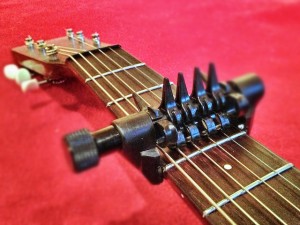
    Spider Capo

    UPDATE, 03.07.13: I should have mentioned a point that several readers noted in comments: The capo only alters the tuning of open strings. Which means that while you can play many harmonies normally available only in dropped tunings, any notes above the capo appear at their usual frets. For example, all barre chords are played exactly as in standard tuning.

    After all the digital guitar stuff I’ve been writing about lately, I really wanted to spend an afternoon without plugging in any frickin’ USB cables. So I finally got around to experimenting with the SpiderCapo I picked up last year on a whim.

    The SpiderCapo his six independently adjustable clamps, each of which can either stop the string or let it ring freely. That means you can dial in most dropped tunings without actually detuning any strings — instead, you transpose the entire voicing up. It’s a lot of fun to play, and seems like it could be a cool composing tool if you’re the sort of musician who gets inspired by unfamiliar tunings. Plus, it looks kind of wicked when you fret the unstopped strings behind the capo.

    Here’s a little video I made, noodling around in a few tunings I particularly liked:

    Anyone else tried one of these? Or any other “tricky” alternate-tuning capo? How about those gadgets that (unlike the SpiderCapo) can stop strings at differing frets?