Archived Posts

  • Simple But Deadly Fuzz(Tonefiend DIY Club Project #2)

    Simple But Deadly Fuzz
    (Tonefiend DIY Club Project #2)

    I swear, it’s practically worth learning DIY electronics just to build this one insanely simple, insanely great fuzz circuit. What I’m going to call the Bulk Fuzz is a variant on a popular DIY project known as the Bazz Fuss. A really smart guy from Finland named Christian H. figured out how to generate the scuzziest of fuzz tones from a simple transistor/diode pair. It’s a great circuit for modding and custom-tuning, and you’ll have a chance to mix your perfect fuzz cocktail over the course of this fun project.

    Incredibly, I don’t know of any commercial manufactures who have co-opted this design. Which means, like they used to say on TV, “Not available in stores!”

    Here’s a demo clip. Forewarned is forearmed.

    If this sounds like your cup of dirt, please read this great article about the circuit and its variants. (It’s from a cool DIY site, home-wrecker.com/.) Using the techniques introduced in Project #1, you should be able to breadboard any of these and hear how they sound. In the meantime, I’ll be posting a step-by-step project PDF in the coming days. Check back here, or follow tonefiend on Twitter. UPDATE, 11.04.11:The files are here.

  • How to Mic an AmpPart 1: The Basics

    How to Mic an Amp
    Part 1: The Basics

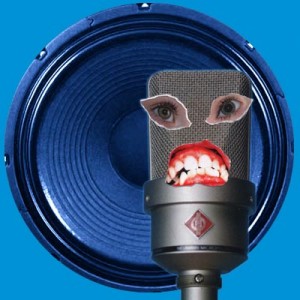
    Don't fear the mic! (Illustration: Elise Malmberg)

    Recording be be brutal. Tracking vocals is tough. Capturing pianos or acoustic guitars is painstaking work. But recording electric guitars is easy, easy, easy—once you learn a few basics.

    The post focuses on the simplest way to record a guitar amp: sticking a single mic in front of a speaker. In future posts we’ll tackle the tricky stuff: multiple mics, unorthodox mic positions, amps in shower stalls or aluminum trash cans. Those techniques are great—but you don’t need any arcane tricks to record great electric sounds. You don’t even have to have a fancy mic—countless great guitar tracks have been recorded with the humble Shure SM-57.

    In fact, if the guitar, amp, and performance sound good, it’s actually pretty difficult to screw things up. Basically, you’ve got two things to consider: Which mic to use, and where to stick it. We’ll tackle those topics in reverse order.

    (more…)

  • Changing Three Pickups in Five Minutes (and What It Sounds Like)

    Changing Three Pickups in Five Minutes
    (and What It Sounds Like)

    This is my kind of pickup change: the easy kind!

    I got my hands on the new Seymour Duncan Everything Axe pickguard, which comes with three pre-installed Strat-format humbuckers (JB Jr., Duckbucker, and Little ’59). I’ve always avoided humbuckerized Strats because they remind of really bad ’80s bands. But I love the JB and ’59, so I figured, why not confront my prejudices?

    I slapped the pickguard onto your basic Mexican Strat, and voilà! Instant coolness.

    Here’s a little demo featuring all five pickup combinations. As the product name implies, this particular pickup trio yields many high-contrast colors. But I’m struck most by how much Strat flavor remains—there’s certainly no lack of shimmer and twang. I favored clean tones in the demo, just to deep-six my outdated stereotypes about harsh, compressed, over-distorted Strat humbucker sounds.

    And it really did take about five minutes.

  • Let’s Talk Looping!

    Let’s Talk Looping!

    Here’s a little video I made yesterday using the looping setup I’ve been using live.

    Any other looping geeks out there? I didn’t set out to be one—I just wanted to do a duo band with percussionist extraordinaire Dawn Richardson. Looping seemed, well, kind of ten years ago, but I got sucked in, and it turned out to be a cool format for a lot of the sound design I was doing in Apple’s MainStage software. So there.

    As always in looping, it’s easy to build big textures, but difficult to break them down. That’s where I always choke.

    FYI, Dawn and I made an album this way, and are working on a second. More info here.

  • Tonefiend DIY Club:The Bad-Ass Distortion Has Arrived!

    Tonefiend DIY Club:
    The Bad-Ass Distortion Has Arrived!

    Warning: It’s fin-ished!

    Here is the fourth and final part of the Tonefiend DIY Club’s first stompbox project: The Bad-Ass Distortion is a variation on the popular Electra circuit, beloved by many boutique builders. Once you box up the mess project, you too will be a boutique geek.

    Here’s a sketchy little demo.

  • Can Cool Pickups Save a Crappy Guitar?

    Can Cool Pickups Save a Crappy Guitar?

    My cat is skeptical.

    Multiple readers have asked some variation of that question since I launched this blog last month. I’ve been wondering myself as I prowled the local music emporia, searching for a fun, but seriously funky guitar to experiment on.

    (more…)

  • “Only an Idiot Would Put Those Things on a Bass!”

    “Only an Idiot Would Put Those Things on a Bass!”

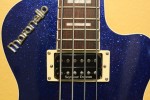
    Cheap chic: The Italia Maranello bass

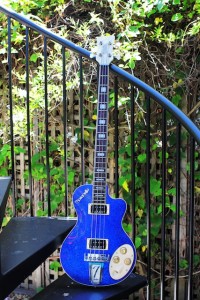
    I’ve got this weird Italia Maranello bass I picked up years ago when I was playing in the Eels. It looks like it’s from the ’60, but is, in fact, a modern instrument designed by Brit luthier Trev Wilkinson and built in Korea. The only “Italy” in “Italia” is the fact that their instruments look like the Brand X axes being made in Italy, Gemany, and Sweden nearly 50 years ago. It looks inexpensive, and is. But it’s cool if you like weird, trashy stuff.

    I strung it up with flatwounds, figuring I’d try to use it as a pseudo-Hofner, something to use for melodic parts that didn’t demand massive low end. Given the instrument and the relatively dull-toned pickups, I didn’t expect anything massive-sounding. I got this: (more…)

  • Tonefiend DIY Club: Project 1, Part 3

    Tonefiend DIY Club: Project 1, Part 3

    Here are the instructions for Part 3 of our first DIY Club project: building a bad-ass distortion pedal.

    In this installment, we transfer the circuit we customized in Part 2 from the breadboard to its permanent home on a piece of perfboard. Once you get the hang of this technique, you’ll find it easy to transform any simple schematic into a working circuit.

    Also, just to keep things organized, I’ve created a new DIY Club Page that will always feature the latest versions of all projects, plus other helpful resources. You can access it by clicking the DIY Club image in the right sidebar.

  • Practice Without an Instrument [VIDEO]

    Practice Without an Instrument [VIDEO]

    For players who have a little bit too much of a life: five fretting-hand exercises you can practice when you’re away from your guitar or bass. Make sure to run through them in public places so bystanders can alert the mental health authorities admire your prowess.

  • Vibrato: Do You Shake It Like Ethel?

    Vibrato: Do You Shake It Like Ethel?

    Can you shake it like Ethel? And more important, SHOULD you?

    Almost all of us are guilty of it: repetitive, auto-pilot vibrato.

    Can you blame us? Between choosing the right notes, and trying to play them in tune and in time, we don’t always have surplus brain cells to shape each note individually. So much simpler to stamp each one with the same prefab wiggle!

    One of the wickedest observations about shred guitar came from one of the greatest shred guitarists, Paul Gilbert. In a conversation many years ago when he was a youngster, he noted that a lot of players seem to have pilfered their vibrato technique from Ethel Merman. (more…)