Monday: Theory and Technique
Tuesday: Gear
Wednesday: Repairs and DIY
Thursday: Biography
Friday: Fiction
This week we’re talking about our favorite guitar/music books. The plan is simple: I discuss a few titles I’ve found particularly enlightening, useful, or entertaining, and then you jump in and do the same. I’ve organized the days of this week by subject matter. Today’s topic is guitar gear.
Guitar gear books seem to fall into three categories:
- Pornographic. Lavish publications featuring beautiful photos of rare instruments, often focusing on a single manufacturer or collector.
- Encyclopedic. Thick reference books covering wide swaths of guitar history.
- Pragmatic. Books that explain the inner workings of guitar technology, with an emphasis on how to turn this info to your musical advantage.
Even if I weren’t a jaded former guitar mag editor, I doubt I’d have much interest in coffee-table guitar porn books (and the occasional guitar porn magazine). Or at least, no more interest than I’d have in photos of, say, beautiful watches, speedboats, or nutcrackers. I’m not a guitar collector.
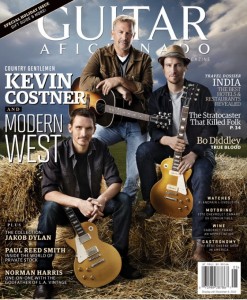
Hey — stop laughing! Yeah, I own more than 20 guitars. (The exact number depends on whether I count guitars I’ve loaned out indefinitely and ones I’ve borrowed indefinitely.) I appreciate my instruments greatly, and I am very aware of how fortunate I am to have access to so many musical tools. But in the end, they are just tools to me, with little significance beyond their musical applications.
I realize this is a pretty weird attitude for a guitar dude, and one reason why I was probably never a perfect fit as a guitar mag editor. (I must be missing some crucial male gene, because I’m equally blasé about cars and sports. With rare exceptions.)
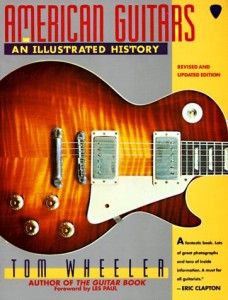
Reference books are a different story, especially the books of George Gruhn and Walter Carter, and those of Tom Wheeler. Sure, some of their weightier works have guitar porn aspects, but always paired with vast historical knowledge and the expertise of longtime industry insiders. Gruhn and Carter may know more about American guitars than anyone. But I always gravitate to Tom Wheeler’s books, and not just because he’s a longtime friend and mentor. Tom is a fine writer, an impeccable researcher (he’s been a journalism prof for the last 20 years), and he still conveys a teenager’s passion for the instrument. Tom is my hero.
(Bonus question: Has Wikipedia rendered the guitar reference book obsolete?)
But these days, the gear books that excite me most are the technically slanted, nuts-and-bolts titles. It’s one thing to ogle pretty instruments, and another to explain how they work, why they sound the way they do, and what that all means for the music we make today. And that’s why I love the books of Dave Hunter.