UPDATE: Based on cool info supplied by YOU, dear readers, I’m expanding the scope of this piece. I’m furiously wiring up clones of some very rare models, and I can promise many cool and interesting surprises. Thanks, guys! :beer:
Okay, now that we’ve all gotten that silly “reading” stuff out of our systems with Book Week, it’s time to get back to the real focus of this blog: nasty, filthy fuzz pedals.
Last time we were on the subject, we looked at the original version of Dallas-Arbiter Fuzz Face, and included Mitchell “super-freq” Hudson’s beautiful DIY instructions.
Those posts generated many interesting comments — plus some misinformation on my part. For example, I said that the original Fuzz Face circuit is a close cousin to the Tone Bender Mk I, which would mean, for example, that known Mk 1 user Mick Ronson was essentially using a Fuzz Face between his Les Paul and his Marshall. But subsequent listening and reading makes me believe I was wrong. So I figured it was time to play fuzz detective and sort the facts from the other stuff.
First, I made clones of all the early commercial fuzzes. I’ll be posting a compare-and-contrast video in the coming days. (The audio forensics will be quite incriminating.) Here’s the lineup:
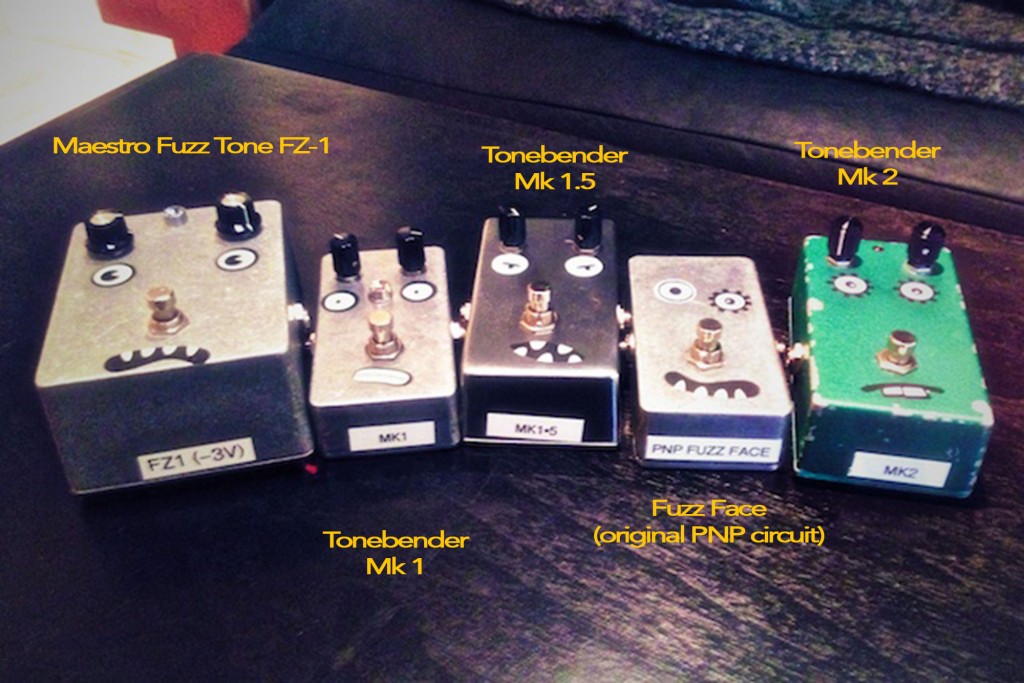
I’ve also re-read the experts, and man, even my most trusted sources contradict each other right and left, especially when it comes to those darn Tone Benders. While I have absolutely no inside dope on what actually transpired, I think David from D*A*M Stompboxes offers the most convincing Tone Bender chronology, which you can read here.
Anyway, here’s my best guess about how the early fuzz years unfolded: