Categories
DIY guitar Pickups

The Pagey Project: Prelude

Double the sounds available from your axe!

Man, preparing the Pagey project has been a real eye-opener! Expect some surprising results! (Hint: There’s much of interest, even for players who have zero desire to sound like Page.)

I’ll be posting the first video and tech walk-through after the weekend, but in the meantime, I wanted to update you on the game plan, which, frankly, only became clear once I started soldering.

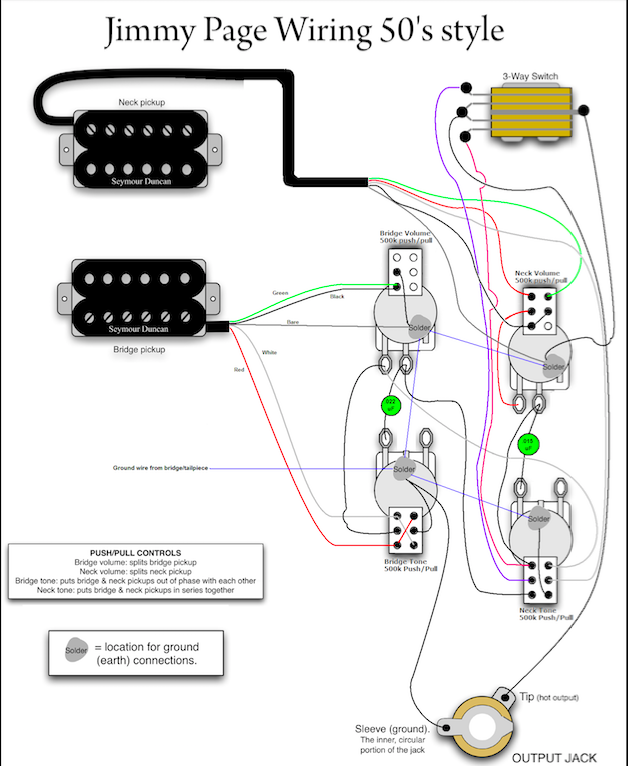
If you haven’t downloaded the relevant schematics, you can snag them here. (Reader Jeff pointed out pointed out a difference between the two versions of the four-push/pull wiring. I have no idea which version page used, but I went with the version from Scott Miller’s Guitar Player magazine article because it offers a bit more control — and this project is all about control!)

We’re going to tackle the project in two phases. First, we’ll look at the original Pagey wiring, using four push-pull pots and period-accurate pickups (I went with Duncan ’59s with four-connector cable). I’ve wired up my ’82 Les Paul in exactly this fashion, and it’s pretty dang cool. Yes, it’s a complicated job, but not as tough as anticipated. Amazingly (for me) it turned out great on the first attempt.
Categories
DIY guitar Pickups

Join the Pagey Project — If You Dare!

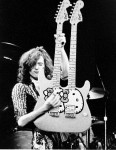
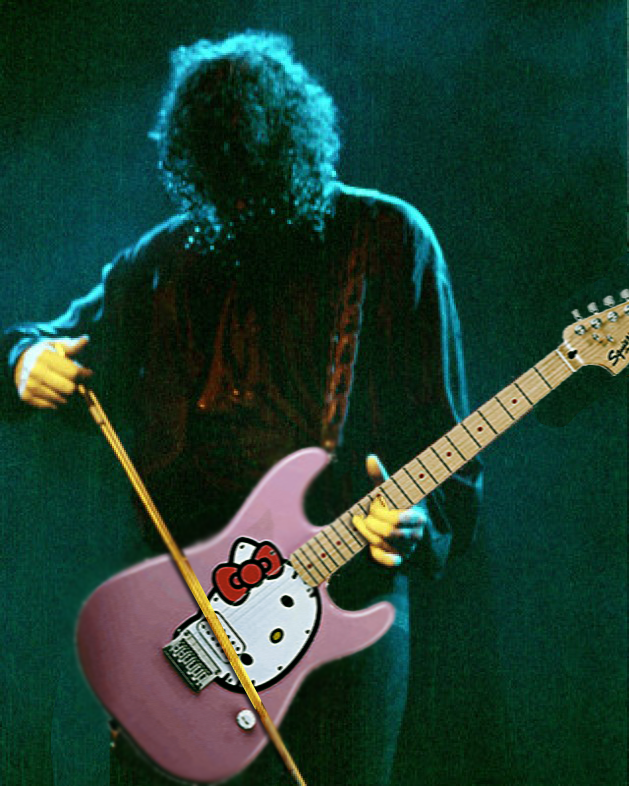
True fact: While Jimmy Page is usually pictured with a Les Paul, he recorded many of Led Zeppelin's greatest tracks with Fender guitars. (Artist's conception.)

All aboard, mateys! Join our ship of fools as we sail the fiercest seas of guitar electronics: Yes, the legendary Jimmy Page wiring scheme. There will be NO QUARTER for pickup pussies!

Actually, there will be a great deal of quarter as we help each other with this cool but tricky project. I’ll be disembolwing the black Les Paul Custom I wrote about here. My hope is that many of you will join me on this voyage. We can troubleshoot together, share tips, and commiserate after we’ve destroyed a bunch of nice guitars other things.

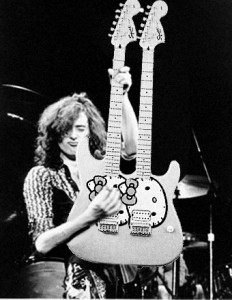
As you probably know, this complex wiring scheme transforms a standard Les Paul into an über-versatile tone machine with added series/parallel, phase-canceling, and split-coil options. It was the means by which Pagey reproduced the many Telecaster and Danectro parts from Zep’s studio albums when performing live.

We’ll cover the classic arrangement, with four push/pull pots. Then we’ll go a step further: If you add a pair of Seymour Duncan Triple Shot Mounting Rings to the mix, you get many more options than with the original scheme. Yes, we can all be bigger badasses than Pagey.   :shake:

(FWIW, I’m less interested in cloning Page’s setup than in mastering the ins and outs of alternative humbucker wiring. So think of this as a chance to explore all available options, and refine a mod that works best for you.)

Here’s what you must have before setting sail:

Categories
guitar Pickups

The Joe Bonamassa Pickup Set: It’s Not Just for Blues!

Vintage P.A.F. pickups are like snowflakes — only a lot louder and a lot more expensive.

Aficionados of the P.A.F.pickup, the original humbucker, often say that vintage models are like snowflakes — no two are identical, due chiefly to the the pre-digital inconsistencies of their windings.

One particularly memorable pair of snowflakes resides in Joe Bonamassa’s 1959 Les Paul, the crown jewel of Joe’s insanely huge guitar collection. Joe and Seymour Duncan teamed up to duplicate their sound, and have released the results as the Joe Bonamassa Signature Pickup Set. As a rabid fan of Seymour P.A.F.-inspired Seth Lover and Antiquity Humbucker models, I couldn’t wait to smear greasy fingerprints all over the new set.

I got to hang out in the studio with Joe a few years ago during a project I was working on for Apple. He’s a phenomenal player, a nice guy, and a walking encyclopedia of guitar gear. There aren’t many players who better understand the glory of a great P.A.F. — and how to make the most of it.

As promised, these pickups provide superb P.A.F. tones, and they have a sonic personality quite distinct from Duncan’s other P.A.F. models. Check out this little demo I recorded: