Categories
Uncategorized

Three Days with Marianne Faithfull

I just heard that Marianne Faithfull has died. It wasn’t a total shock — she’d been grappling with health problems for years. But it’s incredibly sad, and it makes me feel even more grateful for the few days that I got to spend playing and traveling with her in the summer of 2013.

She was booked for two outdoor shows in Northern California. My old pal, keyboardist Rob Burger, enlisted me, I think because her usual guitarist, Bill Frisell, couldn’t make the dates. Robbie is one of the two or three best musicians I’ve ever known. He’s played with … well, pretty much everybody, the fucker.  

The very embodiment of hip 1960s London

Robbie is one of several friends who knew Marianne far better than I. Another is Richard Fortus from Guns N’ Roses, who was her housemate for a time. Yet another is music journalism icon Sylvie Simmons, who Marianne sometimes treated like a kid sister. My encounter was relatively fleeting, but I can’t help jotting down some memories.

I knew Marianne’s legend, from Swingin’ London It Girl to brutally honest singer/songwriter. I’d seen her in Lucifer Rising and Girl on a Motorcycle. I’d heard how she fought for her rightful authorship of the Rolling Stones song “Sister Morphine.” Her vicious and uncompromising 1979 comeback album, Broken English, blew me away, as it did countless other listeners. And she was the featured speaker at a music journalism awards event I attended in LA. (She literally phoned in sick, delivering her address via loudspeaker.) 

I’d also read the first of her two autobiographies, titled Memories, Dreams, and Reflections after the Carl Jung book with a near-identical title. It’s one of the best music bios you’ll ever read — and one of the few that was actually written by its subject. Most are ghost-written as-told-to tales. But Marianne had the literary chops to handle the job herself.

Marianne might not have grown up wealthy, but she was raised in an environment of extraordinary cultural privilege. Her parents were artists and intellectuals, and she was literally a baroness — her great-great uncle was Baron Leopold von Sacher-Masoch, who wrote Venus in Furs and gave us the word “masochism.” She was an extraordinarily intelligent and literate woman.

I was thrilled by this opportunity, but nervous before the first rehearsal because Marianne sometimes had a reputation as a prickly diva. She arrived last for rehearsal, draped in couture and managing something like regal grandeur in a practice space the size of a suburban bathroom. She was already stout by then, but you could still detect that youthful beauty in her face. She was … imposing and amazing. 

But I figured I had a good opening line: “Hey, we’ve both worked with Polly Harvey and Tom Waits.”

“Polly Harvey,” she said, voicing the name with deliberate slowness. “Did you find her difficult to work with? I certainly did.”

I mentioned Tom, which elicited a stronger reaction. “Tom Waits — that arrogant little punk! He’s the most conceited man I’ve ever met aside from Macca. But then, Macca was a Beatle, wasn’t he? There’s not many who can say that.” Apparently the bad blood stemmed from her time performing the role of the Devil in the stage version of Waits’s The Black Rider. (I played guitar and banjo on the original album, but never performed it live.)  

Marianne in 2013, the year I met her.

The backup was minimal — just Robbie on piano and me on baritone guitar. Happily, Marianne seemed satisfied with what we played, and she treated me nicely. I owe a lot to Robbie for helping me learn some of the material — and pointing out that I’d always played the “Broken English” riff incorrectly. (It starts on the second scale degree, not the first.) 

Marianne treated us all to dinner at a fancy San Francisco sushi restaurant. An overweening waiter fawned as he took our orders. “Thank you,” she said, adding “Now fuck off” as he walked away. I’m pretty sure he heard her.

The first gig —  at a rustic vineyard venue — went well enough, though there was one memorable rough spot. On one song, Robbie and I simultaneously bungled a chord change going into a bridge. This was a freak occurrence, because Robbie is the sort of musician who simply doesn’t make mistakes — everything sounds perfect on the first take, whereas I can rarely manage 16 clam-free bars. Furious, Marianne whipped her head around to glare at Robbie. “Now,” she told the audience, “we’re going to play it again from the beginning because he fucked it up.” Thanks, Robbie, for taking my bullet.

She, of course, was fabulous. That presence! That chilling, gravel-toned voice! Marianne was an actor as well as a musician, and you knew it.

The next gig was at an outdoor hippie festival in rural Northern California. The drive took many hours, and I got to sit next to Marianne in the passenger van. Man, I wish I’d recorded those conversations! We talked a lot about literature, particularly the Brontë sisters. How the fuck, I wondered, did Emily emerge from such a sheltered upbringing to conceive something as emotionally and sexually explosive as Wuthering Heights? Marianne attributed it to the influence of brother Branwell, the worldliest of the Brontë kids, who failed in multiple careers before succumbing to alcohol and opium addiction. 

She loved to gossip about the music icons of the ’60s. Pete Townshend had recently been embroiled in scandal for possessing child porn, which he claimed was research material for his own autobiography. (He was eventually cleared of charges.) Marianne believed him 100%. And I was struck by how she remembered Keith Moon. Not as a drunken maniac, but as a nice guy. “Keith was a very, very kind man,” she said. 

She gave the dude the idea for “Sympathy for the Devil.” He stole credit for her song “Sister Morphine.”

Then as now, I’ve suspected that Keith Richards did not play the guitar solo on “Sympathy for the Devil.” (Long story — let’s skip it for now.) But I figured I might get some info from Marianne, since she was at the frickin’ session, singing those woo-woos alongside Anita Pallenberg.  

According to rock legend, hyper-literate Marianne had read Mikhail Bulgakov’s The Master and Margarita, a religious/political satire written in the 1930s, but censored by Russian authorities until the late ’60s. It depicts a charming, urbane Satan — AKA Professor Woland — wreaking havoc on  pre-WWII Moscow. She reportedly shared the book with then-squeeze Mick Jagger, who promptly penned “Sympathy.” 

I asked if the story was true. 

“Well,” she replied, “have you read the book?”

Like three times! 

“Have you heard the song?” she asked.

I nodded. Duh.

She gave a theatrical shrug that I interpreted as “Of course it’s fucking true.”

“Who played the solo on that song?” I asked with fake casualness.

She turned to stare out the window. Long seconds of silence. “I just knew,” she finally grumbled, “that you were eventually going to ask me something idiotic like that.” 

For once I stood strong. “Look, I’m not asking that as some drooling Stones fan. I’ve devoted my life to the craft of guitar playing, and that recording was an important influence on several generations of players. Those details matter.”

Marianne seemed to buy it. She dropped the belligerence and sighed. “I guess you’ll have to ask Keith, won’t you? He is the guitar player, after all. You do know Keith, don’t you, darling?” (Yes, she really said “darling,” like on Absolutely Fabulous, where she had portrayed God.) 

No, I didn’t know Keith. But one time when I was staying at the Mandarin Oriental in Knightsbridge on tour, I kept running into him and his bodyguard in the elevator and on the stairway. Only later did it occur to me that I had a great opening line: “Hey, you and I both played on Tom Waits’s Bone Machine!” (Though not on the same songs.) Maybe that line would have worked better with Keith than it had with Marianne.

We arrived at the venue and parked the van in a dirt lot near the ad-hoc backstage area. The vibe was vintage hippie. I saw Wavy Gravy wandering around. 

Marianne in 2021 after her disastrous covid episode. (How could Courtney possibly NOT have known her?)

The road manger helped Marianne down from the van — she was already having mobility problems. As her heels touched the dirt, she turned to me and asked, “Darling, do you think I’m the only one here wearing Chanel?”

That show also went fairly well, but I don’t think it connected with much of the audience, who probably had no idea who Marianne was or what she represented. Afterward she seemed tired and a bit melancholy. 

That night we stayed in a modest motel near the event. John Prine, who had also appeared  at the festival, was staying there too. We’d included one of Prine’s songs in the set. I’d known of both Prine and Marianne since my early teens. How weird, I thought, for these paths to intersect at a rural motel four decades later.

The next morning we drove back to SF. We talked more about books. I raved about Jake Arnott’s recent The House of Rumor. One of its labyrinthine subplots involved rocket scientist/Satanist Jack Parsons, who had inspired Marianne’s song “City of Quartz.” She earnestly advised me not to pursue Satanism. (“It can be very harmful.”) When we stopped for coffee in San Rafael, I dashed to a nearby bookstore for a copy. They didn’t have it. I promised to send Marianne the book, but I never did. Not long after we all said goodbye in San Francisco. 

That was the last time I saw Marianne. I heard about her subsequent travails via Robbie: the near-fatal covid episode, its dire after-effects. I’m just grateful to have spent a few days in the company of such a fiery, imposing, and brilliant artist. Thank you, Robbie. Thank you, Marianne.         
Categories
Acoustic guitar Music Recording

My Very First Album (It Only Took 50 Years!)

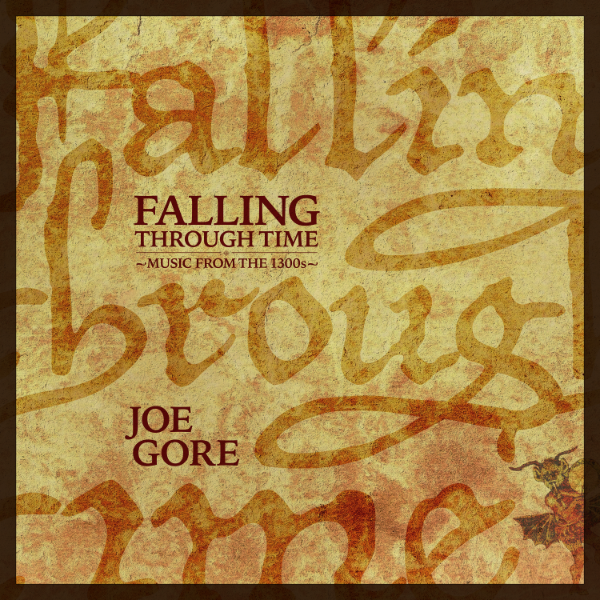
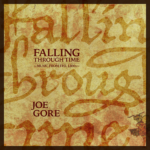
I’ve worked on many projects by many artists, but this is my first release under my own name. And it only took me 50 years!


It’s a back-to-the-roots project for me, though I have some fairly strange roots. When I was a teen I wanted to go into academia, specializing in early music (that is, European classical music from before 1650). Fate choose a different path for me, but I’ve always been fascinated by ancient music, especially the bizarre stuff that emerged toward the end of the Middle Ages. So this is a collection of music composed during the 1300s.

I followed a simple but strict “rule book”: I played only the notes and rhythms the composers specified, but I allowed myself total freedom in applying modern instrumentation and production. (As opposed to when I was young, when my goal, like that of most early music practitioners, was to perform the music as authentically as possible.) The resulting album is surreal, psychedelic, and, for better or worse, unlike anything I’ve ever heard.

Here are some places you can listen:

Bandcamp

Apple Music

Spotify

This is a digital-only release for now, though I’ll do a vinyl pressing if there’s enough interest.

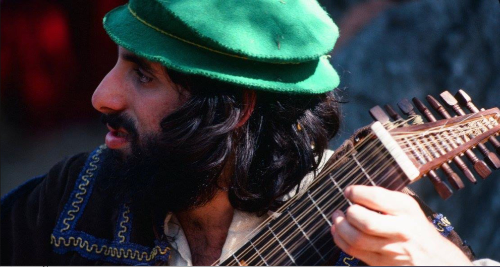
Me at age 17, playing my 15-string lute at — where else? — a Renaissance Faire. Yes, I was a dork even by 1970s standards.

I could say a lot more about the project, but I already did: I created a little booklet with credits, liner notes, background, and lots of amazing 14th-century images. It’s a free download from here:

Falling Through Time PDF

I also created several videos. Here’s the first one:

I’ll be honored if you can spare the time to listen to this passion project. Thanks, friends!

Categories
Uncategorized

New Pedal: Purr Vibrato

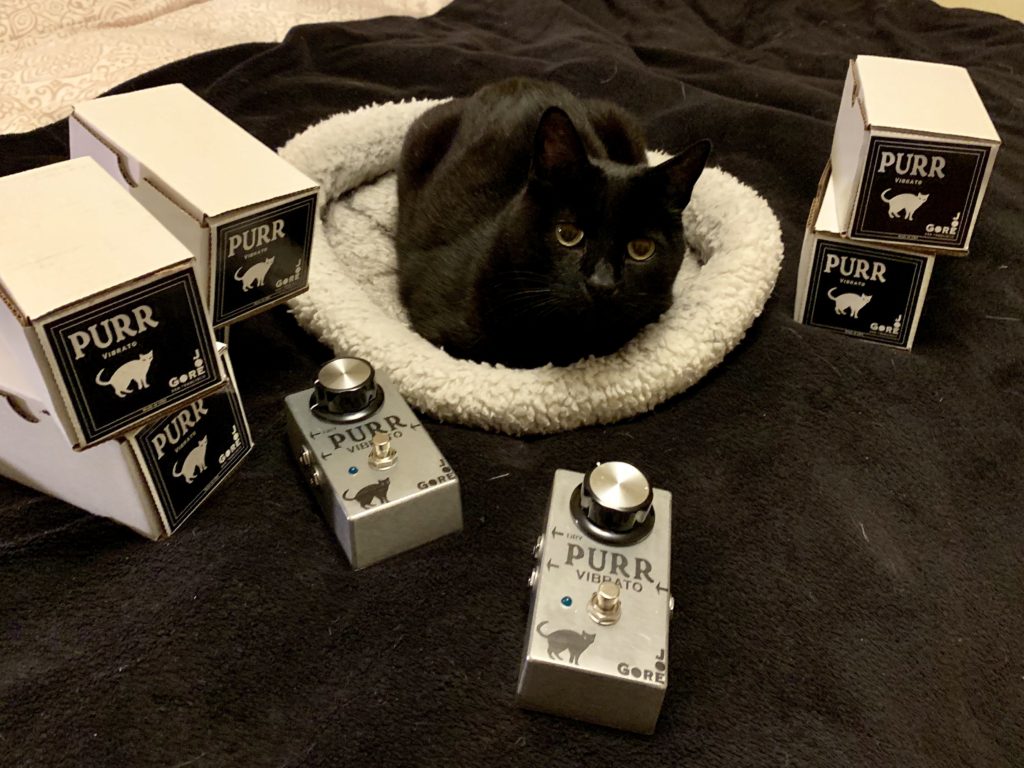
About frickin’ time! I announced this new Vibrato pedal at NAMM 2018. Now it’s time for NAMM 2019, and Purr is finally available and in stock at Vintage King.

Why so long? As soon as we finalized the prototype and designed the new circuit board, a crucial part suddenly became unavailable. ARGH!

It took forever to track down an acceptable substitute. But we finally did, and I’m thrilled with the results. I hope other guitarists dig it too.

Hey, if you’re going to NAMM 2019 in Anaheim next week, please stop by and say hi. Especially since since I’ll be sharing a booth with my my friend James Trussart, creator of some of the loveliest guitars ever conceived. We’ll be in Hall D at Booth 3942.

It’s too early to say whether guitarist will dig the Purr pedal. But at least someone I know is excited about the new release!

Categories
Live Looping

Loopocalypse: A Live Looping Concert

This 65-minute performance features 17 of the songs I’ve been performing live over the last couple of years. In concert, though, I use a single instrument. But here I get to play most of my favorite guitars.

I’ve posted each of these songs individually over the last few weeks, but this is the first time I’ve shared them as a single video.

Song List
1. Heroes (00:20)
2. Thunderbeast Park (05:28)
3. Just Like Heaven (09:09)
4. Shake It Off 11/8 (13:14)
5. God Only Knows (18:14)
6. Monospace (21:12)
7. Lujon (24:39)
8. Disco Plato (28:15)
9. Pumped Up Kicks (32:00)
10. Pandemonic Waltz (36:44)
11. Love Will Tear (38:16)
12. Midnight Cowboy (42:57)
13. In Like Flint (46:13)
14. Space Shrine (48:45)
15. Rhiannon (52:34)
16. Luxardo (56:55)
17. Ladies and Gentlemen We Are Floating In Space (01:00:58)

Tech Notes
1. Joe’s Looping Rig (01:05:25)
2. The Guitars (01:08:39)

Categories
Live Looping

Loopocalypse Day 17 (of 17): “Ladies and Gentlemen We Are Floating in Space.”

For the last day of Loopocalypse, here’s a cover of Spiritualized exquisite “Ladies and Gentlemen We Are Floating in Space.” I often close my show with this tune.

Here’s an explanation of my live looping rig.

In first heard this song in while asleep on one of those coffin beds on a tour bus. I was listening with headphones, and awoke during the tunes final seconds, with earlier passages still in my head. As it it weren’t already sufficiently dreamlike and spacy.

Spiritualized’s original studio masterpiece flirts with the melody of Willie Nelson’s “I Can’t Help Falling in Love With You,” though it never quite crosses the copyright line. In concert, however, the backing choir breaks into the tune near the end, (as heard here at 08:00) and it’s magnificent. What a masterpiece!

The guitar is my DIY Kitschcaster, with Warmoth parts, TV Jones Filter’Tron pickups, and some very weird electronics. More details here and here.

How my looping rig works: https://bit.ly/2SO5JcU

Categories
Live Looping

Loopocalypse Day 16 (of 17): “Luxardo”

Inspired by the most sublime thing you can drop into a cocktail. Or maybe that and the cocktail.

The guitar is a random collection of Fender Strat parts with Duncan lipstick tube pickups. They sound a zillion times better than modern Danelectro pickups. (Plus I boycott Dano on principle because their parent company is a major supporter of homophobic far-right legislation.)

Here’s an explanation of my live looping rig.

Categories
Live Looping

Loopocalypse Day 15 (of 17): “Rhiannon”

Gawd, did I hate this song as a ’70s teen. But I sure loved Stevie Nicks in Season 3 of American Horror Story.

This is far from the best “Rhiannon” cover, but it may be the only one based on Olivier Messiaen‘s Second Mode of Limited Transposition.

The guitar is a bitchin’ Gretsch/TV Jones baritone on loan from a generous friend. I’m tuned down to Bb, F, Bb, Eb, G, C, low to high.

Categories
Live Looping

Loopocalypse Day 14 (of 17): “Space Shrine”

This one is a tribute to Fela Kuti and afrobeat.

I’m not trying to play in an authentic Nigerian style, obviously. But I lived for this stuff when I was in my early ’20s. Back then there was a thriving expat African musician community in Oakland, and I was privileged to be mentored by monster players who’d played with the greats, or who were the greats.

The first good band I ever played in was with Orlando Julius, a highlife star who’d come to the States with Hugh Masekela. (At the time, he performed under the name O.J. Ekemode, and everyone called him O.J.)

At the time, I’d just dropped out of a classical music composition PhD program, where I’d focused exclusively on abstract and complex music that no one liked. It was a revelation not only to play in a great dance band, but to play a single one- or two-bar pattern without (intentional) variation for 30 or 40 minutes at a time.

Even though it’s been a long time since I’ve played somewhat authentic African pop, the style influences me every time I pick up the guitar. I’m eternally grateful to have learned from such masters. Ever since that experience, I’ve maintained an exceedingly afrocentric view regarding the history of American popular music.

The last time I swapped email with O.J. he was living back in his hometown of Lagos, Nigeria, and doing well. He still performs in African and Europe.

The guitar, a loaner from singer Greer Sinclair, is a 21st-century Tele Deluxe reissue, retrofitted with a Bigsby and Lollar Wide Range pickups. More info.

Categories
Live Looping

Loopocalypse Day 13 (of 17): “In Like Flint”

This is a companion piece to yesterday’s version of John Barry’s Midnight Cowboy theme. It’s the main title from Jerry Goldsmith’s score for In Like Flint, a kitschy Bond parody that predated Austin Powers by decades. I was too young to see the film as a kid, but a radio ad featuring this theme blew my impressionable mind. I seriously believe the theme’s #4s and b2s triggered my lifelong love of dark chromaticism.

I’ve covered this once or twice before, though the sounds are quite different here.

The guitar is an unremarkable 1982 Les Paul Custom — the cheapest real Paul I could find when I needed one for an Apple sound design project. It’s even stamped “SECOND” on the back of the headstock. But the only original parts are the neck and body. The pickups are unpotted Duncan Seth Lover PDFs, and the guitar houses the most ridiculously over-the-top wiring scheme I’ve ever attempted.

Here’s an explanation of my live looping rig.

Categories
Live Looping

Loopocalypse Day 12 (of 17): “Midnight Cowboy”

I was way too young to see Midnight Cowboy when the movie came out, but I was obsessed with Ferrante and Teicher’s hit instrumental cover, featuring Vinnie Bell’s “drops of water” guitar tone. (It took me decades to figure out he’s using a combination of fast phase shifting and heavy reverb.)

I once got to interview the late John Barry, who composed this along with most of the early James Bond music, plus many other iconic scores. He was the coolest — friendly, funny, and modest. Film score fans probably know the story about how he wrote the entire Dr. No score, with all that iconic guitar work played by Barry’s longtime accomplice Vic Flick. But to this day, the music is credited to Monte Norman, the original composer who’d been fired. John never actually said he wrote the score, but he used some phrasing like, “Well, listen to the rest of my music, and then listen to Dr. No.” It’s pretty darn obvious!

I’m playing my ’90s 000-sized Lowden. I’d originally intended to record the 17 Loopocalypse songs on 17 different guitars, but I cheated, and this instrument appears twice. (I also used it on Day 3’s “Just Like Heaven” cover. Naturally, it sounds nothing like an acoustic guitar.

Here’s an explanation of my live looping rig.