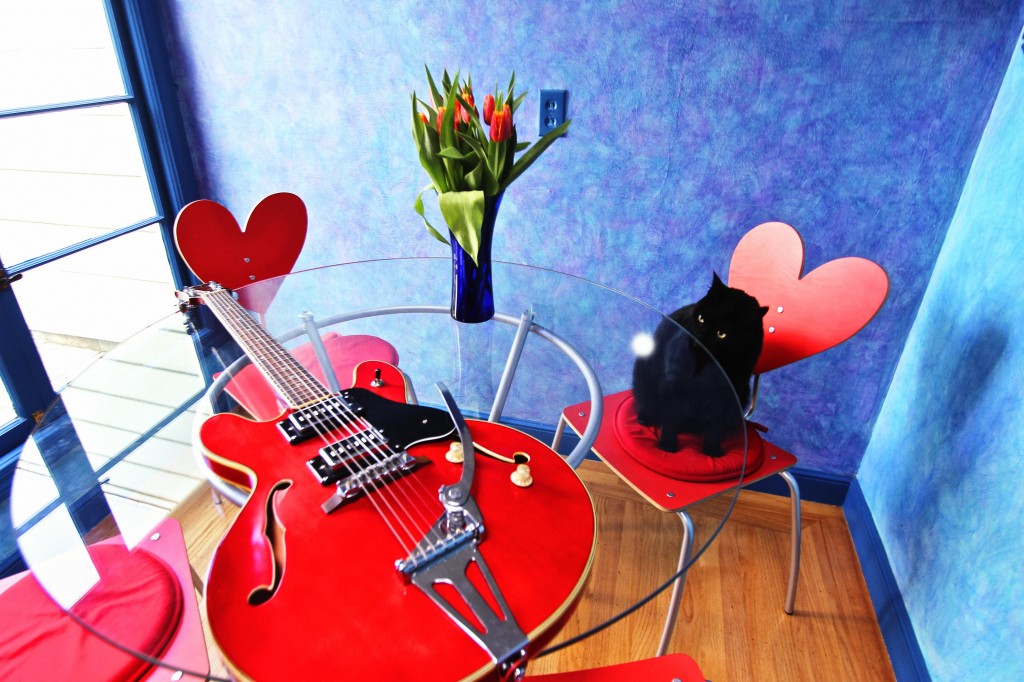
Multiple readers have asked some variation of that question since I launched this blog last month. I’ve been wondering myself as I prowled the local music emporia, searching for a fun, but seriously funky guitar to experiment on.
Multiple readers have asked some variation of that question since I launched this blog last month. I’ve been wondering myself as I prowled the local music emporia, searching for a fun, but seriously funky guitar to experiment on.
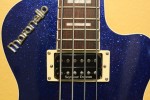
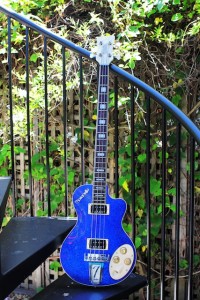
I’ve got this weird Italia Maranello bass I picked up years ago when I was playing in the Eels. It looks like it’s from the ’60, but is, in fact, a modern instrument designed by Brit luthier Trev Wilkinson and built in Korea. The only “Italy” in “Italia” is the fact that their instruments look like the Brand X axes being made in Italy, Gemany, and Sweden nearly 50 years ago. It looks inexpensive, and is. But it’s cool if you like weird, trashy stuff.
I strung it up with flatwounds, figuring I’d try to use it as a pseudo-Hofner, something to use for melodic parts that didn’t demand massive low end. Given the instrument and the relatively dull-toned pickups, I didn’t expect anything massive-sounding. I got this:

Here are the instructions for Part 3 of our first DIY Club project: building a bad-ass distortion pedal.
In this installment, we transfer the circuit we customized in Part 2 from the breadboard to its permanent home on a piece of perfboard. Once you get the hang of this technique, you’ll find it easy to transform any simple schematic into a working circuit.
Also, just to keep things organized, I’ve created a new DIY Club Page that will always feature the latest versions of all projects, plus other helpful resources. You can access it by clicking the DIY Club image in the right sidebar.


Here are the instructions for Part 2 of our first DIY Club project: building a bad-ass distortion pedal.
Not to spoil any surprises, but in this installment, we take the loud, raw sound we arrived at in Project 1, Part 1:
…and refine it by adding diode distortion, and customizing it to taste. Here are four possible results:
We’ll also add a variable gain control:
…plus a master volume. Along the way, you’ll encounter cool tricks, wicked sounds, boring theory, and a friendly but foul-smelling sasquatch who can play most of Led Zeppelin’s “Rain Song.” And only one of these statements is a lie!
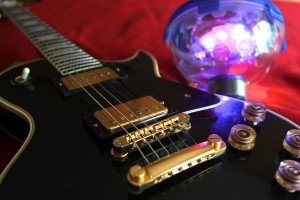
I recently upgraded a beat-up old Les Paul with a pair of Seth Lover humbuckers, a journey detailed here and here.
While I was in a makeover frame of mind, I figured, what not try something I’d always been curious about: installing a P-90 and a humbucker on the same guitar. So I swapped the neck pickup for a Seymour Duncan Phat Cat, a vintage-sounding P-90 is a humbucker-sized housing.


Okay, DIYers—get ready for Part 1 of our first project.
Warning: It ends with a bang!
Download the step-by-step instructions here. (You might want to print out a copy to use on your workbench.) Post any thoughts, questions, or curses in comments.
UPDATE, Sunday, October 2nd: We had a nice little online meeting Friday eve. I’ll be posting a PDF with step-by-step instructions for Project 1 on Monday, the 3rd. Check back here!
 Now that people have had a few days to assemble tools and parts, we’ll be diving into our first project after the weekend. Again, this will be basic stuff, suitable for absolute newbs. But I’ll be including info about mods and options that may be of interest to more experienced builders. Also, the projects themselves will sound seriously bad-ass, if I do say so myself. 🙂
Check out this short article from Beavis Audio Research. Great advice on choosing a soldering iron, and a nice introduction to some of the basic moves, plus a few good jokes. Many other fine tutorials at this superb DIY site.
My fave of many youtube soldering tutorials.
He should have added: Don’t touch the hot end of the iron. Work in a ventilated space. Wash your hands afterwards. Don’t eat the solder. Sheesh! What’s wrong with kids these days? 😉

WARNING! This post contains the answers to the quiz! If you still want to take the test, stop reading now and challenge your ear here.
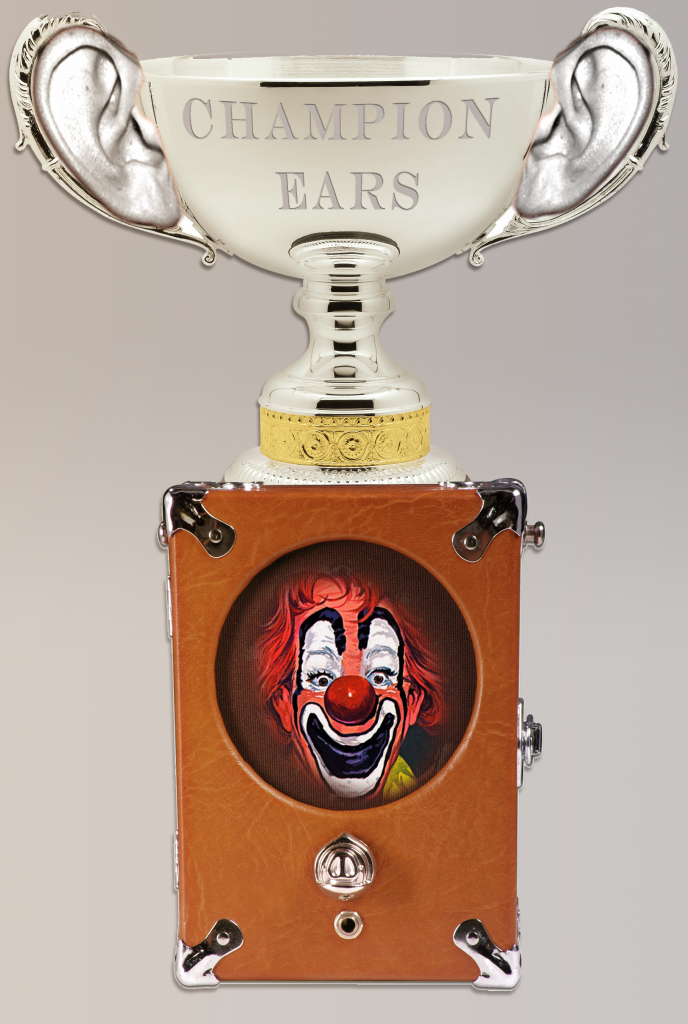
It was only two weeks, but it feels so much longer—at least for me, after processing some 220 entries before receiving the third perfect eight-out-of-eight score last night, which concluded the contest.
I honestly didn’t think it would take as long as it did. Not that I’m complaining! The Amps Vs. Models Contest was a fascinating experiment that produced many interesting comments. Thanks to everyone who chimed in!
The final entry was from Jessie Nieboer of Walkerville, Michigan, who selected a Seymour Duncan Twin Tube Mayhem pedal as his prize. Several days earlier, Ralf Tyra of Hamburg, Germany, claimed second place. He chose a Twin Tube Classic and a Tweak Fuzz. And last week Colm Kelley of Dublin, Ireland, took first place with the first perfect score. He hasn’t yet decided which stompboxes he wants, but mentioned the possibility of three Deja Vu delay pedals.
And the correct answers?