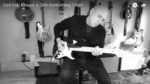
Admittedly, there’s only a smidgen of looping here. I usually play this without a looper, but it’s nice being able to grab that lovely falsetto line at 02:25.
The guitar is a Guild X-15 arch top from the ’90s. It’s had many pickups over the years. This one is a lovely Lollar Charlie Christian model.
It probably wins my vote for prettiest pop-rock song of all time, and it’s a far-from-controversial opinion. “God Only Knows” and all the other great tracks from the Beach Boys’ incomparable Pet Sounds album are 50 years old. (The album was released on May 26th, 1966.)
I owe a big thanks to my pal Mark Goldenberg who inspired me to really learn the entire tune. Mark performs an exquisite solo version, far more lyrical and poetic than my relatively motoric reading. He and I are also preparing a duo version for an album project in the works.
I say “really learn” because you don’t appreciate the number of perverse composition tricks in the tune until you study it bar by bar. Example: the jarring leap into the bridge after the second verse. Or the way that chromatically snaking bridge seems to usher in a return to the chorus, but it’s only a three-bar tease (and in the “wrong” key at that) before a exquisite harmonic pirouette into the final verse. Or the fact that many, if not most, chords in the song don’t feature their root note in the bass. (Especially that verse! The voice leading simply makes no sense on paper, but it’s perfection in practice.) And while countless musicians have praised the outro’s beautiful choral polyphony, I haven’t got much to add, except to say that it’s frickin’ hard trying to cover all those parts! (I didn’t succeed — I only played as many as I could cram into my left hand.)
And oh, the guitar: It’s the latest installment in the ongoing Mongrel Strat Project.I’ve been hacking away at the same sad parts for years. Literally hacking, in this case: I had to route out the pickup cavity to accommodate a pair of über-retro PAFs (a Duncan Joe Bonamassa signature set). Yeah, a Strat with humbuckers isn’t a new idea. But the pickups used are almost always high-gain models designed for macho soloing. I wanted to try something low-gain and unpotted for relatively bright, resonant sounds not quite so far removed from traditional Strat tones. I’m finishing up a video about the project, and I’ll post it in the next few days.
Anyway: Happy birthday, beautiful. You wear your age well.:)
Tonefiend Book Week is simple: I discuss a few titles I’ve found particularly enlightening, useful, or entertaining, and then you jump in and do the same. I’ve organized the days of this week by subject matter. Today’s topic: musical fiction.
In comments to yesterday’s installment on musical autobiographies, several folks mentioned the Real Frank Zappa Book. Which reminds me of a quote often (and apparently incorrectly) attributed to Frank: “Writing about music is like dancing about architecture.”
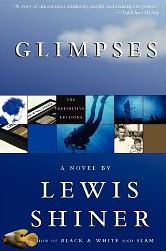
A music fan rescues ’60s rock via time travel. (Not as dorky as I’m making it sound!)
The line probably originated in reference to music journalism, but it applies just as well to fiction about music. Countless novelists and screenwriters are ardent music lovers. Yet there aren’t many novels or films that capture the act of music creation — what’s it’s like to be a musician.
The problem isn’t a lack of passion for music. Leo Tolstoy, Thomas Mann, and Victor Hugo were knowledgable listeners who channeled the emotions they perceived in great music into equally great prose. But even among literary titans, depictions of the music-making process tend to be as bogus as that clichéd Hollywood montage: Composer paces room. Furiously crumbles aborted manuscript page. Howls at moon. And then — Eureka! — a Masterpiece is born.[CUT TO END OF CONCERT, STANDING OVATION.]
Writers seem to do better depicting the worlds that surround music. For example, Jennifer Egan’s 2011 novel A Visit from the Goon Squad includes scenes set in the old San Francisco punk scene, and she nails the vibe. Many fine younger writers — Egan, Dave Eggers, Jonathan Lethem — are obvious rock geeks who skillfully evoke the experience of music consumption. There are also memorable depictions of fandom, notably Nick Hornby’s 1996 novel High Fidelity. But few books attempt to provide glimpses into the musicianly mind. (Actually, I haven’t yet read Lethem’s You Don’t Love Me Yet, which is set in the indie rock scene. Have any of you? I sure love his Motherless Brooklyn and Fortress of Solitude.)
At worst, smart writers sound stupid when attempting to write knowingly of music creation. I dig most Salman Rushdie I’ve read, but man, his 2000 “rock” novel, The Ground Beneath Her Feet is a stinker. Rushdie attempts an alternate rock history via his signature South Asian magic realism, and the result isn’t fantastical — it’s bunk. Sorry, partying with members of U2 doesn’t automatically afford vast insight into the musicianly mind. Or at least that’s been my experience. 😉