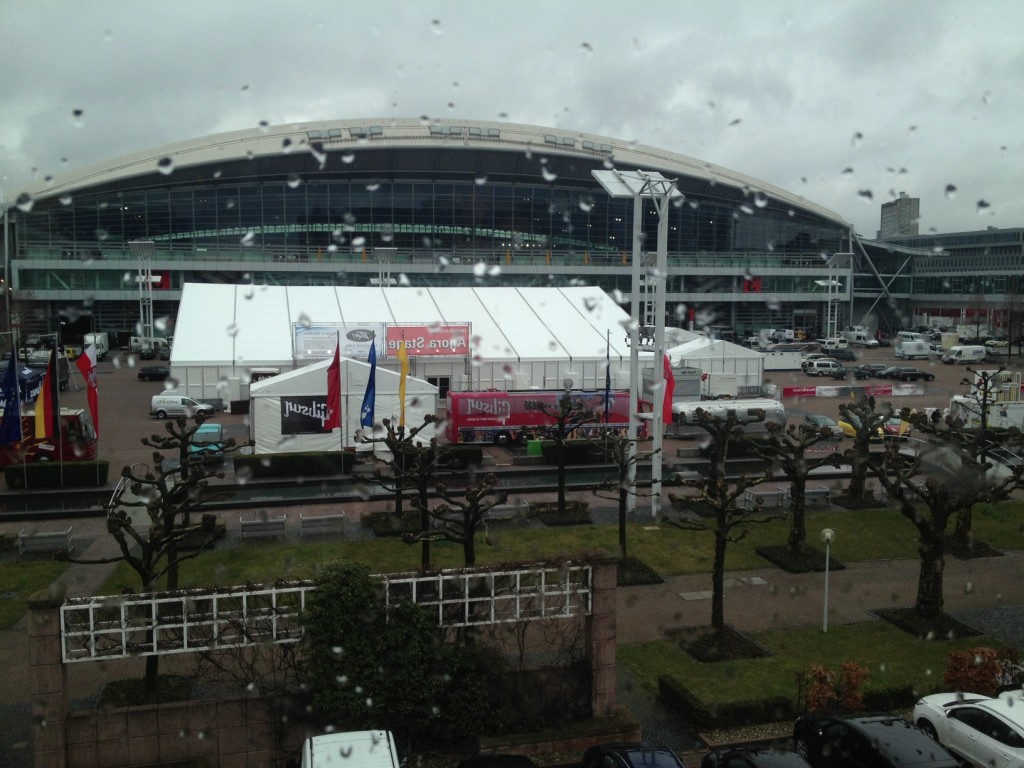
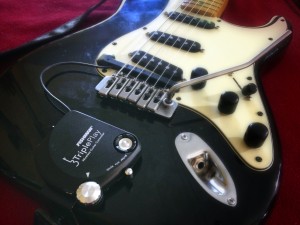
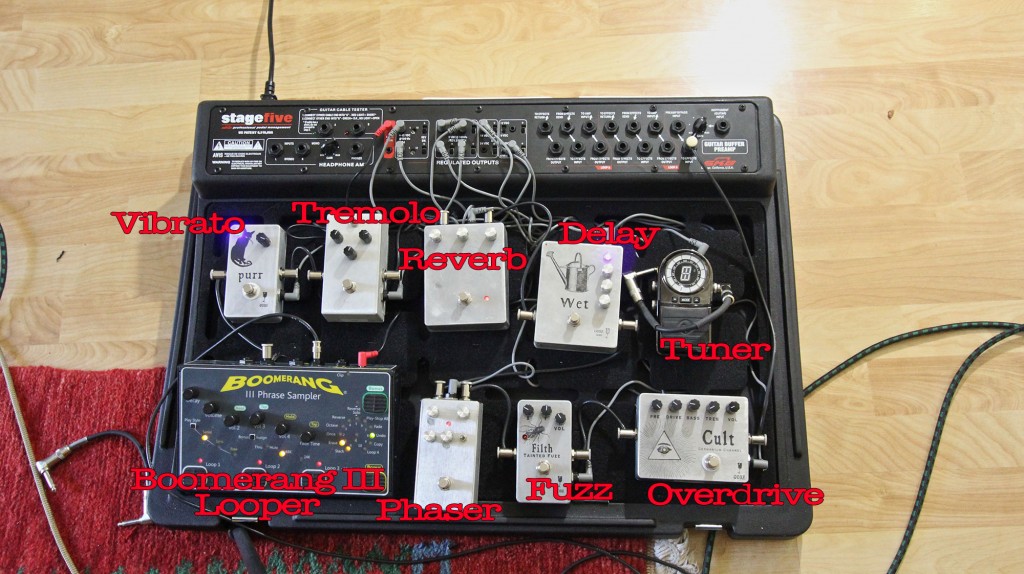
Howdy from Frankfurt, where I arrived this afternoon to attend Musikmesse. United Airlines was its usual scuzzy self, though a nice flight attendant found a place for me to stow my guitar. And my pedalboard seems to have arrived in fine shape, even though I had to checked it in its soft but reassuringly padded Mono case.
I’m here as a demo artist for Fishman’s TriplePlay, but I should have some downtime to poke around and look for cool stuff. I’ll keep you posted!
This event is gigantic — more than twice the size of NAMM. And even on a setup day like today, you can tell how loud it’s going to be, especially since they don’t enforce volume restrictions is stringently as they do in Anaheim. (I’m told it’s like Saturday afternoon at Guitar Center, squared.) And my demo area just opposite the big, loud Gibson stage. It’ll be an adventure! 🙂
Any of you guys ever been? Got any advice to share?
For the last few months I’ve been working with Fishman on the documentation for TriplePlay, their long-awaited wireless MIDI guitar system, which will finally ship this quarter. I had a blast demoing TriplePlay at MacWorld a few weeks ago, and I’m looking forward to doing so again at Musikmesse in Frankfurt in April.
But at times, it’s been frustrating. I power up TriplePlay to study some feature, get all excited, and then have to turn it off and write about it instead of going off and playing it for six hours. This little demo was my first real chance to just fool around with the thing. Thoughts and details after the video.
Oh wait — that was last month. Now it’s January. NAMM time!
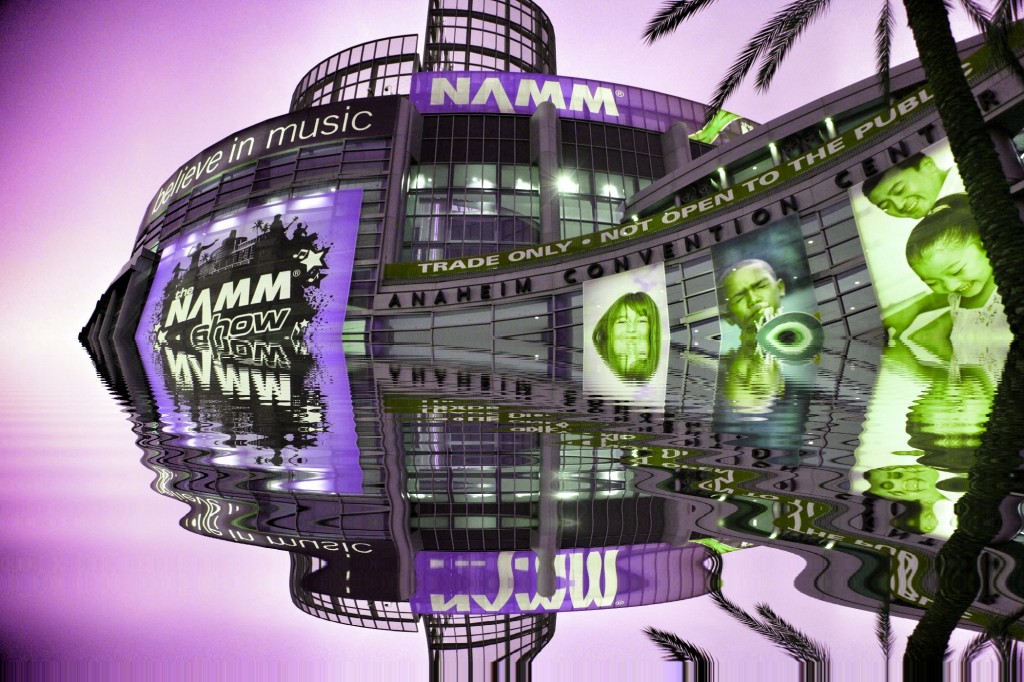
I’ll be there for the duration, partly to hang out with my Pure Guitar pals, and partly to meet with Fishman about the upcoming TriplePlay release. But mostly to gawp at the weird shit admire the musical instrument industry’s latest offerings. :oogle:
I’ll be posting my findings here, and also doing a little write-up for my friends at Create Digital Music, one of my fave musician sites.
Actually, I have this perverse fantasy of spending an entire show in Hall E: the Anaheim Convention Center’s low-rent basement/dungeon, a dark, inhospitable region where Fender and Gibson fear to tread. That’s where the industry leaders of tomorrow rub elbows with mad scientists and perennial laughingstocks (AKA “my peeps”).
Any of you guys going? And if not, anything special you’re curious about?
Last week I dared all incautious chumps you to prognosticate about our guitaristic future. I knew the resulting comments thread would be fun, but I didn’t expect it to be that fun!
And also oddly uplifting. Future predictions just seem to skew in an optimistic direction, perhaps because you have to start by assuming that we have a future. So for every funny post suggesting that the most stupid and obnoxious aspects of today’s musical culture will get even more stupid and obnoxious, there’s a complementary positive perspective. In the future, these upbeat dreamers argue, we wil be better…stronger…faster. Of course we’ll have the technology! Better still, we’ll develop common sense.
Granted, some of the predictions are destined to be as disappointing as a 1948 issue of Popular Mechanics, with its broken promises of personal helicopters and monkey butlers domestic robots. But would it be preferable never to have dreamt of having you own jetpack? I think not!
Here’s a fine, optimistic example from Thecoslar, writing about “Lego” Pedals and Amps:
Standardized wiring “harnesses” and interchangeable components will allow companies to produce amp cabinets and pedal cases that consumers will purchase, in addition to compartmentalized circuits. The consumers will “design” their own pedals and amps by mixing and matching that various parts. Combine an optical compressor and a germanium boost. An octave up and a chorus. And that’s just pedals. Imagine what could be done by mixing and matching tone stacks, reverb and delay, or pre amp circuits in amps? Built in analog effects your amp, just by plugging in the components. Everyone and anyone will be able to piece together their own custom circuit, no solder, no muss, no fuss.
Yeah, that would be frickin’ awesome. Of course, we happen to live in a world with at least four common types of USB connectors, no standardized guitar wiring harnesses, and where millions of consumers sigh as they fork over yet more cash for the latest proprietary i-connector. But we can dream can’t we?
Hell yeah, we can! I hope you’re enjoying the conversation as much as I am.
(The fun’s not over, BTW — keep posting your predictions.)
Weird, isn’t it? You can explain the rules of thumb for ordering your guitar effects in about ten seconds, but you can still get stumped after years of experimentation.
You probably know the conventional effect-order advice, which goes something like this (in order of appearance):
And that’s good advice, as far is it goes. But you don’t have to dig very deep before encountering alternatives, exceptions, and arrangements that make no sense whatsoever, but still sound great.
“We are all interested in the future, for that is where you and I are going to spend the rest of our lives.” — Criswell, Plan 9 from Outer Space
UPDATE:Wow, I can’t believe all the cool stuff folks have been posting to comments. I find myself feeling quite inspired about the future of instrument — when I’m not laughing so hard I spit coffee all over my laptop. Thanks for all great ideas. Keep ’em coming! 🙂 :thumbup:
Prophecy is for suckers. Who’s stupid enough to go on record with bold prognostications about the future of music and music-making, given the near-certainty that the words will reappear someday to bite you on the ass?
Well, me. And, I hope, you.
So I invite my fellow foolhardy loudmouths to join me in sharing their half-assed guesses wise and well-informed predictions about our brave new fretboard future.
The author of the most compelling prediction wins one of my hand-built stompboxes. So does the author of the one that makes me laugh hardest.
Post your predictions to comments. I’ll go first. 🙂
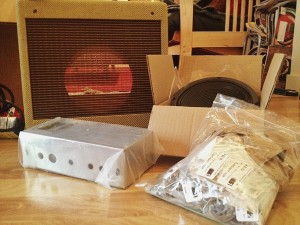
I’ve got a Tweed Champ kit, and I’m not afraid to use it. Or at least not VERY afraid.
Why do they make amps so damn loud?
It’s not just a cranky question from a guitarist who’s drawing depressingly close to the “Get off my lawn!” years. I ask sincerely: Why?
Big amps make total sense — but only if a) it’s 1969, b) you’re playing venues with Jurassic sound reinforcement, and c) you’re a guitarist in danger of being drowned out by Keith Moon or John Bonham.
Okay, end of harangue — I’ll have time for that when I’m chasing kids off my lawn (after I move to the suburbs and GET a lawn). But as I get psyched up to build this review model of Tube Depot’s Tweed Champ kit in the coming days, I figured I’d ask what folks are using these days to get cool amp tones in their bedrooms and basements. Not dedicated practice amps, necessarily, but great-sounding stuff that happens to be ultra-low-wattage? Name your petite-amp poison!
Anyway, I’m stoked about this kit. I’ve already completed a few amp clones from Ceriatone. They were fun to build and sounded great. But I can tell right off the bat that this Tube Depot kit has at least one major advantage over its Malaysian cousins: This one comes with a fabulous 40-page instruction manual. (Most clone vendors simply link you to a schematic.) Having created a few step-by-step instruction manuals myself, I can testify how much painstaking work these entail. Hats off to Tube Depot’s Rob Hull for doing it right!
Details and build report to follow. But now, let’s talk tiny-amp tone!
Is it just me, or do many guitarists these days find themselves alternating between separate analog and digital setups?
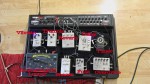
I’m posting some pics of my current pedalboards (bearing in mind that, for reasons I’ll get into in a sec, my pedalboards only tend to stay “current” for a few days at a time). Both were assembled using store-bought housings, though I’ll talk a bit about total DIY boards as well.
First, the mostly analog setup (the exception, of course, is the digital Boomerang III looper).
Joe Gore’s mostly analog pedalboard.
The case is a newly purchased SKB Stage Five, a full-featured unit in a relatively rugged molded plastic case. These retail for a whopping $540, but you can find them heavily discounted. (I forget the exact price I paid for mine, but it was under $300.) It’s loaded with cool features, like dual effect loops, a built-in buffered preamp, and support for 9- through 24-volt DC power, plus 9V AC for those digital pedals like Line 6 modelers and many loopers. There are even trim pots on a few power jacks to simulate dying batteries. I’m less impressed by some of the fittings (like the cheapo plastic jacks), though I suppose they keep the weight down. And make no mistake: This thing is heavy!
Verdict: Too early to tell, since I haven’t subjected it to road abuse, but I trust it enough to at least give it a go. I think I’d be a bit disappointed had I paid full pop, but it strikes me as a fair deal if you can find it at a 40+% discount. (more…)
Does music groove more when all the effects are in sync?
What’s better: synchronizing your modulation and delay effects strictly to tempo? Or “freewheeling” it, and letting the effects wobble and drift a bit?
I eagerly embraced tap-tempo stompboxes when they appeared — how liberating to re-clock your effects without stooping over and fumbling with little knobs! But these days, I often forego strict timekeeping in favor of a sloshier, more organic feel.
Sometimes tempo-sync makes parts groove better. And sometime it makes everything sound cheesy, like the computer-clocked sound and lights of a loud and lousy Broadway show.
One thing that made me more reluctant to over-synchronize my sound was the illicit release of the various “Multitrack Master” audio files, in which classic rock recordings were distributed as individual solo tracks — an illegal yet awesome development I wrote about here. This example in particular blew my mind:
Okay, the analog delay effect on that iconic keyboard part is a bloody mess, the echoes flamming chaotically against the played notes. But would anyone dare suggest it’s not one of the grooviest parts ever committed to tape?
On the other hand, when I do go digital, I’m more likely to take it to extremes. Here’s a little example I threw together using a multi-effect plug-in created with Native Instruments’ Reaktor. (Reaktor itself isn’t an effector, a synth, or a sequencer, but a programming environment for creating all those things and more. This plug-in, called Freak Show, is free for Reaktor owners via the Reaktor User Library. The creator is Carsten Brück.) It’s a set of eight effects — but the active effect changes in time with the sequencer. (You might have reverb on beat 1, pitch-shift on beat 2, phasing on beat 3, etc.) Check it out: (more…)
One cool thing about going indie with tonefiend is that fact that I can finally host my own geek forum! It’s already up and running — but it’s a sad, vacant space that desperately needs to be populated by cool people and cool ideas.
How to get there? Sleazy bribes! Cool prizes!
Here’s the deal: I’ve pre-populated the forum with a few topics and threads. Just come on over, register, and chime in on any thread that interests you — or better yet, start one of your own. And on September 1st, 2012, the three forum members who have consistently contributed the liveliest content as judged by some dork me will get a bitchin’ stompbox laboriously hand-built by the same dork me. I can’t disclose exactly what the pedals will do, but I can promise they will be cool, useful, and genuinely unique — original designs, not some lame-ass Screamer clones. And if I manage not to vaporize my hand with the TechShop laser-cutter I’ve been learning to use, they’ll even have wicked laser-etched enclosures.
Naturally, I hope the tonefiend forum will also be cool and unique, and that you’ll enjoy geeking out there even when there’s no contest. But hey, I’m not above greasing the skids with free stompboxes as needed.