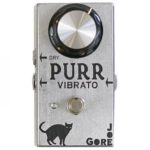
About frickin’ time! I announced this new Vibrato pedal at NAMM 2018. Now it’s time for NAMM 2019, and Purr is finally available and in stock at Vintage King.
Why so long? As soon as we finalized the prototype and designed the new circuit board, a crucial part suddenly became unavailable. ARGH!
It took forever to track down an acceptable substitute. But we finally did, and I’m thrilled with the results. I hope other guitarists dig it too.
Hey, if you’re going to NAMM 2019 in Anaheim next week, please stop by and say hi. Especially since since I’ll be sharing a booth with my my friend James Trussart, creator of some of the loveliest guitars ever conceived. We’ll be in Hall D at Booth 3942.
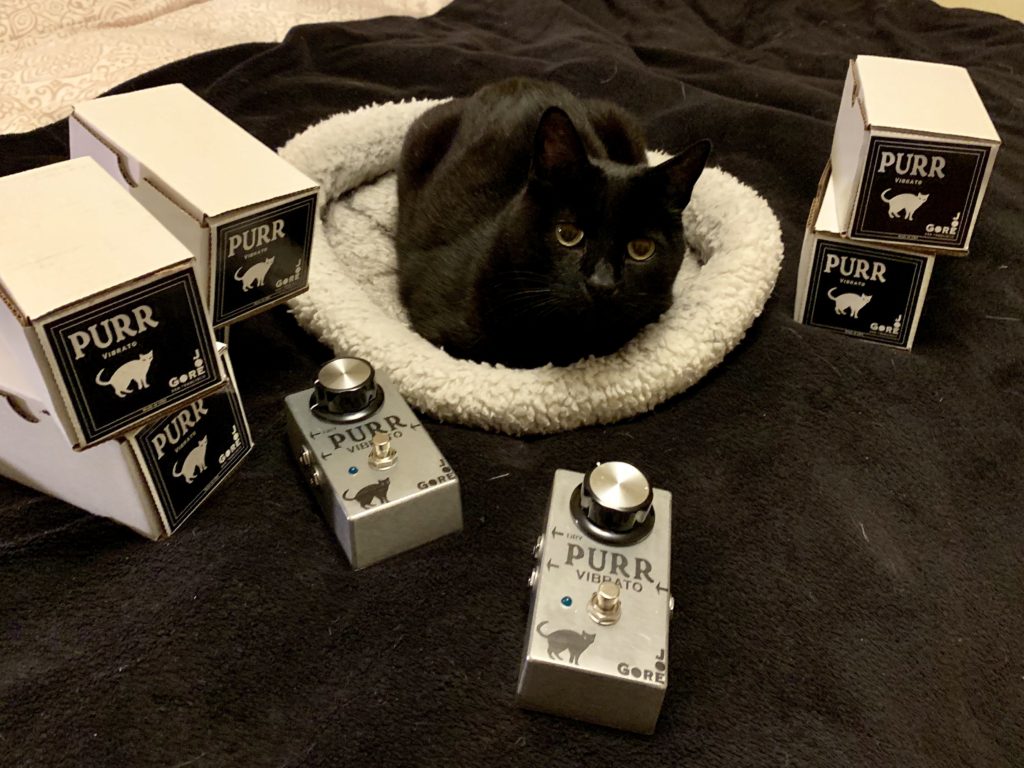
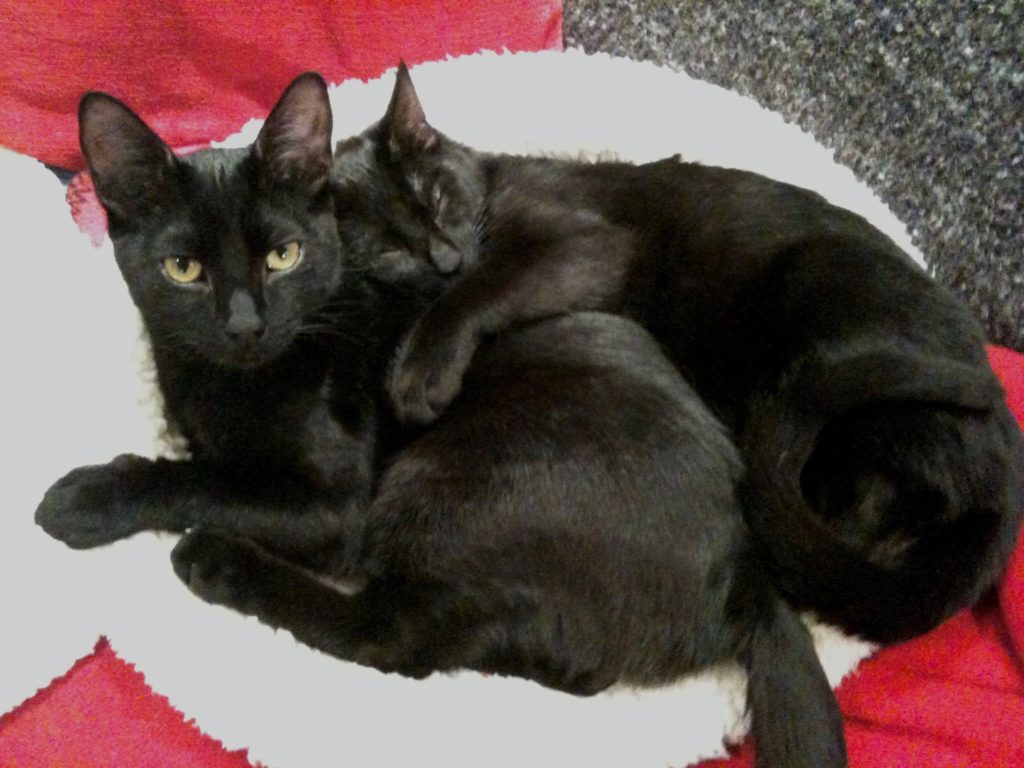
It’s too early to say whether guitarist will dig the Purr pedal. But at least someone I know is excited about the new release!
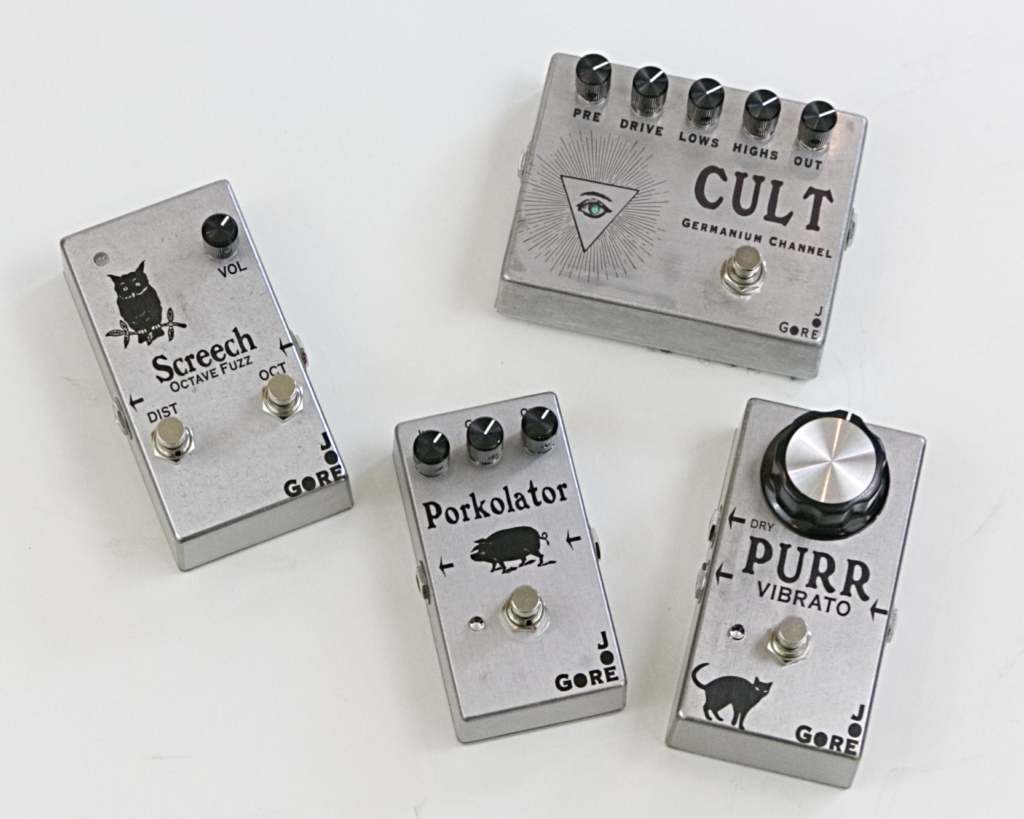
Happy new year, all. Sorry I’ve been so scarce — mostly, I’ve been practicing guitar! I’m trying out lots of challenging new things (for me, anyway) and I’ll share some of them as videos very soon. I’ve also been finalizing the four new Joe Gore pedals I’m debuting at NAMM 2018. Lookit!
They’ve already gone into the production, and they’ll be available via Vintage King very soon. I have yet to make demo videos and detailed spec sheets, and we still haven’t finalized the prices. (It depends how much the damn germanium transistors in Cult Germanium Channel and Porkolator wind up costing.)
In the meantime, here’s the info sheet I’m distributing at NAMM. Also, Premier Guitar is scheduled to record a demo video at the show and post it on their site. (I’ll share the details when that happens.) I hope I sound less like a squirrel on meth than I did for last year’s show-floor video.
If you’re attending the show in Anaheim, please visit me at booth #15517. (It’s a huge booth run by my distributors, M1. I’ll be crammed behind a tabletop somewhere within.) I’d love to say hi.
You know what sucks about attending NAMM as a manufacturer rather than a gear writer? I was epoxied to my booth all day, and I barely saw anything other than my guitar pedals. But on one rare break, I got to hang out with Jannis Anastasakis and his crew from JAM Pedals of Athens, Greece. (I highlighted some of their beautiful work in my pathetically skimpy “NAMM report.”)
Happily, there’s more to celebrate here than great visuals. JAM builds lovely versions of many classic analog effects. Their sounds and production quality are stellar, and JAM often adds modern updates such as realtime expression control, extra knobs, and internal trim pots for customizing tones. It’s quality stuff, used by many a guitar star.
And guess what? Jannis loaned me one of his magnificent Custom Shop analog pedalboards. Γαμώτο!
Sadly, I must now pack up and return this pretty pedalboard. But I’ll be getting my own JAM Delay Llama Supreme, an expanded version of the analog delay heard here, with tap tempo, a cool modulation section, and the almighty infinite-hold switch. (I reviewed it for Premier Guitar a few months ago.)
In the meantime, this experience makes me want to try my own DIY pedalboards. Not as an item for sale — just as a way to group related effects in a single enclosure for stage use. Gears are spinning ….
Oh man — my friends at Premier Guitar just posted a video of me demoing four of my new pedal prototypes at NAMM. I didn’t even think I’d have these ready by showtime, but I powered out at the last minute. (Maybe ’cause I needed something to take my mind of the inauguration.)
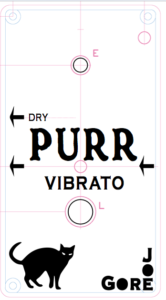
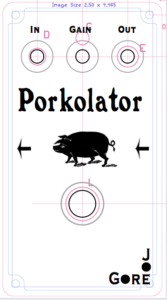
It’s been a busy month since we filmed this. We’ve settled on names, graphics, and specs, and everything is in development. (Though they’re still a few months away from shipping.) I’ve included the first-draft enclosure graphics as well.
Purr is a minimal one-knob optical vibrato. Yep — one knob, which means no independent rate and depth controls. Sound crazy? I agree. But it just sort of works! (I explain my questionable reasoning in the video.)
It’s not a deep, wobbly pitch-shift effect — more like cross between a really warm, pretty tremolo and a subtle optical vibrato. It’ll have the same large knob as my Duh pedal, so you can make adjustments with your foot, assuming you’re not as clumsy as I am.
It’s my fave modulation circuit, one I’ve used on a number of my YouTube videos. Here it’s on throughout at a very subtle setting.
In this video it’s set more strongly, though I toggle it on and off as I loop additional layers.
Screech, a mutant spinoff of the Octavia and Green Ringer octave fuzzes, is an outgrowth of the experiments I did did a few years ago, when I built models of every major octave fuzz design, and then attempted a variation of my own. (It’s not too far removed from the final pedal in this video, which appears at the 10-minute mark.)
It’s got the most extreme octave effect I’ve ever heard from an analog octave fuzz, and unlike on an Octavia or Green Ringer, the effect works in all neck positions and at all pickup settings. You can also bypass the octave portion of the circuit for a straight distortion sound. (That’s not a new idea—it’s a popular Octavia mod. But that non-octave Octavia sound is dull as dirt, whereas this, I think, has a bit more character and impact.)
Porkolator also springs from a video demo/experiment of a few years back. It’s my oddball spin on the Interfax Harmonic Percolator, which is already pretty odd to begin with. It uses the same weird combination of negative- and positive-ground transistors for that sort of gravelly, decidedly non-tube-like distortion that Steve Albini loves so much. But all the part values differ, and the gain stages work very differently. There’s also an independent boost stage that can generate tons of extra level if desired. Again, it’s not that far removed from the final example in my octave fuzz video. (It appears starting at 5:55.)
Unlike the other three pedals, Cult Germanium Channel is pretty much finished. (We were originally going to include it among the 2016 releases, but decided that three new products were enough.) Its heart is the same primitive germanium overdrive circuit as in my Cult pedal, but with lots of added doodads: a tone-shaping pre-gain control, great-sounding active 2-band tone control, and an output trim. You can read more about Cult Germanium Channel here.
The NAMM video also features a demo of Kitty Boy, my imaginary vision of a germanium fuzz that should have existed in the 1960s. It’s sort of a cross between a Maestro Fuzz Tone and a Tone Bender Mk. I, which can go from lightly overdriven “Satisfaction” tones to hyper-saturated Ziggy Stardust glory. (It’s inspired by a conversation with Lyle Workman, so thanks, Lyle!)
I hope folks dig these. I’ll keep you posted about release dates and final prices.
Thanks, Jason Shadrick and Perry Bean, for doing such a nice job with the video and squeezing me into a brutal production schedule at the last minute.
Jet and Kaiju say: “When Joe plugs in those horrible fuzz pedals, we hide in the closet. But that new Purr pedal with the black cat on it isn’t so bad.”