Categories
Bass guitar Music

The Bass VI Boss

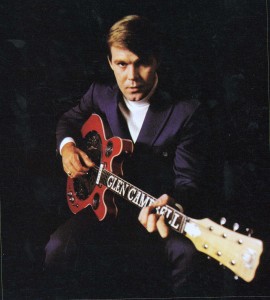
Dang — I wish I had a white turtleneck and a Mosrite electric resophonic!

After some of the long-running contests around here, it was nice having a quickie for a change. San Diego-based steel guitarist Doug Meyer was the first of several readers to correctly identify the four iconic Bass VI riffs in the post on ancient strings. He wins a Seymour Duncan Pickup Booster, a cool clean boost pedal that sound fabulous on 6-string bass, not to mention standard-tuned guitars.

The tunes were, in order of appearance:

1. Glen Campbell’s “Wichita Lineman”
2. Glen Campbell’s “Galveston”
3. Elmer Bernstein’s “Theme from The Magnificent Seven
4. Steve Earle’s “Guitar Town”

Glen Campbell not only sang those two classic Jimmy Webb songs, but played the beautiful 6-string bass parts. As most ’60s pop fans know, Campbell was a leading L.A. session player before becoming a star — he played with Elvis, the Everly Brothers, the Monkees, and on many Beach Boys sessions, including Pet Sounds (that’s him playing electric 12-string on “Sloop John B.”) [CORRECTION IN COMMENTS.]

About the ’90s reissue Bass VI that inspired my original post: I’ve always liked it, and I’ve used it on a zillion sessions, but I never thought it sounded as good as an original. Now I realize that it sounds just like an original — all it needed was the right strings! 🙂
Categories
Acoustic Bass guitar

In Search of Ancient Strings

PLUS: New Contest! Name the Classic 6-String Bass Riffs and Win a Seymour Duncan Pickup Booster Pedal!

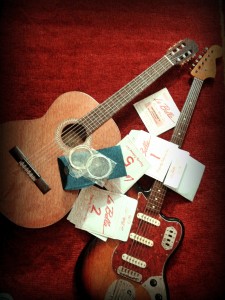
"We both love candlelight, long walks on the beach, and really expensive old-school strings."

NOTE: The contest is at the bottom of this post. You can skip ahead if you don’t care about rare and expensive guitar strings.

What do the classical guitar and the Fender Bass VI have in common?

Both instruments were developed using types of strings that are practically extinct.

First, let’s talk nylon strings. When these appeared after WWII, classical guitarists, led by Andrés Segovia, ditched gut overnight. Nylon strings were louder and brighter, and they offered better consistency, superior intonation, and longer life.

Few living guitarists have ever actually played gut strings, which really are made from animal guts (usually cows, goats, or sheep). I’ve never tried them myself.

But one of my darkest secrets is the fact that I started out as a teenaged lute player. (I have a photo of myself playing on a hay bale at a Renaissance Faire, wearing a feathered tudor cap and white tights. And you will never, ever see it.) I experimented with gut lute strings, only to run screaming. Total tuning nightmare, especially on an Elizabethan-era axe with friction tuning pegs, not to mention lots of unison- and octave-tuned strings. Guitarists were smart when they ditched the stuff.

But I recently bought a new ukelele, which came strung a set of Aquila strings from Italy. They have several lines of faux-gut nylon strings made from a proprietary material called — wait for it — “nylgut,” which allege to capture the sound of gut without the tears. They sounded cool on the uke, so I ordered a few guitar sets. At between $12 and $21 dollars per set, depending on the bass-string wrap material, they’re pricy, but not crazy expensive — about the same as other high-end, E.U.-made brands, like Savarez or Thomastik-Infeld. (Aquila’s US distributor is Just Strings.)

And holy cow, do I love ’em! They don’t look anything like gut strings, which resemble, well, dried-out intestines. But they really do capture a lot of “gutness.” Their tone is quieter and warmer than conventional nylon, with markedly less string noise (a great thing for a very rusty classical player like me). Check out this demo:

Categories
Acoustic Amps Effects Gigs

Amped-Up Acoustic Guitars

What could possibly go wrong?

There are two ways to approach amplifying an acoustic guitar: trying to duplicate the natural sound, only louder, and NOT trying to sound naturalistic at all. This post is about the second approach.

I love playing acoustic through an electric guitar amp (as opposed to a dedicated acoustic amp). True, the tubes and speakers amputate all high frequencies. But if you think of the instrument not as an acoustic guitar, but an idiosyncratic electric variant, it opens up amazing possibilities.

More often than not, I prefer to play acoustic gigs that way. I did a fun benefit show last year playing rock and R&B covers with a band consisting of Flea, Tracy Chapman, and drummer Dawn Richardson. Tracy had a beautiful, ultra-hi-fi acoustic tone, and the ratty, rumbling sound of my acoustic through a small combo was — well, let’s just say it was a very strong contrast.

Admittedly, relatively few  players exploit this technique. One notable exception is Daniel Lanois. He’s best known as a producer (U2, Peter Gabriel, Bob Dylan, etc.), but he’s also a phenomenal player who does amazing things with an acoustic guitar, an inexpensive magnetic soundhole mic, and small vintage Fender amps. I’ve watched him play up-close a few times, and he’s incredibly adept at conjuring a variety of tones and controlled feedback from this setup.

It’s definitely a white-knuckle playing experience. You have to listen carefully and nix unwanted feedback with quick damping technique. But it can be so expressive!

I’ll talk more about the technique in a bit. But first, check out this short video demo featuring distortion and other stompbox effects, controlled (and not-so-controlled) feedback, and a lot of awkward twisting and turning as I grapple with the tone: 

Categories
Bass Effects guitar

Onboard Distortion Without a Battery?

Low-Voltage Chunk from Diode Distortion!

Did you know you can add a simple circuit to your guitar or bass that produces onboard distortion — without using a battery?

The idea is pretty simple — you attach a pair of diodes to the guitar’s output via a pot or switch. With the diodes connected to ground, you get a fairly nice distortion sound. With the connection to ground broken, you get your regular tones. It’s the same method used to create distortion in a several ’70s distortion pedals, notable the MXR Distortion+ and the DOD 250.

You can purchase the necessary components in a sleek black housing under the name Black Ice for $27.50, or you can do a DIY version for about $2 in parts. I’ll explain how after this brief video demo:

Categories
Technique

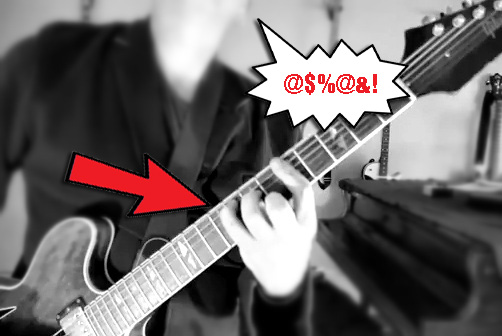
Simple But Deadly Pinky Exercise

Don't hate me for this.

A little something to make your weekend miserable productive:

I learned this pinky-strengthening exercise many years ago from one of my teachers. If the fourth finger of your fretting hand is the runt of the litter, skill-wise, these combination barre-chord/hammer-on routines may help. Plus you’ll learn some cool retro R&B riffs!

Categories
DIY guitar Pickups

Twang Bangers, Vari-Tones & More Strat Strangeness

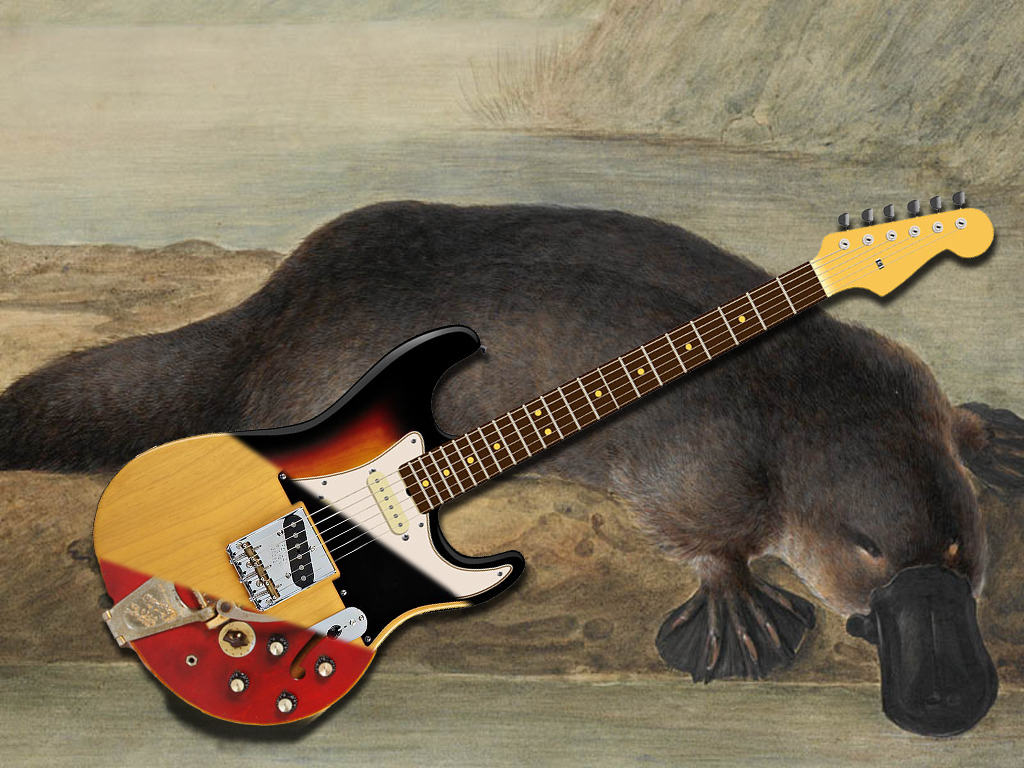
The latest Mongrel Strat (artist's conception).

Welcome to the second installment in the Mongrel Strat Series!

If I were a sensible person, I would have split this week’s experiments into several posts. But much like eating pistachios, it’s tough to know when to stop .

Anyway, this project tackles three topics:

1. Several readers dug the sound of the Telecaster-inspired Seymour Duncan Twang Banger pickup used in Mongrel #1, where I  paired it with a Duncan Lipstick Tube for Strat neck pickup and a Alnico II Pro middle. But I wanted to hear how the Twang Banger sounded in a more traditional Strat array, so this time I paired it was a couple of vintage-accurate SSL-1s, with a reverse-wound, reverse-polarity model in the middle position.

2. Over in The Secret Room, a participant brought up the subject of the Vari-Tone control used in the Gibson ES-345. I wanted to learn more about this often misunderstood circuit (well, I never understood it, anway) and explore whether it had relevance for Strats.

3. In response to another Secret Room topic, I wanted to resolve whether there’s any sonic benefit in bypassing the tone circuit completely.

And the results? You tell me — here’s the video:

Categories
Uncategorized

Locking/Clipping Tuners

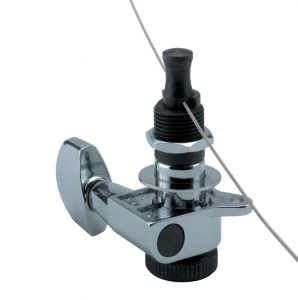
Raising the strings to pitch automatically clips the strings.

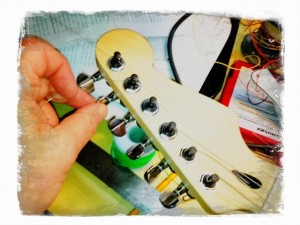
While auditioning parts as part of the ongoing Mongrel Strat Project, I tried out my first set of Planet Waves Auto-Trim Locking Guitar Machines. I’m really digging them! They lock to pitch via a little button on the back, much like Sperzel locking tuners. But when you raise the strings to pitch, they automatically get snipped by the tuners. Smooth!

They’re nicely made, with an 18:1 ratio and a substantial feel. (I got the six-in-line set, though they also have a three-on-a-side model.)

I’m especially digging the fact that, once you’ve snipped a string, it’s easy to loosen and remove the strings for changing pickups, pickguards, and so forth. There’s no curled or barbed end on the strings, so they slide right back into the tuner when your work is done. The only catch: The snipping process can be a bit tough with heavier strings. I installed am .011-.052 set, and it took a bit of work to slice through that fat E string. Not a problem in the end, but it could be an issue with higher gauges.

Now back to messing up some mongrel strats! :satansmoking: In the meantime, what are some of your favorite tuners these days?

Categories
Uncategorized

And the Winning Secrets Are . . .

"We am have photo finish!"

It’s midnight here in California — March 1st. Which means the Secret Room’s first contest is over. The rules were simple: The tone secret with the highest user rating earns it author a $1,000 Godin Natural Summit CT, a versatile carved-top solidbody. The authors of the second- and third-most popular posts each win a set of Seymour Duncan pickups of their choice (excluding Custom Shop models).

Drop by the Secret Room and read the winning posts — or anything else that captures your interest. All you have to do is upload one of your best tone secrets. Read more here.

Categories
The Secret Room

Secret Room: The Big Countdown

Can you believe it’s almost March? But February won’t officially creak to its conclusion until we announce the winner of the first big prize in our Secret Room giveaway. Yep — come the first, we will be awarding a $1,000 Godin Natural Summit CT to the author of the most most popular user-submitted tone secret, as judged by all the other players who have submitted tone secrets. And there are well over 500 of them — and mostly really good ones!

You can still influence the outcome — and learn an INSANE amount about tone, technique, gear, and DIY. If you’ve already submitted a secret and obtained a password, there’s still time to vote for your fave secrets. And if you haven’t yet checked out the Secret Room, learn more here.

Categories
DIY guitar Pickups

Meet Mongrel Strat #1

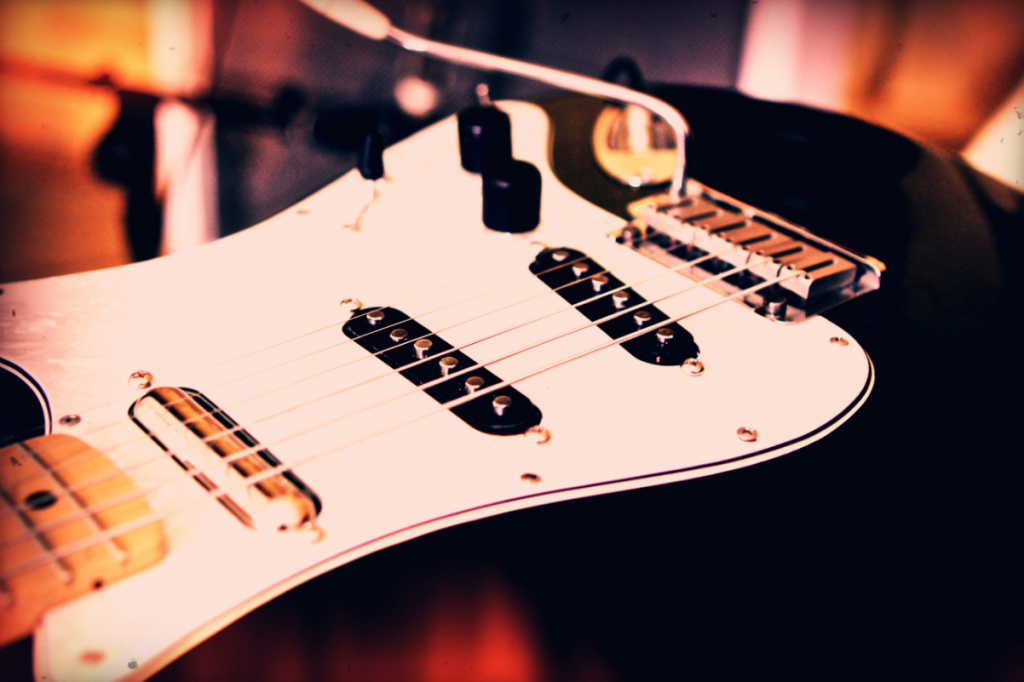
Three "mismatched" Duncan pickups in an off-the-rack Mexican Strat. (Left to right: Lipstick Tube for Strat, Alnico II Pro Staggered, Twang Banger)

As previously threatened, here’s the first installment in a series on unusual Strat pickup combinations, inspired by a big box of Duncan pickups and a couple of prewired “BYOP” pickguards. I tried a couple of meh combinations that I didn’t like enough to record, but this third experiment seemed worth sharing. Dig this odd combo: Lipstick Tube neck. Alnico II Pro middle. Twang Banger bridge. Comments and post mortem after the clip. Have a listen!