Categories
Pickups

Mini-Humbuckers vs. Firebird Pickups: A Head-to-Head Comparison

Man, I’ve been wanting to do this experiment for ages — and largely because it’s been a black hole off ignorance for me. As mentioned in the video, I used to think they were the same pickup. But as you can hear, they’re quite distinct, and the differences are far from subtle.

Polly’s Firebird is a 1960s original.

Until now I’ve never owned a guitar with either pickup type. My chief experience with mini-humbuckers was when I demoed a set in this sane Strat for my Strat replacement pickups comparison. I liked them there as well, though I was using a set of Seymour Duncans, while these are Lollars. (I’d be cautious about making tone comparisons, since the two videos were recorded using very different tone chains.)

Annie Clark designed her own signature guitar.

I once played Polly Harvey’s original reverse Firebird on a gig, and I wasn’t that blown away at the time. (Though there were many other variables at play.) But I adored the way the Firebird pickups in Annie Clark’s Musicman St. Vincent model sounded, and I gave the instrument a rave review for Premier Guitar. I was struck then, as now, by their extraordinary dynamic response. Small variations in touch yield big tonal contrasts. My hope was that they’d sound like Fender pickups on steroids in a Strat, and to my ear, they do. (By “steroids,” I don’t mean high output — I generally recoil from extra-hot Strat pickups. Tones are simply fatter without neutering the high end as super-hot single coils tend to do.

I liked both pickups sets a great deal, but the Firebirds are a better match for my fingerstyle playing. What do you think?
Categories
DIY Effects

Next Week on Fuzz Detective!

UPDATE: Based on cool info supplied by YOU, dear readers, I’m expanding the scope of this piece. I’m furiously wiring up clones of some very rare models, and I can promise many cool and interesting surprises. Thanks, guys! :beer:

Okay, now that we’ve all gotten that silly “reading” stuff out of our systems with Book Week, it’s time to get back to the real focus of this blog: nasty, filthy fuzz pedals.

Last time we were on the subject, we looked at the original version of Dallas-Arbiter Fuzz Face, and included Mitchell “super-freq” Hudson’s beautiful DIY instructions.

Those posts generated many interesting comments — plus some misinformation on my part. For example, I said that the original Fuzz Face circuit is a close cousin to the Tone Bender Mk I, which would mean, for example, that known Mk 1 user Mick Ronson was essentially using a Fuzz Face between his Les Paul and his Marshall. But subsequent listening and reading makes me believe I was wrong. So I figured it was time to play fuzz detective and sort the facts from the other stuff.

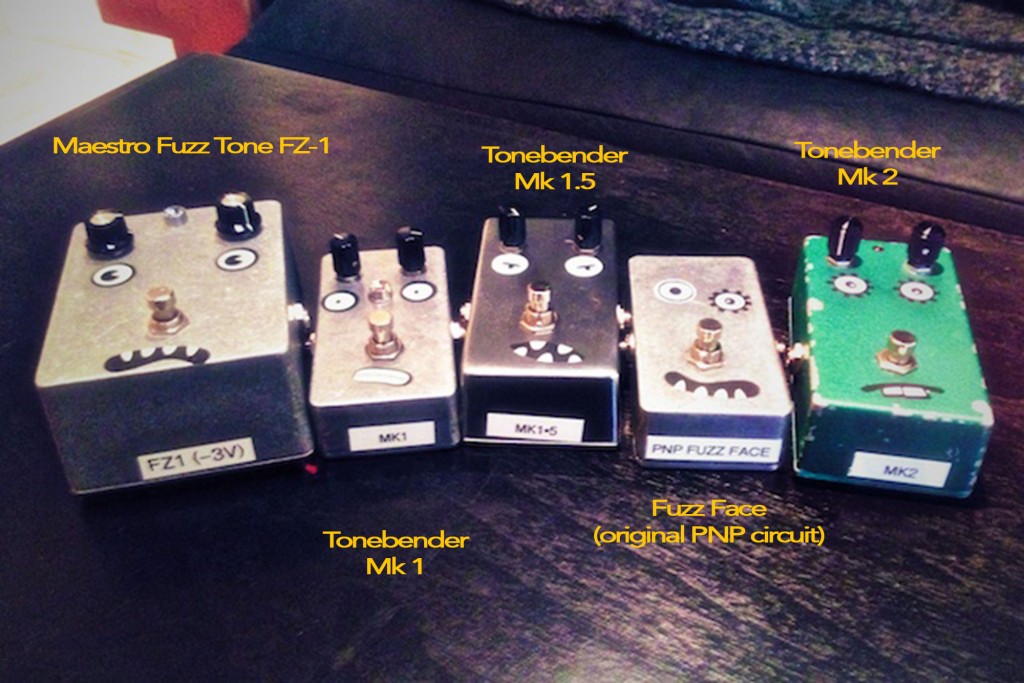
First, I made clones of all the early commercial fuzzes. I’ll be posting a compare-and-contrast video in the coming days. (The audio forensics will be quite incriminating.) Here’s the lineup:

The usual suspects. (Incriminating audio/video evidence to be posted soon!)

I’ve also re-read the experts, and man, even my most trusted sources contradict each other right and left, especially when it comes to those darn Tone Benders. While I have absolutely no inside dope on what actually transpired, I think David from D*A*M Stompboxes offers the most convincing Tone Bender chronology, which you can read here.

Anyway, here’s my best guess about how the early fuzz years unfolded:

Categories
guitar Music

The Best Music Notation Software for Guitarists?

Since New Year resolutions expire at midnight, January 7th, I’m racing to realize my goal of finally becoming fluent with music notation software before the sands run out.

A new way to feign productivity in cafes!

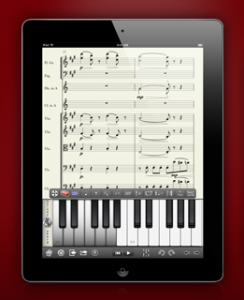
I’d like to share some initial impressions about Notion. This isn’t a full-fledged product review — just a few thoughts about a half-dozen features I dig. (Most also apply to Notion’s sister app, Progression, which compiles all of Notion’s fretted-instrument tools, but omits the orchestral stuff. If you only plan to notate for guitar, the lower-priced Progression is probably all you need.)

1. Appropriate complexity. Two programs, Sibelius and Finale, dominate the music notation field. Both are powerful, deep programs. Most notation pros use them because they’re packed with features essential to “music engraving” (the archaic and pretentious term for the process of preparing music for publication).