Categories
Bass DIY Effects guitar

How to Install Onboard Effects

UPDATE: I’ve added a page listing all the “How To” posts on this site. Just click the cleverly titled How-To Posts Are Here! box at upper-right of each page.
There’s got to be a better way!

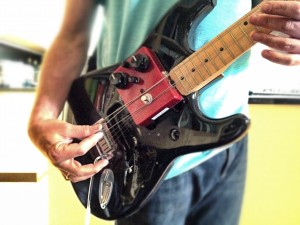
Several readers asked for more specific tech advice on how to wire up battery-powered effects inside a guitar or bass, so I created a step-by-step tutorial, which you can download here.

Some historical background: Since the ’60s, many guitar companies have toyed with the notion of installing battery-operated effects inside guitars.

And “toyed” is probably the perfect verb for it. Onboard effects have earned a reputation as cheesy, low-budget products. In many cases this reputation is justified. (And sometimes it’s not — the Electra guitars of the ’80s were never particularly popular, but their simple onboard distortion circuit has generated hundreds of “boutique” clones, not to mention our own Bad-Ass Distortion project).

And why would you want to put an effect inside a guitar or bass? You can use a stompbox with any electric instrument, but an onboard effect is married to one axe till solder-do-they-part.

I have an ironclad rebuttal to such concerns: 

Categories
Effects Recording

A History of Reverb

Hi there. We changed musical history!

Tonefiend reader Scott S. hipped me to a fabulous little article that just appeared in the online edition of The Atlantic: a history of artificial reverb that’s both technically savvy and fun to read. Author William Weir covers all the right gizmos: echo chambers, plates, springs, tape echo, custom convolution reverbs (which I wrote about here), and Duane Eddy’s 2,000-gallon water tank. Plus there’s lots of of fascinating historical speculation: Did Stonehenge draw some of its ritualistic power from its unique acoustic properties? Did the long reverb times of medieval cathedrals hasten the birth of polyphony?

Quick! Can you name the first hit to feature fake reverb? You will after you read this fine piece!

Categories
DIY Effects guitar Pickups

Hello Kitty Strat: Not for Pussies!

Would this be anything less than awesome? I think not.

As I gloated last week, Jane Wiedlin gave me her Hello Kitty Stratocaster  — the most bitchin’ $99 guitar ever conceived! I finally had a chance to destroy/customize it yesterday, in what will no doubt be the first of many desecrations/enhancements.

I’d ordered one of those Synyster Gates Duncan Invaders with the pretty white pole pieces for the guitar, but just couldn’t wait to experiment, so I browsed through the ol’ pickup collection, and found a nice Duncan Phat Cat I’d used in a Les Paul experiment some months ago.

I don’t generally recommend choosing pickups because of their names, but come on! Kitty + Cat? How could I resist?

Turns out it was a lucky choice. I hadn’t planned to install a pickup that was actually lower in output than the stock humbucker, but it lets me get nicer clean sounds, and coughs up more than enough crunch when goosed with distortion. Speaking of which: the other custom feature is a built-in-distortion circuit activated via push-pull pot (I took lots of pics of the process for a DIY built-in-effects tutorial I’ll be posting very soon.)

View the carnage in this little video. Thanks, Jane Weidlin! Sorry, Stevie Nicks!

Categories
Acoustic Amps Effects Gigs

Amped-Up Acoustic Guitars

What could possibly go wrong?

There are two ways to approach amplifying an acoustic guitar: trying to duplicate the natural sound, only louder, and NOT trying to sound naturalistic at all. This post is about the second approach.

I love playing acoustic through an electric guitar amp (as opposed to a dedicated acoustic amp). True, the tubes and speakers amputate all high frequencies. But if you think of the instrument not as an acoustic guitar, but an idiosyncratic electric variant, it opens up amazing possibilities.

More often than not, I prefer to play acoustic gigs that way. I did a fun benefit show last year playing rock and R&B covers with a band consisting of Flea, Tracy Chapman, and drummer Dawn Richardson. Tracy had a beautiful, ultra-hi-fi acoustic tone, and the ratty, rumbling sound of my acoustic through a small combo was — well, let’s just say it was a very strong contrast.

Admittedly, relatively few  players exploit this technique. One notable exception is Daniel Lanois. He’s best known as a producer (U2, Peter Gabriel, Bob Dylan, etc.), but he’s also a phenomenal player who does amazing things with an acoustic guitar, an inexpensive magnetic soundhole mic, and small vintage Fender amps. I’ve watched him play up-close a few times, and he’s incredibly adept at conjuring a variety of tones and controlled feedback from this setup.

It’s definitely a white-knuckle playing experience. You have to listen carefully and nix unwanted feedback with quick damping technique. But it can be so expressive!

I’ll talk more about the technique in a bit. But first, check out this short video demo featuring distortion and other stompbox effects, controlled (and not-so-controlled) feedback, and a lot of awkward twisting and turning as I grapple with the tone: 

Categories
Bass Effects guitar

Onboard Distortion Without a Battery?

Low-Voltage Chunk from Diode Distortion!

Did you know you can add a simple circuit to your guitar or bass that produces onboard distortion — without using a battery?

The idea is pretty simple — you attach a pair of diodes to the guitar’s output via a pot or switch. With the diodes connected to ground, you get a fairly nice distortion sound. With the connection to ground broken, you get your regular tones. It’s the same method used to create distortion in a several ’70s distortion pedals, notable the MXR Distortion+ and the DOD 250.

You can purchase the necessary components in a sleek black housing under the name Black Ice for $27.50, or you can do a DIY version for about $2 in parts. I’ll explain how after this brief video demo:

Categories
Bass Digital Effects guitar Pickups Uncategorized

NAMM-O-Rama!

Amazing things at NAMM, #1,287: Bootsy Collins's right hand.

Just got back from a couple of days at the 2012 NAMM convention in Anaheim. And I’m glad to be writing about it rather than talking about it, because I have no voice left from screaming over several days of unbelievably loud ambient noise. How ironic that we evaluate the musical instrument industry’s new creations in one of the earth’s most acoustically abysmal environments.

Still, I had a blast. I saw tons of cool new things that will appear on this blog as they become available. I got to see lots of old pals and hobnob with great musicians, brilliant builders, visionary designers, and amusing crackpots. Fun was had.

I didn’t prepare anything like a comprehensive report. For an overview of all the product announcements and press releases, just go here. This is just a short video documenting the misbehavior of my friends and colleagues some cool stuff I saw.

Categories
DIY Effects guitar Tonefiend DIY Club

Build the World’s Wickedest Overdrive
(for less than $30)

"Who are you callin' ugly?"

UPDATE: My thanks to reader William Badjek, who found in error on page 31 of the v01 project file, which would have prevented the tone control from working properly. (The schematics, however, were correct in v01.) If you’ve encountered that issue, please revisit that page of the v02 project file, now available at the link below. My apologies to anyone who got stuck on this!

Hey, DIY victims fans!

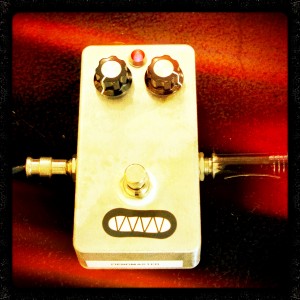
Here’s the project file for Tonefiend DIY Club Project #4: the Fiendmaster, a fab-sounding update of the Dallas Rangemaster, the circuit that put the punch in so much classic British rock. If your record collection includes a lot of albums from around 1970 featuring skinny guys with long hair and flared trousers, you need one of these!

It sounds incredible. It’s a relatively easy build. And unlike strict clones, this version runs on a regular modern power supply like the rest of your pedals. It also includes a knob that fades between the original’s bright, snappy Brit blues sound, and the humungous sludgetone that spawned Sabbath. You can round up all the parts from the usual suppliers for less the 30 bucks, or just order a pre-assembled kit from Mammoth Electronics.

View a brief demo video of the final product here. Learn more about the circuit’s significance here. And fill your cranium with everything you need to know about germanium here. Happy soldering!

Categories
Amps Effects Recording

ReAmps: Cooler and CHEAPER Than Ever!

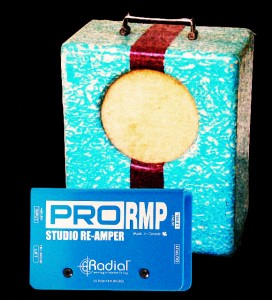
The latest version of the ReAmp, the Radial PRO RMP Studio Re-Amper, lists for a recession-friendly US$115, which means you can probably snag one for under a C-note.

Teisco amp not included. Pity.

The device, created by engineer John Cuniberti (best known as Joe Satriani’s studio wiz), is a recording direct box in reverse: It lets you play recorded tracks through guitar stompboxes and amps by stepping the signal down from line level to instrument level. Applications include:

    • recording guitars direct or through amp simulators, and then choosing the perfect analog amp sound after other crucial tracks are in place
    • running non-guitar tracks through guitar effects and amps
    • making objective comparisons between amps, effects, and DIY project options by running identical signals through multiple pieces of gear.

If you’ve been following this blog, you’ve heard a lot of ReAmp. I recommend them to all studio provocateurs — especially now that the price is right!

Categories
DIY Effects Tonefiend DIY Club

Meet the Fiendmaster!
(A new Tonefiend DIY Club project)

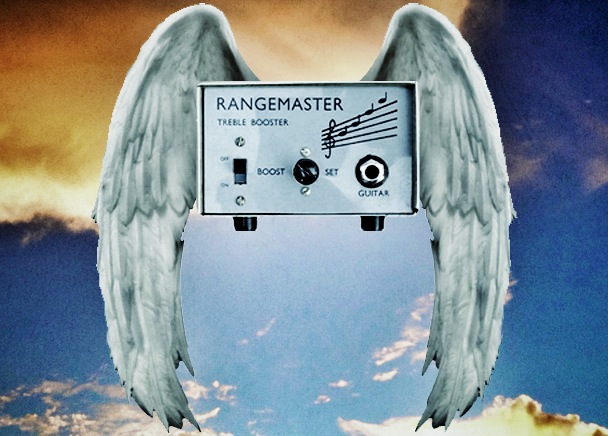
Technically speaking, original Dallas Rangemasters didn't have angel wings, though they probably should have. However, the musically illiterate treble staff IS historically accurate.

The next Tonefiend DIY Club project is a cool update of the Dallas Rangemaster treble booster — for my money, the wickedest overdrive ever. I’ll post all the project files within the next week, but I’m introducing the project here so you can listen to the pedal, decide if you’re interested, and if so, start rounding up the parts.

Like our first project, this is a single-transistor distortion device. But this one gets it glorious Brit-rock tones from a funky old germanium transistor.

At the end of this post is a parts list, plus names of dealers who sell reliable germanium transistors. And once again, Mammoth Electronics is offering a pre-assembled kit with everything needed to build a ready-for-gigging Fiendmaster. [FYI, neither I nor Seymour Duncan have any financial stake in this item. I’ve simply asked Mammoth to put together a kit for your DIY shopping convenience.] You can order the kit here. If you don’t see it on the page yet, check back — it’ll be up soon.

Check out this brief video to hear the wicked beast in action:

Categories
DIY Effects

The Germanium Mystique

Germanium is actually a boring, silvery-gray color. Aren't you glad I added cheesy digital effects?

“Germanium” is a magical word among guitar gearheads, right up there with “pre-CBS,” “true bypass,” “matched tubes,” “point-to-point wiring,” and “scatter-wound.” And like those other phrases, it owes its cachet to a mix of fact and fancy.

Germanium was used extensively in electronic component production the 1950s and ’60s, but was abandoned in favor of silicon components, which boasted superior performance, consistency, and value. Today no one cares about rare and finicky germanium components except certain audio geeks — especially the ones who play guitars.

In the stompbox realm, you’re liable to encounter two types of germanium components: germanium diodes, which lend distortion pedals a softer, smoother tone relative to silicon diodes or LEDs, and germanium transistors, which are typically used in clones of ’60s drive and fuzz pedals. Germanium components are usually available only from specialized distributors, who inevitably sell them for many times the cost of their silicon equivalents.

Compared to silicon transistors, germaniums are . . . different.