Categories
Digital DIY Effects guitar Music

Pinn Panelle’s Derek Song:
12 Million Views and Counting

Pinn Panelle's Derek Song.
Pinn Panelle’s Derek Song.

A highlight of this year’s NAMM show was hanging out with Derek Song, a 23-year-old digital guitarist whose band, Pinn Panelle, has racked up an astonishing 12.5 million YouTube views with their realtime cover versions of electronic music hits, especially their version of Skrillex’s “Scary Monster and Nice Sprites”

Song, a Berklee College of Music grad, is DIY personified. He’s developed his own innovate guitar controllers and written custom software to milk them to the max. Those hit videos were shot on a shoestring. A Kickstarter campaign financed the Pinn Panelle’s last tour, where they brought live-band energy to DJ-driven EDM concerts and festivals. And the group has created two full albums without help from a label, including the just-released Ghosts and Liars. (However, days before the album’s release, the group’s bassist and keyboardist left the band. Now Derek and drummer Justin Conway are plotting their next moves, though Derek says Pinn Panelle will continue.)

Derek, a blisteringly smart guy with a friendly, unpretentious attitude, was kind enough to let me drag him into a relatively quiet corner of the NAMM show, shove a recorder in his face, and bark questions at him.

But first, that video again:

You’re a music-school dude.

I grew up in Glenview, Illinois, but moved Boston to go to Berklee because I knew I wanted to pursue music and new ideas. When I got there, I figured out that I would waste the least amount of money by pursuing electronic music production rather than performance. I’m not docking performance — some kids get so good at it! But I’ve always been more of a self-learner. I’m a terrible student, especially when I’m given exercises. I just want to play the ideas I have in my mind, and as long as I have the facility to do that, I don’t care about additional technique. But the Electronic Production and Design program at Berkeley had so many cool avenues for exploration, and I knew that technology was the future.

Did you always tinker with tech?

Well, one thing that influenced me as a composer and technologist was the fact that my dad used to fix TVs. Later on, when I started developing my own controllers, I’d work on them with him, and that’s really inspired me musically. When I first started playing in bands, my dad and I invested in a Boss GT-6 multi-effect pedal. I never used stompboxes because I could never afford them! But I read the Boss manual till I knew that thing like the back of my hand, and I still use that GT-6. Basically, I hacked it. I discovered some functions under the surface that open up a lot of opportunities for controlling specific effect parameters.

For example?
Categories
DIY Effects

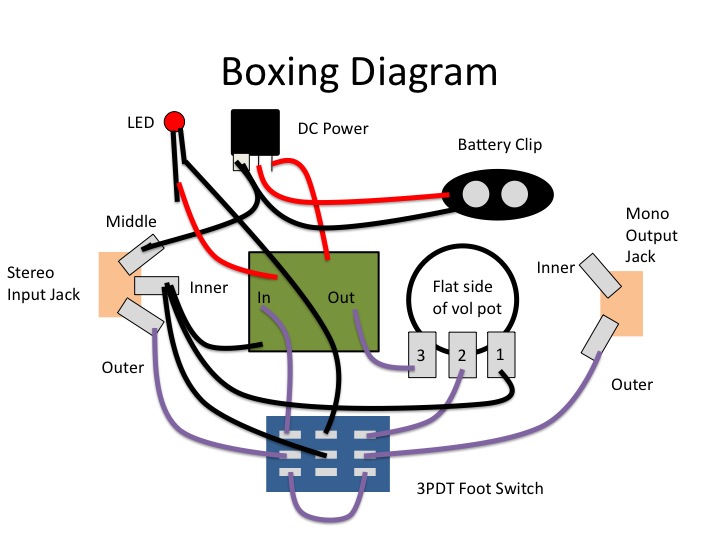
A Generic Stompbox Wiring Diagram

I had to share this image sent by reader Gerald Good. (Thanks, man!)

BoxingDiagram
Gerald Good made this pretty picture. (Click to embiggen.)

It’s a handy stompbox wiring diagram that’ll work with all the stompbox project on this site, and most other simple circuits. It’s not the only way to do it — there are other good options, especially for wiring that diabolical 3PDT footswitch. (You’ll find some of them here.)

But I like the configuration Gerald chose to illustrate, because it’s the most idiot-proof. And everything I touch need serious idiot-proofing. I’m embarrassed to admit how many pedals I had to build before I had these basic connections committed to memory. The footswitch wiring alone nearly used to bring me to tears. I kept an ugly, hand-drawn diagram glued to a plank alongside my breadboard for ages.

This is nicer. Print it out and post it at your workbench! :beer:

Categories
Amps Effects guitar Music

NAMM 2013: The Analog Edition

NAMM

UPDATE: My apologies if this page failed to load properly before. After a much screaming and crying some careful troubleshooting, it seems to be working correctly now.

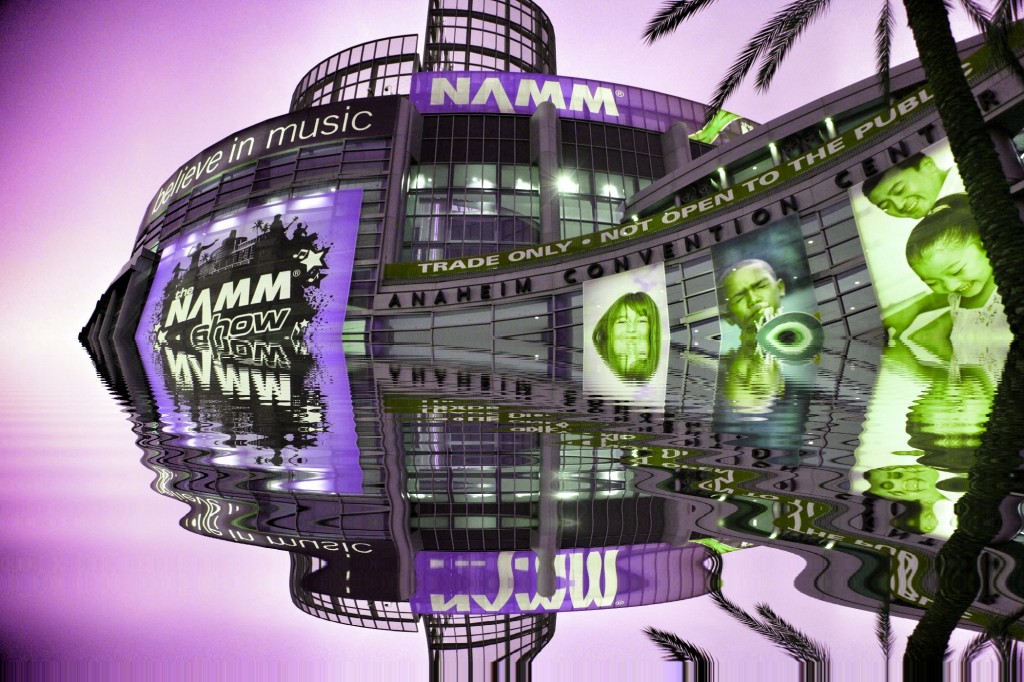
I put together a little slideshow of some of the interesting things I saw last week at the 2013 NAMM show in Anaheim.

I covered some of the coolest new digital gear in this post. This time, the focus is analog guitars, amps, and effects. Plus: an ultra-rare sighting of a true California celebrity!

Categories
Acoustic Amps Bass Digital DIY Effects guitar Recording

NAMM I Am

It's that time again, folks.
It’s that time again, folks.

“It’s the most won-der-ful time of the year…”

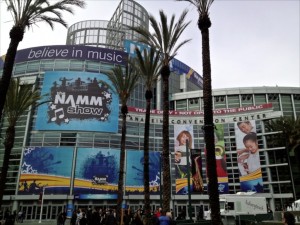
Oh wait — that was last month. Now it’s January. NAMM time!

I’ll be there for the duration, partly to hang out with my Pure Guitar pals, and partly to meet with Fishman about the upcoming TriplePlay release. But mostly to gawp at the weird shit admire the musical instrument industry’s latest offerings. :oogle:

I’ll be posting my findings here, and also doing a little write-up for my friends at Create Digital Music, one of my fave musician sites.

Actually, I have this perverse fantasy of spending an entire show in Hall E: the Anaheim Convention Center’s low-rent basement/dungeon, a dark, inhospitable region where Fender and Gibson fear to tread. That’s where the industry leaders of tomorrow rub elbows with mad scientists and perennial laughingstocks (AKA “my peeps”).

Any of you guys going? And if not, anything special you’re curious about?

Categories
Effects guitar

Ring Modulation: The Effect from HELL!

effect_from_hell
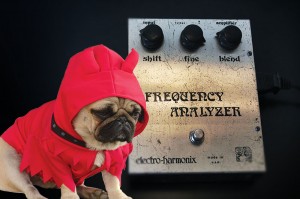
Only very bad dogs like ring modulation!

No disrespect to Chuck Berry, but I seriously doubt Johnny B. Goode played guitar just like a-ringin’ a bell unless he was using a ring modulator. That’s the only effect that can give you the complex, clangorous harmonics of a bell or a cymbal. Or make you sound like a ravenous horde of mutant robot ants.

Theoretically, Johnny could have used one. By 1958, when Berry documented the guitarist in song, the effect was already being exploited extensively by avant-garde classical composers, notably the late Karlheinz Stockhausen, who used it to terrifying effect in his Gesang Der Jünglinge [1956].

This post drips with perverse ring-mod love, including a demo of a rare vintage Electro-Harmonix Frequency Analyzer, and another featuring Roswell Ringer, a wicked ring mod plug-in.

Categories
DIY Effects guitar

New Frontiers in Fuzz:
The Devi Ever Interview

Some boutique stompbox builders pursue endless refinements of classic pedal designs, developing ever-more-suave iterations of the Tube Screamer and Ross Compressor.

And some just want to blow shit up.

Guess which category Portland, Oregon’s Devi Ever falls into? Hint: Her extensive line of guitar and bass pedals includes such anarchy boxes as the Little Shit, the Ruiner, the Heroin Lifestyle, and the Truly Beautiful Disaster.

Here’s what I’m talking about: Check out Devi’s video demo for her Shoe Gazer fuzz…

…or this one of Wilco’s mighty Nels Cline giving Devi’s Soda Meiser a workout:

Categories
Effects guitar

Museum of Lost Effects:
The Systech Harmonic Energizer

IMG_5847
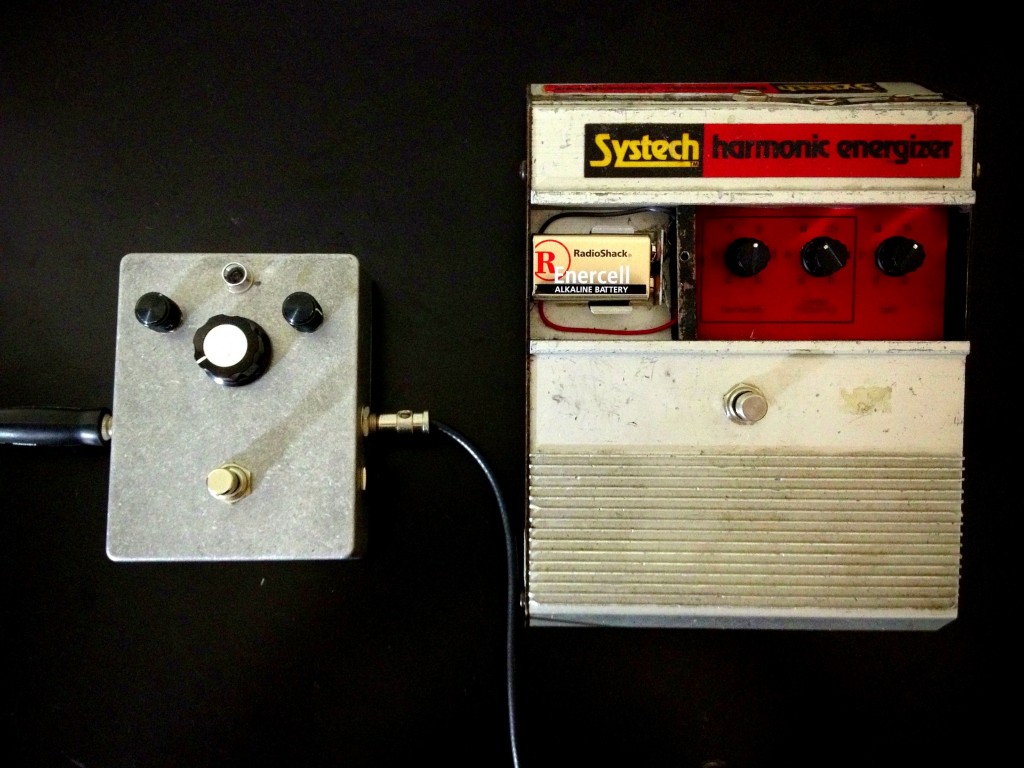
A homely clone cowers in the shadow of a ramshackle original.

Okay, here’s an old weirdo I’ve been meaning to write about for ages. The Systech Harmonic Energizer is an ultra-rare filter/distortion effect from the ’70s that takes the fuzz-wah formula in some interesting directions. Its signature is edgy, ultra-resonant filter sounds. You’re most likely to have heard it generating Frank Zappa’s nasal midrange squawk, but it does lots of other abrasive tricks too. I used this one on Tom Waits’s “All Stripped Down,” and on “Jets” by Action Plus.

The S.H.E. doesn’t do pretty. Most of its sounds are so strongly flavored, they’re hard to use as a primary tones. But it’s great for things like clanky percussive accents, or walloping low-frequency assaults.

But let’s talk later. First the video:

Categories
Amps Digital Effects Gigs guitar Recording

The Future of Wishful Thinking

Coming soon to a star system near you!

Last week I dared all incautious chumps you to prognosticate about our guitaristic future. I knew the resulting comments thread would be fun, but I didn’t expect it to be that fun!

And also oddly uplifting. Future predictions just seem to skew in an optimistic direction, perhaps because you have to start by assuming that we have a future. So for every funny post suggesting that the most stupid and obnoxious aspects of today’s musical culture will get even more stupid and obnoxious, there’s a complementary positive perspective. In the future, these upbeat dreamers argue, we wil be better…stronger…faster. Of course we’ll have the technology! Better still, we’ll develop common sense.

Granted, some of the predictions are destined to be as disappointing as a 1948 issue of Popular Mechanics, with its broken promises of personal helicopters and monkey butlers domestic robots. But would it be preferable never to have dreamt of having you own jetpack? I think not!

Here’s a fine, optimistic example from Thecoslar, writing about “Lego” Pedals and Amps:

Standardized wiring “harnesses” and interchangeable components will allow companies to produce amp cabinets and pedal cases that consumers will purchase, in addition to compartmentalized circuits. The consumers will “design” their own pedals and amps by mixing and matching that various parts. Combine an optical compressor and a germanium boost. An octave up and a chorus. And that’s just pedals. Imagine what could be done by mixing and matching tone stacks, reverb and delay, or pre amp circuits in amps? Built in analog effects your amp, just by plugging in the components. Everyone and anyone will be able to piece together their own custom circuit, no solder, no muss, no fuss.

Yeah, that would be frickin’ awesome. Of course, we happen to live in a world with at least four common types of USB connectors, no standardized guitar wiring harnesses, and where millions of consumers sigh as they fork over yet more cash for the latest proprietary i-connector. But we can dream can’t we?

Hell yeah, we can! I hope you’re enjoying the conversation as much as I am.

(The fun’s not over, BTW — keep posting your predictions.)

Categories
Bass Effects Gigs guitar Recording

The Effect-Order Follies

This effect order ALWAYS works great!

Weird, isn’t it? You can explain the rules of thumb for ordering your guitar effects in about ten seconds, but you can still get stumped after years of experimentation.

You probably know the conventional effect-order advice, which goes something like this (in order of appearance):

  1. Distortion effects (fuzzes, distortion, overdrives)
  2. Modulation effects (phasers, flangers, vibratos, tremolos)
  3. Delay effects (digital or analog delays)
  4. Reverbs (analog or digital)

And that’s good advice, as far is it goes. But you don’t have to dig very deep before encountering alternatives, exceptions, and arrangements that make no sense whatsoever, but still sound great.

How, for example, do you deal with the following?

Categories
Acoustic Amps Bass Digital DIY Effects Gigs guitar Music Pickups Recording Technique

Who Dares Predict Our Fretboard Future?

“We are all interested in the future, for that is where you and I are going to spend the rest of our lives.” — Criswell, Plan 9 from Outer Space

UPDATE: Wow, I can’t believe all the cool stuff folks have been posting to comments. I find myself feeling quite inspired about the future of instrument — when I’m not laughing so hard I spit coffee all over my laptop. Thanks for all great ideas. Keep ’em coming! 🙂 :thumbup:

Prophecy is for suckers. Who’s stupid enough to go on record with bold prognostications about the future of music and music-making, given the near-certainty that the words will reappear someday to bite you on the ass?

Well, me. And, I hope, you.

So I invite my fellow foolhardy loudmouths to join me in sharing their half-assed guesses wise and well-informed predictions about our brave new fretboard future.

The author of the most compelling prediction wins one of my hand-built stompboxes. So does the author of the one that makes me laugh hardest.

Post your predictions to comments. I’ll go first. 🙂