Categories
Live Looping

Loopocalypse Day 10 (of 17): “Pandemonic Waltz”

I always feel a bit guilty playing this one, because it uses the one looping technique I’ve always tried to avoid: simply slathering one part on top of another till you have a damn racket, and then lurching to a halt. But hey.

The guitar is a Lowden 15E, a cool yet bargain-priced 12-string. Not that it sounds anything like a 12-string here. Here’s a more naturalistic demo.

Here’s an explanation of my live looping rig.

Categories
Acoustic

“Surf’s Up” for Guitar Quartet

I’ve been nursing the idea of arranging this most exquisite of Brian Wilson songs for multiple guitars for a long time. But two recent developments spurred me to finally do it.

Spirit of ’67
The first was my plan to record my first-ever solo album — a collection of heavily reinterpreted songs from 1967, tentatively titled Sixty-Seven Ghosts, marking the 50th anniversary of that memorable musical year. I was eight years old then, too young to play the music, but old enough that the music’s “ghosts crowded the young child’s fragile eggshell mind.” (I quote Jim Morrison, one of many crucial artists who debuted in that year.)

When I started playing music seriously a few years later, I had a sense that I’d missed the party, and that the music of ’67 was simply more meaningful than my early-’70s middle-school soundtrack. (I was wrong, of course. Subsequent decades have proven that if anything, the first years of the new decade produced at least as much great stuff. Yet 1967 had a mythic aura for me, and much of that year’s music has pursued me for a half-century.)

I wasn’t hip to “Surf’s Up” till those middle-school years, when the Beach Boys belatedly included the track on their 1971 album of the same title. The FM radio hits from that disc were “Long Promised Road” and “Feel Flows” — “Surf’s Up” was simply the record’s quirky coda. A few years later I discovered “Surf’s Up” lyricist Van Dyke Parks’ solo albums, with their similarly surreal lyrics and left-field song structures.

The Smile Mythos
But I had no inkling of the song’s true provenance till some 20 years later, when pop fans began to grow obsessed with Pet Sounds and its “follow-up that never was,” Smile. Only then did I learn that “Surf’s Up” was originally from ’67, the intended centerpiece for that literally legendary album. By then we all knew the Brain Wilson crackup story, with its echoes of Greek tragedy. He’d held the music of the gods in the palm of his hand — so legend had it — only to have it ripped away by demons of self-doubt. Madness and self-destruction ensued.

My personal Smile mythology was heavily influenced by Lewis Shiner’s 1993 novel Glimpses (which I wrote about here). In it, a modern music fan realizes he can go back in time to the moments when great musical masterpieces were lost. (Sounds silly, but trust me — it’s not.) The highlight for me was the Wilson sequence, where our protagonist meets Brian at his peak moment of genius and fragility, right before everything went off the rails. The scene where Brian played the brilliant new songs for his hater bandmates haunted me:

Categories
Music

Suite ’66: Free EP by Goldenberg & Gore!

suite-66-cover

A free EP from we to thee!

Guitar genius Mark Goldenberg and I recently recorded Suite ’66, a set of improvised duets on four tunes from 1966, in honor of the 50th Anniversary of one of the greatest years in pop music.

We teased this “release” a few months ago with this rehearsal video. The EP features a more developed version of the same tune, plus three others.

Even if you’re not familiar with Mark’s name, you’ve probably heard his playing. Mark has been a leading LA sideman and session player for decades. He’s worked with Jackson Browne, Linda Ronstadt, Bonnie Raiit, Waylon Jennings, Chris Isaak, Willie Nelson, Hugh Laurie, Natalie Imbruglia, and most impressively, William Shatner.

Less well known is Mark’s beautiful solo style, which resides at the intersection of rock, classical, and jazz. I was instantly smitten when I first heard Mark play in person at one of Teja Gerken‘s solo guitar events a couple of years ago. Mark’s musicianship flabbergasted me, plus we bonded over the fact that we shared the same teacher, the late Ted Greene. (Though I studied with Ted when I was a teen, so much of his wisdom went over my head. Mark, however, worked with Ted after becoming one of LA’s most respected players, so he absorbed Ted’s insights on a far deeper level.)

Listening to Mark play is sheer musical ecstasy, whether or not I happen to be picking along with him. He’s been one of my greatest musical inspirations of the last few years. (Translation: I’ve ripped him off more times than I can count.)

Listen and download via SoundCloud:

Tech notes: We recorded and mixed this in my basement studio. I’m on the left channel throughout, and Mark’s on the right. (There are no overdubs.) My instruments are a Gretsch Spectra Sonic electric baritone guitar (kindly loaned by Xander Soren), a Veillette Avant Gryphon octave 12-string, and a Taylor 150e 12-string. Mark plays two magnificent guitars: his Kenny Hill classical and a Collings 001MH steel-string.

IMPORTANT: This non-commercial recording is shared as a gift between us and our friends. It may not be reused for any purposes, especially commercial ones. We’re simply inviting you to listen in on our jam session.
Categories
Acoustic Effects

Nice, Pretty Acoustic Guitar

Nicely mutated and pretty f’ed up, that is.

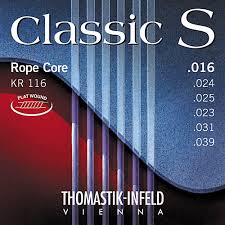
Ordinarily, these Thomastik-Infeld Classic S strings sound more like nylon strings than steel ones.

But their cores ARE steel — which means you can play through a magnetic pickup and mutilate the tone with amps and effects. I’m playing through effects designed for Apple’s MainStage software. (Some of them are in Logic Pro’s included sound library.)

Categories
Acoustic Recording

Tribute to Leonard Cohen

I’m working on this version of Leonard Cohen’s “Suzanne” as part of album in progress: a collection of radically reinterpreted songs from 1967. I haven’t nailed down the final song list. (If you review the list of amazing songs from that year, you’ll understand why. And that link only cites the songs that charted, and doesn’t include classics like the first Velvet Underground album, some great Jobim tunes, random stuff like “Some Velvet Morning,” and lots more.) By hook or by crook, I hope to have the project done before year’s end in time to cynically capitalize on pay tribute to the 50th anniversary of that musically monumental year.

Some interesting tech notes: I’ve you followed this blog, you’re no doubt sick to death of my evangelizing for Thomastik-Infeld rope-core strings. But this is the first time I’ve put them on my Lowden S-25, my main acoustic guitar for nearly 20 years. Its default tone is super loud and bright. (Larry Fishman once referred to it as “a fucking cannon.”) But these days my ears are drawn to darker, softer tones. The Classic S transformed this laser-bright acoustic into an expressive crooner.

Meanwhile, I’ve become a bit alienated from traditional nylon strings over the years, but these, with their hybrid nylon/steel sound, hit just the right sweet spot for me. They’re extremely quiet (though they don’t sound like it when close-miked like this), but they have vast dynamic range and a smooth, sexy feel.

classic_s

I’d previously written that this set is the same as the (cheaper in the U.S.) John Pearse Folk Series Fingerpicking strings, but I was mistaken. The story I hear was that the late Mr. Pearse, working with Thomastik-Infeld, devised this set for Brazilian guitar monster Bola Sete. But on the current Pearse set, the bass strings have nylon cores, while the Classic S bass strings have steel cores. That means you can use the TI set with a magnetic soundhole pickup, allowing you to plug into amps and effects. (I’ll be posting an example soon as a companion piece to this video.) But both sets sound lovely, and both allow you to bend strings as you would on an electric guitar — something you definitely can’t accomplish on conventional classical strings.

I don’t have a ton to add about the sublime Leonard Cohen. But “Suzanne” has always exerted a deep emotional spell on me — even, as here, minus the lyrics.

Categories
Music

“Eleanor Rigby” Rehearsal

Lucky me: I just started rehearsing for a duo project with one of my guitar heroes, the brilliant Mark Goldenberg. Here’s a run-through of “Eleanor Rigby,” one of the tunes we’re working on. It’s pretty rough still, and the recording quality ain’t great. But I love Mark’s playing so much here that I couldn’t resist sharing.

I’ve only known Mark a year or two, but we hit it off as soon as we met at one of Teja Gerkin’s solo guitar events. Mark played ravishing solo version of so many of my favorites: “God Only Knows,” “Shenandoah,” “Wichita Lineman,” “Mood Indigo,” and more. I love his ultra-dynamic touch and beautiful Bill Evans-style harmonies. Plus he’s just an cool guy.

And it turns out we both studied with the same teacher: the late Ted Greene. (I took lessons from Ted as a teen, with a few more sessions 20 years later. Mark studied with Ted long after he became a leading LA sideman and session player.) You can read more about Mark on his website. He’s recorded and toured with Jackson Browne, Bonnie Raitt, Linda Ronstadt, Eels, Natalie Imbruglia, Chris Isaak, Waylon Jennings, Willie Nelson, Peter Frampton and — hehehe — William Shatner. It’s a real thrill to collaborate with such an inspired player.

I’m playing a Gretsch TV Jones baritone on loan from my pal Xander Soren. Mark’s playing his magnificent mahogany Collings.

Categories
Uncategorized

Instagramarama!

Name That Gear!
Name That Gear!

I just started a Tonefiend Instagram feed, ’cause I know there’s not enough junk in your inbox. If you’re an Instagram user, feel free to follow. (Or just friend me on Facebook, where all the Instagram images also appear. I’m not picky—I’ll friend anyone, at least till they start posting links to $19 Prada handbag knockoffs.)

Often I don’t post here at tonefiend.com till I’ve cobbled together a relatively substantial item, which means the site can fester for weeks without an update. But for better or worse, I plan to post a steady stream of square cell phone pics compelling images and trivial pithy thoughts on Instagram/FB/Twitter.

On Instagram, I’m starting out with two weekly posts. Both are pretty silly, but each has inspired some surprisingly cool conversations. The first series is “Name That Gear,” which is simply a close-up shot of some music gizmo, but with some telling detail that reveals its identity. Not much too it, but it can be fun.

Page vs. Wagner: Who'd Win in a Fight?
Page vs. Wagner: Who’d Win in a Fight?

The other recurring item is “Who’d Win in a Fight?” These are deliberately absurdist:  The first post matched Jimmy “Hammer of the Gods” Page against Richard “Twilight of the Gods” Wagner. But amazingly, it inspired a long, fascinating, and drop-dead funny Facebook conversation. (Thanks for my wife for suggesting both ideas.)

Naturally, I’ll also be using those feeds to shamelessly flog my music and gear. I’m going to be showing the first five Joe Gore Pedals stompboxes at the LA Amp Show in Van Nuys, California on October 3rd and 4th—just a couple of weeks from now! The product announcements aren’t quite ready yet, but trust me—I bombarding you with them very soon. 🙂

Categories
guitar

Those $24 Acoustic Strings

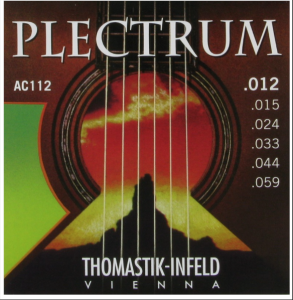
As if I weren’t already blowing enough money on arcane strings, I’ve got a new obsession: Thomastik-Infeld Plectrum series acoustic strings (which sell for $24 in the U.S.).

If you hang out here much, you’ve heard me bitch incessantly about acoustic strings. I hate the way most modern strings are all hyped treble zing and blaring volume, at the expense of deep, decisive fundamentals. With due respect to my vegetarian friends, too many strings are all sizzle and no steak.

Screenshot 2015-06-03 14.55.56

Yeah, bright strings can seem energizing in a cocaine-binge sort of way. But all that glassy presence gets fatiguing. Meanwhile, darker bass strings leave sonic space for the treble strings to shine. Even on my teensy-tiny Martin 0-17, these low strings sing in a warm baritone voice, not like some squeaky, poorly Auto-Tuned teen idol.

This pricy Austrian set features brass-coated steel 1st and 2nd strings, while the bass strings are bronze, but with both silk inlays and flexible steel cores. The flatwound 3rd, 4th, and 5th strings nix finger noise and minimize tone contrasts between wound and unwound strings. The polished roundwound 6th string adds a touch of focus to the lowest register, yet introduces no awkward contrasts on melodies played across multiple strings.

The set is low in both tension and volume relative to most U.S.-made strings. Even though the low E is a chunky .059, it has a soft, relaxed feel that makes me want to linger over notes, shaping them. The harmonic range is fantastic, the dynamic range even more so. They’re long-lasting too — this video was recorded three weeks and many playing hours after installing the set.

I’m hooked. Damn it.

(Hey, Mr. Tambourine Man — I don’t want you getting your nasty treble overtones all over my acoustic strings, no matter how frickin’ jingle-jangle the morning happens to be. Just back off, pendejo.)

Categories
Gigs

Solo Guitar Shows: L.A. Confidential & Furtive Frisco

LA_kitty

Psst…this week I embark on a grueling two-city solo guitar tour.

I’m playing my first ever L.A. solo show next Tuesday, the 12th, with one of my favorite players on the planet: the brilliant Mark Goldenberg. I’d previously know his pop work, but only became aware of his amazing solo playing last year when we both performed at one of Teja Gerken‘s guitar events. It was love at first note. We bonded on our affections for Ellington and ’60s L.A. pop, and the fact that we were both Ted Greene students. Plus, he’s just a cool guy.

The show’s at Genghis Cohen (740 N. Fairfax near Melrose). Danielle D’Andrea plays at 8:00 PM, Mark’s on at 9:30, and and I play a bit after 10:00. Maybe Mark and I will even work up a duet or two.

Admission is 10 bucks. The show is all-ages. If you’re in SoCal and free on the 12th, please join us!

My pal Bill Selby drew this amazing illustration. I'm going to hell for defacing it in Photoshop.
My pal Bill Selby drew this amazing illustration. I’m going to hell for defacing it in Photoshop.

And then, on Thursday, the 14th, I play my monthly solo show at my beloved local dive, San Francisco’s El Rio. This one’s special too: My guest star is another astonishing player, Giacomo Fiore. Giacomo is rightly renowned as one of of our greatest avant-garde classical guitarists, specializing in difficult modern repertoire. But this time, Giacomo’s performing an all-electric set. I have no idea what to expect, though I’m certain it will be astonishing. (In addition to releasing some remarkable recordings, Giacomo lectures at several noted Northern California universities and conservatories, and he gets excellent marks on Rate My Professor. Just sayin’.)

This show is free, but over-21 only. I play at 7PM sharp, and Giacomo starts around 8.

Remember, you heard it here first — off the record, on the QT, and strictly hush-hush.*

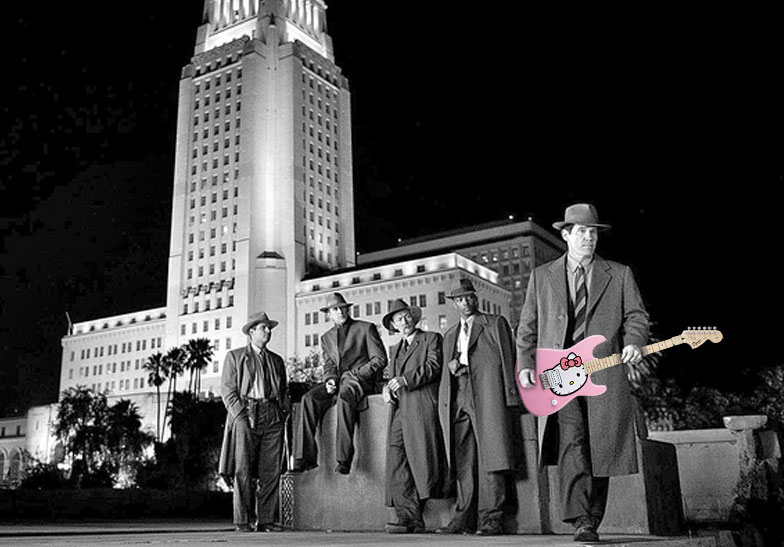
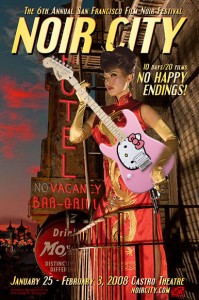
* This quote, the post title, and the noir pics are inspired by James Ellroy’s L.A. Quartet, probably the greatest series of hardcore crime novels ever. (And Ellroy’s newly released prequel, Perfidia, is every bit is awesome.)

Categories
Acoustic guitar Music

Magic Fairy Dust: The Veillette Avante Gryphon

I recently reviewed the gorgeous little Veillette Avante Gryphon for Premier Guitar and liked it so much that I bought one. This was my first opportunity to record it in my studio.

The Avante Gryphon is a relatively low-cost version of Woodstock luthier Joe Veillette’s Gryphon, an 18.5″-scale 12-string designed to be tuned a minor seventh (an octave minus two frets) above standard. But while 12-string guitars feature octave-tuned string pairs, here all six courses are unisons, as on a mandolin. In fact, the Avante Gryphon sounds a lot like a mandolin, but with a wider range and guitar-like tuning. And unlike the couple of janky plywood mandolins I own, it plays gloriously in tune. It’s made (very nicely!) by Korean CNC robots and sells for $1,400, as opposed to $4K+ for Veillette’s hand-built models.

For years I’ve been looking for the right upscale mandolin, but now I’m happy I found this instead. My original motivation was a high-tuned soprano instrument for multi-guitar arrangements, or for magic-fairy-dust studio overdubs. But the thing is so fun — and sounds so darn pretty — that I can’t stop playing it solo. This Bach prelude, for example:

I won’t recap my review here—check it out if you’re curious. Instead, let’s yak about Johann Sebastian!