Categories
guitar

The Ugly Guitar Design Contest:
Every Entry Was a “Winner!”

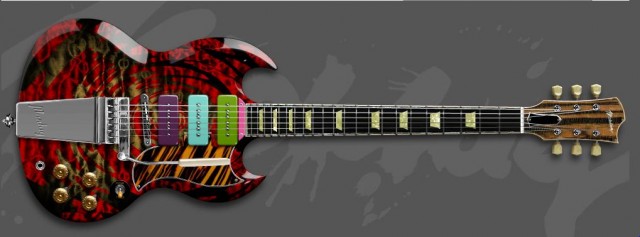
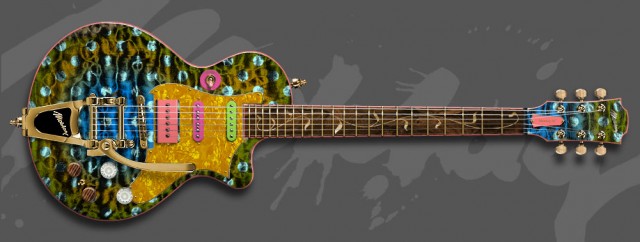
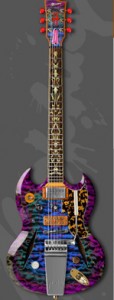
Simply beautiful! (Luthier: A. Meyer)

Oh, man — this is the most fun I’ve ever had on this blog (provided you define “fun” as “laughing hard enough to snort coffee through your nose”).

It sucked trying to pick a contest winner! I received over 150 guitar images, and I loved every single one of them (provided you define “love” as “the way you feel about pictures that make coffee come out of your nose”).

I made a little movie featuring several dozen of my favorites. If you’re drinking coffee, cover your nose.

It’s about four minutes long. You can fast-forward to 3:30 if you only want to see my top three picks. I think you’ll agree with me that they are remarkable in their ability to inspire strong emotional reaction, even after viewing so many truly memorable guitar designs. But frankly, I don’t recommend skipping ahead.

I pity the fool who misses out on any of the treasures herein. :pity:

Apologies to all whose guitars weren’t included. They were all amazing! And thanks to everyone who made this such a memorable event! Let’s do it again soon.
Categories
guitar

Ugly Guitar Building Contest Update!

Songs in the Key of Ug.

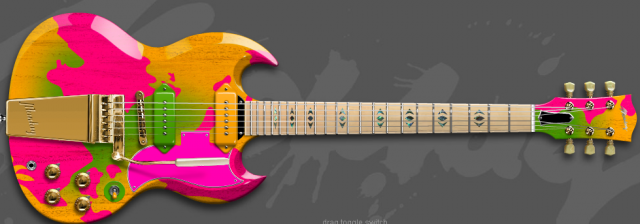
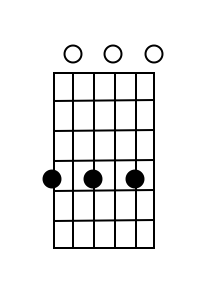
I had no frickin’ idea that the Bad Body Building Contest would strike such a chord with readers. Granted, it’s not the prettiest of chords. I think it might be the one shown here.

Seriously — in 24 hours, I received well over 100 creations. I am humbled. I am moved. I am nauseous.

I’m posting a few “favorites” as a slideshow. This is only the tip of the iceberg. (“Iceberg” may not be the best metaphor, though. Perhaps if you envision a huge floating mass made of bacon grease, My Little Pony figurines, and moldy iceberg lettuce….) There are many, many amazing ones posted here.

Luthier: AiXeLysD13

Luthier: AiXeLysD13

Luthier: Andrew Lund

Luthier: Andrew Lund

Luthier: Gavin

Luthier: Gavin

Luthier: Brian Sullivan

Luthier: Brian Sullivan

Luthier: Christopher Buyak

Luthier: Christopher Buyak

Luthier: Steve

Luthier: Steve

Luthier: Karen Campbell

Luthier: Karen Campbell

Luthier: wariomt

Luthier: wariomt

Luthier: Matt Fleming

Luthier: Matt Fleming

Luthier: Micah Houchin

Luthier: Micah Houchin

Luthier: Thee Mighty Mighty

Luthier: Thee Mighty Mighty

Luthier: Litos

Luthier: Litos

Luthier: AiXeLysD13 thumbnail
Luthier: Andrew Lund thumbnail
Luthier: Gavin thumbnail
Luthier: Brian Sullivan thumbnail
Luthier: Christopher Buyak thumbnail
Luthier: Steve thumbnail
Luthier: Karen Campbell thumbnail
Luthier: wariomt thumbnail
Luthier: Matt Fleming thumbnail
Luthier: Micah Houchin thumbnail
Luthier: Thee Mighty Mighty thumbnail
Luthier: Litos thumbnail

It’s not too late to waste otherwise productive time making ugly pictures join the fun! Here’s a list of online guitar visualization tools:

USA Custom Guitars
Fender Guitar Builder
Bailey Guitars
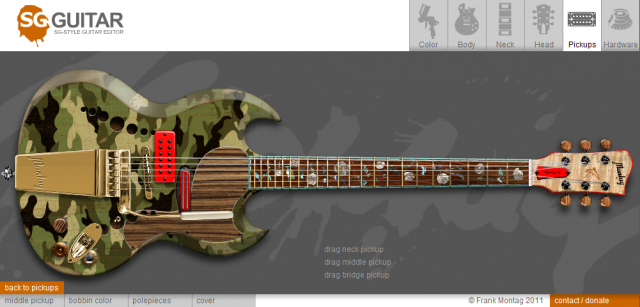
Frank Montag
Warmoth Body Builder

The contest runs till Sunday at midnight, Pacific Coast Time (GMT-8). Winners get announced on Monday. Post your creations to comments.

Categories
guitar

Mini-Contest:
Misadventures in Body Building

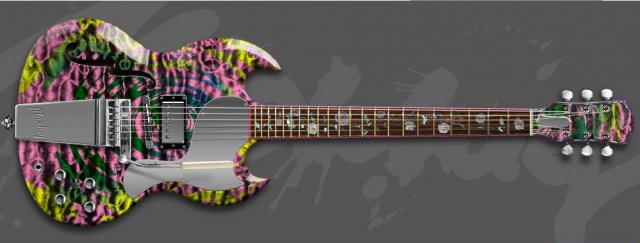
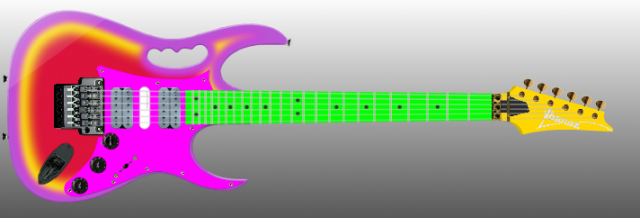
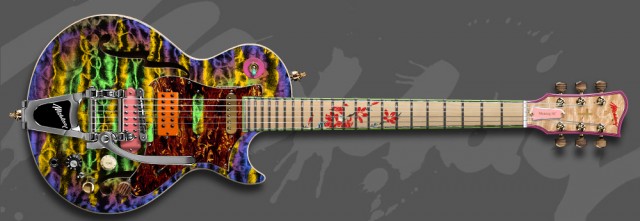
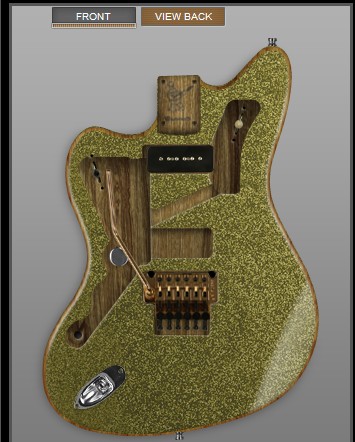
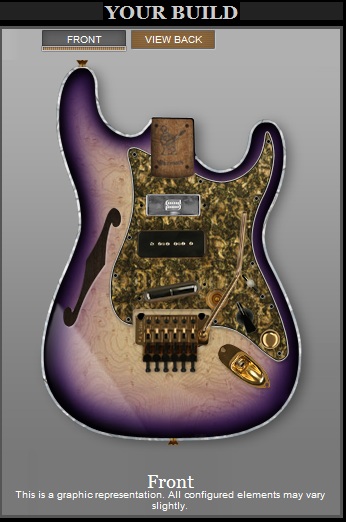
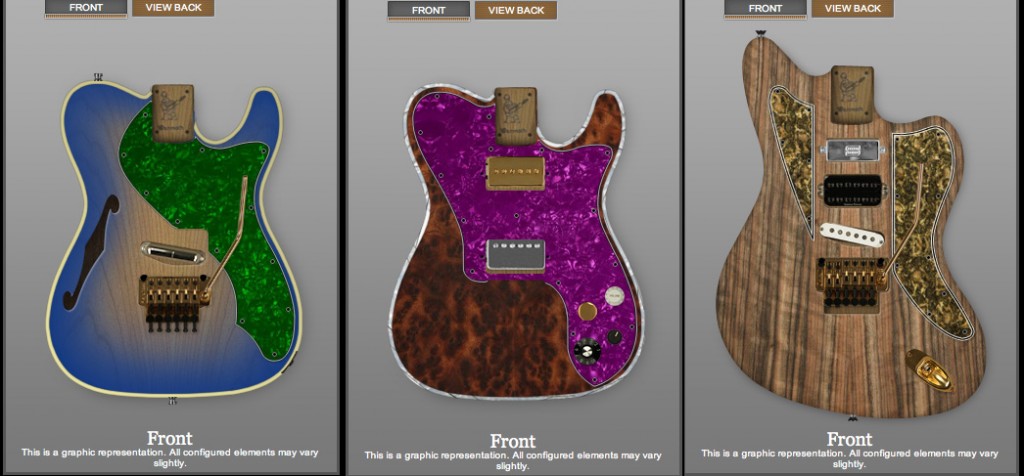
Hey, has anyone checked out the super-cool “Body Builder” section over at Warmoth Custom Guitar Parts? It’s an incredibly fun interface that lets you select a guitar body and add all the appointments. Your dreams become reality before you very eyes.

Which is all well and good — unless you have really bad dreams!

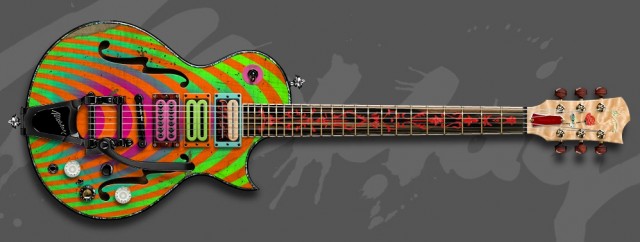
How come nobody makes ’em like THIS?

Which brings us to the latest Tonefiend contest. Mind you, it’s not much of a contest, but that’s cool — it’s not not much of a prize either.

The “rules”:

Categories
guitar Music Pickups

New Audio Player: Loud & Cloud!

Hi folks — I’m experimenting with a switch to the SoundCloud audio player. I’ve been eyeing it for a long time, but until now it’s been entirely Flash-based, which meant you couldn’t access SoundCloud clips from mobile devices. But they’ve just introduced HTML5 support, so I’m ready to make the plunge.

The clip is an accompaniment to the post below about using unspotted Seth Lover pickups with the expanded Phase 2 version of the Jimmy Page wiring scheme.

One of the coolest things about SoundCloud (beside the nifty waveform view) is the fact that it supports notes. Just click on the little icons beneath the waveform to read a description of which pickup settings are being heard at a particular point. Sweet.

Work for you? Computer? Phone? Tablet? Any comments or questions? (Thanks in advance for for your unpaid beta testing!)


Categories
DIY guitar Pickups

The Pagey Project: Postscript

Does this guitar LOOK like it has over a hundred settings?

Just a quick follow-up on the Pagey project, which first recreated the original Jimmy Page wiring scheme, and then explored an even  more extreme version using Seymour Duncan Triple Shot Mounting Rings.

Once I’d finished the project, I had to decide whether to keep the guitar heavily modded, or revert to something simpler. It probably won’t surprise you to hear I decided to keep the extreme Phase 2 wiring, with its added germanium overdrive.

But as cool as the Duncan ’59 model pickups sounded, I wanted to revisit the Duncan Seth Lover pickups I’d previously had in the guitar. They’re bright — twangy, even — compared to the ’59s, and I like the midrange honk they add by virtue of being unpotted. (I’ve written about the pros and cons of potting here.)

I’ve recorded an example of how the guitar sounds with the Seth Lovers. (You can’t make exact comparisons with the previous Pagey videos, since I used an amp for those, while the new examples were recorded through an amp simulator, though the “Seth” character still shines through.) I’ve included the clip in the post after/above this one, because it’s my first audio example using SoundCloud, and I wanted to say a few words about that.

"There's GOLD in that thar pickup!"

And call me shallow, but…I really dig the way my guitar looks with the Seth Lovers installed. Between the teensy switches on the mounting rings and the push/pull pots, you really have to look hard to tell the guitar is not merely non-stock — it’s a morbidly overdeveloped tweak machine.

Funny — I’ve always found gold hardware a little bit tacky. But now I’m so enthusiastic about the look of gold that I feel like this guy at the right.

Categories
Digital guitar Music Recording

A Loop-Oriented Laptop Guitar Rig

I haz a band.

My ol’ pals at Guitar Player magazine interviewed me for an instructional article on looping for next month’s issue. It was especially flattering to be invited, because the interviewer was Barry Cleveland, a fine guitarist and a leading figure in the looping community.

I put together this little video to demo the digital rig I use onstage with my duo band, Mental 99, and I’ve cross-posted it here. It covers software, hardware loopers, looping techniques, and the like. Have a listen.
Categories
DIY guitar Pickups Recording

The Pagey Project, Phase 2:
An INSANELY Versatile Les Paul

Just how many colors can you coax from one guitar?

This post is about a guitar wiring scheme that only geeks and tweakers could love.

I think you’ll dig it. :satansmoking:

In Phase 1 of this project, I recreated the original Page wiring scheme using an ’82 Paul, a pair of Duncan ’59 model pickups, and four push-pull pots. The result was a great-sounding, almost absurdly versatile guitar, though the sheer number of options was downright bewildering.

So naturally, the only way forward was to make the instrument even more bewildering by adding additional sonic options. This version offers all the sound of the Phase 1 model, and a buttload more. Several buttloads, actually — and I’m not talking about those skimpy metric buttloads!

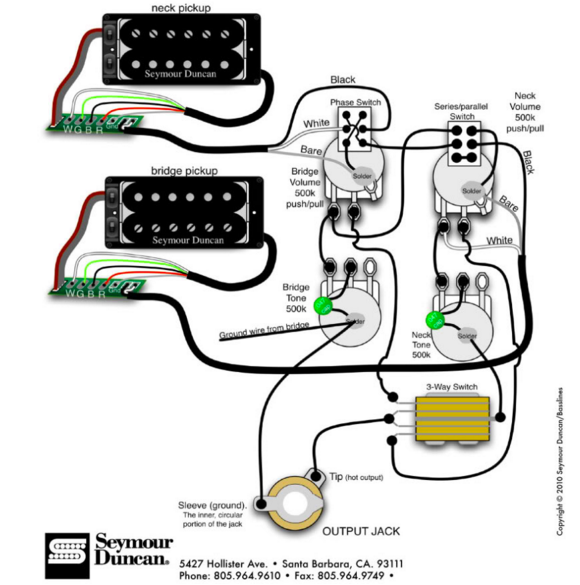
I gutted all the Phase 1 electronics. (Man, that hurt!) Next, using the same pickups, I added a pair of Duncan Triple Shot Mounting Rings. These provide four settings per pickup: humbucker, inner coil split, outer coil split, and both coils in parallel. (The Phase 1 plan offers only one split-coil setting per pickups. While you can configure the two pickups in parallel, you can’t do so with the individual coils in each pickup like you can here in Phase 2.) Here’s the wiring diagram I worked from, which for some reason is no longer posted on the Duncan site.

Since the Triple Shots add four new switches, the Phase 2 wiring requires only two push/pull pots. I wan’t about to let that real estate go unused! I installed a homemade germanium overdrive circuit (similar to the one we made in DIY Club) inside the guitar. My third push/pull pot activates it, and the fourth selects between two input caps, so I get a choice between a fat, Sabbath-style drive and a brighter, thinner Bluesbreakers-type tone.

Check out the demo video:

Categories
Bass DIY guitar

A Modern Vari-Tone Alternative…

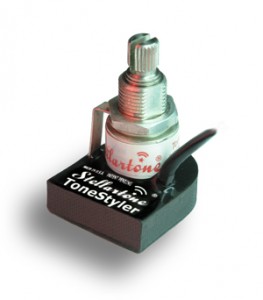
Looks like a pot — but it's not!

In the comments on my post on the Mongrel Strat with the Obsessive-Compulsive Tone Control, reader Dave mentioned a related product: The Stellartone ToneStyler. I ordered one and popped in into my dual-humbucker Hamer 20th Anniversary guitar (which still boasts the Seymour Duncan Joe Bonamassa pickup set I demoed here.)

(Quick memory refresher: The Vari-Tone appeared in several historic Gibson guitars, notably the ES-345. It uses a half-dozen different-sized capacitors to alter the voicing of the tone pot. It also adds an inductor, which preserves lows while the capacitors remove highs. Result: the rolled-off settings have a somewhat piercing, nasal character, as opposed to the usual dark, wooly sound of a rolled-off tone pot.)

Like some cool DIY versions of the project, the ToneStyler omits the inductor. And while it looks like a conventional tone pot,it’s actually a 16-position switch that selects between stepped capacitors, all of them smaller than in a conventional tone control. Result: rolled-off tones that maintain more volume and impact than in a conventional tone control.

Have a listen:

Categories
guitar Music

Afrobeat Forever

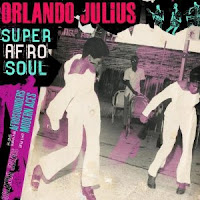
The first good band I ever played in was led by Nigerian singer/saxophonist Orlando Julius Ekemode. I was an obsessive African pop fan, astonished to find myself playing afrobeat, highlife, and juju with a bunch of West African expats in Oakland, California. The crew included the great African music scholar C.K. Ladzekpo and Kwasi “Rocky” Dzidornu, who worked as a session player in London, where, among other things, he recorded the iconic conga track on the Stones’ “Sympathy for the Devil.” Other players had recorded with great West African artists such as King Sunny Ade, Hedzoleh Soundz, Sonny Okosuns, and the big kahuna of African funk, Fela Kuti.

Orlando Julius — “O.J.” — was a kind bandleader who patiently coached me on how not to suck at the styles. I learned so much about time-keeping, note placement, and consistency. And if there’s a better consistency exercise than playing an unvarying one-bar pattern for a half-hour song, I can’t think of it.

I haven’t performed literal afrobeat in many years, though I still find myself alluding to the style. In fact, I just nipped down to the studio and recorded this lick:

The Quintessential Fela Kuti Lick

…and it still makes me happy. 

Categories
DIY guitar Pickups

The Pagey Project, Phase One!

Hey kids! You’re never too young to mod your guitars!
Now get off my lawn.

As promised, here are a demo video and tech notes for the first phase of the Pagey Project, which recreates Jimmy Page’s original Les Paul wiring scheme. (The upcoming Phase Two will expand on the idea with even more crazy options.)

All I can say is, sheesh! Why did it take me decades to try out this awesome Les Paul mod?

I think it’s because I had a nasty dual-humbucker guitar many years ago with series and coil-split switches. Even though I knew the pickups were crap, it still prejudiced me against alternate humbucker wirings. “Just pick up a Fender!” I’d think.

Another factor: I lacked the sophistication to know that, while many of the tones unlocked by the Pagey wiring sound thin and/or weird on their own, they can be quite useful in context.

And make no mistake — except for the series switch, all the alternate Page sounds are smaller than stock Les Paul sounds. And that’s a good thing! They’re great for crystalline clean tones, ratty faux-P-90 distortion, and simply making the regular Les Paul sounds seem gigantic by contrast.

Have a listen. There video starts with a 90-second overview, then works through the system in detail: