Categories
Effects

Four New Joe Gore Pedals at NAMM 2018

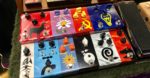
Happy new year, all. Sorry I’ve been so scarce — mostly, I’ve been practicing guitar! I’m trying out lots of challenging new things (for me, anyway) and I’ll share some of them as videos very soon. I’ve also been finalizing the four new Joe Gore pedals I’m debuting at NAMM 2018. Lookit!
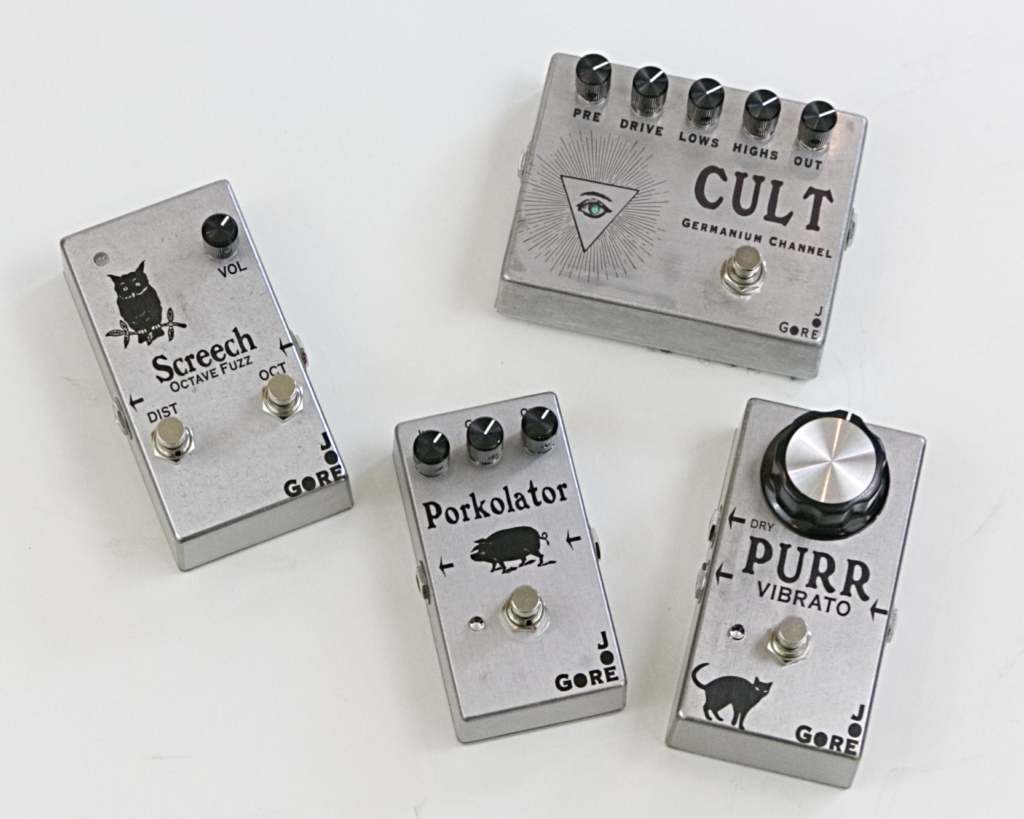
[L-R]: Screech Octave Fuzz, Porkolator Distortion, Cult Germanium Channel, Purr Vibrato

They’ve already gone into the production, and they’ll be available via Vintage King very soon. I have yet to make demo videos and detailed spec sheets, and we still haven’t finalized the prices. (It depends how much the damn germanium transistors in Cult Germanium Channel and Porkolator wind up costing.)

In the meantime, here’s the info sheet I’m distributing at NAMM. Also, Premier Guitar is scheduled to record a demo video at the show and post it on their site. (I’ll share the details when that happens.) I hope I sound less like a squirrel on meth than I did for last year’s show-floor video.

If you’re attending the show in Anaheim, please visit me at booth #15517. (It’s a huge booth run by my distributors, M1. I’ll be crammed behind a tabletop somewhere within.) I’d love to say hi.
Categories
DIY Effects guitar

The Prettiest Pedalboard! (Plus: A New DIY Lipstick Tube Guitar)

You know what sucks about attending NAMM as a manufacturer rather than a gear writer? I was epoxied to my booth all day, and I barely saw anything other than my guitar pedals. But on one rare break, I got to hang out with Jannis Anastasakis and his crew from JAM Pedals of Athens, Greece. (I highlighted some of their beautiful work in my pathetically skimpy “NAMM report.”)

Happily, there’s more to celebrate here than great visuals. JAM builds lovely versions of many classic analog effects. Their sounds and production quality are stellar, and JAM often adds modern updates such as realtime expression control, extra knobs, and internal trim pots for customizing tones. It’s quality stuff, used by many a guitar star.

And guess what? Jannis loaned me one of his magnificent Custom Shop analog pedalboards. Γαμώτο!

Sadly, I must now pack up and return this pretty pedalboard. But I’ll be getting my own JAM Delay Llama Supreme, an expanded version of the analog delay heard here, with tap tempo, a cool modulation section, and the almighty infinite-hold switch. (I reviewed it for Premier Guitar a few months ago.)

In the meantime, this experience makes me want to try my own DIY pedalboards. Not as an item for sale — just as a way to group related effects in a single enclosure for stage use. Gears are spinning ….

Categories
Amps Effects guitar Music

NAMM 2013: The Analog Edition

NAMM

UPDATE: My apologies if this page failed to load properly before. After a much screaming and crying some careful troubleshooting, it seems to be working correctly now.

I put together a little slideshow of some of the interesting things I saw last week at the 2013 NAMM show in Anaheim.

I covered some of the coolest new digital gear in this post. This time, the focus is analog guitars, amps, and effects. Plus: an ultra-rare sighting of a true California celebrity!

Categories
Digital guitar Music

NAMM 2013: Digital Discoveries

This first installment of my 2013 NAMM report focuses on products for the digital guitarist. In the coming days I’ll be doing posts on analog amps, guitar, stompboxes, and accessories. (But maybe not as quickly as I’d like, because I’ve also got to cover MacWorld in San Francisco this weekend.) This is cross-posted from Create Digital Music, one of the few music sites I visit every frickin’ day. 

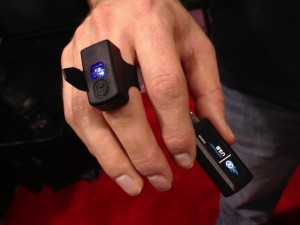
Source Audio's Hot Hand USB wireless controller.
Source Audio’s Hot Hand USB wireless controller.

We guitarists tend to be a technologically conservative bunch, yet there was no shortage of forward-looking products at NAMM 2013.

Not that everyone was looking in the same direction. Guitar processors are getting smarter, but they’re doing so in different ways. Are we entering an era when every guitar, amp, and pedal in our effect chain will boast powerful processors and a dedicated editing environment? Or will we just simply centralize everything in some future i-device? (I suspect that latter, and tend to think that smart pedals and smart amps represent an evolutionary cul-de-sac. But that cul-de-sac might be a real nice place to hang out for a couple of years.)

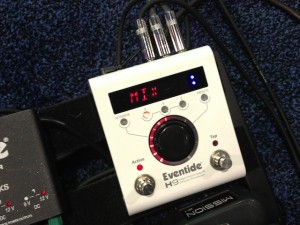
Eventide's H9 can play all the sounds from the company's software-intensive stompboxes, and you can edit and control them wirelessly.
Eventide’s H9 can play all the sounds from the company’s software-intensive stompboxes, and you can edit and control them wirelessly.

One release I found particularly telling was Eventide’s H9, the latest addition to the company’s software-intensive stompbox line. The H9 has few new sounds, but can run all the DSP algorithms from Eventide’s other guitar stompboxes. The $499 box will ship late this quarter, preloaded with 9 of Eventide’s 43 current algorithms. Players hungry for more will be able to purchase them а la carte from an online store. (Eventide hasn’t yet finalized the add-on pricing.) The H9 also includes a handsome and full-featured iOS app for editing and managing patches via Bluetooth. There are no current plans to release an editor for OSX or Windows.

Categories
Effects guitar

Ring Modulation: The Effect from HELL!

effect_from_hell
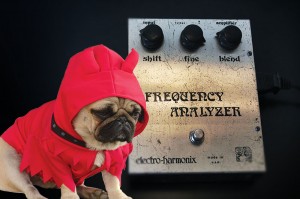
Only very bad dogs like ring modulation!

No disrespect to Chuck Berry, but I seriously doubt Johnny B. Goode played guitar just like a-ringin’ a bell unless he was using a ring modulator. That’s the only effect that can give you the complex, clangorous harmonics of a bell or a cymbal. Or make you sound like a ravenous horde of mutant robot ants.

Theoretically, Johnny could have used one. By 1958, when Berry documented the guitarist in song, the effect was already being exploited extensively by avant-garde classical composers, notably the late Karlheinz Stockhausen, who used it to terrifying effect in his Gesang Der Jünglinge [1956].

This post drips with perverse ring-mod love, including a demo of a rare vintage Electro-Harmonix Frequency Analyzer, and another featuring Roswell Ringer, a wicked ring mod plug-in.

Categories
Digital guitar

Analog Schmanalog

Ever notice how most analog vs. digital battles discussions boil down to two basic questions?

1. Can digital sound as good as analog?
2. What are the practical benefits of digital?

They’re good questions, but they tend to overshadow another important (and probably more interesting) topic: What are the musical benefits of digital?

Everyone loves great analog guitar sounds. But there’s lots of cool stuff that you can only do in digital. Here are a few of the ones I enjoy.

A partial list of the strictly digital sounds and techniques heard here:

• looping
• granular synthesis and delay
• pitch-shifted delays and reverbs
• impulse-response reverbs
• subharmonic sysnthesis
• Realtime MIDI control

You heard it here first!

Hey, I’m totally guilty of fostering simplistic analog vs. digital arguments. After all, I launched this blog over a year ago with an Amps vs. Models listening contest. (The prizes have long since been claimed, but you can still take the test.) But maybe we should spend a little less time arguing about how faithfully that amp model mimics the sound of an amp from 1965, and a little more time exploring the cool and meaningful musical applications of post-analog tone production?

Categories
DIY Effects Gigs Recording

A Tale of Two Pedalboards

Is it just me, or do many guitarists these days find themselves alternating between separate analog and digital setups?

I’m posting some pics of my current pedalboards (bearing in mind that, for reasons I’ll get into in a sec, my pedalboards only tend to stay “current” for a few days at a time). Both were assembled using store-bought housings, though I’ll talk a bit about total DIY boards as well.

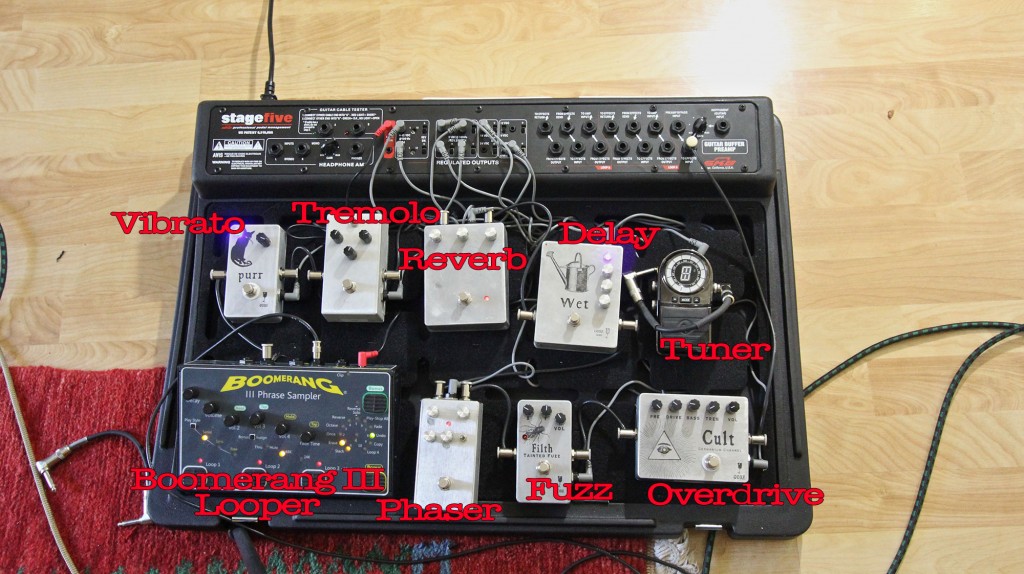
First, the mostly analog setup (the exception, of course, is the digital Boomerang III looper).

Joe Gore’s mostly analog pedalboard.

The case is a newly purchased SKB Stage Five, a full-featured unit in a relatively rugged molded plastic case. These retail for a whopping $540, but you can find them heavily discounted. (I forget the exact price I paid for mine, but it was under $300.) It’s loaded with cool features, like dual effect loops, a built-in buffered preamp, and support for 9- through 24-volt DC power, plus 9V AC for those digital pedals like Line 6 modelers and many loopers. There are even trim pots on a few power jacks to simulate dying batteries. I’m less impressed by some of the fittings (like the cheapo plastic jacks), though I suppose they keep the weight down. And make no mistake: This thing is heavy!

Verdict: Too early to tell, since I haven’t subjected it to road abuse, but I trust it enough to at least give it a go. I think I’d be a bit disappointed had I paid full pop, but it strikes me as a fair deal if you can find it at a 40+% discount. 

Categories
Effects guitar

Museum of Lost Effects:
Maestro Rhythm ’N Sound for Guitar

Well, I’m not sure it’s fair to call it a “museum” when there’s only one exhibit so far. But it’s a really, really good one…

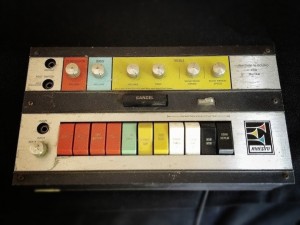
I bought this Maestro Rhythm ’N Sound for Guitar for a pittance back in the ’90s. It’s a primitive multi-effect unit from 1968, with a cool octave-down bass tone, auto-wah, and two fixed filters. It’s got fuzztone (though mine has always been broken), and a weird, choppy tremolo reminiscent of the Vox Repeat Percussion effect. (Mine worked fine — until I broke it yesterday while trying and failing to fix the fuzz. Kill me now.)

But the marquee feature of this hand-soldered contraption is the option of triggering four wonderfully cheesy analog percussion sounds. Bongo? Cymbal? Tambourine? Clave? At your command!

Does it sound as weird as it sounds? No — weirder!

You can’t assign specific specific notes to specific sounds — any input triggers the percussion, so the clicks and clanks tend to work best shadowing every note in a phrase, adding a weird edge. (I used them like that on Oranj Symphonette’s “Charade,” Erica Garcia’s “Yo No Tengo La Culpa,” and PJ Harvey’s “Maniac.”)

But then it occurred to me you could more ambitious things with the percussion sounds via looping. Which is exactly what I do in this short, fuzz-free video.

Check it out — and then let’s talk about this Museum of Lost Effects thing!