Categories
Effects guitar

Phasers That Stun

phaser_stun


UPDATE: My Premier Guitar Heptode Virtuoso review is live. Read and listen here.

I’ve got phase shifters on the brain, especially after encountering a couple of truly stunning ones. I just wrote a review for Premier Guitar of Heptode’s Virtuoso phaser, a superb clone of the old Maestro PS-1A. (I’ll link to the review when it goes live.)

It took me back to my Pleistocene pre-teen years, when I once spent hours in my local music shop playing an electric nylon-string through a big-ass PS-1A mounted on a music stand. Despite its size, it had few controls — just big colored switches that could have been swiped from one of the era’s cheesy home organs. It sounded glorious to my 12-year-old ears. I’ve never since held such a high opinion of my own playing.

I haven’t played a PS-1A since then, but the Heptode pedal took me right back. It really is a gorgeous-sounding phaser, and one that vanished soon after the debut of the cheaper, smaller, and awesome-sounding MXR Phase 90. The sound captivated me all over, though I’m not sure if I actually like it more than the Phase 90, or if it just sounds so cool because it’s a less familiar color.
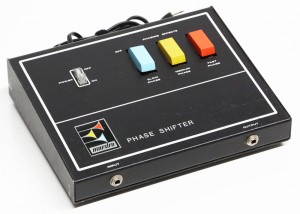
The plastic switches make it sound better.

I dug out a few other favorite phasers, like the $89 BYOC Phase Royale that usually lives on my analog pedalboard. It’s yet another brilliant DIY kit from BYOC’s Keith Vonderhulls. It’s basically a Phase 90, but with all the cool mods, like mix and resonance controls, plus a six-stage phasing option. (The Phase 90 and the Uni-Vibe are four-stage, while the Maestro is six-stage). It’s a fun build, and an excellent next step for DIYers who have built a few fuzzes and are ready for something a bit more challenging.

I concluded my little phase-fest by unearthing my old Lovetone Doppelganger, a bitchin’ dual-LFO phaser from the late ’90s. Not to be confused with today’s Lovepedal brand, Lovetone was a British company run by Dan Coggins and Vlad Naslas. They specialized in large-format pedals with an almost absurd number of controls. (Their brilliant slogan — “Big Pedals to Trip Over” — is rivaled only by Zachary Vex’s “Crazy Effects for Rich People.”) I’d flip out when each new Lovetone pedal came in for review at Guitar Player. Even then, they were expensive, usually in the $400-500 range. Now, of course, they’re obscenely rare and valuable. I bought as many review models as I could afford, and to this day I regret not purchasing their Meatball, Wobulator, and Brown Source. I did, however, snag the Big Cheese, Flange with No Name, Ring Stinger, and this guy:

I haven’t heard the Doppelganger in years, and it was interesting to revisit it. See, while I always loved the ideas behind the Lovetone boxes and was happy to own them, I’d found that I just didn’t tend to use them a lot for gigging and recording. For me, they had tons of cool sounds, but often not quite the right one. But I’ve gotten better at dialing in tones in recent years, and really dug the sounds I got yesterday while making the video. Maybe it just took me 15 years to learn how to wrangle these beasts!

Anyway, the Doppelganger is now a Museum of Lost Effects inductee, and it’ll be joined soon by its big-box brothers.

Categories
Effects guitar Music Recording Technique

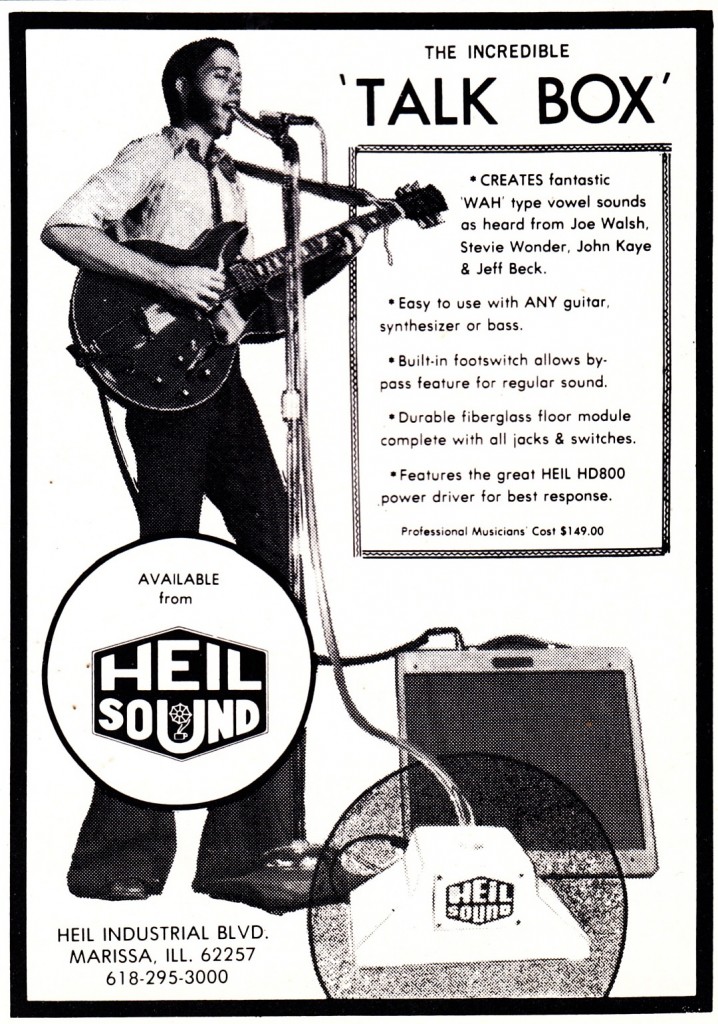
The WRONG Way to Use a Talk Box

Any talk box fans out there?

Whew. Didn’t think so. I mean, doesn’t everybody hate those godforsaken things? Wasn’t it all downhill after “Tell Me Something Good?”

But did you know that the “talking guitar” has a rather exalted history four decades pre-Frampton Comes Alive? Check out this performance by Alvino Rey, the steel guitar genius who pioneered the technique.

I am TOTALLY going to have nightmares about Stringy for the next 10 years!

Rey worked his magic in tandem with his vocalist wife. She supposedly stood behind a curtain with a mic attached to her throat, the output of which modulated the guitar signal. (That’s what online sources say, though it sounds a bit fishy to me.) A similar technique — or perhaps the same one — was known as the Solovox. In this case, a small loudspeaker attached to the singer’s throat, “playing” the music through the vocalist’s mouth. More amazing/horrifying evidence:

That’s the basic principle behind the rock-era talk boxes, though they rely on a plastic tube inserted into the mouth rather than a mic pressed to the neck. The first commercially available model was Kustom’s The Bag from 1969, “immortalized” on Steppenwolf Live. The Heil Talk Box — the version of the effect most of us know and loath — debuted in 1973. Dunlop is still making them.

But I have a perverse affection for the Rocktron Banshee. It’s incredibly loud. It’s actually a small amp, quite capable of driving a speaker cab, with a blunt-force distortion tone. That extra power is useful for my preferred way of using a Talk Box:

How about you guys? Anyone have anything good to say about the talk box?

Heil_TalkBox_1974

Categories
Digital Recording

Logic Pro X:
What’s New for Guitarists & Bassists?

Inside Logic Pro XAs promised: an overview of Apple’s new Logic X Pro, with an emphasis on what’s new and cool for guitarists and bassists. Lots of movies and audio!

It’s here.

This is an exciting post for me, and not just because I get a desperately needed break from Klons and Screamers. I’m thrilled to bits about Logic Pro X and MainStage 3, though I’m still wrapping me head around them. (Yeah, I worked as a developer for both products, but I didn’t get a proper program-wide view until last week’s release.)

Also, it’s my first story for Premier Guitar, whose staff I’ve just joined as a senior editor. I’m stoked because it reunites me with PG editor Shawn Hammond and senior editor Andy Ellis, both of whom I remember fondly from my Guitar Player magazine days.

There’s much talent and coolness on the staff. I’m a happy little guitar nerd. Plus, the schedule is loose enough that I can still record, perform, and continue to work with audio/software clients.

What does the gig mean for this blog? Good things. I have no plans for a major course change — there are too many things I can only cover on a non-commercial site, including some of the topics closest to my heart. Meanwhile, working with PG will keep me more up-to-date on new music, new gear, and scurrilous guitar community gossip. In some cases, though, I may link to a PG article I’ve written rather than duplicate the work here. Today, for example. 🙂

Categories
Effects guitar

NEW CONTEST: Klon vs. Screamer
Identify the Audio Clips and Win!

Left: Klon Centaur #309, worth over $2,000.Right: BYOC Overdrive 2, a $95 Tube Screamer clone.
Left: Klon Centaur #309, worth over $2,000.
Right: BYOC Overdrive 2, a $95 Tube Screamer clone.

It’s hardly a new idea: YouTube is full of Klon vs. Screamer comparison videos.

But this one is different.

Using the same “reasonably scientific” techniques deployed in my recent germanium fuzz survey, I’ve created a blind listening test that removes as many variables as possible from the equation.

The video details the testing procedures. But basically, the A/B recordings are identical save for the use of one pedal or the other. The rival pedals are Klon Centaur #309 (the unit reviewed in Guitar Player back in the ’90s) and a new BYOC Overdrive 2, a DIY Tube Screamer clone kit with extra knobs and pots to provide the most popular boutique mods.

This Klon would fetch north of $2,000 on EBay. You can order the Overdrive 2 online for $95.

Now, these two pedals are NOT identical circuits. (The key differences are covered in the video.) But they share the same topology and sonic character. It’s not an apples and oranges comparison — more like two apples of distinct but related varieties.

For the video I dialed in five different sounds from across the Klon’s range, and then tried to duplicate them with the BYOC Screamer clone. You’ll hear the same material ten times, like so:

Example 1: medium gain, medium tone

Pedal A =
Pedal B =

Example 2: high gain, medium tone

Pedal A =
Pedal B =

Example 3: low gain, medium tone

Pedal A =
Pedal B =

Example 4: medium gain, bright tone

Pedal A =
Pedal B =

Example 5: medium gain, dark tone

Pedal A =
Pedal B =

To compete, just fill in the blanks and copy your answers into the comments thread below.

The pedals might not appear in the same order for each pair of audio clips. Other than that, there are no sneaky tricks. (For example, you really do hear two different pedals for every example.)


The first three contestants to submit perfect scores before Tuesday, July 23rd, 2013, will each win fabulous prizes one of my hand-built stompboxes. On that date I’ll post the answers and announce the winners here, assuming there are some. You can still test your ears after that by watching this video and not peeking at the answers — but sorry, no more prizes.

Only one entry per person. Anyone caught circumventing this rule via multiple identities may be subject to global ridicule.

I’ll hold off on any sonic observations till I post the correct answers next week.

Good luck, and may the best ears win some gnarly stompbox.

Categories
Effects guitar

Fuzz Detective:
The Case of the 12 Germanium Fuzzes

As threatened, the Fuzz Detective video:

WHAT: Twelve germanium fuzz circuits compared and analyzed. These represent the sounds of almost every fuzz pedal introduced between 1962 and 1968.

WHY: A tool to help players identify the circuits most relevant to their musical needs. This isn’t about particular brands of pedals, but the circuits they employ. If you hear something you like, you can either do as I did and build a clone from the schematic, or buy one based on that particular design. (The relative merits of rival clones is another story.) Of course, if you’re rich and you desire an ancient pedal that probably doesn’t sound as good as a new clone, you can always purchase a vintage original. 😉

HOW: I tried to establish a “level playing field” by removing as many sonic variables as possible. I used the same signal chain, the same guitars, the same musical material, etc. (Tech details below.)

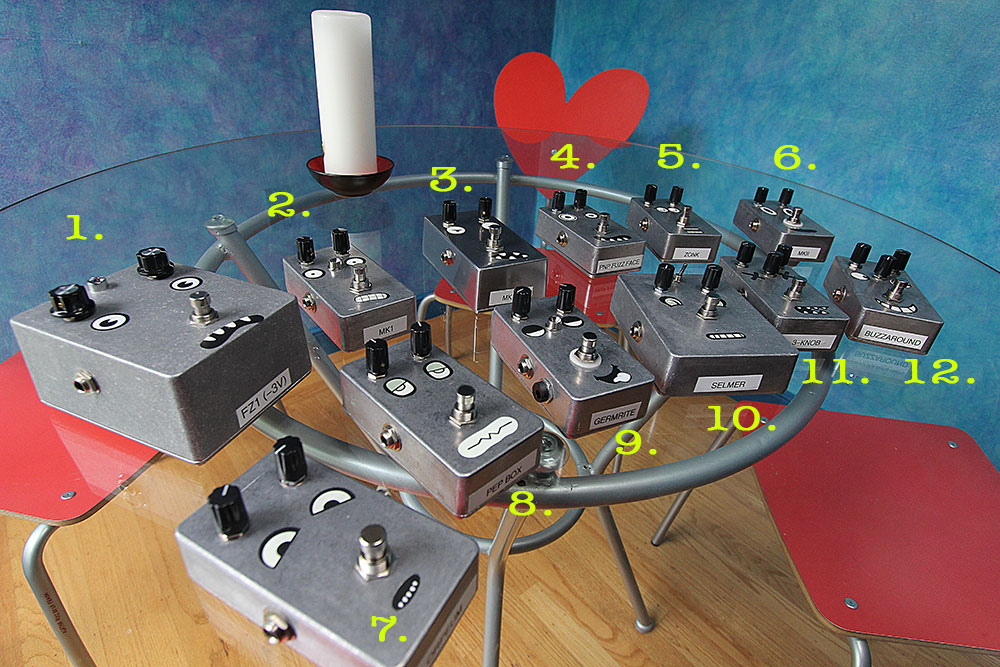
WHO:

  1. Maestro FZ-1 Fuzz Tone
  2. Sola Tone Bender Mk 1
  3. Hornby-Skewes Zonk Machine
  4. Sola Tone Bender “Mk 1.5” (similar to Vox Tone Benders)
  5. Dallas-Arbiter Fuzz Face
  6. WEM Pep Box Rush
  7. Sola Tone Bender Mk II (same as Marshall Supafuzz)
  8. Mosrite Fuzzrite (germanium version)
  9. Orpheum Fuzz (germanium version)
  10. Selmer Buzz Tone
  11. Sola Tone Bender Mk III (same as Park Fuzz Sound, Carlsbro Fuzz)
  12. Baldwin-Burns Buzzaround.

WHEN: Like, now, man!

Categories
Effects

Fuzz Detective: The Plot Thickens!

Man, I’m glad I announced my intentions about this project! Thanks to your links and suggestions, the “Fuzz Detective” project has grown vastly more ambitious. I need a few more days to make my test recordings are assemble the results, but I believe this will be the most complete and “scientific” audio comparison of 1960s fuzz circuits yet attempted. I’m posting this update to share my current plans — and solicit last-minute suggestions for improving them. —Joe

Wanker's Dozen: twelve Germanium fuzz pedals compete on a level playing field.
Wanker’s dozen: twelve germanium fuzz pedals will finally compete on a level playing field.

I’ve been a busy little solder monkey! Dig my new pedals:

1. Maestro Fuzz Tone FZ-1 clone
2. Sola Tone Bender “Mk I” clone
3. Sola Tone Bender “Mk 1.5” clone (near-twins: Vox Distortion Booster, Italian Vox Tone Benders)
4. Dallas-Arbiter Fuzz Face clone (very similar to Tone Bender Mk 1.5)
5. Hornby-Skewes Zonk Machine clone (near-twin: Tone Bender Mk 1)
6. Sola Tone Bender “Mk II” clone (near-twin: Marshall Supafuzz)
7. Orpheum Fuzz clone
8. WEM Pep Box Rush clone
9. Mosrite Fuzzrite clone (germanium version)
10. Selmer Buzz-Tone clone
11. Sola Tone Bender Mk III (“3-knob”) clone
12. Baldwin-Burns Buzzaround clone

About the Fuzz Detective project:

I’m attempting to create a comprehensive comparative sound library of germanium-transistor fuzz pedal circuits.

There’s no shortage of audio clips and demo videos featuring the great stompboxes of the ’60s and their modern clones. Yet it’s difficult to make qualitative comparisons between circuits because there are so many other variables at play. Who performed the examples? Using what gear? Were the examples recorded in a pro studio or on a mobile phone? Are the pedals ’60s originals or modern clones? What’s the condition of the transistors? And so on.

This isn’t about, say, deciding who makes the best Fuzz Face clone. The focus is the circuits themselves. The Fuzz Detective project aims to “level the playing field” by removing as many variables as possible.

Categories
DIY Effects

Next Week on Fuzz Detective!

UPDATE: Based on cool info supplied by YOU, dear readers, I’m expanding the scope of this piece. I’m furiously wiring up clones of some very rare models, and I can promise many cool and interesting surprises. Thanks, guys! :beer:

Okay, now that we’ve all gotten that silly “reading” stuff out of our systems with Book Week, it’s time to get back to the real focus of this blog: nasty, filthy fuzz pedals.

Last time we were on the subject, we looked at the original version of Dallas-Arbiter Fuzz Face, and included Mitchell “super-freq” Hudson’s beautiful DIY instructions.

Those posts generated many interesting comments — plus some misinformation on my part. For example, I said that the original Fuzz Face circuit is a close cousin to the Tone Bender Mk I, which would mean, for example, that known Mk 1 user Mick Ronson was essentially using a Fuzz Face between his Les Paul and his Marshall. But subsequent listening and reading makes me believe I was wrong. So I figured it was time to play fuzz detective and sort the facts from the other stuff.

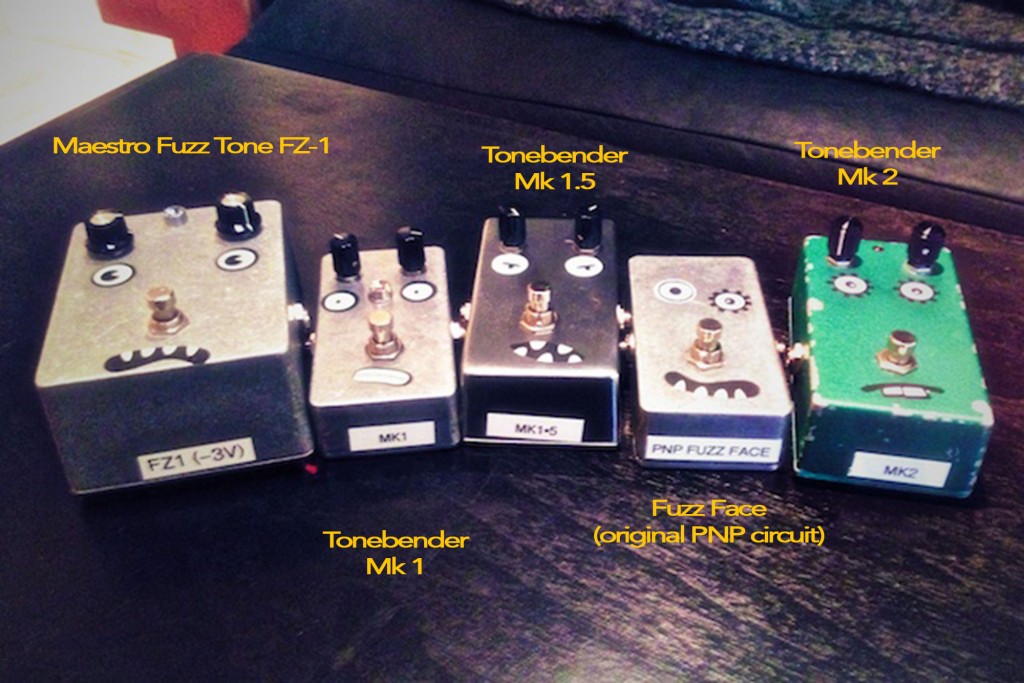
First, I made clones of all the early commercial fuzzes. I’ll be posting a compare-and-contrast video in the coming days. (The audio forensics will be quite incriminating.) Here’s the lineup:

The usual suspects. (Incriminating audio/video evidence to be posted soon!)

I’ve also re-read the experts, and man, even my most trusted sources contradict each other right and left, especially when it comes to those darn Tone Benders. While I have absolutely no inside dope on what actually transpired, I think David from D*A*M Stompboxes offers the most convincing Tone Bender chronology, which you can read here.

Anyway, here’s my best guess about how the early fuzz years unfolded:

Categories
DIY Effects guitar

The “Super-Fiend” DIY Fuzz Face!

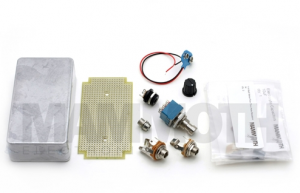
You can purchase a kit, or source your own parts.

UPDATE [06.16.2013]: Build instructions updated to v02.

The Fuzz Face has inspired countless spinoffs since Ivor Arbiter unveiled the device in 1966. Some introduced meaningful improvements. Many didn’t.

The goal of this project, created by my friend Mitchell “Super-Freq” Hudson, is to create a pedal very similar to the original. It’s a great way to explore one of the iconic sounds of ’60s rock (and lots of ’60s-influenced rock).

The instructions are available here. [19MB PDF.]

You can order a kit from Mammoth for $45. (Disclosure: Neither tonefiend nor super-freq has any financial stake in these kits. I simply asked the Mammoth guys to create one for your parts-sourcing convenience. All necessary parts are readily available from other vendors.)

But before you attempt the project, please be aware of some of its quirks. (And if you’re curious, you can read about how I customized the pedal I used in my video demo.)

Categories
DIY Effects guitar

Fuzz Face:
The Daiquiri of Distortion Pedals?

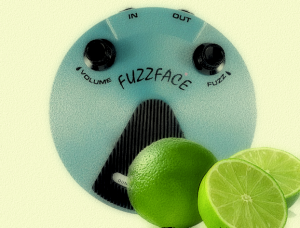
fuzzlimeMost sentient guitarists love Hendrix, but not everyone is equally fond of his signature distortion pedal.
So what’s your take on the Fuzz Face?

I used to hate them — but only because my sole exposure to them was via the crappy reissues of the ’70s, ’80s, and ’90s. They sounded so brittle and harsh! Not till this century did I encounter the pedal in its original incarnation.

What a difference!

Vintage-style Fuzz Faces produce tones that are warm, rich, and unbelievably dynamic. It was like the first time I tasted a vintage-style daiquiri. Like the Fuzz Face, the classic daiquiri is a delicate concoction made from a few simple yet complexly interactive ingredients — nothing like those nasty blended drinks that taste like Slurpees spiked with Everclear.

Here’s everything I love about vintage Fuzz Faces, compressed into 60 seconds:

My DIY version is based on inventor Ivor Arbiter’s original 1966 schematic. That’s also the basis for a new DIY project created by my stompbox-buildin’ pal Mitchell Hudson, who runs the cool DIY site Super-Freq. We’ll both be posting it on our sites in the next few days. You can source the parts on your own, or order a kit for less than $50 — not as cheap as some of our other DIY projects, thanks to its two relatively pricy germanium transistors.

Most lore about “mojo” stompbox parts is utter nonsense, but there is something harmonically unique about the germanium transistors used in ’60s fuzz pedals, including original Fuzz Faces. (See my “Germanium Mystique” post/rant for more info.) You don’t need germanium for a good fuzz sound — there are many great tones available via silicon transistors, integrated circuits, and digital modeling. But one problem with those god-awful Fuzz Face reissues was that they often simply substituted high-gain silicon transistors for germanium ones without modifying anything else in the circuit. The result was more gain, but at the cost of harsh, excessively bright tones and inferior dynamic response.

In the last decade or so, builders have wised up. Numerous manufacturers offer authentic ’60s-style replicas. Meanwhile, the DIY community has created countless variations, many of which use post-germanium parts to great effect. These days it’s pretty easy to find a Fuzz Face that doesn’t suck.

I’ve build many Fuzz Face variants, but until Mitchell created his Fuzz Face project, I’d never done a strict original, with positive-ground wiring, PNP transistors, and few latter-day “refinements.” (Don’t sweat it if those terms mean nothing to you — they’re all explained within the project.)

Anyway, that’s the circuit you hear in the video above. It’s not a fuzz for all seasons — it doesn’t have a ton of gain, and its loose, spongy distortion is unsuitable for metal and modern hard rock. But I love its warm, non-macho timbre and phenomenal dynamic response. It’s simple, classic, and delicious, much like this.

Categories
Effects guitar

Ring Modulation: The Effect from HELL!

effect_from_hell
Only very bad dogs like ring modulation!

No disrespect to Chuck Berry, but I seriously doubt Johnny B. Goode played guitar just like a-ringin’ a bell unless he was using a ring modulator. That’s the only effect that can give you the complex, clangorous harmonics of a bell or a cymbal. Or make you sound like a ravenous horde of mutant robot ants.

Theoretically, Johnny could have used one. By 1958, when Berry documented the guitarist in song, the effect was already being exploited extensively by avant-garde classical composers, notably the late Karlheinz Stockhausen, who used it to terrifying effect in his Gesang Der Jünglinge [1956].

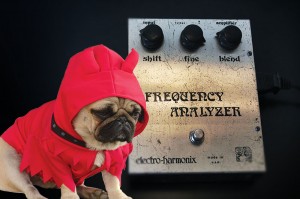
This post drips with perverse ring-mod love, including a demo of a rare vintage Electro-Harmonix Frequency Analyzer, and another featuring Roswell Ringer, a wicked ring mod plug-in.