Categories
DIY

Indispensable DIY Tool

UPIf you build pedals, you REALLY want this $41 tool.

UPDATE: A Facebook friend of mine found the same tool on eBay for $25.49.

Jon Cusack — the pedal builder, not the actor — recently turned me on to one of the best DIY tools I’ve ever owned: The Multi-Function Tester TC1.

Jon’s Michigan shop manufactures  the pedals I design. He and I were trying to pinpoint the optimal gain for the germanium transistors in two of the new pedals I’m about to release.

I’d been using a multimeter to test gain, which is measured in terms of hFE. An old germanium transistor might have hFE of 50 or less, while a hot silicon Darlington transistor such as an MPSA13 might check in at hFE = 5,000. As you can imagine, it’s a crucial measurement for any stompbox that employs transistors.

But like many before me, I encountered two big problems. First, most multimeters don’t have an hFE function. (To make such measurements, the device needs a trio of sockets so you can plug in the transistor’s three legs.) It’s not a matter of cost. In fact, most high-end multimeters, such as the Fluke models  whose prices start at well over $100, omit the function. (To be fair, we’re talking about antique transistor technology, which is pretty much extinct in most modern electronics.) You’re likelier to find an hFE tool on cheaper, more obscure models. So I’d been using bunch of cheap-ass Chinese multimeters just to measure hFE.

But there’s another problem: Those multimeter hFE testers are notorious for their inaccuracy. They’re especially prone to overstating the actual gain. They’re not quite useless, but they’re close.

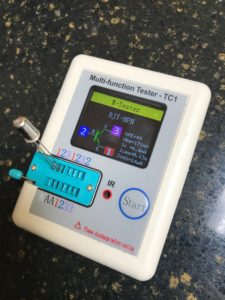
Jon recommended the TC1 ($41.50), which apparently is only available via eBay in the US. And it’s more useful than I could have imagined.

First off, it gives accurate hFE readings within a hundredth of an hFE unit. It works with silicon and germanium BJTs, FETS, JFETS, and MOSFETS. And dig this: It doesn’t matter which way you orient the pins — it knows which leg is which, so no more  jumping online to verify the pinout of a particular part.

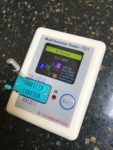
Check out the photo: The LCD image tells me that the pin in socket 3 is the collector. Had I inserted it the transistor the other way around, the collector would be marked with a 1. Better still, it also works with resistors, capacitors, and diodes. You don’t even have to switch metering functions, as on a  multimeter. Just pop in the part, secure it with the clamp, and TC1 does the rest.

Trust me — if you work with transistors, resistors, caps, and diodes, you want this tool. Now I seldom use my crappy multimeter unless I need its continuity (“beeper”) tool.

Thanks for the excellent tip, Jon! 🙂

Categories
Uncategorized

Tom Wheeler, R.I.P.

I just learned that longtime Guitar Player magazine editor Tom Wheeler has died. No details have been disclosed yet. [UPDATE: Apparently Tom succumbed to a heart attack while leaving a family gathering.]

Tom not only gave me my first job in guitar journalism — he gave me my first proper job ever. When he hired me as an assistant editor in 1988, I filled out my first W-2 form. Before that I was a deadbeat musician, music teacher, and student.

Many will talk about Tom’ titanic influence in the not-so-titanic world of guitar. He shepherded Guitar Player magazine through its most successful years. His The Guitar Book was the era’s standard reference for players and teachers. (My copy was worn out by the time I met Tom.) He joined the staff in 1977, and was head honcho from 1981 to 1991, when he left to assume a journalism professorship at the University of Oregon.

Tom was the finest mentor any young writer/editor could have wished for. (Well, so was then-senior editor Jas Obrecht, who is very much alive, well, and busy writing important music history books. So I was blessed with the two best mentors imaginable.)

I first contacted Tom the year before he hired me, pitching a monthly column on world music called Global Guitar. Tom wrote me a very nice rejection letter. I tried again the following year, and he declined a second time — but invited me down to Cupertino to interview for a new assistant editor position. I took the gig and commenced the long daily commute from San Francisco to Cupertino.

Tom took me under his wing in a big way. He gave me the opportunity to write a cover story my very first month (with the wise and wonderful Vernon Reid). He finally launched Global Guitar. And he was highly receptive to my story pitches and other editorial ideas.

Tom showed me the editing and publishing ropes with inexhaustible patience. He instilled a sense of ethics that guides me to this day: Be honest. Write clearly. And never forget that you’re there to serve the readers, not the publishers or the advertisers.

I happened to arrive at an exciting moment in guitar history, probably the greatest 6-string Renaissance since the ’60s. At that point the magazine focused on shred players, fusion maestros, and classic rockers. It didn’t take any special insight for me to realize we should also include upstarts like Sonic Youth, the Cure, and the Smiths, yet that indie/alt stuff hadn’t yet been embraced by the guitar mags. But Tom accepted such pitches and assigned me cover stories on those artists and many others. Today such coverage seems like a no-brainer, but it was quite controversial at the time. I received much reader hate mail, and those stories were sometimes blamed for the mag’s declining market share. Yet Tom backed me without fail. He also let me write about funk, the avant-garde scene, and players from Africa, Latin America, and Asia.

We held our staff meetings in Tom’s office — “Wheelie’s office,” we’d say — and it was always a bloody mess. There were inevitably overflowing mail bins of yet-to-be-heard vinyl and CDs and lofty towers of magazines and loose paper. That’s not to say Tom was disorganized — he never missed deadlines and rarely displayed stress during editorial crunches. There was always just a lot of crap in his office!

I was there for the last gasp of the mag’s original vision. Founder Jim Crockett and former editor Don Menn — two other lovely, supportive guys — soon departed, and GP was sold for the first of many times. After being the only magazine of its kind for decades (and effortlessly raking in big advertising bucks) there was increasing competition from Guitar World, Guitar for the Practicing Musician, and various spinoffs. Tom chafed under the corporate scrutiny, especially when the new publisher upbraided him for being late with some bullshit corporate report while a member of Tom’s family was undergoing a serious health scare. When a chance to teach journalism arose, Tom took it, and he recommended me to assume his role. (I didn’t really, literally or figuratively. We crafted a sort of halfway editor gig with Keyboard’s Dom Milano as publisher, which I held for a few years till I left to focus on playing.) Tom’s parting gift was a copyediting manual I have to this day.

It’s no secret that Tom really loved guitar. In fact, his most lasting contributions to the field may be the hefty tomes he authored after quitting GP. He’d always pause his work to check out whatever gear was passing through, and he played with the enthusiasm of a kid newly hooked on the instrument. Me, I have a neurotic love/hate relationship with the guitar and its players. Tom just reveled in all of it, in the purest possible way.

What I remember most about Tom, though, was his kindness. He was just plain nice! I remember one time when our newly hired NYC editor, Matt Resnicoff, was visiting. Matt, who had previously worked for Guitar World, was flabbergasted to witness Tom take a call from a random reader who wanted to ask about some arcane gear detail. “Whenever someone like that calls Guitar World,” Matt said. ”Our editor tells the receptionist, ‘Tell ’em to blow! We’re not a fucking information service.’”

I saw Tom a few times after he left. I’d run into him often at NAMM shows, and if I could drag him away from his admirers, we’d grab a sandwich. And I’d give him a ring whenever I played near Eugene. One time he came to an Oranj Symphonette gig with his local guitar buddy, Bill “Zoot Horn Rollo” Harkleroad of Capt. Beefheart fame. I was so nervous!

But whenever I think of Wheelie, I visualize one specific image: Tom, head down at his desk amid stacks of yet-to-be-processed paper, concentrating on an edit or page proof. (He was a great proofreader.) No matter how deeply focused he was, if you tapped on his door, he would pause, look you directly in the eye, and flash that all-American Tom Sawyer grin, his eyes sparkling exactly as in this photo. He’s not putting on that expression for the camera — he usually looked like that!

Later, when I briefly occupied the corner office, I would attempt to emulate him. I mean that literally: I’d think, “Pause, look up, eye contact, big smile.” But I never mastered the skill like Tom. He was a natural.

Farewell, my role model and mentor. You always were and will always be an inspiration, and I know that countless other players, craftspeople, readers, and writers feel the same. I am eternally grateful for your passion, wisdom, generosity, and kindness.
Categories
Digital Effects guitar

My New Live Looping Rig: Total “Faylor”

I haven’t posted any new video in months and months. It’s not just laziness or business, though I suffer from both. I’ve just been locked away in my studio, trying to create a new live looping system.

I still haven’t nailed it down, so I’m not going to get into a complete run-down yet. But here are the basic ideas.

I’ve moved from a hardware looper to software looping. When I started this godforsaken looping project years ago, I’d just finished a lot of work on Apple’s then-new MainStage software. At the time, the program’s looper simply wasn’t reliable enough for live performance. Also, my intense signal processing was pushing my MacBook Pro to its limits. But since then, the program has gone through many upgrades. Meanwhile, after years of relative stagnation, Apple finally issued a major MacBook Pro upgrade in 2017. Between the more powerful computer and the refined software, I could finally shift looping and signal processing to the computer. Yeah, there are a couple of disadvantages. For one thing, MainStage’s looper lacks a “copy” function, something I’ve come to rely on a great deal in my arrangements. But it sure is nice not having to run the entire mix through the relatively cheap hardware looper convertors — just the snazzy ones in my Apollo interface. (Of course, now that I’ve transitioned, Electro-Harmonix has just announced a compelling-looking 6-track looper. I’ll have to check that out…)

I’ve put aside for now the Fishman TriplePlay MIDI pickup. I have no complaints about TriplePlay, which is far and away the best MIDI pickup ever created, and a product I recommend without reservation. But I wanted to be free from the hardware setup. This way, I can plug in any guitar, any time. (I’ve been experimenting with acoustic looping — more on that soon.) I’m still using MIDI sounds, but again, it’s all in software via Jam Origin’s brilliant MIDI Guitar plugin. It works incredibly well without a MIDI pickup, but it’s not nearly as fast as TriplePlay. It’s fine for doubling, or for melodic and textural stuff, but it’s just not speedy enough to play MIDI drums at even moderate tempos. Which bring me to the other big departure …

I confess: I’m playing to a drum machine. I’m triggering and changing patterns using a KMI !2 Step foot controller. I really wrestled with this decision. I loved the idea of using no machine tempos — it all came from the hands. But at some point I realized that the main reason I was committed to that approach was for bragging rights: “No prerecorded tracks, and no machine rhythms” I could boast. But who cares except geeks like me? Anyway, I still have misgivings about the change, but I’m going with it for now. I think that means, though, that I’ll create more arrangements without percussion, just so I’m not locked to the machine for an entire set.

Meanwhile working with a tempo clock lets me do fun stuff with synchronized effects. I’m especially besotted with Sugar Bytes’s Effectrix, a mind-bending multi-effector that lets you activate and edit effects on a note-by-note basis. You hear it a lot in the “solo” in this video.

I’ve played a few shows with the new setup. The first one was flawed but promising. The second was an unmitigated disaster. Then I doubled up on practicing and (not kidding) started meditating again, which helped a lot. Last time I tried this live, it went really well! We’ll see how it goes at my gig this week.

Anyway, it’s still a work in progress. I’ll keep the curious updated.

I played this cover tune with no irony whatsoever. I love the original.

Categories
Pickups

Charlie Christian (and That Pickup)

Despite being obsessed with Charlie Christian for decades, I’ve never played a Gibson ES-150, the guitar he made famous. I’ve never even messed with a “Charlie Christian pickup,” even though it’s been a fairly common retrofit ever since the late Danny Gatton installed one in his Tele’s neck position. But I’ve always wondered: Could the C.C. pickup work in styles other than jazz? How would it sound in the bridge position? (The ES-150 had only a neck pickup.) And most of all, how would it sound with nasty fuzz?

Lollar Pickups helped me answer those questions with a loaner of three humbucker-sized Charlie Christian pickups. These differ cosmetically from the originals, lacking the cumbersome mounting hardware and the ornamental top plate. But they’re convincing sound-alikes, with similar magnets, wires, windings, blades, and modest output. (Their DC resistance is just under 3k ohms). Here’s what I discovered!

Clearly, it’s not a pickup for every rock guitarist (though it’s perfect for a swing-era jazz sound). Still, I found its non-jazz sounds strange and compelling, and I can definitely imagine using them in the studio. What do you think?

While making comparisons, I spend hours reacquainting myself with Charlie’s recordings, of which there are only a few dozen. His career was absurdly brief — it was less than three years from his first recordings with Benny Goodman through his death from tuberculosis (and probably other bad stuff) at age 25. But that was long enough to forever alter the guitar’s history.

Categories
Bass

Just How Heavy Can a U-Bass Get?

I've had this cool Kala U-Bass for a few years. (I did a video on it back when I got it.) I've used it on a few things, especially when I want a sort of Latin-flavored Ampeg Baby Bass sound. (That solidbody upright from the 1960s is largely forgotten, except in Latin dance bands, where it's considered the classic bass.)

But I've recently started rehearsing with a new band featuring my pals Jane Wiedlin, Pietro Straccia, and Dawn Richardson. And for perversity's sake, I decided to try using this little uke bass as the sole bass in band. (And Dawn hits those drums pretty hard!)

The above video demos some sounds I concocted using Fractal's AX8, the "light" pedalboard version of Axe-FX II, the company's flagship amp/effect modeler. I'm quite encouraged by the results! AX8 has no power amp, so I've been plugging into one or both of the Fishman LoudBoxes I use for my solo looping gigs. And if we play somewhere with good monitoring, I can just bring the uke bass and a small shoulder bag. Total lazy old guy gig!

The sonic missions were pretty simple: Amp up the lows. Nix as much of the ugly piezo pickup quack as possible. Concoct enough patches to make a nice, interesting palette for a set. There's still more to do, especially in terms of modifying my technique for the instrument. I'm still not quite comfy to the super-short scale. Also, I'm too accustomed to resting my picking hand on the body or bridge, and the piezo loves to amplify those thumping and scraping sounds.

But overall, I'm encouraged. Plus it's just sick fun. :)

Categories
Effects guitar

The One Weird Thing About Gold Foil Pickups

Okay, the funky gold foil pickups found in cheapo Japanese and American gutiars in the 1950s and ’60s are popular again. And trend slut that I am, I’m smitten with them. But they do this one really weird thing ….

It has to do with the capacitive relationship between the guitar volume knob, pickups, and downstream pedals and amps. If you don’t use your guitar’s volume knob as an expressive device, this behavior probably doesn’t matter. But if you do, this is potentially a big deal, one worth considering before purchasing a pair of gold foils.

I first realized this as I was preparing my Gore Pedals demo for the NAMM show. Many of my pedal designs depend on the ability to alter tones from the guitar — it’s how I get away with using relatively few knobs. It’s the quality you hear in the first minute of my Cult pedal demo:

You just can’t do that with gold foils. Apparently, the rubber magnets in gold foil have a different capacitive relationship with downstream gear, relative to conventional alnico- and ceramic-magnet pickups. Some of the peaky, high-resonance sound you get when rolling back the volume knob on a guitar with gold foils are pretty cool, and I can certainly imagine using them. But I definitely have to modify my technique when using gold foils.

I recently reviewed one of the bitchin’ new Supro guitars for Premier Guitar. Their pickups are based on a different historic gold foil model, but they exhibit the exact behavior demoed in my first video above. After writing that review I spoke with Ken Calvet of Roadhouse Pickups, who created the excellent-sounding Valco-style gold foils for Supro. He acknowledged the unusual volume knob behavior and attributed it to the rubber magnets used in historically accurate gold foils.

My first video above demonstrates this property using a capacitance-dependent vintage-style Fuzz Face. Not only do you encounter the same thing with many non-buffered (i.e., cool) fuzzes and boosters, but also when plugging directly into an overdriven amp. You can’t summon clean sounds from a dirty amp via the guitar volume knob the way you can with most conventional passive pickups.

But despite all of that, I’m still crazy for the Lollar Gold Foils in my DIY Resistocaster:

Has anyone else noticed this quirky characteristic?

Categories
DIY Effects guitar

The Prettiest Pedalboard! (Plus: A New DIY Lipstick Tube Guitar)

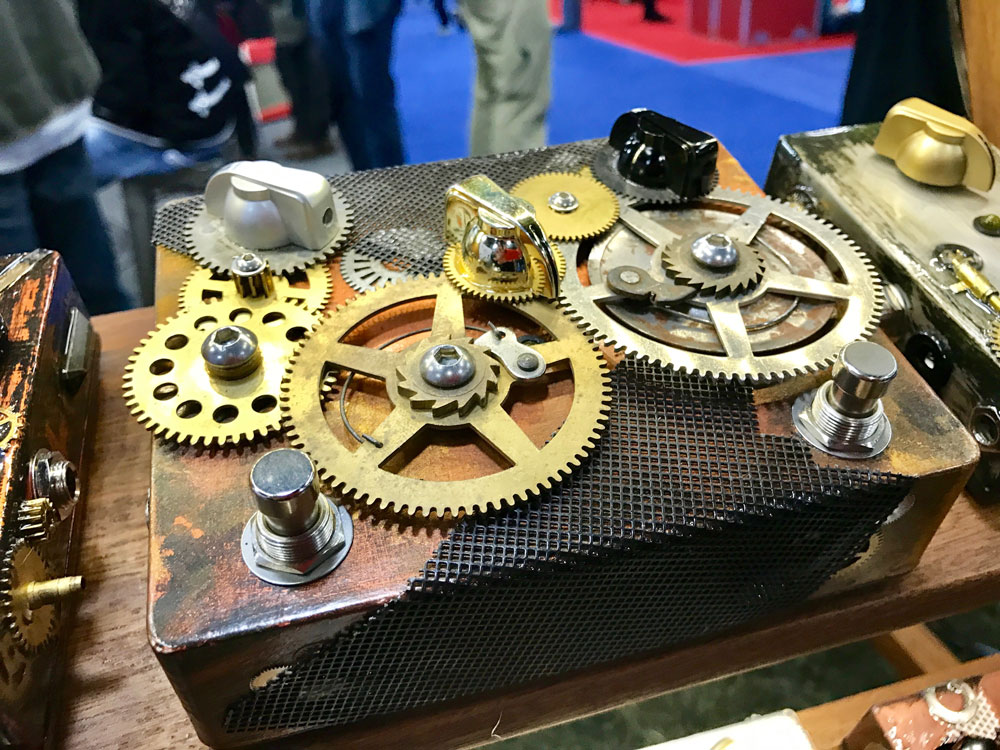
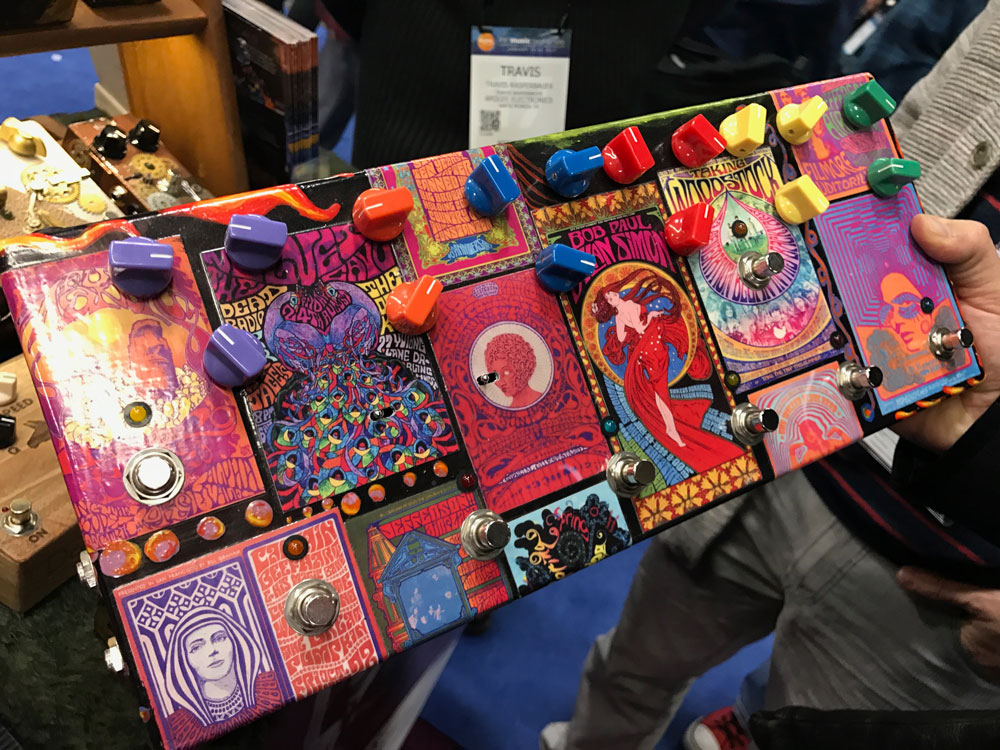
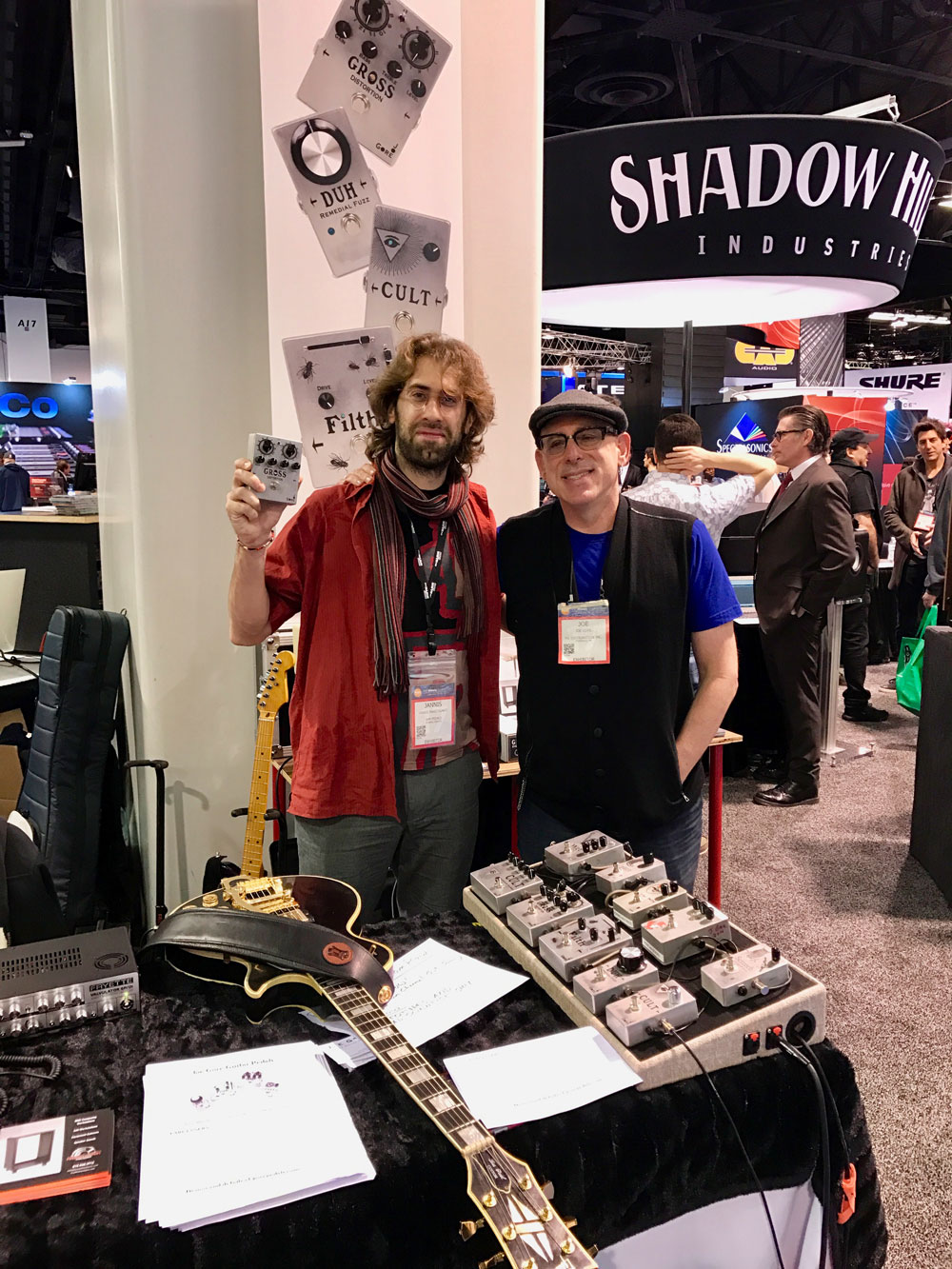
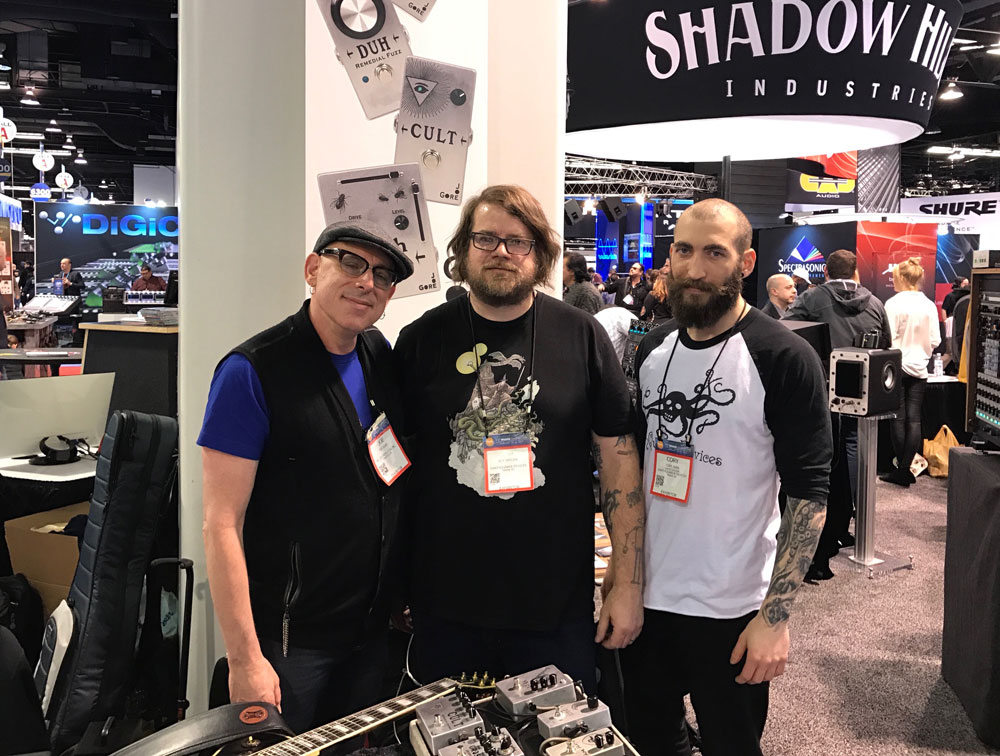
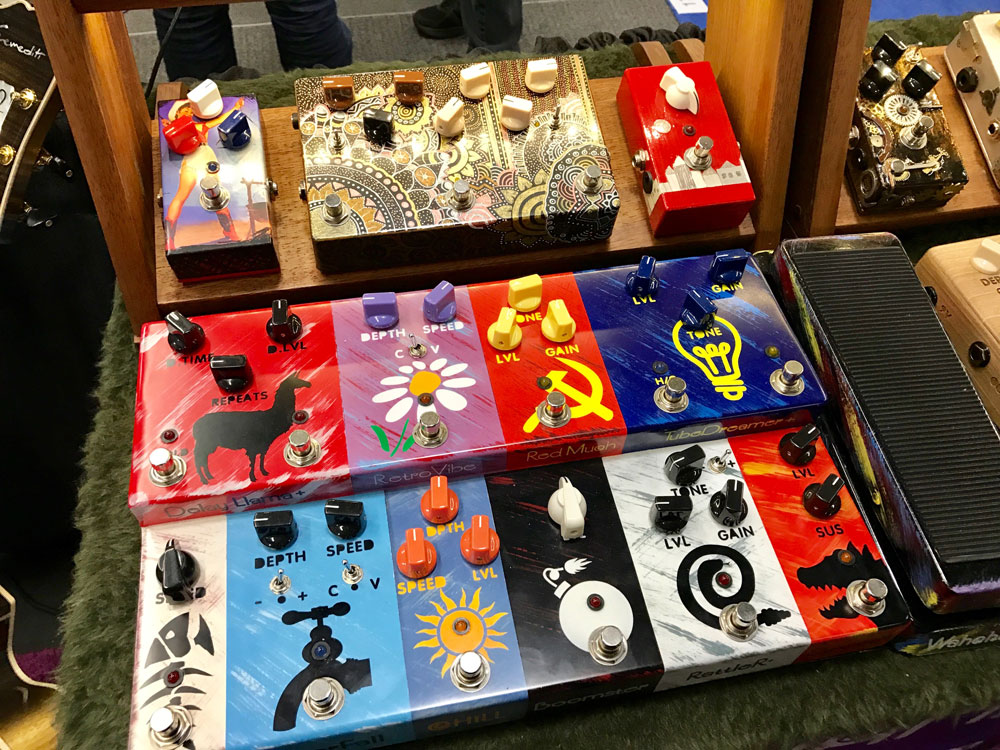
You know what sucks about attending NAMM as a manufacturer rather than a gear writer? I was epoxied to my booth all day, and I barely saw anything other than my guitar pedals. But on one rare break, I got to hang out with Jannis Anastasakis and his crew from JAM Pedals of Athens, Greece. (I highlighted some of their beautiful work in my pathetically skimpy “NAMM report.”)

Happily, there’s more to celebrate here than great visuals. JAM builds lovely versions of many classic analog effects. Their sounds and production quality are stellar, and JAM often adds modern updates such as realtime expression control, extra knobs, and internal trim pots for customizing tones. It’s quality stuff, used by many a guitar star.

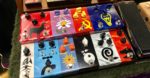
And guess what? Jannis loaned me one of his magnificent Custom Shop analog pedalboards. Γαμώτο!

Sadly, I must now pack up and return this pretty pedalboard. But I’ll be getting my own JAM Delay Llama Supreme, an expanded version of the analog delay heard here, with tap tempo, a cool modulation section, and the almighty infinite-hold switch. (I reviewed it for Premier Guitar a few months ago.)

In the meantime, this experience makes me want to try my own DIY pedalboards. Not as an item for sale — just as a way to group related effects in a single enclosure for stage use. Gears are spinning ….

Categories
guitar

Meet the Resistocaster!

Here’s a new guitar I put together using Warmoth parts and Lollar Gold Foil pickups.

Around the time I started assembling the Resistocaster, I reviewed the cool new Supro Westbury — another guitar with gold-foil pickups — for Premier Guitar. It was an interesting juxtaposition, because the Lollar pickups are cloned from the models in vintage Teisco guitars from Japan, while the nouveau Supro pickups are based on the gold foils made in the ’50s and ’60s by Chicago-based Valco and used in several of the brands the company produced.

While the two sets don’t sound identical, they have much in common. Both provide full-frequency tones, with warm, cushy bass and open-sounding highs. Like vintage lipstick tube pickups, they have an attractively “hollow” character that always reminds me of an acoustic guitar. Gold foils are gorgeous for clean sounds, while overdriven tones are big and buttery, albeit it rather loose-sounding. (Though adding a bass-cut circuit to this guitar let me dial in tighter sounds.)

Another odd property: With almost all pickups, pulling back the guitar’s level cleans up tones on overdriven amps and dynamically responsive distortion pedals. (That behavior is pretty much the entire premise of my Cult pedal demo.)

But with gold foils, that just doesn’t work! As you lower the guitar volume when playing through distortion-producing gear, tones don’t clean up — they get a little quieter, then sputter out in the pot’s lower range. This isn’t intrinsically a good or bad thing, but as a player who tries to exploit the tonal shifts produced by varied guitar output, I was startled by this property.

At NAMM, I mentioned this behavior to Ken Calvet of Roadhouse Pickups, who created the Valco-style gold foils for the new Supros. He nodded in acknowledgement, and said it was due to the idiosyncrasies of the rubber magnets used in gold foils. (I probably wouldn’t understand the science even if he’d had time to explain it to me.)

But while it took me a while to get comfortable with the gold foils’ unusual dynamic behavior, I needed zero time to fall in love with their warm, character-rich tones. (This, by the way, is the same set of gold foils I recently demoed in my alternative Strat pickups video.

I love how this guitar turned out, and I expect to use it a lot this year. 🙂

Categories
Effects guitar

Nice NAMM Things

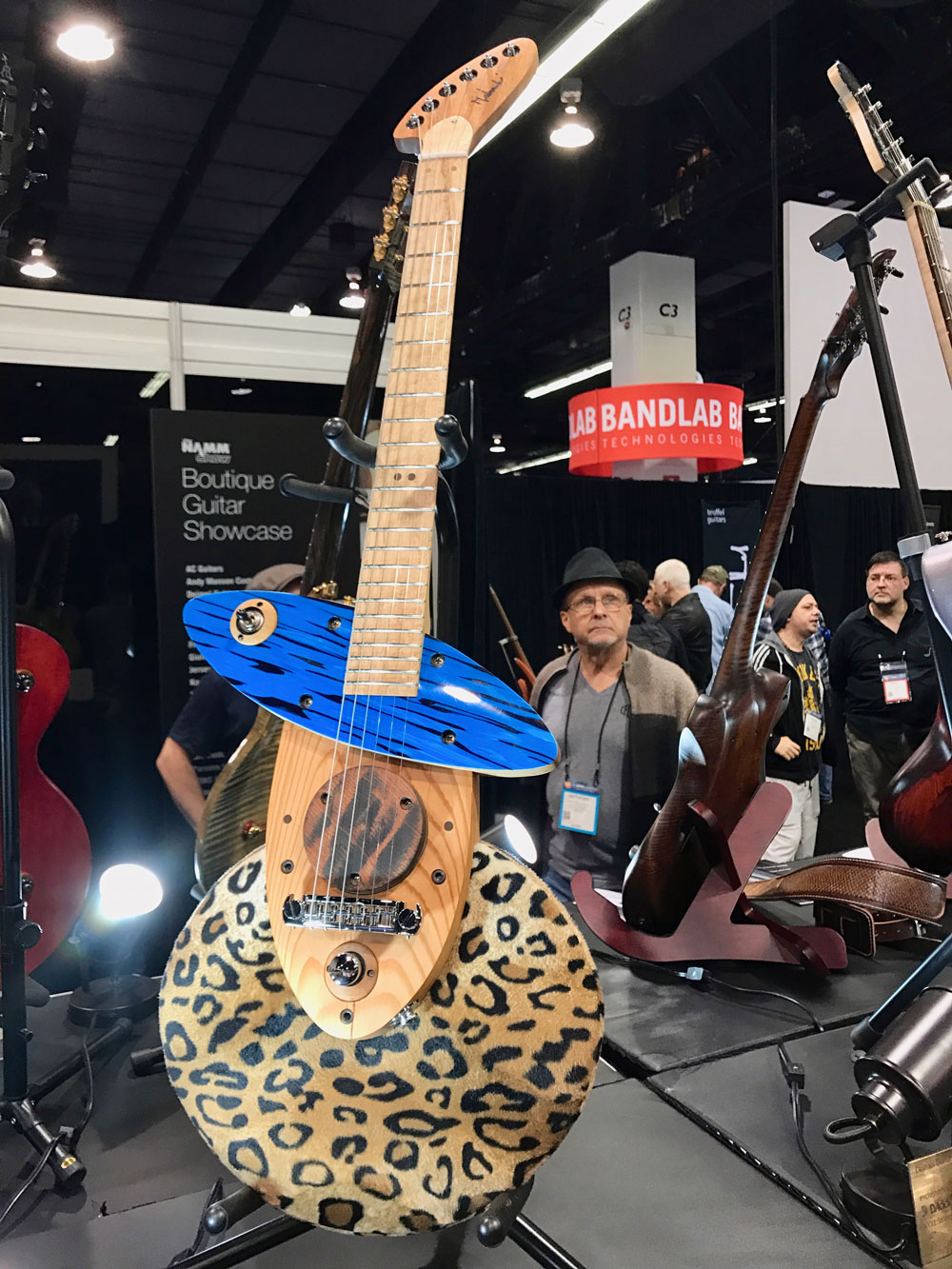
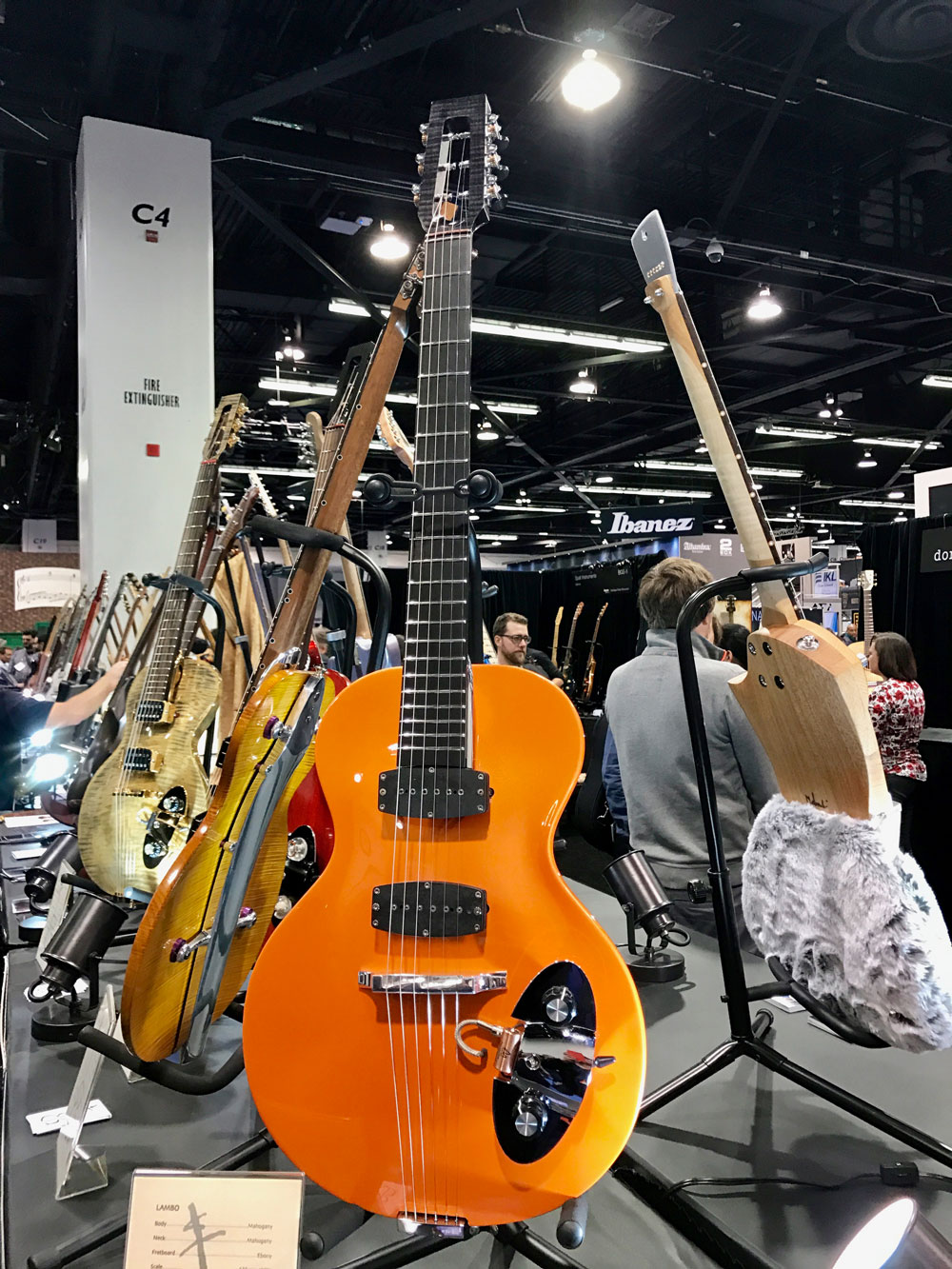
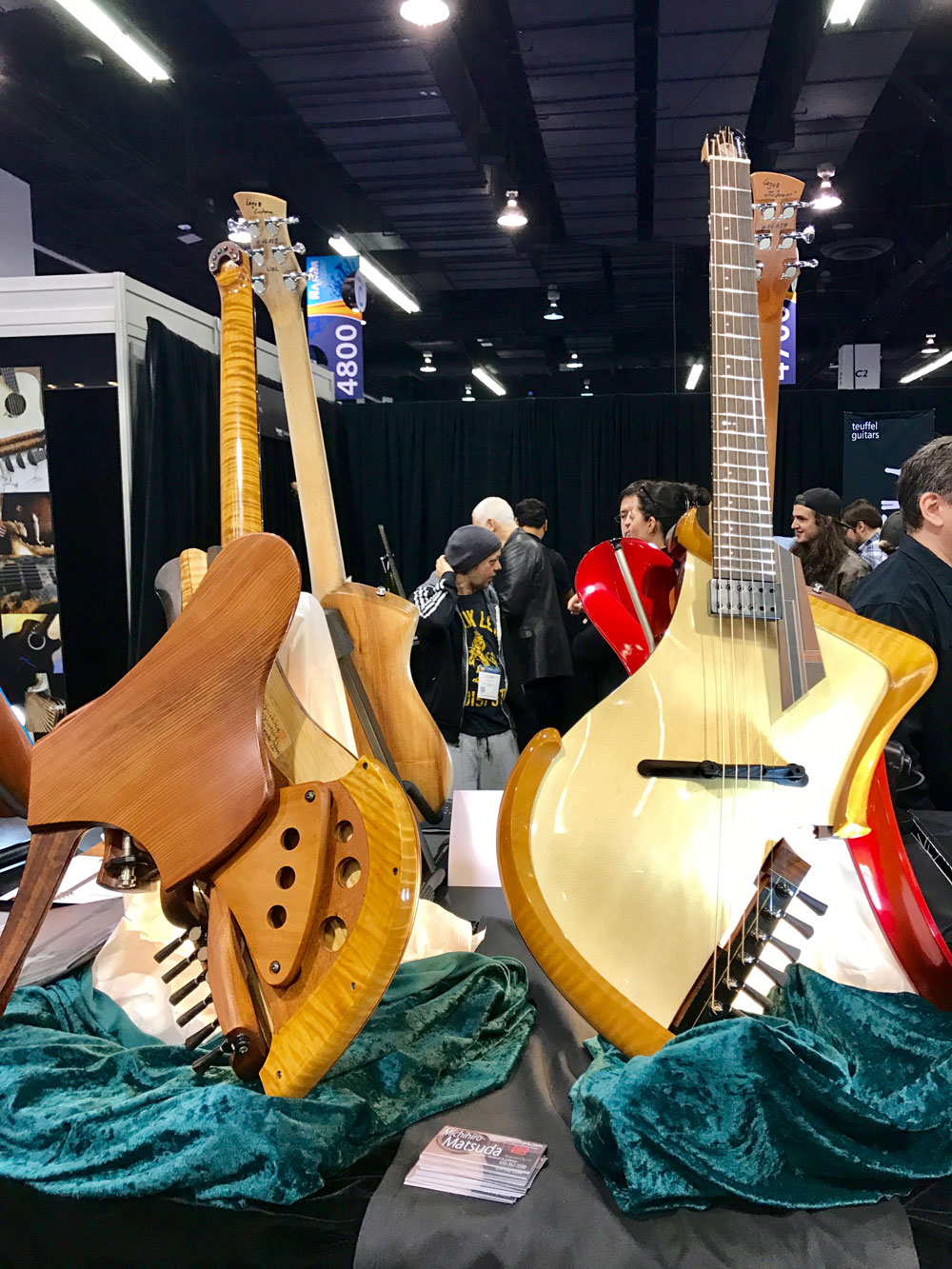
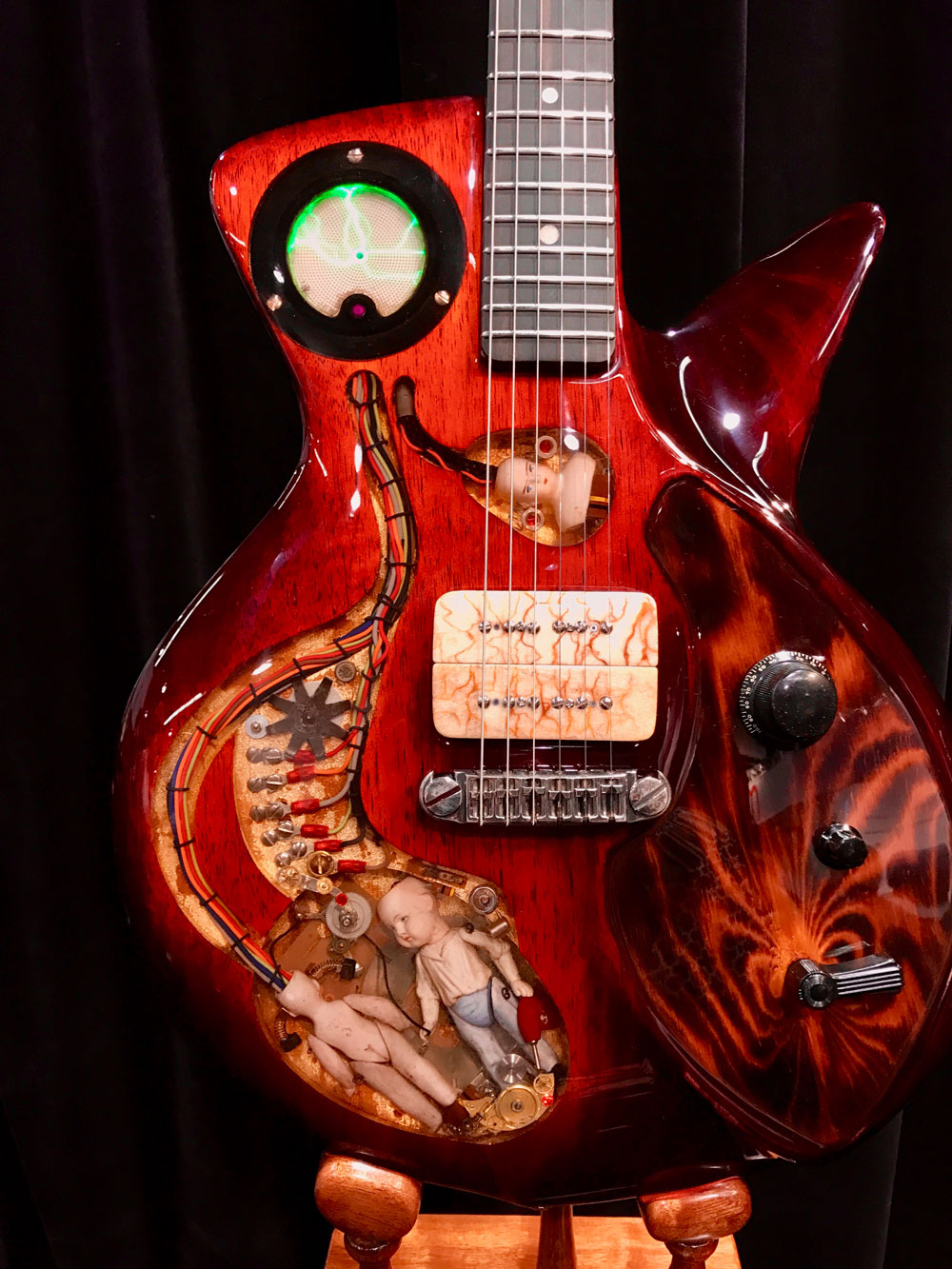
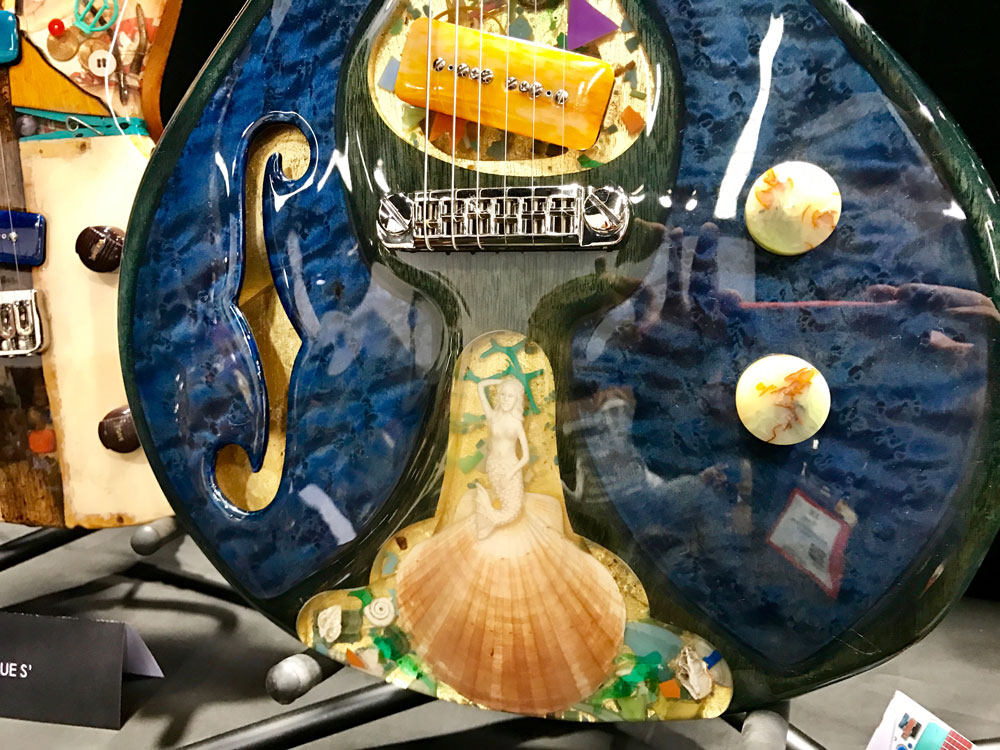
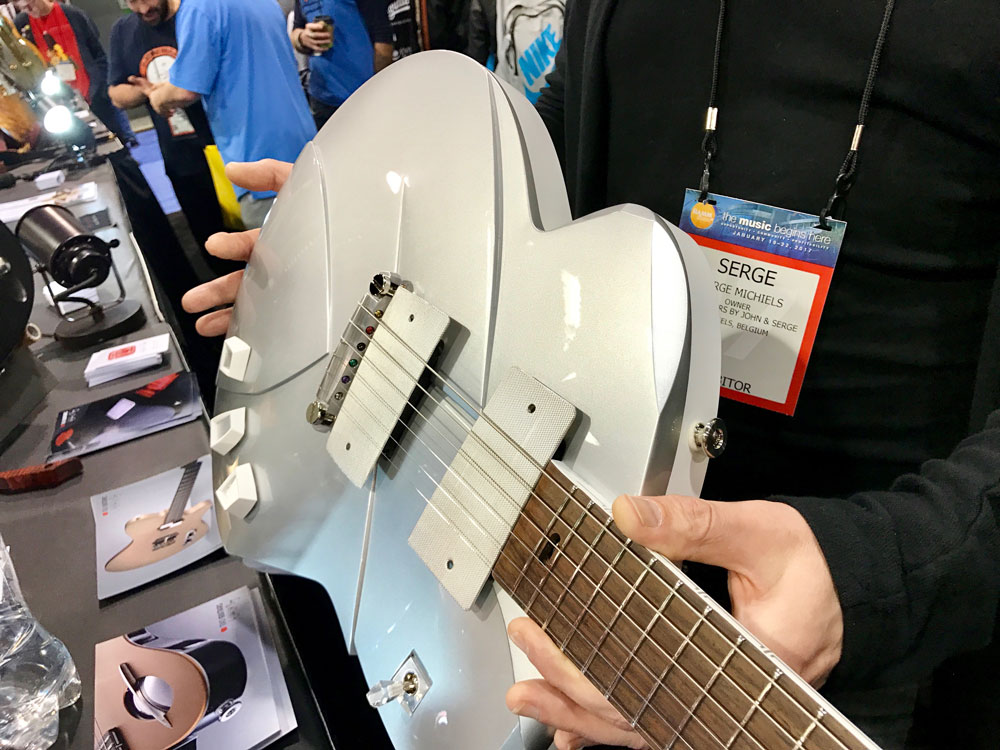
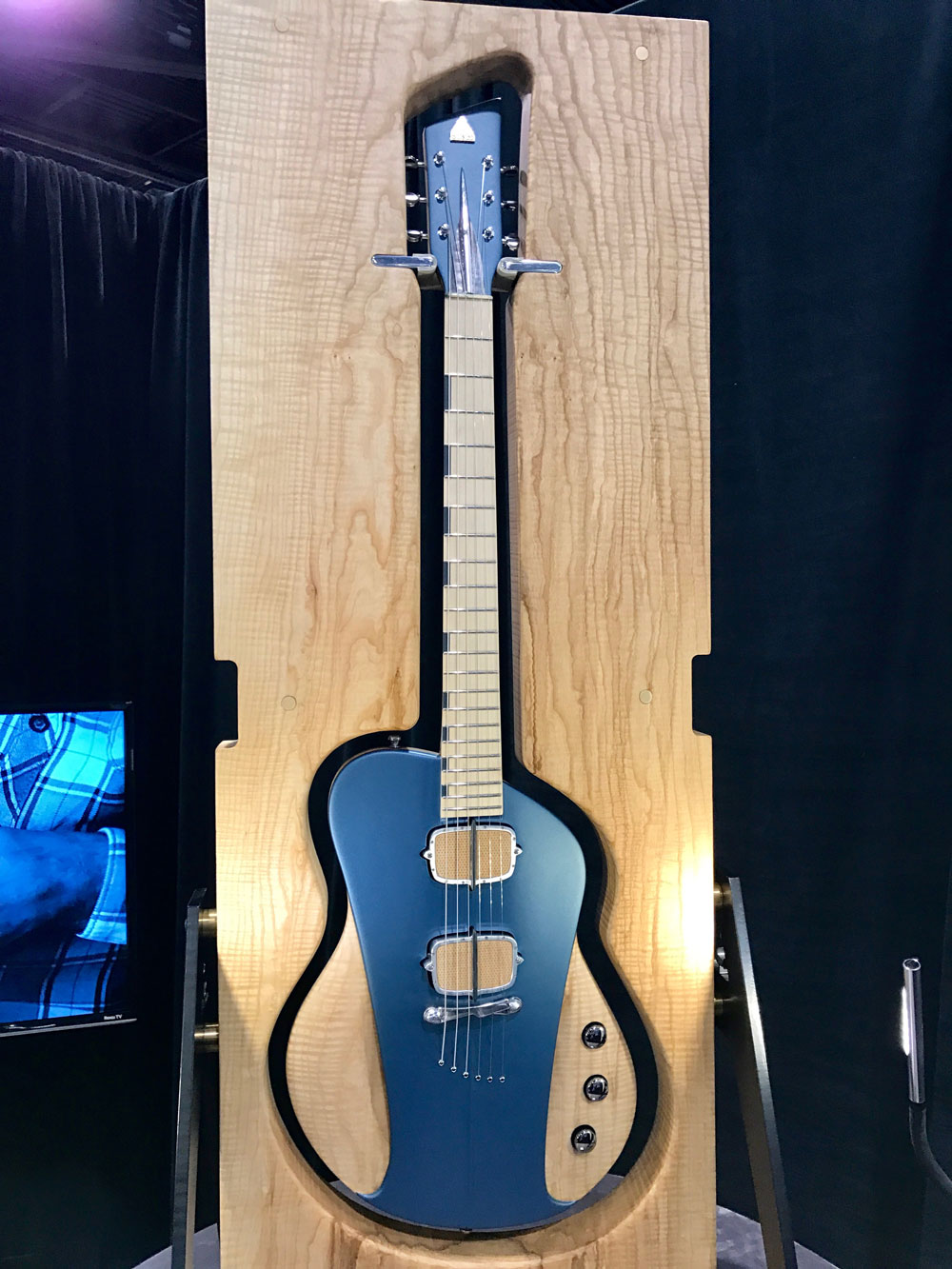
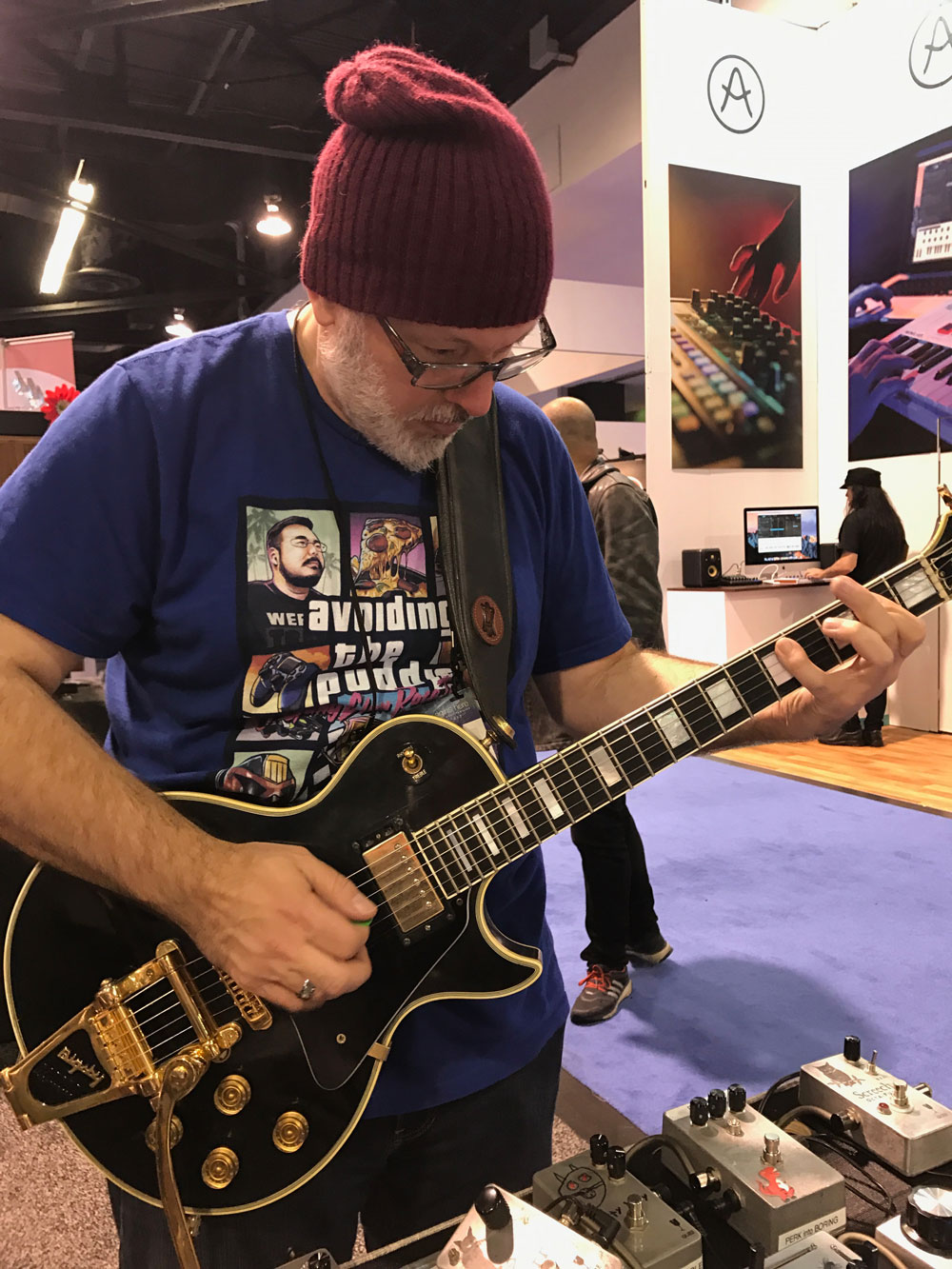
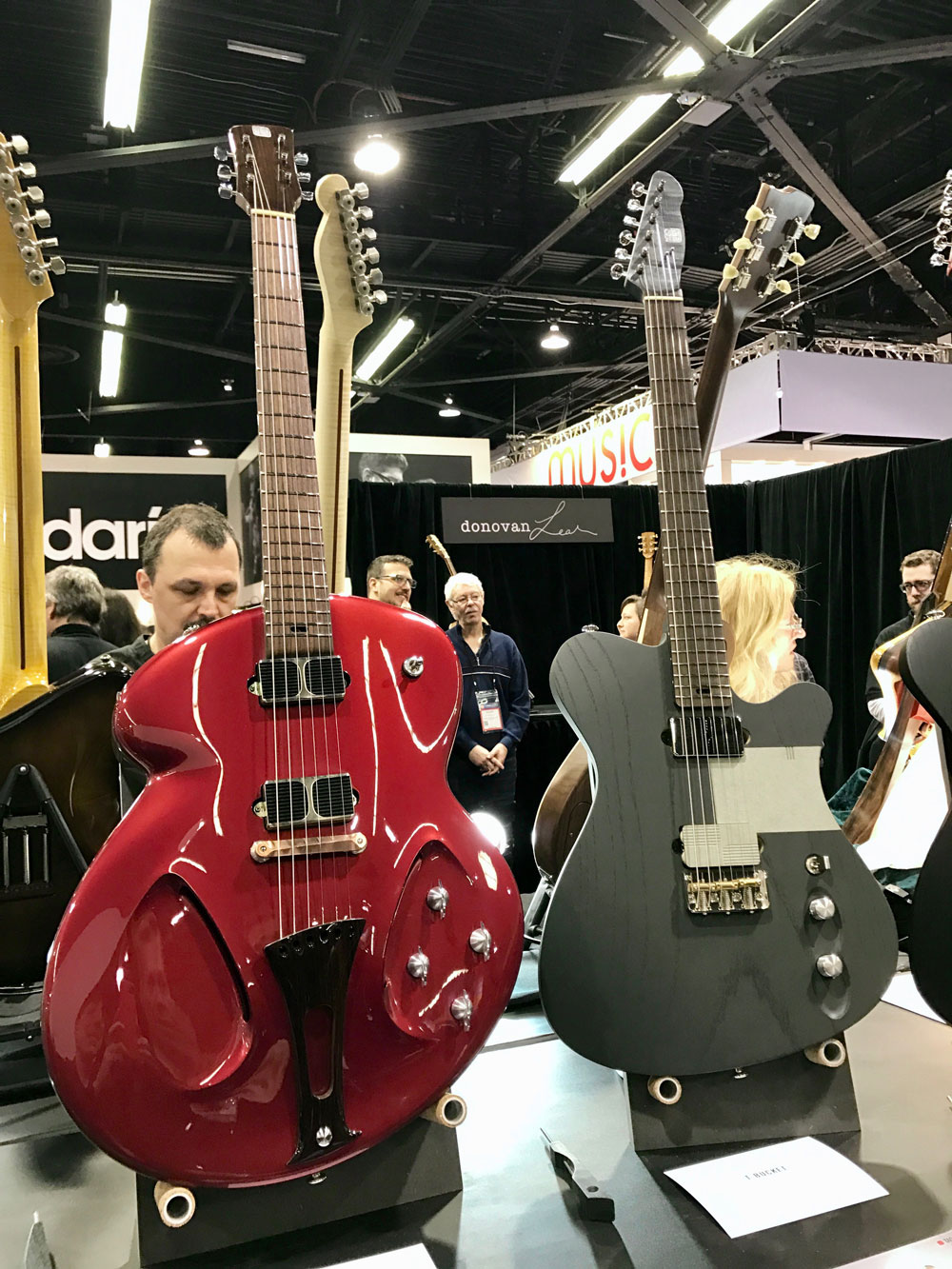
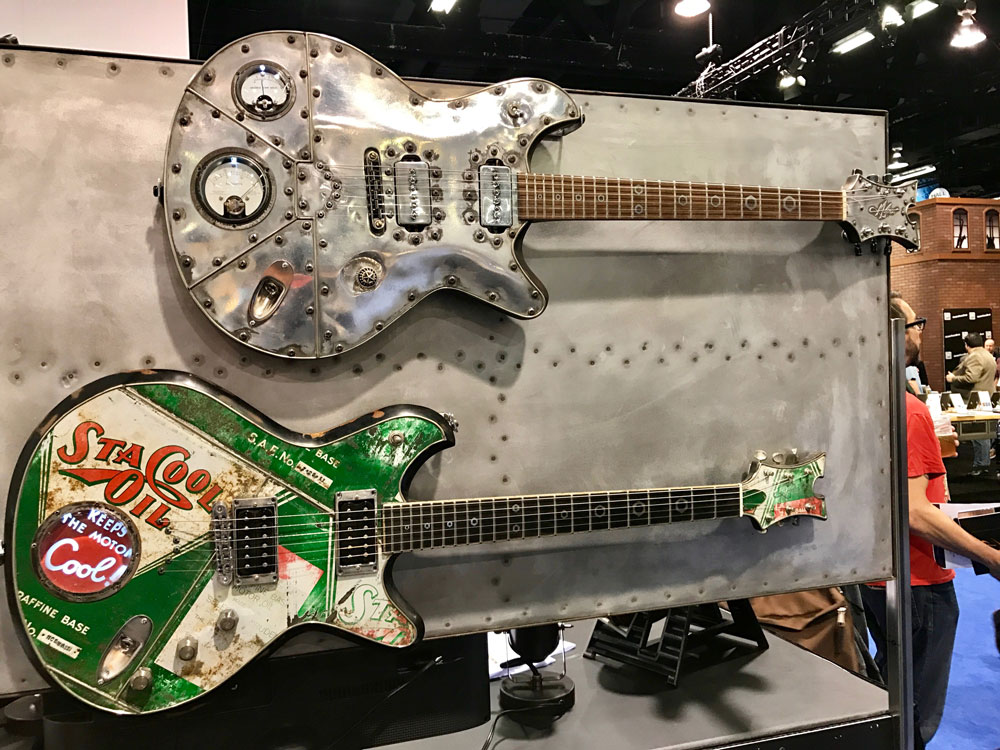
This doesn’t qualify as any kind of NAMM report. I was imprisoned behind the desk at my Gore Pedals booth, relieved only for bathroom breaks and a couple of visits with old friends. Even so, I saw some lovely and inspiring things, especially the visionary instruments at the Boutique Guitar Showcase and the ravishing stompbox visuals from Greece’s JAM Pedals. (JAM pedals sound great too.) Plus a few old friends dropped by. It was so fun, I went minutes at a time without thinking about the inauguration.

Jannis Anastasakis of JAM Pedals was kind enough to loan me one of the eye-popping pedalboards from his display (the last image in the slideshow). I’ll be posting a demo here soon!

Categories
Effects

NAMM I Am

I has a sign.

Is anyone attending the 2017 NAMM thing next week in Anaheim? I’ll be there demoing my pedals and checking out the latest guitars and gizmos. If you’re there, stop by and say hi! I’ll be at booth #6820 in Hall A (that is, the pro audio room where guitarists fear to tread) with M1, my distributor (and sister company of my partners, Vintage King). I’ll be playing and talking about my stuff, and there will also be headphone stations where you can try them out for yourself.

The headphone rigs are newfangled Valvulators from Fryette Amplification. These are cool 1-watt tube amps for direct recording, with amp-style controls plus speaker emulations. There will also be a set of my pedals at Fryette’s booth, #4844 in guitar-intensive Hall C.

After writing about other people’s gear for so many years, it’s still difficult for me to wrap my head around the notion that I’m attending the show as a manufacturer, not a “journalist.” But I just completed a key manufacturer’s rite of passage: I order a 24″ x 80″ retractable sign hyping my boxes, just so I can stand in its shadow. It feels so … grown-up.

I’m not officially announcing our 2017 releases ’cause we’re not 100% what they’ll be yet. But I will be bringing a box full of experiments and prototypes, which should be amusing, assuming my sketchy demo builds survive the road trip. I’m also bringing a couple of new DIY guitars that I haven’t shared here yet.

I’m not really up to speed yet on what new gear to expect, so I haven’t yet put together a must-see list. Is there anything you are particularly eager to check out? Anything I should know about? Thanks in advance for your tips!