Categories
Amps DIY

My Sad Little Amp

My amp has a sad.

Thank heaven I became a guitar geek shortly before my 12th birthday. If I hadn’t, I probably would have requested a minibike for my bar mitzvah present a year later, instead of my first electric guitar. And today I’d be an over-the-hill biker instead of an over-the-hill guitarist.

My schoolteacher mom had a colleague whose son worked at Fender in Fullterton, California, not far from where I grew up. (Sadly, I’ve forgotten his name). Shortly before my big day, we visited his mobile home (let’s face it: the musical instrument industry has never been lucrative) to audition some decidedly post-CBS guitars he was selling. I opted for a black Jazzmaster, though I was tempted by the paisley Tele. It was my sole electric throughout high school, though I sold it at exactly the wrong time: five minutes before new-wave guitarists such as Tom Verlaine and Elvis Costello made it cool again. (Though I shouldn’t complain, since I managed to procure my pre-CBS Strat around that time.)

The Fender guy didn’t have extra amps on hand, but I slavered over the oversized amps in the early-’70s Fender catalog.Which sleek silver combo would greet me on the big day?

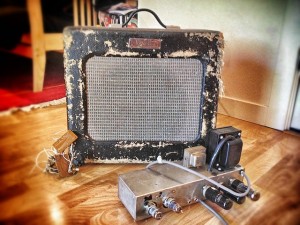
To my horror, I received an ancient, teensy-weensy combo amp, an ugly thing spray-painted black. I was mature enough not to express anything other than delight, but my heart ached. I wanted an amp as big and loud as my dreams, not this sad relic. They told me I was a man when I turned 13 — but I didn’t feel like one without the Dual Showman of my dreams.

My disappointing amp was a tweed 1952 Deluxe — which makes it sound like this story will have a happy ending. Sadly, no. 

Categories
Digital guitar Pickups

Synth Guitar:
Did They Finally Get It Right?

Anyone here ever owned a synth guitar? Not a Keytar, but a guitar fitted with a hexaphonic pickup that transmits MIDI data to external devices? And if so, do you readily admit it?

The synth guitar has had one of the most checkered histories outside of, well, checkers. Since the ’70s, many brilliant minds have tried to bridge the gap between the plucked string and the external tone generator. But despite a few notable exceptions (mostly in the prog/fusion realm), guitarists have been reluctant to embrace the technology.

I’ve had a Yahama synth system (basically a clone of the Roland GK-2) for many years, though I rarely use it. Like a lot of players, I balk at the installation hassle and the ugly, cumbersome hardware. (Plus, I’ve played keys longer than I’ve played guitar, so I don’t really need a guitar to conjure synth sounds.) Also, those systems are expensive! Many players have been disappointed. Many businesses too — the Avatar guitar synth probably killed off the ARP company.

But I’ve been thinking about guitar synth again since last January’s NAMM show, where Fishman previewed their Triple Play system, a new take on MIDI guitar which I mentioned at the time here. (Here’s much more info from the company’s Summer NAMM press release.)

I finally got to play a late-stage prototype this weekend. But before I discuss the experience, I need to confide that a) Larry Fishman is a pal of mine, and b) I may be working with his company on the product’s documentation and marketing. (My words of praise are 100% sincere — but as always, consider the source.)

Categories
Digital Effects guitar Recording

Tempo-Synched Effects: Cool or Crap?

Does music groove more when all the effects are in sync?

What’s better: synchronizing your modulation and delay effects strictly to tempo? Or “freewheeling” it, and letting the effects wobble and drift a bit?

I eagerly embraced tap-tempo stompboxes when they appeared — how liberating to re-clock your effects without stooping over and fumbling with little knobs! But these days, I often forego strict timekeeping in favor of a sloshier, more organic feel.

Sometimes tempo-sync makes parts groove better. And sometime it makes everything sound cheesy, like the computer-clocked sound and lights of a loud and lousy Broadway show.

One thing that made me more reluctant to over-synchronize my sound was the illicit release of the various “Multitrack Master” audio files, in which classic rock recordings were distributed as individual solo tracks — an illegal yet awesome development I wrote about here. This example in particular blew my mind:

Okay, the analog delay effect on that iconic keyboard part is a bloody mess, the echoes flamming chaotically against the played notes. But would anyone dare suggest it’s not one of the grooviest parts ever committed to tape?

On the other hand, when I do go digital, I’m more likely to take it to extremes. Here’s a little example I threw together using a multi-effect plug-in created with Native Instruments’ Reaktor. (Reaktor itself isn’t an effector, a synth, or a sequencer, but a programming environment for creating all those things and more. This plug-in, called Freak Show, is free for Reaktor owners via the Reaktor User Library. The creator is Carsten Brück.) It’s a set of eight effects — but the active effect changes in time with the sequencer. (You might have reverb on beat 1, pitch-shift on beat 2, phasing on beat 3, etc.) Check it out:

Categories
guitar

Do You Ever Give It a Rest?

I got out of the studio for a few days…WAY out.
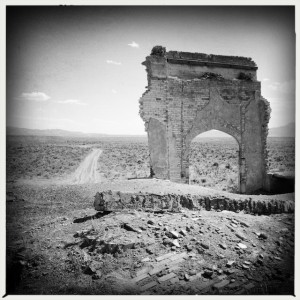
Welcome to Metropolis, Nevada, population zero.

Do you ever find it beneficial to put down the damn guitar and get out of the house?

Usually, my answer is “no” — I like hanging out in the studio, and am immensely grateful that I get to do something I love most days. But after a long stretch of over-work, I was hankering for a nice, long road trip, and decided to go on a photo safari of remote ghost town sites in Northern Nevada — something I’ve never done, and a serious change of venue for an effete urbanite like me.

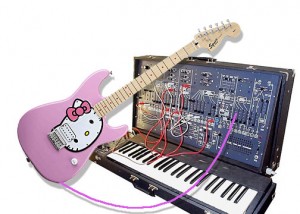
The plan: explore by day and play with my mobile recording rig in the evening. Crank out a few posts on small audio interfaces and recording via GarageBand for iPad. So I tossed my Hello Kitty guitar into the back of my rented 4×4, figuring I could prop it in front of disintegrating shacks and abandoned mine shafts for maximum photo fun.

And then right before departure, I unpacked all the music stuff and left it behind in San Francisco. :finger:

I just had a last-minute hunch that it might be beneficial to not play music, or even think about it, for a few days. I didn’t even listen to the radio much — just a couple of audiobooks. (Holy cow, I forgot how amazing Heart of Darkness is — and I only just realized that title of that great Gang of Four song “We Live As We Dream, Alone” is pilfered from Joseph Conrad.)

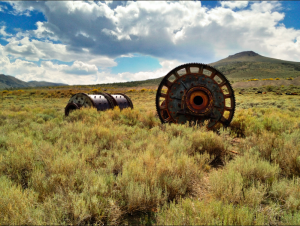
Abandoned mining equipment, Hamilton, Nevada.
No Hello Kitty guitars here!

So now I’m back home — and while I can’t claim I’m bursting with magical inspiration, the guitar necks feel fresh in my hands, and think I’m a little more mindful about choosing and shaping notes — or at least more relaxed about the process.

Anyone have similar experiences? Instances when temporarily fleeing your musicianship improves, or at least refreshes, it?

Categories
guitar Music

Name that Guitar Cliché!

Are drummers smarter than guitar players?

I’m not a huge fan of drummer jokes. I know plenty of smart drummers, and it seems to me that we should accord them every bit as much respect as if they played an actual musical instrument.

Still, I bridle at the notion that they are more verbally skilled than we are.

I’m talking about the drumming tradition of referring to stereotypical licks via funny, short phrases. Shouldn’t we guitarists and bassists have a similar shorthand for our clichés? It won’t necessarily make us play any better, but at least we can display a little verbal creativity, especially on those days when musical creativity calls in sick.

For those who have absolutely no idea what I’m talking about, allow me to link to a few examples. Here’s a nice explanation of the ever-popular “Pat Boone, Debbie Boone” fill:

Categories
DIY Effects guitar

Octave Fuzz Overdose!
Seven Classic Circuits

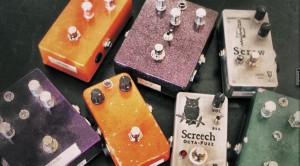
These funky homemade pedals represent all the leading octave-fuzz circuits.

I had no idea I had so many octave fuzz pedals! I had no idea they sounded so different! And after spending way too much time auditioning and recording them, I have no idea when I’m ever going to be able to stand listening to them again! :noshake:

Naw, just kidding — I had lots of fun putting together this octa-fuzz fest. It features no name-brand pedals, just DIY clones based on old circuits. But hey, most of today’s octave fuzzes are also clones of old circuits.

In fact, imitation has always been the name of the game here. The Roger Mayer Octavia used by Jimi Hendrix was inspired by a circuit found in a British mixing console. The US-made Tycobrahe Octavia was a ripoff of Mayer’s circuit, though tone snobs tend to regard it as the superior unit. It’s certainly one of the rarest and most valuable stompboxes ever.  The name “Octavia” has also been slapped on many other variations of the circuit, including some particularly dismal models. The Prescription Electronics Experience and Lovetone Ultimate Octave are based on the Foxx Tone Machine. The Dan Armstrong Green Ringer was based on the Ampeg Scrambler, and I used the Green Ringer circuit as a jumping-off point for some of my own designs. The sincerest form of flattery abounds here.

If you make it through this seven-circuit survey, you’ll encounter most of the major players, and if you hear something that particularly interests you, you can build it yourself using readily available schematics, or buy a nice kit or boutique clone.

Now, don’t confuse this effect with modern digital devices that actually transpose the notes you play. Octave fuzzes use an electronic trick to cancels out much of the fundamental of each note, making the octave overtone stand out more prominently. The process is called full-wave rectification, and ever-knowledgable reader mwseniff explains it far more capably than I in a comment following my previous post on this topic. It’s an odd, glitchy effect that tends to require specific playing techniques for the best results. And for better or worse, it’s an effect that has so far been difficult to mimic digitally. Sure, some of the modeling boxes out there have interesting-sounding octave-fuzz effects, but they tend to score low on the analog-realism scale.

Check out the video. The post-mortem comes after, as post-mortems usually do. 

Categories
DIY Effects

Octave Fuzz: Love It or Hate It. Or Both.

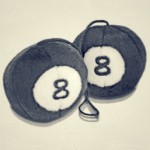
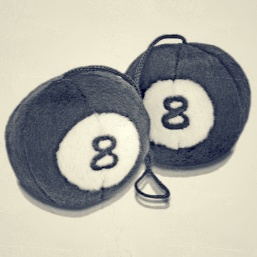
They’re fuzzy eight balls, okay? Eight as in octave. Fuzzy as in fuzz. Get it? GET IT? Oh, never mind.

Anyone have any strong feelings about octave fuzz? I’m guessing so, because not many effects produce stronger feelings. It’s not a path for the faint-hearted. Or control freaks. Or frankly, most guitar players.

I rounded up all my octave fuzz pedals and made an amazing discovery: I have way too many of them! I’m putting together a video demo of some faves, and will post it in a couple of days. But I couldn’t wait to start talking about it this quirkiest of effects.

Categories
Acoustic guitar Technique

Welcome to Fingerstyle Boot Camp!

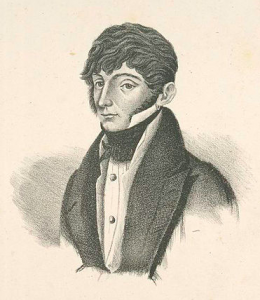
I’m 200 years old, but I can still kick your ass, punk!

UPDATE: I’m proud to announce that my fingerstyle video lesson based on the 200-year-old etudes of Mauro Giuliani has been selected to appear in the debut issue of Pure Guitar, a new digital guitar mag whose editorial staff includes my two music journo mentors : Tom Wheeler and Jas Obrecht. Also on board: jazz ace Wayne Goins, session superhero Tim Pierce, Nashville’s leading guitar tech, Joe Glaser, and other preeminent axe experts.

You’ll find my article here — but frankly, I recommend starting at the homepage of issue #1 and reading all the way through!

Congrats, guys, on the new mag. I’m psyched to be part of it. :beer:

Categories
Bass guitar Music Technique

What’s Your “Basic Concept?”

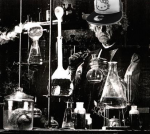
“They call me mad, but I’m actually a HAPPY scientist!”

There’s an interesting thread over on the Forum, started by reader Double D, who asked:

“Do you have a central core concept or inspiration that drives your playing? Are you squirrelled away with obscure harmony texts, or practising modes till your fingers bleed? Do you have go-to chord substitutions that define your sound? Do you have a creamy harmonic centre?”

Like most great questions, it’s really hard to answer (though some folks managed to reply in extremely articulate and compelling ways). I’ve been pondering it myself for the last few days, and the best answer I can come up with is something along the lines of what I hinted at in this recent post on chromaticism, namely a liquid sense of modality based on the notion that most of us Westerners really only perceive two modes — major and minor — but that there’s a vast amount if “wiggle room” when it comes to placing individual scale degrees.

To put it another way, most of what I play is based on simple tonic triads, major or minor, but the placement of all the other scale degrees is highly negotiable. For me, the advantage of viewing scales this way is that they remain grounded in harmony, and vice-versa. As opposed to the way many of us were taught modes: as purely mathematical sets of intervals divorced from their chordal implications — or just a bunch of diatonic scales that start on the “wrong” notes.

Hey, why is everyone nodding off, staring out the window, or checking their phones? Wake up and talk about the methods of your madness!

:cuckoo:

Categories
Bass DIY guitar

How to Clean a Dirty, Filthy, Gross, Disgusting, NASTY Guitar

This photo was digitally altered to make the guitar look even dirtier than it was — but not by much.

Sometimes only the threat of public exposure can inspire a proper clean-up job. Case in point: I hadn’t groomed my battered ’63 Strat in years, and when I pupped it from the wall for my recent post on the instrument, the fact that I was about to show it to the world you guys made me finally admit how gross it had become.

Now, it’s not like I wanted it to sparkle or anything — seems to me that an old guitar should look old, and removing 100% of the grime would be a little too much like those octogenarians with preternaturally white teeth. I mainly just wanted to remove the sticky crud that had accu