Categories
guitar Music

A REAL Cult Band

I just watched an amazing documentary on Netflix: The Source Family, the story the early-’70s cult led by James “Father Yod” Baker. Baker’s Sunset Strip restaurant, the Source, was a fixture of my LA youth — a popular hang for both hippies and music-industry types. (You’ve probably seen it as the backdrop for the breakup scene in Woody Allen’s Annie Hall.)
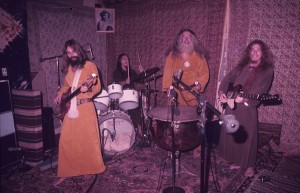
source
The hell with cowbell! We need more tympani!
James “Father Yod” Baker (with mallets towards none) fronting Ya Ho Wa 13.

One of Baker’s less eccentric notions was to blow a fortune on music gear and a pro studio, where his self-styled “band,” Ya Ho Wa 13, reportedly recorded 65 albums’ worth of improvised music, much of which has been reissued in recent years. Prolific, chaotic, and fueled by a philosophy comprehensible only to its creator, the body of work is a bit reminiscent of Sun Ra’s, minus the talent.

Perhaps the best thing you can say about Baker is that he was no Manson. I don’t know that anyone died on his watch other than Baker himself (in an idiotic stunt I’ll refrain from sharing so as not to spoil the film’s stupefying denouement, though you can devour the details here if you like).

But he was a serial psycho-sexual abuser who acquired 14 very young wives while liberating hundreds of starry-eyed acolytes from their worldly possessions and cruising LA in a white Rolls Royce. Among the film’s most remarkable scenes are Ya Ho Wa 13’s recruiting concerts held at well-to-do West Side high schools and colleges, including my alma mater. Just … wow.

(Buttloads more audio/video here.)

To its credit, though, the film isn’t moralistic in the slightest — directors Maria Demopoulos and Jodi Wille tell the story via the words of its witnesses, supplemented by film and photos of the cult’s own Isis Aquarian, Baker’s anointed archivist. (They report — you gawp in astonishment.) Many surviving members appear onscreen, as do such rock admirers as Billy Corgan and Don Bolles of the Germs.

The film is a companion to Isis Aquarian’s 2007 book (co-written with fellow Source family member Electricity Aquarian), The Source: The Untold Story of Father Yod, Ya Ho Wa 13, and the Source Family. The book includes a CD of Ya Ho Wa 13’s music. I haven’t read it — but will now!

August 8, 1969: Connie McCormack, Shep Shepheard, Nancy Bacar and cult leader Ken Kerman arrested.
Fictional mugshots of our fictional band’s fictional 1969 arrest, along with their fictional cult leader.

I knew the general outlines of the Source story, but not the hundreds of bizarre details that make it so compelling. Elise Malmberg and I drew from it a decade ago while creating Clubbo Records, our “music fiction” project. We concocted the Fold, a fictional hippie cult band, using bits pilfered from various spiritual scams of the era, including the Source and the equally fascinating Process Church. (A fictionalized Process Church also figures in Last Days, a darn good horror novel by Adam Nevill, though not quite as awesome as Nevill’s The Ritual, with its Scandinavian black metal underpinnings. It’s as scary/funny as actual black metal.)

Naturally, our fake story isn’t one-tenth as interesting as the shit that actually happened. But it did produce “Into the Fold,” one of our best bits of counterfeit music, featuring the brilliant Chuck Prophet singing the Morrison-esque role of Gary “Shep” Shepheard, who fronted the Fold’s rock band under the direction of cult leader Maestro Ludgang. (Elise wrote the song, and I played the music, except the drums, which are by Patrick Campbell. Other friends served as photo models.)

Meanwhile, I’ve been working on a new piece that has some sounds and phrases I like, but has steadfastly refused to take shape. I tried recording it the other night, but every soloistic element I added sounded stupid. When live-looping, I’m so self-conscious about excessive repetition that I use every trick I can muster to vary the sound and move things  along. This time, though — under the spiritual influence of The Source Family, perhaps? — I just let the loops roll, visualized my ego dissolving into a pool of pearlescent light, and dug on the trance. Man.

It’s called “Unfolded,” after the Fold, of course.

But please, folks — if I start calling myself Maestro Ludgang Aquarian, do me a favor and stage an intervention.
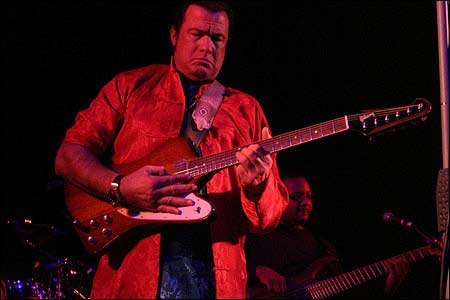
steven_seagal_guitar
Actor Steven Seagal, who belongs to the homophobic (yet oddly homoerotic) Vladamir Putin cult, plays a reverse Firebird like the one that Ya Ho Wa 13 used. Coincidence?

UPDATE [06.16.14]: Okay, this is too great: I just shared this post with my pal/fellow Premier Guitar editor Charlie Saufely, who told me he played for a Ya Ho Wa 13 tribute band that performed in front of original band members when this film premiered at San Francisco’s Roxy Theater. Afterwards he got to jam with Djin, the guitarist. “It was a thrill,” Charlie says. “He was way more into skronking than blues jamming. We kinda went off on a Thurston-and-Lee, hail of sonic scree barrage. He had the Firebird … it was surreal. He reached over at one point and started scraping my strings with his fingernails. That was pretty sweet!”
Categories
Gigs

I’m Performing Solo. Yikes.

joe_solo
Seriously, dude — where’s my band?

Anyone have much experience playing solo instrumental guitar gigs?

Even though I’ve been playing since the Pleistocene, I’ve only performed solo once since I was a teenaged classical guitarist. But I’ll be making the stumble leap this Wednesday, Sept. 11th, when I perform north of San Francisco at the Sleeping Lady Cafe in Fairfax. I’ll be a guest at Teja Gerken’s monthly fingerstyle guitar showcase, performing alternating tunes with Teja and Mark Goldenberg. (Gig details here.)

Both Teja and Mark are gifted players and composers — check out the evidence here and here. I believe they’ll be playing acoustically, while I’ll be dragging up my whole frickin’ looping/synth rig. Because what could provide better counterpoint to an evening of refined and intelligent fretwork than a goddamned electronic racket?

Oh — that one solo gig? It too was a multiplayer solo guitar night featuring some astonishing players: Will Bernard, Jim Campilongo, and Buckethead. Will, Jim, and Brian were as amazing as you’d expect. Meanwhile I put everyone to sleep by performing the entire Bach A Minor Lute Suite on steel-string acoustic. (I’m sure the audience was duly impressed by my formidable memorization skills as they nodded off.)

I’m not repeating that mistake! This time it’ll be fuzz and feedback, with a double side order of ring modulation!  :pity:

So got any survival tips for performing solo? Any good jokes for during the inevitable laptop crash and reboot?

If all else fails, I can borrow a trick that the late, lamented Danny Gatton once shared with me in an interview: A lifelong tinker, Gatton built a stompbox designed to blow the power in any club. If he didn’t like how the gig was going, he’d click it on, plunging the venue into darkness and calling it a night. (Or so he claimed.) Hmm — maybe that’ll be the next tonefiend DIY project….

Categories
Digital Recording

Logic Pro X:
What’s New for Guitarists & Bassists?

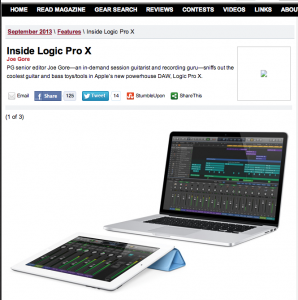
Inside Logic Pro XAs promised: an overview of Apple’s new Logic X Pro, with an emphasis on what’s new and cool for guitarists and bassists. Lots of movies and audio!

It’s here.

This is an exciting post for me, and not just because I get a desperately needed break from Klons and Screamers. I’m thrilled to bits about Logic Pro X and MainStage 3, though I’m still wrapping me head around them. (Yeah, I worked as a developer for both products, but I didn’t get a proper program-wide view until last week’s release.)

Also, it’s my first story for Premier Guitar, whose staff I’ve just joined as a senior editor. I’m stoked because it reunites me with PG editor Shawn Hammond and senior editor Andy Ellis, both of whom I remember fondly from my Guitar Player magazine days.

There’s much talent and coolness on the staff. I’m a happy little guitar nerd. Plus, the schedule is loose enough that I can still record, perform, and continue to work with audio/software clients.

What does the gig mean for this blog? Good things. I have no plans for a major course change — there are too many things I can only cover on a non-commercial site, including some of the topics closest to my heart. Meanwhile, working with PG will keep me more up-to-date on new music, new gear, and scurrilous guitar community gossip. In some cases, though, I may link to a PG article I’ve written rather than duplicate the work here. Today, for example. 🙂

Categories
Effects guitar Recording

Klon vs. Screamer Test:
The Results Are In!

As promised, the correct answers to the Klon vs. Screamer blind listening test posted exactly a week ago:

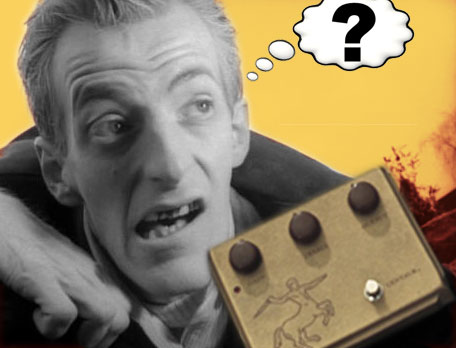
klon_zombie

Example 1: medium gain, medium tone

Pedal A = BYOC clone
Pedal B = Klon Centaur

Example 2: high gain, medium tone

Pedal A = BYOC clone
Pedal B = Klon Centaur

Example 3: low gain, medium tone

Pedal A = Klon Centaur
Pedal B = BYOC clone

Example 4: medium gain, bright tone

Pedal A = Klon Centaur
Pedal B = BYOC clone

Example 5: medium gain, dark tone

Pedal A = Klon Centaur
Pedal B =BYOC clone

And the winners are…

Categories
Digital guitar

Fishman TriplePlay Demo:
Now with More Nasty!

For the first Fishman TriplePlay demo I posted last month, I featured pretty, naturalistic acoustic sounds. This time around I went for something a little less polite.

I’ve been having a blast — albeit a humbling blast — trying to play real-time drum parts from the guitar. I still suck if it’s much more complicated than what I play here, but I can imagine learning to do it well. It’s also fun using the guitar to access the big keyboard sound libraries I’ve built over the years. Perhaps most exciting of all are the hybrid guitar/synth/sample sounds I’m starting to develop. (There aren’t any in this demo — the sounds are either samples or processed guitar, though I blur the lines with guitar-ish samples and guitars processed to sound like machinery. Next time, though, I’ll try to showcase some of those unholy hybrids.)

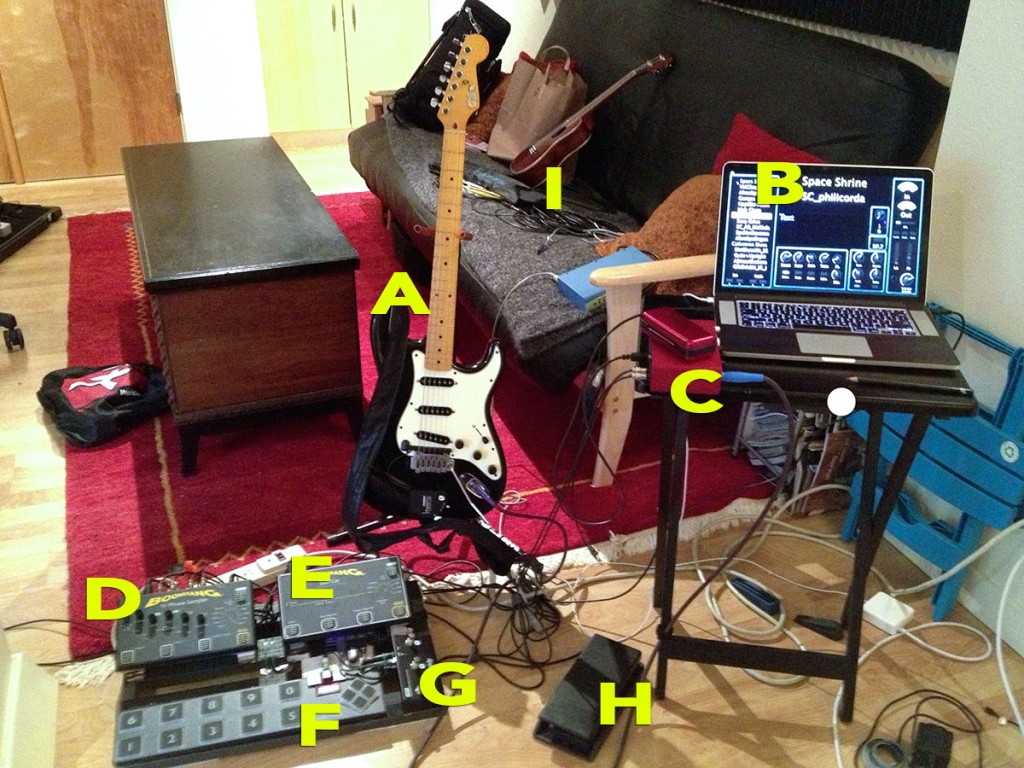
Here’s how the setup looks from my perspective. (I’m not trying to be secretive about what’s on the floor — it’s just hard to fit into the frame, even with a wide-angle lens.)

Joe's looping/MIDI rig.
Joe’s looping/MIDI rig.
  1. Homemade strat with Fishman controller/pickup. MIDI transmitted wirelessly.
  2. MacBook Pro running Apple’s MainStage software. I use a ridiculous number of plug-ins and some ridiculously huge sample libraries. My main sampler is NI Kontakt.
  3. Focusrite Scarlett interface. All the prosumer interfaces sound pretty decent to me these days, though I like the fact that this one isn’t made out of cheapo plastic.
  4. Boomerang III looper. I love its ergonomics and smooth looping points. I screw up my loop points constantly, but I have fewer disasters with the Boomerang than with anything else I’ve tried.
  5. Boomerang Sidecar. Basically just extra buttons for the Boomerang so you can access more features without reprogramming it or performing awkward foot moves.
  6. Keith McMillen SoftStep MIDI controller. Powerful, rugged, feather-light, and not too expensive.
  7. Logidy UMI3. A nice, rugged, and inexpensive USB MIDI controller — just to have a few extra switches.
  8. Generic controller pedal. Its role varies from patch to patch. It might be a mod wheel, a pan pot, a fader, a filter cutoff control, etc.
  9. Piles of crap. These magically materialize every time I start messing with this stuff.

Just to be clear — these sounds are from my collection, and are not included with TriplePlay. Also, I used TriplePlay in “simple mode” for this video — in other words, I’m not using the dedicated TriplePlay application, but simply using TriplePlay as a generic MIDI controller to trigger sounds loaded into MainStage.

BTW, I’m about to head out for Musik Messe in Frankfurt, Germany, where I’ll be demoing this contraption. Oddly, I’ve never been to this vast musical instruments show, which has been described as a much larger NAMM show with more sausage, beer, and accordions. I’ll be sure to tell you about any cool stuff I see!

DISCLOSURE: Fishman, Apple, and Keith McMillen are among my clients, but no one paid me to make or post this video.

Categories
guitar Music

Meet the REAL Spiders from Mars!
Bartók on Electric Guitar

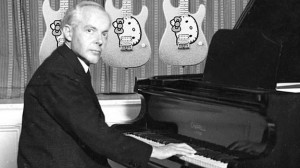
Bartók: Smarter than math-rock — and way more violent.

My Bowie fandom is second to none. Yet I’ve always felt a vague sense of disappointment that the Spiders from Mars didn’t really sound much like spiders from Mars.

On the other hand, the fourth movement from Béla Bartók‘s Fourth String Quartet really does sound like Martian spiders — assuming the critters in question had been force-fed a diet of chord clusters, mathematics, Hungarian folk music, and some of the most astonishing counterpoint this side of J.S. Bach.

And dig it: This white-hot blast of dissonant modernism was composed in 1928!

And how does this string quartet music sound on guitars? Awesome, IMHO — largely because the movement is played entirely pizzicato (plucked, not bowed). Very few modifications were needed to adopt it for four electric guitars.

Categories
guitar Music

my band (hearts) u

Season's Greeting from Mental 99

UPDATE: Here’s a direct link via SoundCloud. The file is downloadable for free. Sheesh — never occurred to me that folks might, like, actually download it and overwhelm my feeble little DropBox account!

While most people are baking cookies or lining up at the grocery store for 45 minutes to buy those frickin’ chives they forgot the other day, Dawn Richardson and I just put the finishing touches on Mental 99’s chaotic cover version of the Doors’ “Hello, I Love You.” (Mental 99 is our digital guitar/analog drums duo band.)

Have a free copy on us! Grab it here. (Download available.)

Why? Because we love you, man!

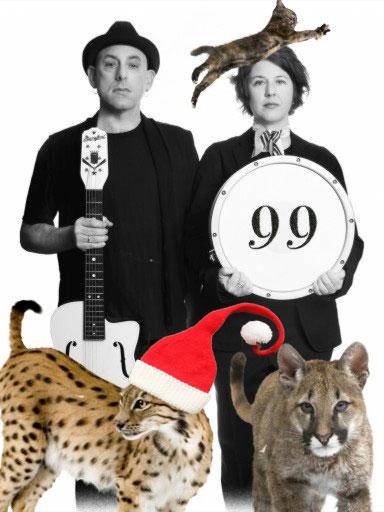
Seasons best from Mental 99!

(Nerd details: all guitar tracks played on my James Trussart Steelcaster though Apple’s MainStage software. Drums tracked at Fantasy Studio A, Berkeley, California, by Jason Carmer and Alberto Hernandez.)

Categories
Digital guitar

Analog Schmanalog

Ever notice how most analog vs. digital battles discussions boil down to two basic questions?

1. Can digital sound as good as analog?
2. What are the practical benefits of digital?

They’re good questions, but they tend to overshadow another important (and probably more interesting) topic: What are the musical benefits of digital?

Everyone loves great analog guitar sounds. But there’s lots of cool stuff that you can only do in digital. Here are a few of the ones I enjoy.

A partial list of the strictly digital sounds and techniques heard here:

• looping
• granular synthesis and delay
• pitch-shifted delays and reverbs
• impulse-response reverbs
• subharmonic sysnthesis
• Realtime MIDI control

You heard it here first!

Hey, I’m totally guilty of fostering simplistic analog vs. digital arguments. After all, I launched this blog over a year ago with an Amps vs. Models listening contest. (The prizes have long since been claimed, but you can still take the test.) But maybe we should spend a little less time arguing about how faithfully that amp model mimics the sound of an amp from 1965, and a little more time exploring the cool and meaningful musical applications of post-analog tone production?

Categories
guitar

The Ugly Guitar Design Contest:
Every Entry Was a “Winner!”

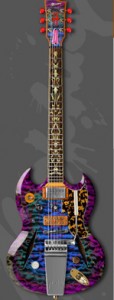
Simply beautiful! (Luthier: A. Meyer)

Oh, man — this is the most fun I’ve ever had on this blog (provided you define “fun” as “laughing hard enough to snort coffee through your nose”).

It sucked trying to pick a contest winner! I received over 150 guitar images, and I loved every single one of them (provided you define “love” as “the way you feel about pictures that make coffee come out of your nose”).

I made a little movie featuring several dozen of my favorites. If you’re drinking coffee, cover your nose.

It’s about four minutes long. You can fast-forward to 3:30 if you only want to see my top three picks. I think you’ll agree with me that they are remarkable in their ability to inspire strong emotional reaction, even after viewing so many truly memorable guitar designs. But frankly, I don’t recommend skipping ahead.

I pity the fool who misses out on any of the treasures herein. :pity:

Apologies to all whose guitars weren’t included. They were all amazing! And thanks to everyone who made this such a memorable event! Let’s do it again soon.

Categories
DIY guitar Pickups Recording

The Pagey Project, Phase 2:
An INSANELY Versatile Les Paul

Just how many colors can you coax from one guitar?

This post is about a guitar wiring scheme that only geeks and tweakers could love.

I think you’ll dig it. :satansmoking:

In Phase 1 of this project, I recreated the original Page wiring scheme using an ’82 Paul, a pair of Duncan ’59 model pickups, and four push-pull pots. The result was a great-sounding, almost absurdly versatile guitar, though the sheer number of options was downright bewildering.

So naturally, the only way forward was to make the instrument even more bewildering by adding additional sonic options. This version offers all the sound of the Phase 1 model, and a buttload more. Several buttloads, actually — and I’m not talking about those skimpy metric buttloads!

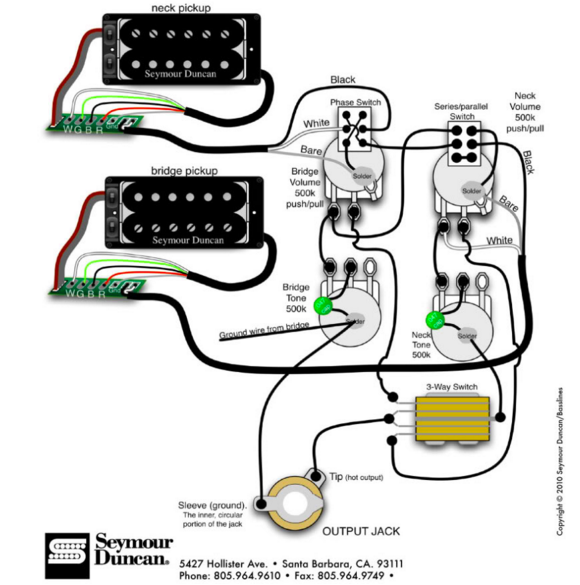
I gutted all the Phase 1 electronics. (Man, that hurt!) Next, using the same pickups, I added a pair of Duncan Triple Shot Mounting Rings. These provide four settings per pickup: humbucker, inner coil split, outer coil split, and both coils in parallel. (The Phase 1 plan offers only one split-coil setting per pickups. While you can configure the two pickups in parallel, you can’t do so with the individual coils in each pickup like you can here in Phase 2.) Here’s the wiring diagram I worked from, which for some reason is no longer posted on the Duncan site.

Since the Triple Shots add four new switches, the Phase 2 wiring requires only two push/pull pots. I wan’t about to let that real estate go unused! I installed a homemade germanium overdrive circuit (similar to the one we made in DIY Club) inside the guitar. My third push/pull pot activates it, and the fourth selects between two input caps, so I get a choice between a fat, Sabbath-style drive and a brighter, thinner Bluesbreakers-type tone.

Check out the demo video: